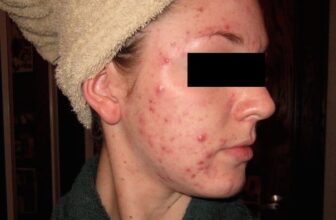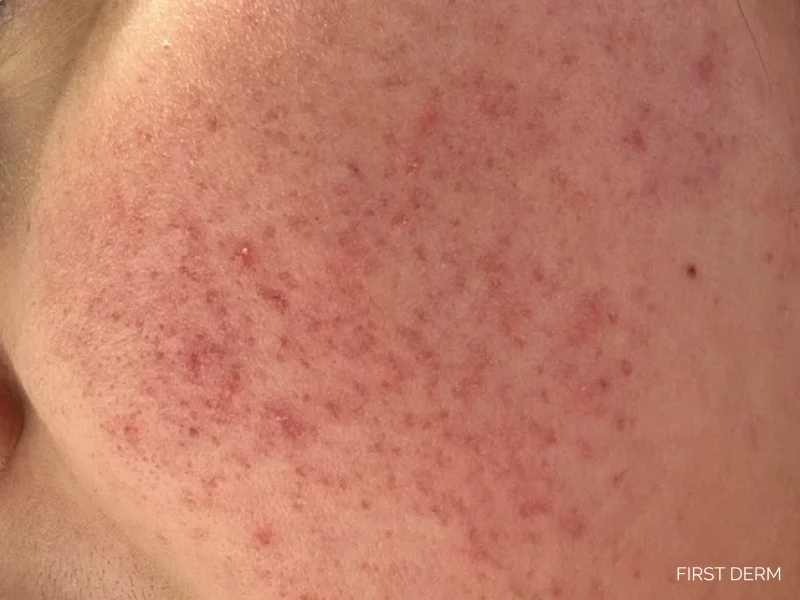
Rosacea is a long-term skin condition that causes facial redness and rashes. It is often triggered by factors such as sunlight, heat or cold, spicy food, alcohol, stress, and some medications. Rosacea is most common in adults aged 30 to 60 and affects women more than men, although symptoms may be more severe in men.
Symptoms
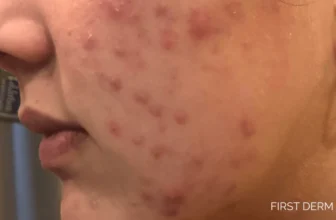
It is marked by hot or sticky sensitive skin, and sometimes red bumps. They can look like acne. Other symptoms include dilated superficial blood vessels, red skin, small pustules, coarse pores and enlarged sebaceous glands. It often appear as lesions on the forehead, nose, cheeks and chin. Sometimes your eyes and the skin around the eyes can become red and irritated.
What can I do?
If you suspect you have rosacea, avoid known triggers such as alcohol, spicy foods, hot drinks, extreme temperatures, and stress. Use a high-factor sunscreen daily (SPF 30 or higher) and choose gentle, fragrance-free skincare products designed for sensitive skin.
Over-the-counter treatments containing metronidazole are not available in the UK without prescription, so speak to a GP for advice. Do not use steroid creams unless advised by your doctor, as they can worsen rosacea.
Should I seek medical care?
Yes, if you have persistent facial redness, visible blood vessels, or bumps and spots on the face, you should see a GP. A doctor can diagnose rosacea based on its appearance and advise on suitable treatments. It’s especially important to seek medical attention if you experience eye symptoms—such as red, sore eyes, blurred vision, or light sensitivity—as these may require urgent care.
Treatment
Rosacea is a chronic condition with no known cure, but symptoms can be managed effectively. Topical treatments such as metronidazole gel or azelaic acid may reduce inflammation and help relieve redness and spots. If topical treatments are not effective, oral antibiotics like doxycycline may be prescribed, usually for 6 to 16 weeks.
Laser therapy can be used to reduce visible blood vessels if they are causing significant distress. Avoiding known triggers—such as sun exposure, alcohol, spicy food, and emotional stress—can also help reduce flare-ups. Daily use of a high-factor sunscreen (SPF 30 or above) is recommended.