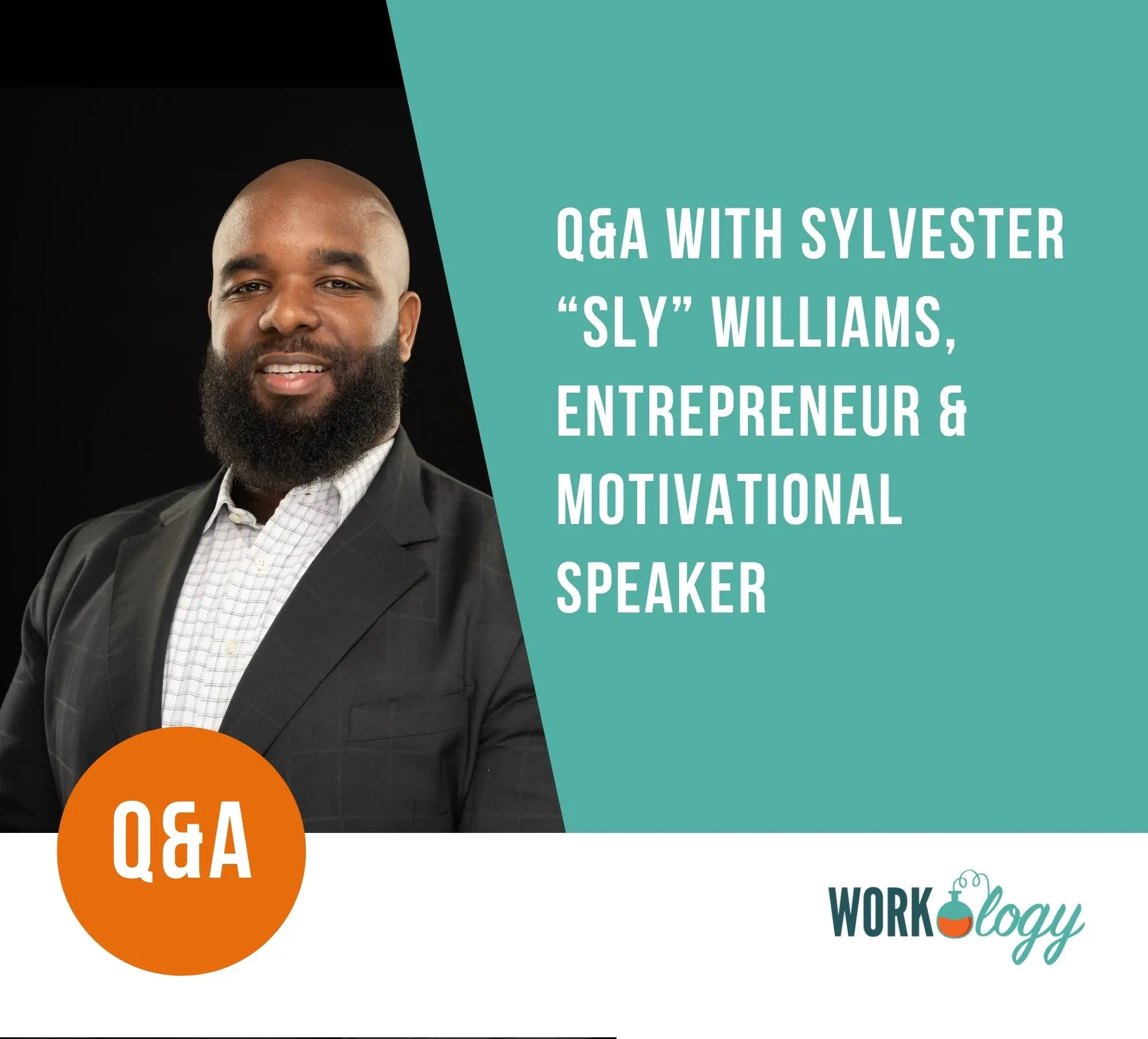
This interview is part of Workology’s HR spotlight series, where we highlight influential HR leaders who are shaping the future of work through bold ideas and real-world impact. For this post, we’re talking to Sylvester “Sly” Williams (yes, THAT Sly Williams, former NFL athlete and Super Bowl 50 Champion).
Sylvester “Sly” Williams is a CEO, entrepreneur, motivational speaker, and former NFL athlete whose inspiring journey from overcoming early adversity to leading high-performing organizations has shaped his mission to develop talent and build championship cultures. After walking on to the football team at Coffeyville Community College with little prior experience, Sly’s determination earned him a scholarship to the University of North Carolina and an eight-season career in the NFL. On February 7, 2016, Williams was part of the Denver Broncos team that won Super Bowl 50 (defeating the Carolina Panthers by a score of 24–10). Now retired from the NFL, he has since translated the discipline, grit, and teamwork learned on the field into business success, leading companies across industries including real estate, healthcare, and laboratory testing.
As the founder of Sly Williams Motivation, Sly focuses on helping organizations unlock human potential and foster leadership at every level. Through his “5 Pillars of Championship Life” — Commitment, Honesty, Awareness, Mastery, and Persistence — he equips professionals and executives to overcome obstacles, embrace authentic opportunities, and thrive in today’s rapidly changing workplace. Whether he’s leading as CEO, coaching emerging leaders, or speaking on stages nationwide, Sly is passionate about aligning people strategy with business growth and developing leaders who can drive lasting impact.
5 Questions With Sylvester “Sly” Williams
Your personal journey—from academic struggles to an NFL career and CEO leadership—is inspiring. How do you decide which parts of your story to share when speaking to different audiences?
Because of everything I’ve been through, my life has really been a series of trial and error, and that’s taught me how to connect with different audiences. I think of my story like a toolbox—I’ve got all these experiences, and depending on who I’m speaking to, I pull out what’s going to resonate with them.
The beauty of my trials and tribulations is that they’ve allowed me to see both sides of life—the struggle and the success. And at the end of the day, my story is my testimony. So even when I speak about the harder parts of my journey, I come from a place of pride, because those are moments I overcame. My hope is that when I share from that lens of resilience and perseverance, it connects with anyone listening, because we’ve all had to push through something in our own way.
You don’t just inspire individuals—you help organizations create lasting change. How do you approach working with companies to improve their culture, leadership, and employee engagement?
For me, it always starts with understanding the real problem. I don’t believe in quick fixes—I believe in building systems that create long-term solutions. That’s why I’m so committed to CHAmp. Challenges are going to come up no matter how strong the organization is. The question is: when those problems hit, what do you fall back on? What structure, tools, or framework do you have in place to help you push through and keep moving forward?
The number one challenge in any organization will always come down to people. So the work becomes: how do you identify the gaps, develop the team, and keep them aligned with the mission? How do you keep them connected to each other and to the bigger picture?
An organization might have a lot of departments, but it’s still one team. So I focus on strengthening it from the inside out—protecting the integrity of the culture, elevating leadership, and making sure engagement isn’t just a buzzword, but something people feel every day.
Your NFL career required resilience, discipline, and teamwork. How do you integrate lessons from professional sports into your keynote talks and workshops for businesses and leaders?
One of the biggest lessons I took from the NFL is that it’s a business first. And like any business, its success depends entirely on how the organization builds, supports, and develops its people. I had the experience of playing for different teams, and that’s where I saw the real contrast. Some organizations were intentional about structure, leadership, and growth from the top down—and those were the teams that won championships. Others didn’t prioritize development or alignment, and their results reflected that.
When you’re part of a championship organization, there’s total alignment. From ownership all the way down to the janitorial staff, everyone understands the mission and their role in it. No job is too small, no person is outside the standard, and everyone is accountable. We win together and we lose together, but we stay connected to the same goal.
That’s the mindset I carry into my keynotes and workshops. I help companies understand that culture, structure, and people development aren’t side projects—they’re the foundation. An organization is only as strong as the person it overlooks. But when every individual is developed, aligned, and bought in with a winning mindset, the whole team becomes unstoppable.
When everybody’s built to win—who’s really going to lose?
Many people feel inspired right after a keynote but struggle to sustain momentum. How do you help your audiences translate inspiration into lasting behavioral change?
A lot of speakers come with rehearsed stories or secondhand ideas. I don’t do that. Everything I share comes from what I’ve actually lived. I’m not someone who listened to a podcast or read a book and decided I suddenly had the solutions. I’m the product of accountability, discipline, perseverance, and mindset. I’m a real example of what it looks like to push through adversity and win anyway.
When I speak, I’m not just telling stories—I’m giving people the same tools I use in my own life. These are the tools that helped me overcome what I’ve faced and still help me today. Me showing up authentically leaves a lasting impact, because people can see through anything that isn’t real. And when you hear a real story, from a real person who faced adversity and overcame it in spite of. That resonates. It sticks. It moves people.
This space has gotten too black-and-white and predictable, and that’s why audiences tune out. But when someone hears from a person who has lived it and is still living it, it hits different.
I still face adversity every single day. Success doesn’t remove the challenges—it just raises the level. But I’m unshakable and I’m unstoppable, not because life got easier, but because of how I choose to show up. That’s what people connect to. I’m not just trying to spark a moment of emotion—I’m showing people a model they can follow when the moment is over.
That’s how inspiration becomes action: by giving people something real they can apply, not just something they can applaud.
Workplaces are evolving fast, and so are people’s expectations of leadership. What role do you see motivational speaking and leadership development playing in shaping the future of work?
I don’t even like to call it “motivational speaking”—I call it personal development. Because I’m not interested in showing up, giving a speech, and going home. My focus is on helping organizations build leaders and develop people into champions. The future of work is going to demand that.
Leadership today isn’t about titles—it’s about responsibility. You’re only as strong as the people you lead, and your team’s success is a direct reflection of how you show up. That’s why I believe personal development and leadership training have to be part of the culture, not a checkbox.
In the NFL, every year we had what’s called a self-scout meeting. You look at where you struggled, where you succeeded, and where you need to improve. You don’t take it personal—you take it seriously. That mindset should exist in every workplace. The day we stop learning is the day we stop growing, and the moment we stop growing, we start regressing.
The future of leadership is going to require constant realignment. Leaders have to remain the example—the standard. When leaders are committed to developing themselves and shifting their mindset, they’re able to pour into their teams, invest in their growth, and take the entire organization to the next level of excellence.
RESOURCES
Sly Williams (website)