
Hundreds of British College Students Clashed With Wooden Swords in a 1966 Re-enactment of the Battle of Hastings. Watch the Rediscovered ‘Time Capsule’ of Lost Footage

A local videographer shot 300 reels of color film during the re-enactment, which shows “soldiers on foot getting remarkably close to horses” and “a rather relaxed attitude towards health and safety.” The event sparked an annual tradition that continues to this day
/https://tf-cmsv2-smithsonianmag-media.s3.amazonaws.com/accounts/headshot/Sonja_headshot.png)
/https://tf-cmsv2-smithsonianmag-media.s3.amazonaws.com/filer_public/7b/84/7b840680-9e03-472b-b6a8-1f13793fdeef/5454.jpeg)
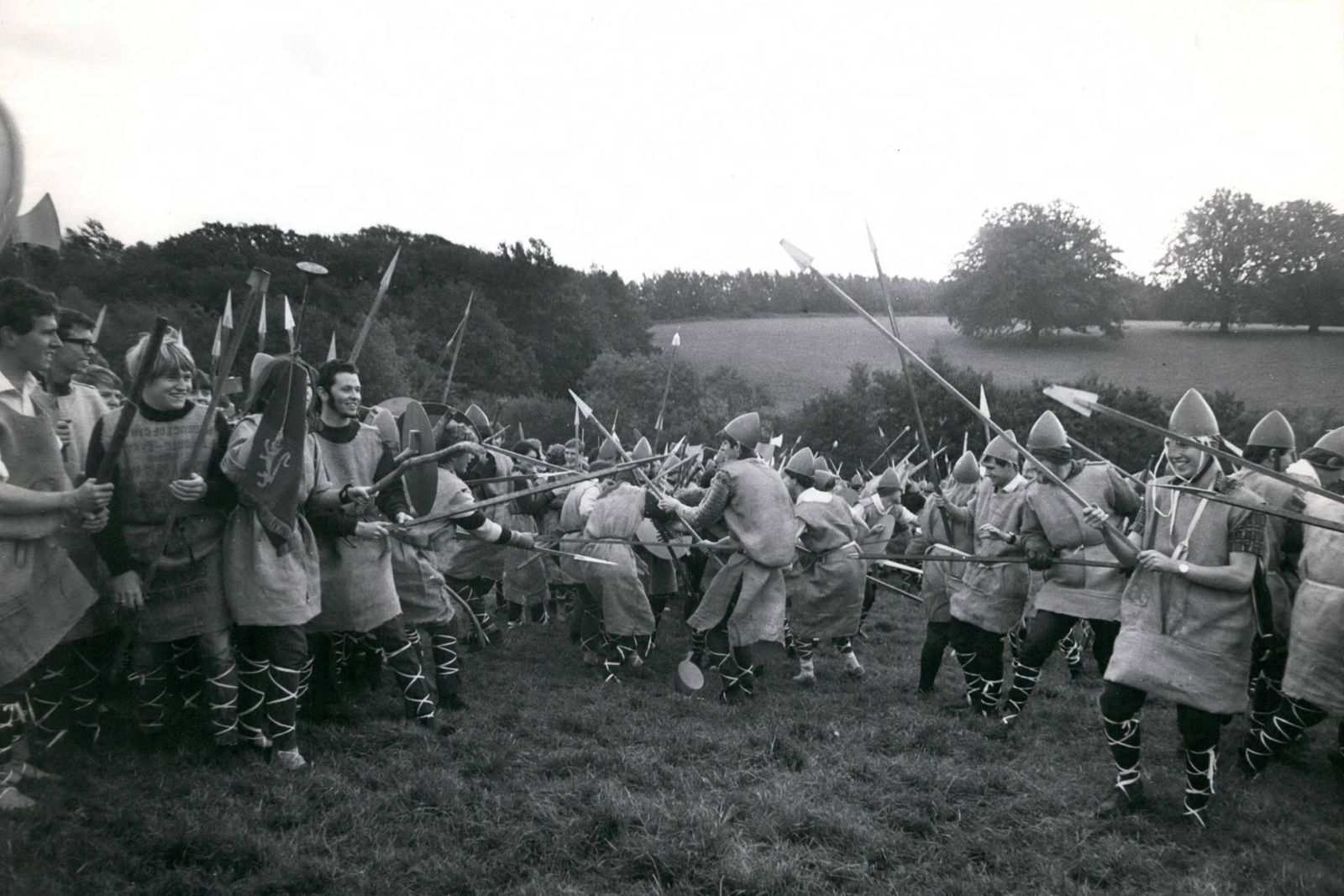
Students from the universities of Kent and Sussex fighting at the first Battle of Hastings re-enactment on October 14, 1966
Keystone Press / Alamy
On October 14, 1966, several hundred college students dressed in burlap and fake chainmail converged on a grassy hill in southern England. Armed with wooden swords and shields, they prepared to re-enact the Battle of Hastings—the key event in England’s Norman Conquest—to commemorate its 900th anniversary.
“We were recruited with the promise of beer on the day and a coach trip and a good day out,” Peter Sampson, who played a Norman foot soldier in the re-enactment, tells the BBC’s Craig Buchan. “At times it got very realistic in terms of aggression between the two sides,” he explains, not least because the students hailed from the rival universities of Kent and Sussex.
Following that 25-minute dust-up, re-enacting the Battle of Hastings became an annual tradition, albeit with greater attention to historical accuracy. The rowdy 900th anniversary re-enactment appeared to be lost to history, and Sampson, for one, never participated in a re-enactment again.
Now, rare color footage of the 1966 event has emerged for the first time. The conservation charity English Heritage has released it as a 12-minute film ahead of this year’s re-enactment, which will take place on October 10 and 11 at Battle Abbey in East Sussex, the site of the 1066 battle.
The 1966 Battle of Hastings
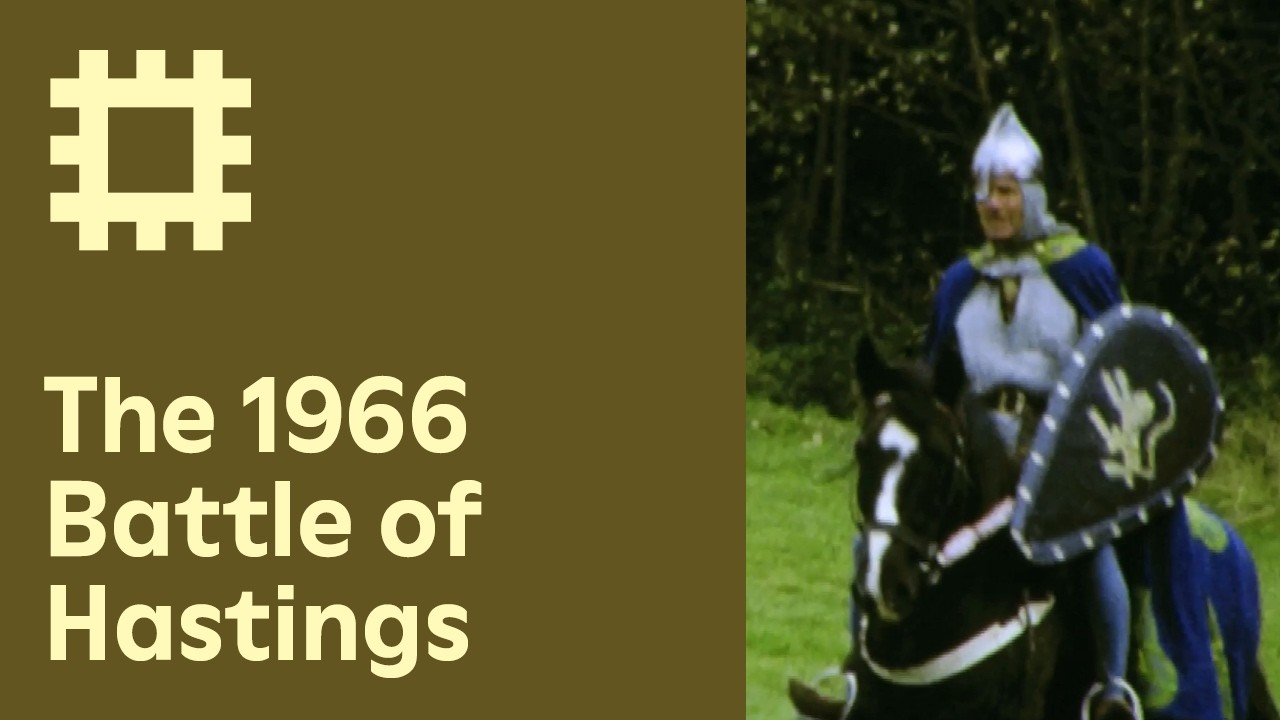
The 1966 film was shot at the behest of the Hastings Town Council by Alan Wootton, a local electronics company owner, and a small production team that included his 12-year-old son, Cliff. After a recent visit to Battle Abbey reminded him of his father’s footage, Cliff worked with English Heritage to turn 300 reels of film into what the Guardian’s Esther Addley calls “a pleasingly Monty Pythonesque record of chaps in fake chainmail bonking each other on the heads with fake weapons.”
The real Battle of Hastings was fought by the armies of the English king Harold II and William the Conqueror, the duke of Normandy. William invaded England and confronted Harold on a hilltop less than ten miles outside Hastings. Harold was killed, alongside thousands of soldiers. William’s army emerged victorious and established the Normans as the rulers of England.
Did you know? The Bayeux Tapestry
The Bayeux Tapestry, embroidered shortly after the Battle of Hastings, depicts the events of the Norman Conquest of England. Usually housed in the Bayeux Museum in Normandy, France, it is on view at the British Museum in London until July 2027.
The 1966 re-enactment drew some 30,000 spectators. Most rooted against William and his Norman army, despite knowing how the battle turned out. The newly restored film also shows “soldiers on foot getting remarkably close to horses—and what can only be described as a rather relaxed attitude towards health and safety,” per a statement from English Heritage.
“There was actually a lot of real pushing and shoving, a lot of fighting going on in there,” Sampson tells the Guardian. “My friend John got a big whack around the head with the end of a [fake] spear, which hurt his face quite a lot.”
Officials say that recent re-enactments of the Battle of Hastings were more historically accurate than the original 1966 event. English Heritage/https://tf-cmsv2-smithsonianmag-media.s3.amazonaws.com/filer_public/56/05/5605c646-78b0-41b7-a641-6dc541fa654c/boh-1966-reenactment-pr-1080x600.jpeg)
English Heritage doesn’t have the names of those who participated in the 1966 spectacle, but officials are encouraging anyone involved to reach out. The charity hopes to host any interested re-enactors as special guests at this year’s event.
“This film is an incredible time capsule,” Battle Abbey site manager James Witcombe says in the statement. “It captures not only the first regular Battle of Hastings re-enactment but also the atmosphere of an event that continues, to this day, to bring history to life for thousands of people almost 1,000 years after the original battle.”


