

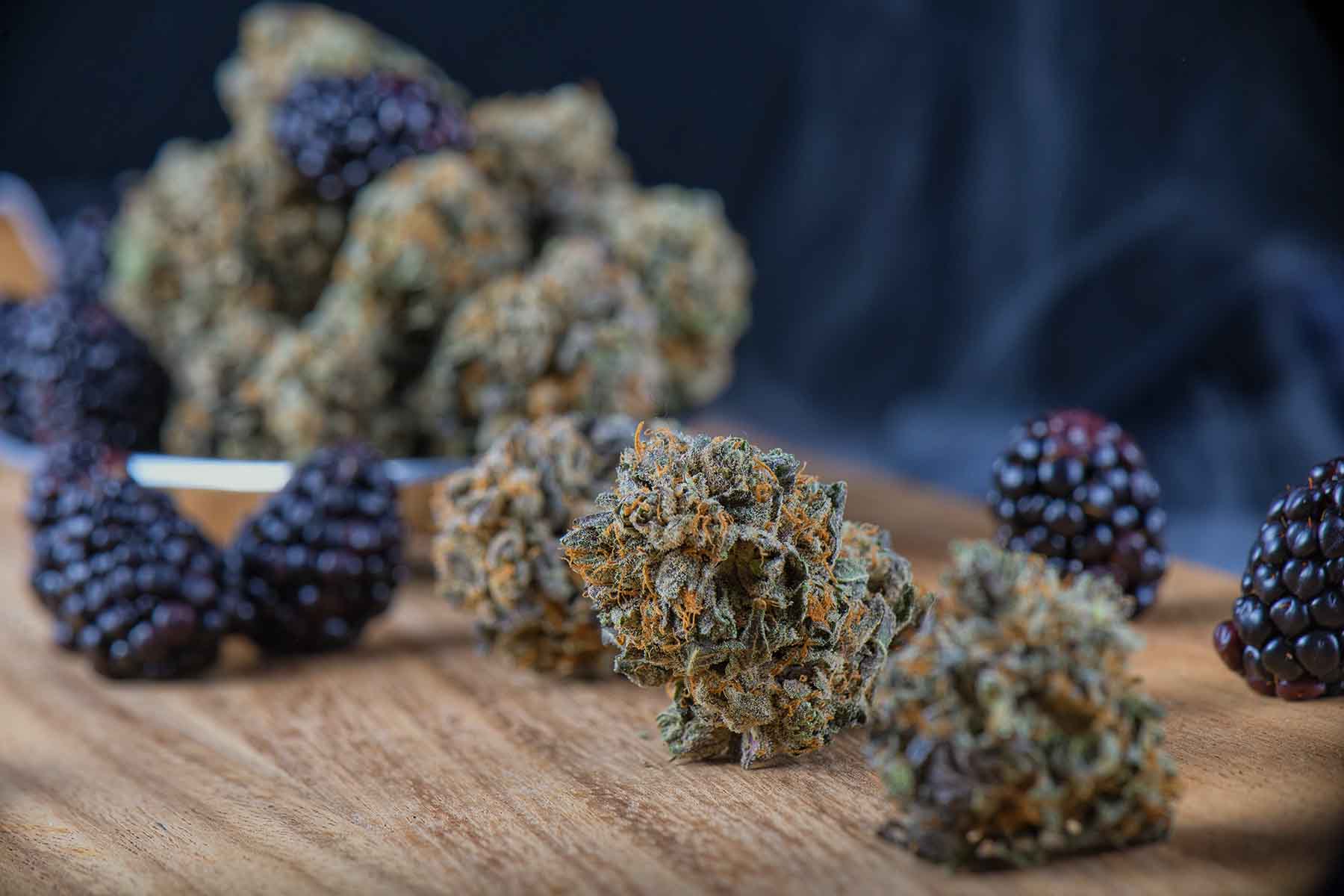
Why might patients say that two containers of medical cannabis, with similar amounts of tetrahydrocannabinol (THC) and cannabidiol (CBD) but made from different varieties of cannabis flower, smell, taste or feel quite different from one another? The answer usually lies with terpenes. These are the aromatic compounds that give each plant variety, or cultivar, its own character. A cultivar is simply a plant type bred by people for certain traits, such as colour, flavour or resistance to disease. For patients trying to work out why one flower seems to suit them better than another, terpenes are often the missing piece of the puzzle.
What terpenes actually are
Terpenes are natural compounds found across the plant world, from citrus peel and pine needles to lavender and black pepper. In cannabis, they are made in the same tiny resin glands, called trichomes, that produce cannabinoids such as THC and CBD. Well over 100 different terpenes have been reported in the plant. Every cultivar carries its own blend. That blend is shaped by the plant’s genetics, how it is grown and when it is harvested.
Terpenes are what you smell when you open medication packaging. It might be a citrus note, something earthy and musky, or a sharp, peppery edge. They are not unique to cannabis. What makes them relevant to prescribing is the idea that they may do more than shape aroma. The effects of individual terpenes on the human body, both in isolation and in combination with other terpenes or cannabinoids, are still under active investigation.
Why the label is only part of the story
In the UK, most cannabis-based medicines, including all flower, are unlicensed. They can only be prescribed by a specialist doctor, and only when licensed treatments have not worked well enough or are not suitable. Patients who are prescribed flower will find that cultivars differ in their cannabinoid and terpene profiles. This can be confusing, especially when two options look almost the same on paper for THC and CBD.
Terpenes are usually where that difference lives. Much reliance was previously placed on whether a plant was labelled “indica” or “sativa”. Yet we now understand that there is marked variation in the chemical composition of flowers within each variety, and that the two labels are not genetically distinct. Research has also shown that the names given to cultivars do not reliably match their actual chemistry. This is why the measured profile of a flower matters more than its name. For patients who are suitable candidates for medical cannabis, a clinician suggesting one cultivar over another will normally draw on that profile, on how the patient responded to cultivars they have tried before, and on their wider medical history.
The role of terpenes alongside cannabinoids
Cannabinoids, such as THC and CBD, act directly on the body’s endocannabinoid system. This is a network of receptors and signalling molecules that helps to regulate pain, mood, sleep and appetite. CBD, in particular, also acts at a diverse range of other receptors. Some researchers suggest that terpenes may work alongside cannabinoids to shape how the body responds. This idea is often called the “entourage effect”.
Some treat the entourage effect as an unmitigated truth of medical cannabis. Others consider it pure mythology. Either way, it is important to be honest about the quality of the evidence for this hypothesis. Most of what we know about individual terpenes comes from studies in cells or animals. These often use amounts far higher than a patient would get from a typical prescribed flower. One careful laboratory study found that six common cannabis terpenes did not change how THC acts at the main cannabinoid receptors at all. A separate study in mice found that some terpenes did produce cannabinoid-like effects, but through several different pathways. Only a handful of studies have looked at terpenes in people. In one small trial of 20 healthy adults, inhaling limonene alongside THC reduced the anxiety and paranoia that THC can cause at certain doses in some individuals, without changing its other effects. That is an interesting result. But it is not evidence of benefit or safety in patients with a health condition.
None of this makes the entourage effect irrelevant. It does mean that a terpene profile is best seen as one part of a much larger clinical picture, alongside cannabinoid content, dose, and how each person responds over time. Terpene content can of course matter in other ways, such as how palatable a medication is, which in turn can affect how easy it is to take it as prescribed.
Some of the terpenes patients may come across
Cultivars are often described by their dominant terpenes. A handful are present across many different cannabis flowers.

- Limonene gives the citrus notes in many cultivars. In laboratory and animal studies it has shown anti-inflammatory and antioxidant activity. It is also the terpene tested in the human trial mentioned above.
- Pinene has a fresh, woody scent similar to rosemary or pine. Laboratory research has looked at possible anti-inflammatory and antimicrobial properties.
- Linalool is the terpene behind lavender’s aroma. Animal studies suggest it may reduce anxiety-like behaviour. Researchers are also exploring whether it helps protect nerve cells, but this work is at an early stage.
- Myrcene gives an earthy, musky character and is also found in hops and lemongrass. Animal studies point to possible anti-inflammatory effects, but a recent review noted that studies in humans are lacking.
- Beta-caryophyllene, found in black pepper and cloves, is unusual because it binds directly to one of the body’s cannabinoid type 2 (CB2) receptors. In mice it has reduced signs of inflammatory and nerve pain, which is why some researchers are interested in it for chronic pain.
- Humulene, present in hops and ginger, has an earthy, spicy profile. Animal studies have looked at its anti-inflammatory activity.
To be clear, none of this means a patient can expect a particular effect from any single terpene. These are areas of active research, mostly in the laboratory, and the strength of evidence varies a great deal between them. High-quality clinical research is needed to test whether these effects are maintained in humans at the concentrations found in medical cannabis preparations.
How this shapes a clinician’s decision
Possibly the most important decision a clinician makes is whether someone is suitable for a trial of medical cannabis at all. This involves identifying an unmet clinical need that licensed medicines have not met, considering any reasons why medical cannabis should not be prescribed, and asking whether another treatment would be more suitable for that patient at that time.
In practice, terpene profile is one factor a prescriber may weigh up for suitable patients. Others include cannabinoid ratios, a patient’s symptoms, their medical history and how they responded to previous cultivars. Two flowers with similar THC and CBD content but different terpene profiles can feel noticeably different to the same patient. This is one reason why finding the right cultivar can take some trial and adjustment, rather than being settled at the first prescription.
It also helps to remember that cannabis-based medicines, like all medicines, can cause side effects. Our own registry data show that side effects are common, particularly in people who have not used cannabis before. That research also found that placebo-controlled trials are still needed to properly establish how well these medicines work. Any change to a prescription, including a switch between cultivars, should only be made with your prescribing clinician.
This is why patients are encouraged to keep track of how a cultivar makes them feel and to share that feedback with their clinical team. The prescriber can use this feedback, alongside the flower’s terpene and cannabinoid profile, to help guide treatment. It works best as an ongoing conversation between patient and clinician, rather than a one-off choice.
Questions worth raising with your clinician
If you want to understand your prescription in more depth, you can ask your clinician why a particular flower has been suggested over another, and what to expect if a switch is made. You can also ask about the terpene profile of your cultivar. Your clinician may not have these figures to hand, but they are usually available in the product information from the manufacturer or pharmacy, and your clinical team can help you find and interpret them. These conversations help set realistic expectations. They also support the kind of feedback that allows a prescription to be refined over time.
The bigger picture
Terpenes are one of the more interesting frontiers in medical cannabis research, and the science is still evolving. What can be said with confidence is that they give each cultivar its distinct character. Researchers are actively investigating whether they also play a role alongside cannabinoids in shaping a patient’s outcomes and safety. Turning that into reliable, individualised prescribing will depend on more clinical research in people, not laboratory studies alone.
Until then, the most useful thing you can do is treat terpenes as part of an informed conversation with your clinical team, leading to a much better understanding of what you have been prescribed and why.
You can read more about terpenes on the Curaleaf Clinic website.
This is a paid-for article published in conjunction with the brand as part of an advertising campaign. Paid-for content helps support our mission of delivering quality journalism.