
Former Models and Epstein Survivors Are Tracing a Pattern of Abuse Across Borders


Former models are connecting their experiences as investigations in France and elsewhere examine the people and institutions around Epstein.
Part 3 of The Pipeline to Predators, a four-part Ms. investigation into the modeling industry’s connections to Jeffrey Epstein and survivors’ fight for accountability.
Sara Ziff, founder of the Model Alliance, says the organization has spoken with hundreds of sexual abuse survivors. She’s come to understand that the abuse she and others suffered was part of a larger pattern in the modeling industry.
“The more you talk to people, the more you connect the dots, and you realize that you were not the only one. That this wasn’t just some freakish thing that happened to you, that you were actually part of a trafficking scheme,” she says.
Stacey Williams says that since others have come forward to tell their stories, “They made me realize that everything was far more orchestrated than I had considered. … Almost like a setup.”
And Lisa Phillips believes that what happened to her and the other victims, including the models connected to Epstein, was trafficking.
The models interviewed by Ms. say they are aware of other former models who were abused by powerful men, but who have not come forward, many of them fearing for their safety or the safety of their families.
“The No. 1 reason,” Williams explains, “is that they don’t want to bring the backlash, the death threats, the vitriol, the misogyny into the lives [of] their children.”

As more survivors do come forward, they’re gaining strength from one another, revealing previously hidden facts and demanding accountability.
Phillips says she’s optimistic that investigations will happen, highlighting the momentum that’s been building among Epstein survivors since they first gathered on Capitol Hill in September 2025 to demand the release of the Epstein files: “We created a movement since September. It’s become a powerful movement.”
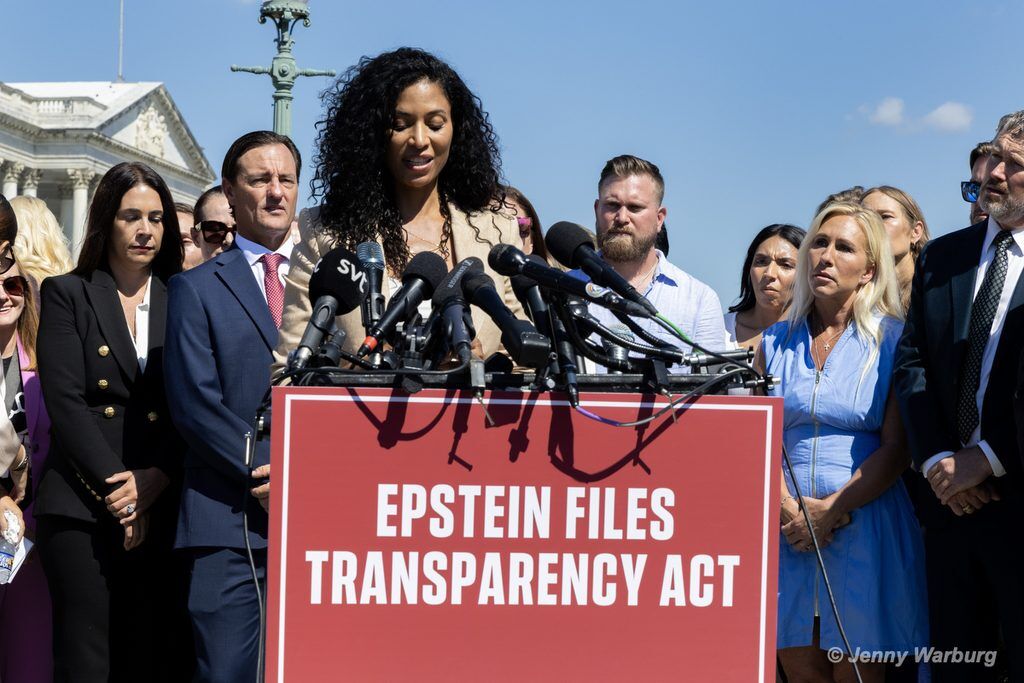
That movement extends beyond the modeling industry to survivors recruited and abused through other means. Together, they’re pressing for investigation, transparency and accountability from the people and systems that failed them.
In a pivotal moment, many of these survivors met at a rally that same September organized by World Without Exploitation, a national, survivor-led coalition working to end human trafficking. They connected and shared their stories, many of them for the first time.
Rachel Foster, cofounder and president of World Without Exploitation, describes the work toward accountability since then as happening 24/7. In collaboration with a group of Epstein survivors, her organization launched multipronged public education and media campaigns and lobbied legislators across party lines for months. The group sees this work as a moral imperative: As Foster says, “If we can’t be courageous in this moment, when can we be?”
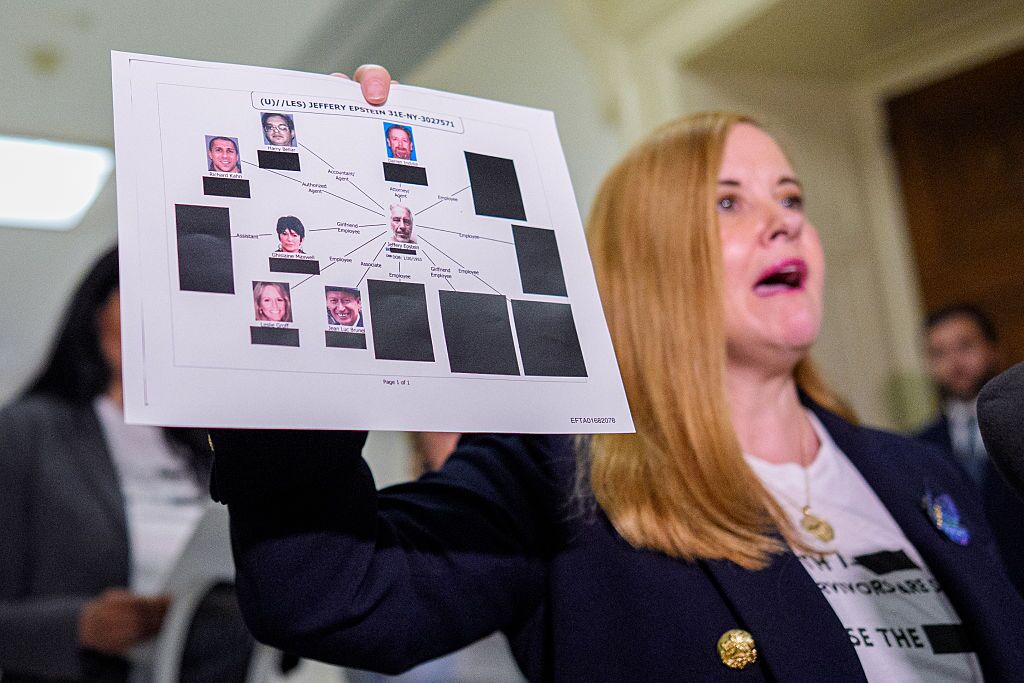
This sustained organizing and renewed pressure led to Congress passing the Epstein Files Transparency Act in November 2025. But advocates say far more remains to be done. They’re looking for greater action from Congress and the states, noting that after the partial and botched release by the DOJ—which exposed survivors’ personal information while redacting and protecting the identities of many Epstein associates and alleged abusers—at least 2.5 million documents remain unreleased.
Attorney and independent journalist Katie Phang has brought a groundbreaking lawsuit seeking to enforce the Epstein Files Transparency Act (EFTA), requiring the Justice Department to release all mandated records and provide specific legal justifications for all withheld documents and redactions. “I knew that I was waiting for something to happen that was never gonna happen. I was waiting for the right thing to be done by this administration and the DOJ, and I would be an idiot to keep on waiting. And so that’s when we decided to file suit,” Phang told Ms. (She provides regular updates on the case regularly through her YouTube channel.)
Meanwhile, some models have turned to pressure campaigns and media advocacy overseas, where investigations have gained ground.
Movement Abroad
France, arguably the international center of the fashion industry and a hub for model recruitment throughout Europe, has seen the most direct modeling-industry-related investigative movement. Prosecutors reopened inquiries into trafficking and financial wrongdoing tied to Epstein in 2026, drawing forward roughly 10 new alleged victims, in addition to others already known through related investigations into Jean-Luc Brunel and Gérald Marie, former head of Elite Model Management in Europe.
In May, France’s highest court also opened a potential civil path for survivors of childhood sexual abuse whose claims might otherwise be barred by statutes of limitations, offering another possible legal avenue for some modeling industry survivors.
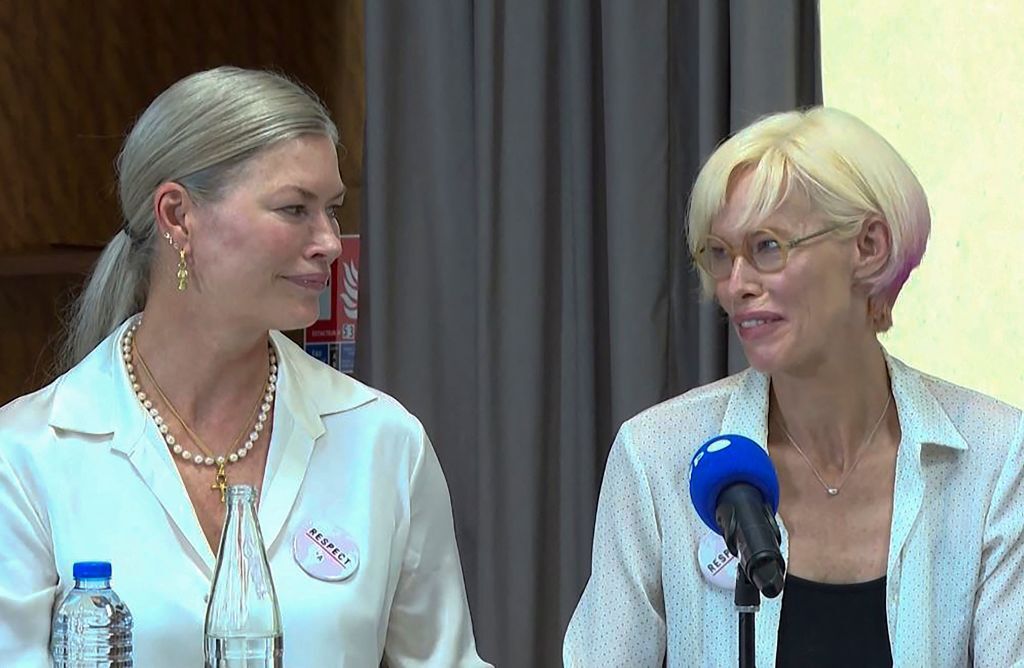
In June, former cover model Carré Otis filed a criminal complaint against Marie, who she says raped her repeatedly when her agency sent her to France and housed her in his apartment when she was just 17 years old. (Marie denies the allegations.) Otis’ filing opened a pathway other survivors could follow, even though her own criminal claim has exceeded the statute of limitations. To date, approximately 26 alleged victims have come forward in France.
In Latvia and Lithuania, investigations were launched after the released Epstein files named local modeling agencies and models who were allegedly recruited for exploitation.
In Britain, former Ambassador Lord Peter Mandelson resigned from the House of Lords amid scrutiny of his Epstein ties, and the Metropolitan Police opened a criminal investigation into his alleged misconduct in public office. He was arrested earlier this year, days after Andrew Mountbatten-Windsor, formerly Prince Andrew, was arrested on the same allegation; both were released on bail.
Norway’s Parliament has announced an external inquiry into its foreign ministry’s Epstein connections, and Irish opposition leaders have pushed for a formal investigation there.
Survivors are connecting their experiences across borders and pressing for answers as investigations abroad move forward. In the U.S., they continue to ask why accountability has been so difficult to obtain.
The final installment of the four-part Pipeline to Predators series will be available here on Friday, Oct. 9.
This article is excerpted from a larger feature in the Fall 2026 issue of Ms., hitting newsstands soon. Become a Ms. member and get print issues delivered right to your mailbox.