
A bedroom should feel quieter than the rest of the home, but quiet does not have to mean plain. The most successful luxury bedroom design balances comfort with proportion, texture and architectural detail, creating a room that feels composed without losing the personality of the people who use it.
At J.Fisher, the process begins with how the room needs to function. Sleep is only part of it. A primary bedroom may also need space for reading, dressing, morning coffee or simply moving comfortably between the bed, closet and bathroom.
Plan the Room Around Scale
The bed is usually the visual anchor, so its size and position influence almost every decision that follows. Before choosing furniture, a designer will consider wall dimensions, door swings, windows and the clearances around the bed.
Bedside tables should feel substantial enough beside the mattress and headboard without interrupting circulation. Where possible, leave comfortable walking space around both sides and the foot of the bed rather than filling every available inch. Rugs should extend far enough beyond the bed to ground the composition, while benches and lounge chairs need enough space around them to feel deliberately placed.
Use Joinery to Strengthen the Architecture
Bespoke joinery can make a bedroom feel integrated rather than furnished after the fact. A full-height headboard wall, built-in nightstands or tailored cabinetry can resolve awkward dimensions while adding storage and architectural presence.
The value of custom work often lies in precision. Panel lines can align with furniture, cabinetry can follow the proportions of the room, and details such as hardware, switch plates and curtain fittings can be coordinated rather than treated as unrelated finishing choices.
Build Calm Through Materials and Color
Luxury bedroom decor works best when materials are layered rather than multiplied. Timber, wool, linen, velvet, plaster and upholstered surfaces can introduce depth without relying on an excessive number of colors or decorative objects.
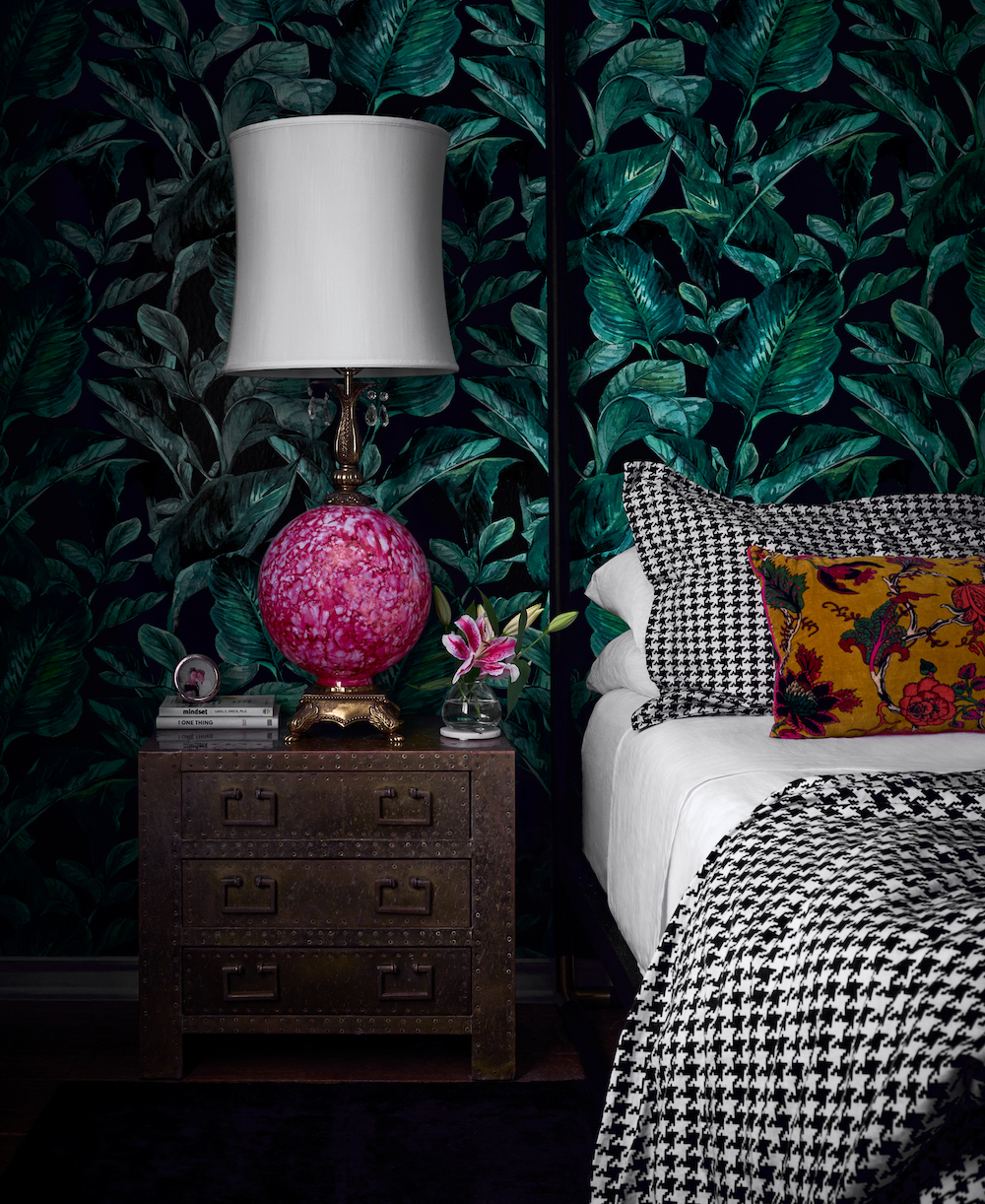
A restrained palette is not the only option. Deep color, patterned wallcovering or richly veined materials can work beautifully when there is enough visual breathing room around them. Instead of making every element compete, designers decide where the room should carry the most energy and simplify what surrounds it.
Light for Different Moments
Bedroom lighting needs more than one setting. Reading lights should be positioned for the person using them, while ambient lighting should make the room comfortable after dark without flattening every surface with overhead light.
Window treatments are equally important. Layered shades or drapery can control glare and privacy during the day while adding softness, texture and visual weight.
Make the Final Layer Personal
Luxury hotels are useful references for layered lighting, tactile materials and visual calm, but a residential bedroom needs something they deliberately avoid: evidence of the person who lives there.
Artwork, books, objects and textiles should connect the bedroom to the homeowner and the wider house rather than making it feel like a self-contained suite.
The strongest luxury bedroom ideas combine planning with character. J.Fisher’s luxury bedroom interior design considers furniture, custom details, materials and lighting as one composition, while its full-home interior design approach ensures the bedroom still belongs to the architecture and story of the entire home.