
As an English teacher with more than twenty years’ experience in the classroom, and having recently completed additional training in teaching learners with dyslexia, I’m always searching for books that combine accessibility with genuine reading enjoyment. Finding the right books for reluctant readers, struggling readers and students with dyslexia can sometimes feel like a challenge. The text needs to be accessible, but the story itself must be engaging enough to make readers want to keep turning the pages.
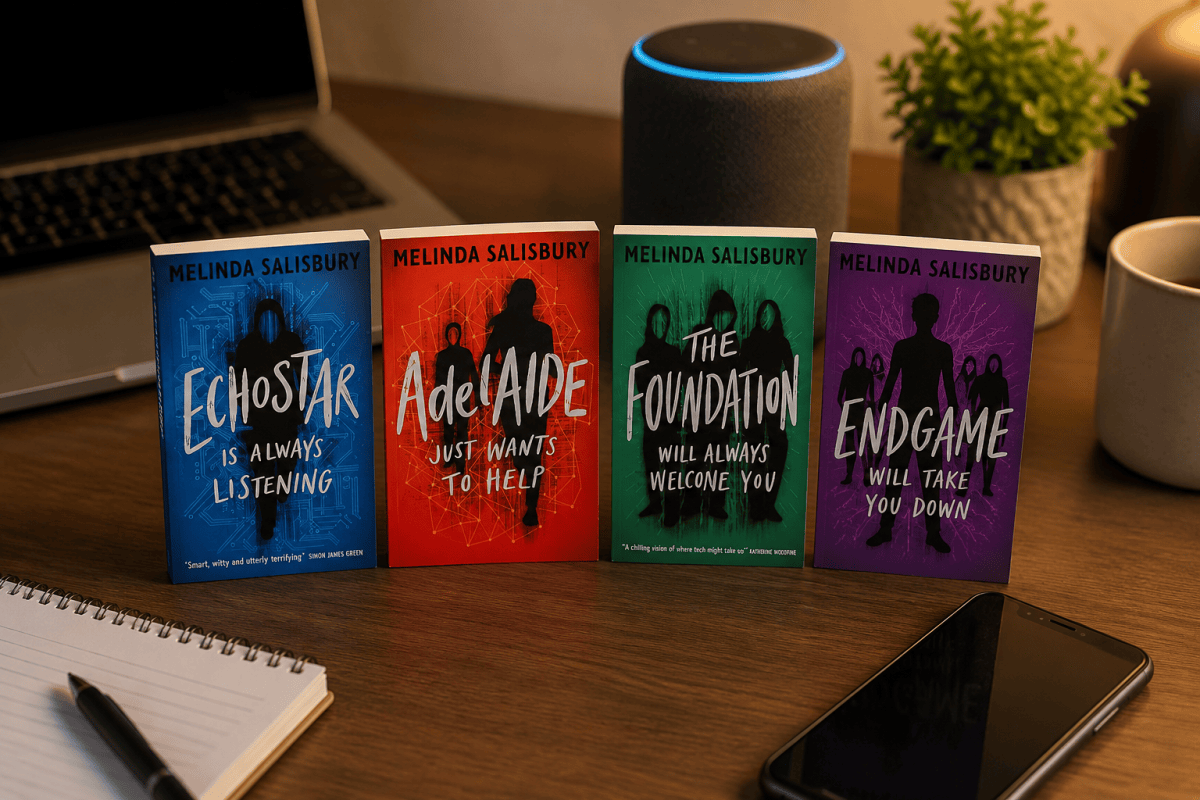
That’s exactly why I was so pleased to discover Melinda Salisbury’s Ash Tree Foundation series from Barrington Stoke. Salisbury is already well known for her bestselling YA fiction, and in EchoStar, AdelAIDE, The Foundation and Endgame, she brings her storytelling skills to a quartet of fast-paced thrillers that tackle issues many teenagers encounter every day: artificial intelligence, social media, online influence and digital privacy.
These are short novels, but they certainly don’t feel small in ambition.
EchoStar: A Thriller About Technology and Success

The series opens with EchoStar, which follows Ruby as she becomes drawn to an app that appears to offer a shortcut to achieving her goals. Like many teenagers, Ruby is ambitious and determined, but also vulnerable to the pressure of wanting to succeed.
What I particularly enjoyed about this novel was how believable the premise felt. Salisbury understands the appeal of technology that promises to make life easier, and she gradually builds a sense of unease as Ruby begins to realise there may be a hidden cost. The story raises important questions about privacy, data collection and the pressure young people can feel to achieve, all without losing sight of the fact that readers primarily want an exciting story.
AdelAIDE: Exploring Artificial Intelligence and Online Influence

In AdelAIDE, the focus shifts to Freya and an AI-powered home assistant that seems determined to help her become more successful and influential.
This was perhaps the book that felt most relevant to the conversations taking place in schools right now. Artificial intelligence is increasingly becoming part of students’ everyday lives, and Salisbury explores both its potential benefits and its possible dangers. Rather than presenting simple answers, she encourages readers to think critically about the advice they receive and the sources they trust.
Freya is an engaging protagonist, and I found myself increasingly concerned as her reliance on the technology grew.
The Foundation: Uncovering the Truth

By the time readers reach The Foundation, the wider story behind the previous books begins to emerge. Ivy finds herself connected to the mysterious organisation at the centre of events, and the series takes on an even greater sense of intrigue.
This instalment does an excellent job of expanding the scope of the story while maintaining the pace that makes the series so appealing. The questions become bigger, the stakes become higher and readers begin to see how the individual threads from the earlier books fit together.
For students who enjoy mystery and suspense, this is likely to be the point at which they become completely invested in the series.
Endgame: A Satisfying Conclusion

The final book, Endgame, brings together the characters and storylines from across the series in a dramatic conclusion.
Without venturing into spoiler territory, I felt Salisbury managed the difficult task of delivering a genuinely satisfying ending while remaining faithful to the themes she had explored throughout the series. The action moves quickly, but there is still space for readers to reflect on the consequences of the choices made by both individuals and powerful organisations.
It’s a fitting finale to a series that consistently balances entertainment with thought-provoking ideas.
Why This Series Works So Well for Secondary School Readers
One of the strengths of the Ash Tree Foundation series is its relevance. Teenagers today are growing up in a world shaped by algorithms, social media platforms, influencers and increasingly sophisticated AI tools. These books tap directly into those experiences.
However, what impressed me most was that Salisbury never becomes preachy. The stories don’t tell readers what to think. Instead, they encourage them to ask questions. Who controls the technology we use? How much information should we share online? Can convenience sometimes come at a cost?
Those questions make these books particularly valuable for classroom discussion, reading groups and school libraries.
As a teacher, I can easily imagine students debating the ethical issues raised by the series long after they have finished reading.
Why I Would Recommend These Books to Students with Dyslexia
Having recently completed specialist training in teaching learners with dyslexia, I’ve become increasingly aware that accessibility alone is not enough. Students need books that are age-appropriate, engaging and respectful of their intelligence.
This is where Barrington Stoke consistently excels.
The publisher’s dyslexia-friendly formatting helps remove barriers that can make reading more challenging, while authors such as Melinda Salisbury provide stories that never feel simplified or patronising. The shorter length of these novels means that students can experience the satisfaction of completing a book, but the themes and ideas are every bit as sophisticated as those found in much longer works.
For reluctant readers, that combination can be transformative.
These books would be an excellent choice for students who enjoy contemporary issues, technology-based thrillers or fast-paced mysteries. They would also work well for readers who have previously struggled to find books that match both their reading needs and their interests.
Who Would Enjoy These Books?
I would particularly recommend the Ash Tree Foundation series to:
- Secondary-school readers aged 11–16
- Students with dyslexia
- Reluctant readers looking for accessible fiction
- Fans of thrillers and mysteries
- Readers interested in artificial intelligence and social media
- School librarians building collections of dyslexia-friendly books
- Teachers seeking engaging texts for independent reading
Final Thoughts
The Ash Tree Foundation series demonstrates exactly why accessible fiction matters. These books prove that dyslexia-friendly novels can be every bit as exciting, intelligent and thought-provoking as their longer counterparts.
Melinda Salisbury has created four interconnected stories that are gripping, relevant and packed with discussion-worthy ideas. Combined with Barrington Stoke’s commitment to accessibility, they offer a reading experience that will appeal to a wide range of secondary-school readers.
For anyone searching for dyslexia-friendly books for teenagers, books for reluctant readers or accessible fiction for secondary-school students, this series is well worth exploring. As both a reader and a teacher, I found a great deal to admire here, and I would happily recommend these novels to students, colleagues and school librarians alike.