

MAO Anime Review
I’ve watched pretty much every anime adaptation of a manga from Takahashi-sensei. With RINNE, I just lost interest in the title. I was vaguely aware of the MAO manga, but I had no interest. However, when the manga received an anime adaptation, I figured I’d give it a watch. I gotta say, this has been the most surprising anime title I’ve ever watched.

* * * S P O I L E R S ! ! ! * * *
The Story, in Brief
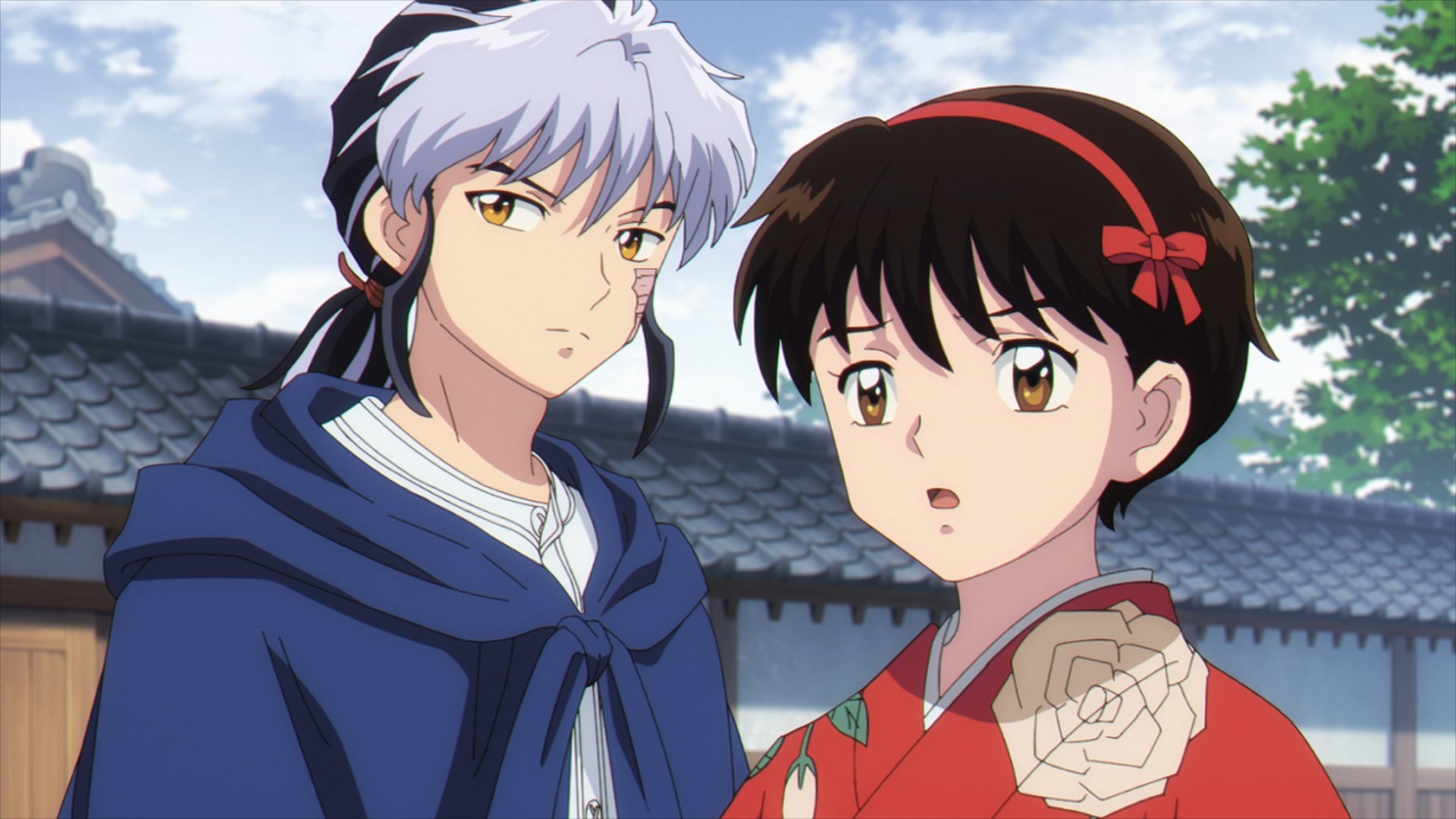
Orphaned, junior high school girl named KIBA Nanoka visits the spot at the entrance of the shopping district where her parents were killed in an automobile accident. She’s drawn into the street, then finds herself in 1923 Japan. However, the people are ghostly. She gets attacked by an ayakashi (youkai) and flees after getting saved by a young man named Mao. Exiting the shopping district, she returns to the present. However, she discovers that at times, she has supernatural abilities of speed, leaping, etc.

Out of curiosity, she returns to the past and meets Mao again. She reveals that during the auto accident, she saw a monster of some sort. Nanoka ends up getting involved in a supernatural mystery cases that Mao takes on. Over time, Nanoka learns that Mao is over 900 years old. He was given powers from Byouki, a supernatural cat. Nanoka also has these powers for some reason.

The Great Kanto Earthquake frees Byouki from where it was sealed. Associates of Mao from 900 years ago come back into Mao’s life. Some ally with him. Some oppose him. As Mao tries to sort out the mystery of why they are still alive, Nanoka tries to sort out her feelings for Mao as she helps him where she can.

Not What I Expected!
When I started MAO, I mostly saw the comparisons to Inuyasha. We have another junior high school female main protagonist. She can travel to the past. She has supernatural powers she can’t explain. As she travels back and forth in time, there are major time skips. This causes her grandfather and Shikigami housekeeper to say Nanoka is in the hospital, as happening in Inuyasha. The male secondary protagonist has a sword and supernatural abilities. As such, I wasn’t sure I’d like it.

However, the initial hook for me was that the past was in 1923 at the start of the series. (When the anime season ends, it is 1924.) There’s very little anime or manga set during this time. (The Story of How My Wife’s Mood Changes the Weather manga springs to mind.) To that end, seeing Japan in the time just before and just after the Great Kanto Earthquake was quite interesting.

Still, a setting does not make a series. Story and characters do. The characters Mao and Nanoka were fine as improved clones of Inuyasha and Kagome. That leaves the writing. THIS is where MAO succeeds. These supernatural cases Mao takes on are interesting in and of themselves. Further, the exploration of the events from 900 years in the past were quite interesting. Through 26 episodes, there wasn’t a whole lot that I called out.

As a result, most of the episodes had me gripped from start to end. Many of the stories have a very dark element to them. The overarching plot thread has a lot of dark, jacked up elements to it as well. That’s something I didn’t expect from a series from Takahashi-sensei. I think this may be the most mature work she’s done, assuming the anime writers are keeping to an accurate adaptation.

The Negatives
I don’t have a lot of negative things to say about MAO. My chief complaint was Nanoka’s modern dress in the 1920s. In the second episode, Tenko mentions Nanoka showing her legs (wearing her junior high school school uniform). After that, nothing. Sorry, but in the 1920s, Nanoka should get tons of stares and whispers to the point she realizes she needs to blend in. Alas, none of that happens.

Sure, there are a couple of stories where Nanoka adopts period dress in aide of the story. But mostly, she’s VERY inappropriately dressed for the time. That annoyed me. I think when she came to Mao’s clinic to help him with whatever, she put on something more period appropriate, even if it is a time period school uniform.

The series does run into the “villain” problem. The series primary antagonist wants Mao dead. The story comes up with an interesting reason that the antagonist cannot go directly for Mao. However, the antagonist has allies and minions. They do come after Mao for a time. Then because “plot”, they all stop. Sure, an antagonist ally might still come after Mao for their own purposes. But since these immortals were all (or mostly all) tasked with killing Mao, then the ones serious about that should never let up the pressure.

There’s also the minor element of it taking 900 years before any of Mao’s associates discover each other is alive. (Well, there was one minor exception to this rule.) Here to, needs of the plot dictate that they all come together again after living lives in Japan for 900 years.

Finally, I hated that the subtitles didn’t use Japanese honorifics. Yet they had no problem using “youkai”, “ayakashi”, and a whole SLEW of Japanese terms in the subtitles (and properly so).

Final Thoughts and Conclusion
In the end, I think MAO qualifies as the most surprising anime I’ve watched in my life. Considering I’ve been seriously watching anime since 2002, it takes a lot to surprise me. It is a shame that the manga’s adaptation also drops the Japanese honorifics while retaining other terms. Otherwise I’d start reading that and reviewing it. As it is, I won’t do that. Instead, I’ll hope for a new season of MAO.





![The Apothecary Diaries S3 Ep 1 [First Impression] – AngryAnimeBitches Anime Blog](https://fivemor.com/wp-content/uploads/2026/10/The-Apothecary-Diaries-S3-Ep-1-img-7-768x432-336x220.png)
