

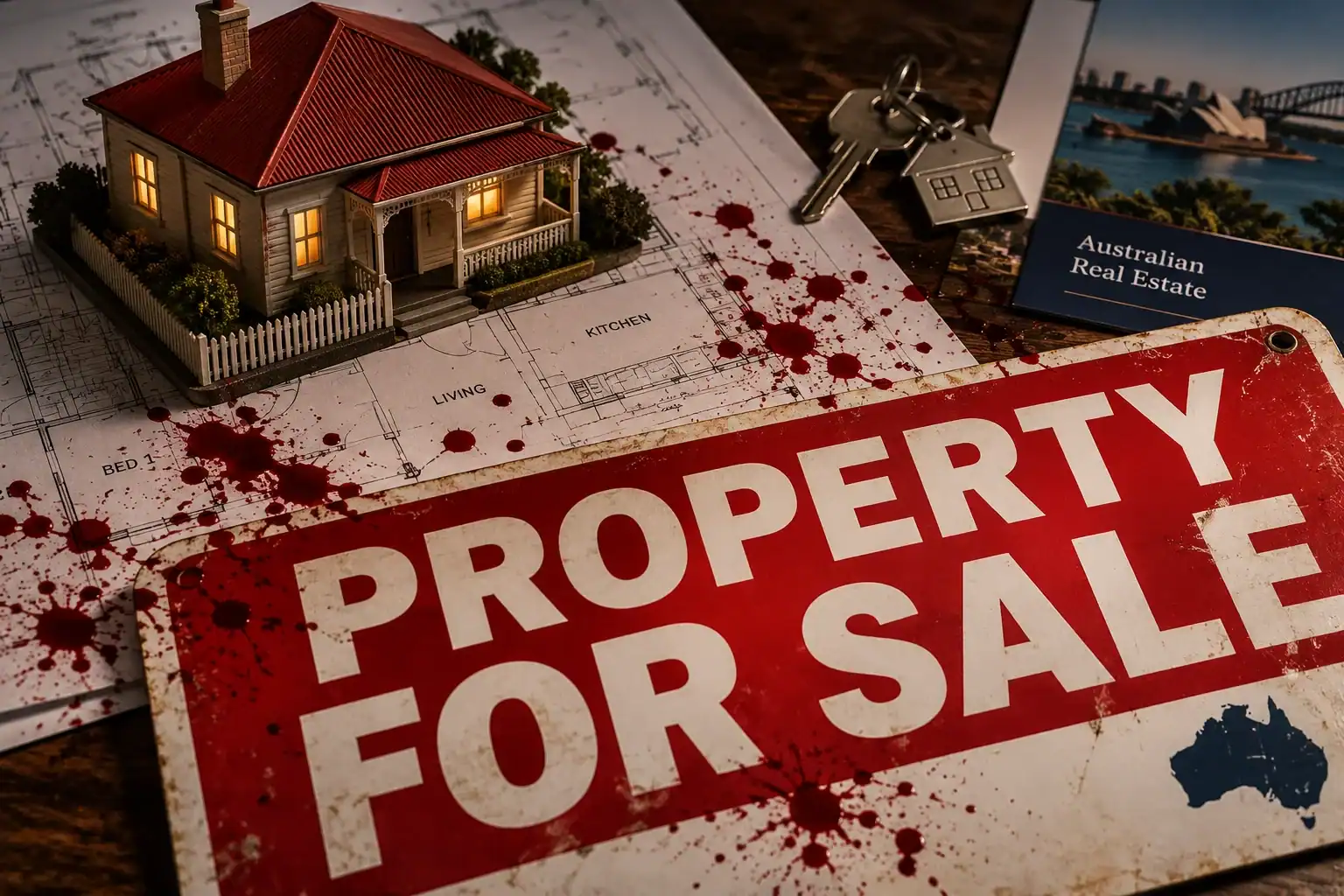
There’s something about a house with a history that makes people pause.
It might be the perfectly ordinary façade. The quiet street. The front door that looks like every other front door on the block. Or perhaps it is the uncomfortable reminder that terrible things can happen in the most familiar places: around a kitchen table, in a lounge room, or behind a door you could walk past without a second thought.
But if you already own your home and have absolutely no plans to spend another Saturday at an open house, why should this matter to you?
Because home is never just bricks, paint colours and whether the laundry has enough storage. It is where family life happens. School bags get dropped by the door. Someone asks what is for dinner for the fourth time. Babies are fed at 2am. Kids grow up. Ordinary life unfolds.
That is why homes connected to serious crimes can stay with us. Not because a building is “cursed”, and not because tragedy should be turned into entertainment, but because homes carry so much emotional weight.
You may never move again—but an adult child, sibling, friend or ageing parent might one day need help choosing a rental or buying a home. You might sell your own place eventually. Or you may simply wonder about the history of a house in your neighbourhood.
These are not silly questions. A property’s past can affect how someone feels about living there, what they are prepared to pay and whether they would feel comfortable selling it later.
Before we go any further: this is not a list of haunted-house rumours, TikTok theories or unverified local gossip. Every case below resulted in a murder conviction or guilty plea, and the information has been drawn from reputable reporting and court-confirmed outcomes.
We are also naming suburbs or general locations only—not full residential addresses where other people may now live.
Content warning: This article discusses murder and violence. Details have been kept non-graphic and the focus is on verified outcomes, property history and the real people and communities affected.
1. The North Ryde family home — the Sef Gonzales case
In July 2001, Teddy Gonzales, Mary Gonzales and their daughter Clodine were killed in their North Ryde family home in Sydney.
Their son, Sef Gonzales, was convicted in 2004 of all three murders and sentenced to three life terms. His appeal against the convictions was later dismissed.
Years later, the home became part of a broader conversation about what prospective buyers should be told about a property’s past. ABC News reported that people who bought the property said they had not known about its history, bringing renewed attention to the difficult issue of “stigmatised” homes and material facts in property sales.
For families, it is a reminder that a home’s history may not appear in glossy real-estate photos or a listing description. If something matters to you, it is worth asking directly rather than assuming it will be raised.
Sources: ABC News on Gonzales’ conviction, his sentence, and ABC News’ explainer on stigmatised properties.
2. The Willagee home — the Moorhouse murders
In 1986, David and Catherine Birnie committed a series of murders in Perth. The couple were convicted over the murders of four women, with several crimes occurring at their Willagee home—leading to the case becoming widely known as the “Moorhouse murders”.
The crimes were horrific, and the women murdered were not characters in a true-crime plot. They were daughters, friends and members of their community.
The property later changed hands. That can feel strange to think about, but it is also a reminder that houses themselves continue on. New owners may move in years later and create completely different lives within the same walls.
For some people, that history would make the property impossible to consider. For others, especially in an expensive housing market, it might be a difficult but practical decision. Neither response is wrong—but everyone deserves the chance to decide with clear information.
Sources: ABC News on Catherine Birnie’s parole bid and Domain’s report on the property’s later sale.
3. The Aberdeen house — Katherine Knight and John Price
In February 2000, John Price was murdered at his home in Aberdeen, in New South Wales’ Upper Hunter region.
His former partner, Katherine Knight, pleaded guilty to murder and was sentenced to life imprisonment without parole. ABC News reported that she was the first Australian woman to receive that sentence.
This is one of Australia’s most distressing criminal cases, and there is no need to repeat its graphic details here. What matters is that John Price was a real person, loved by family and friends, and his death left a lasting impact on the people who knew him.
Stories like this can be uncomfortable because they take place in the kind of home environment most of us recognise. They are a reminder to approach true crime with empathy, not just curiosity.
Sources: ABC News’ 20-year retrospective, ABC Newcastle’s case report, and ABC News on Knight’s unsuccessful appeal.
4. The Rozelle terrace — the Frisoli brothers’ murder
In 2009, brothers Albert and Mario Frisoli were found dead in a terrace home in Rozelle, Sydney.
Their former business associate, Giuseppe Di Cianni, was convicted of their murders. When the property was later sold, it again raised the question many Australians quietly wonder about: should a home’s violent history be disclosed before someone signs on the dotted line?
The answer is not always simple. Property-disclosure rules differ between states and territories, and what must be disclosed can depend on the particular facts. However, real-estate agents must not mislead or create a false impression for consumers, and buyers who are concerned about a property’s history should ask questions directly and seek independent legal advice before committing.
That may sound a little unromantic when you are choosing somewhere to raise a family—but so is finding out something important after settlement.
Sources: Domain’s report on the home’s sale and case background, ABC News’ explainer on stigmatised properties, and the NSW Government’s guidance for property agents on misrepresentation.
5. The Wedderburn rural property — the Lockhart and Holmes murders
In 2014, Peter Lockhart, Mary Lockhart and Mary’s son, Greg Holmes, were killed on adjoining rural properties near Wedderburn in central Victoria.
Their neighbour, Ian Jamieson, pleaded guilty to the murders and was sentenced to life imprisonment in 2016.
This case is a sobering reminder that the phrase “murder house” can make an awful tragedy sound like a spooky novelty. It was not. These were neighbours, families and a small community dealing with an enormous loss.
It is also why we should be careful with the way we talk about homes connected to crime. There may be a natural curiosity about a property’s past, but the people affected by the crime deserve more than a dramatic headline or a viral video.
Sources: ABC News on Jamieson’s guilty plea and his life sentence.

Why should mums care, really?
Because whether we realise it or not, we teach our children how to think about homes, safety, community and other people’s stories.
We are raising kids in a time when a 20-second TikTok can label a stranger’s home “haunted” before anyone has checked a reliable source. A local Facebook post can turn a half-remembered rumour into something that appears factual. And current owners or tenants can become the subject of gossip because of something they had nothing to do with.
A responsible conversation about homes connected to serious crime means asking better questions:
- Is the information from a credible news organisation, court record or government source?
- Is the case resolved, or are allegations being repeated as fact?
- Are people sharing a current residential address unnecessarily?
- Does the story acknowledge the victims and their families?
- Would we want our own home discussed this way online?
There is a difference between being curious and being careless. One can lead to informed decisions; the other can cause real harm.
So… would you buy one?
Honestly, people land in very different places.
Some buyers see a property as bricks, mortar and an opportunity to live in a suburb they otherwise could not afford. Others may know they could never sleep comfortably knowing what happened there. Neither reaction is silly.
If you are ever house-hunting and a property’s past matters to you, ask the agent early. Put important questions in writing. Research reputable local-news archives. Speak with a conveyancer or solicitor before signing a contract.
And if you never move? The takeaway still matters.
Homes hold stories. The best thing we can do when we tell the darkest ones is to do it carefully, accurately and with respect for the people whose lives were changed forever.


