

Hear about travel to Mongolia as the Amateur Traveler talks to returning guest Randy Rohrer about his trip to this vast, sparsely populated country for the Naadam Festival, the ancient Mongol capital of Karakorum, and the landscapes of the Gobi Desert.
Randy says Mongolia appeals to travelers looking for somewhere exotic and still relatively off the beaten path. It combines the history of Genghis Khan and the Mongol Empire with a living nomadic herder culture and surprisingly varied landscapes, from mountains in the north and west to the Gobi Desert in the south.
Randy traveled for a little under two weeks on an organized trip with Wilderness Travel, working locally with Mongolia Quest. His itinerary concentrated on central and southern Mongolia, beginning in Ulaanbaatar, traveling overland to Karakorum and the Gobi, and returning to the capital by air.
Why Visit Mongolia?
Come to Mongolia for huge landscapes, a living nomadic culture, Mongol Empire history, Buddhist traditions, wildlife, dinosaur country, and one of Asia’s great national festivals.
Randy found Mongolia increasingly popular but still far from overrun with tourists, making it an especially appealing destination for travelers seeking a genuine adventure beyond the standard tourist circuit.
A One-Week Mongolia Itinerary Based on Randy’s Trip
Day 1 – Ulaanbaatar
Begin in Ulaanbaatar, Mongolia’s capital and the arrival point for most international travelers.
Randy recommends staying near Sükhbaatar Square, which puts many of the city’s major attractions within easy reach.
Visit:
- Sükhbaatar Square
- Gandan Monastery
- Chinggis Khan Museum
- Mongolia’s history museums
- Zaisan Memorial for a panoramic view over the city
Randy particularly recommends the Chinggis Khan Museum, a modern seven-story museum devoted to Mongolian history, culture, art, and the Mongol Empire. If he had time for only one museum in the city, this would be his choice.
Allow extra time for transportation. Although the international airport is roughly an hour outside the city under ideal conditions, traffic meant Randy’s group needed two to three hours to reach their hotel.
Day 2 – Naadam Festival
If possible, schedule the trip for the Naadam Festival, generally held in early to mid-July.
Naadam revolves around Mongolia’s traditional sports:
- Wrestling
- Archery
- Horse racing
Randy watched the ceremonial banners carried from Sükhbaatar Square to the stadium before attending an elaborate opening ceremony with music, dancing, horsemen, camels, yaks, gymnastics, fireworks, and traditional costumes.
The ceremony reminded him of the opening of the Olympic Games.
Afterward, watch traditional Mongolian wrestling and archery competitions.
Day 3 – Naadam Horse Racing and Khustai National Park
Leave Ulaanbaatar and stop at the countryside portion of Naadam to see the horse races.
Unlike racetrack events, these are long-distance cross-country races of approximately 20 to 30 kilometers. Randy describes the atmosphere as almost like Woodstock, with enormous crowds spread across the grasslands, temporary gers selling food, music and cultural performances, and television screens showing the wrestling competition back in Ulaanbaatar.
Continue west to Khustai National Park.
The park is one of the best places to see Przewalski’s horses, the wild horses that became extinct in the wild before being reintroduced to Mongolia. Randy’s group initially spotted them in the distance but later encountered horses running only about 40 feet from the road.
Spend the night in a ger camp.
Day 4 – Karakorum
Continue across the Mongolian steppe to Karakorum, the ancient capital associated with the Mongol Empire.
Much of the medieval city has disappeared, but the area contains archaeological remains and an important monastery complex.
Visit the Karakorum Museum, which Randy recommends for its history of the ancient city and detailed models showing what Karakorum would have looked like during the Mongol period.
This portion of the trip also reveals one of the defining aspects of traveling in Mongolia: enormous distances and vast stretches of landscape with little visible development.
Spend another night in a ger camp.
Day 5 – Fly or Drive to the South Gobi – Yol Valley
Randy’s original itinerary continued overland, with an overnight stop near a remote monastery, before reaching the South Gobi. With only a week, saving time with a domestic flight or a streamlined transfer made sense.
Base yourself for several nights at a Gobi ger camp. Randy stayed three nights at the Gobi Mirage Ger Camp, using it as a base for day trips. His accommodations were more like glamping than rustic camping, with electricity and private bathrooms.
Visit Yol Valley.
The landscape is surprisingly green compared with the surrounding desert. Walk through a narrow valley following a stream toward a slot canyon. Randy describes it as an easy one- to two-hour walk and one of the most striking contrasts of the trip.
Day 6 – Gobi Sand Dunes and Bactrian Camels
Spend another day exploring the South Gobi.
Much of the Gobi is not made up of towering sand dunes. Instead, large areas are dry, rocky scrubland.
There are, however, dune fields where travelers can climb the sand for views and photographs.
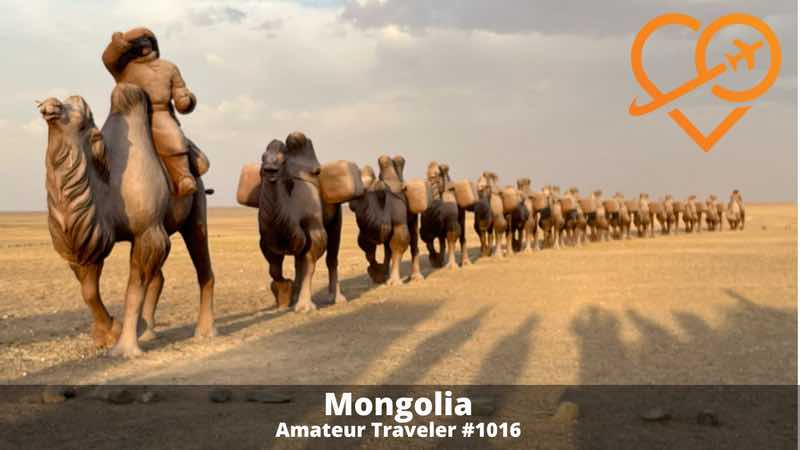
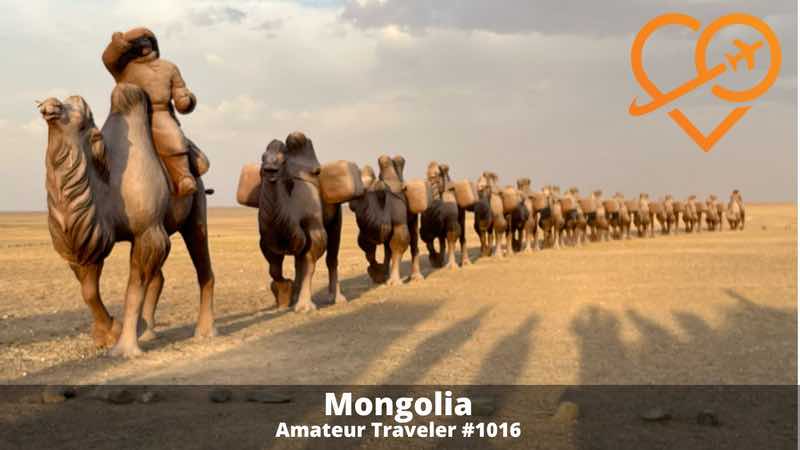
Visitors can also ride Bactrian camels, the distinctive two-humped camels of Central Asia. Randy’s group took approximately a 90-minute camel excursion from a herder settlement toward the dunes.
Visits with local herders can become some of the most memorable experiences. Randy’s group was invited to watch a family milk goats and was offered fresh goat milk and goat cheese.
Hospitality was a recurring theme throughout the trip. On another occasion, Randy’s group unexpectedly joined a large family reunion and was welcomed with snacks and mare’s milk.
Day 7 – Flaming Cliffs and Return to Ulaanbaatar
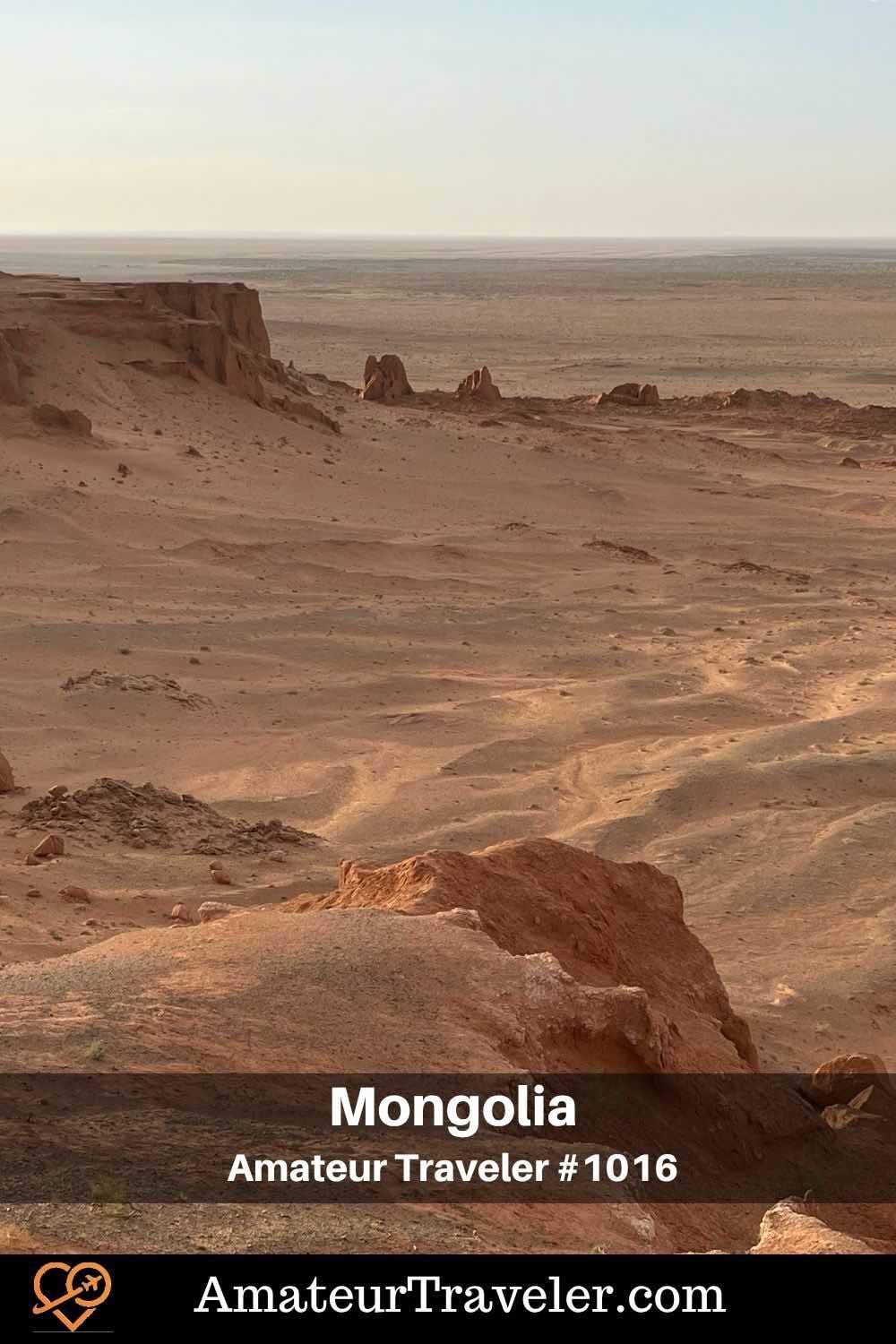
Finish the Gobi portion of the trip at the Flaming Cliffs, famous for major dinosaur discoveries.
American explorer Roy Chapman Andrews led expeditions here in the 1920s, and they discovered dinosaur eggs in the region. The area is also associated with some of Mongolia’s most famous dinosaur fossils.
Visit the visitor center before walking among the red sandstone cliffs.
Randy’s group arrived near sunset, when the cliffs were especially dramatic. He compares the scenery with a smaller version of parts of Bryce Canyon or Canyonlands in the American Southwest.
Travel to Dalanzadgad, often abbreviated as DZ, and visit the Gobi Museum of Natural History, a modern museum focused heavily on dinosaur fossils.
Fly approximately one hour back to Ulaanbaatar rather than retracing the long overland route.
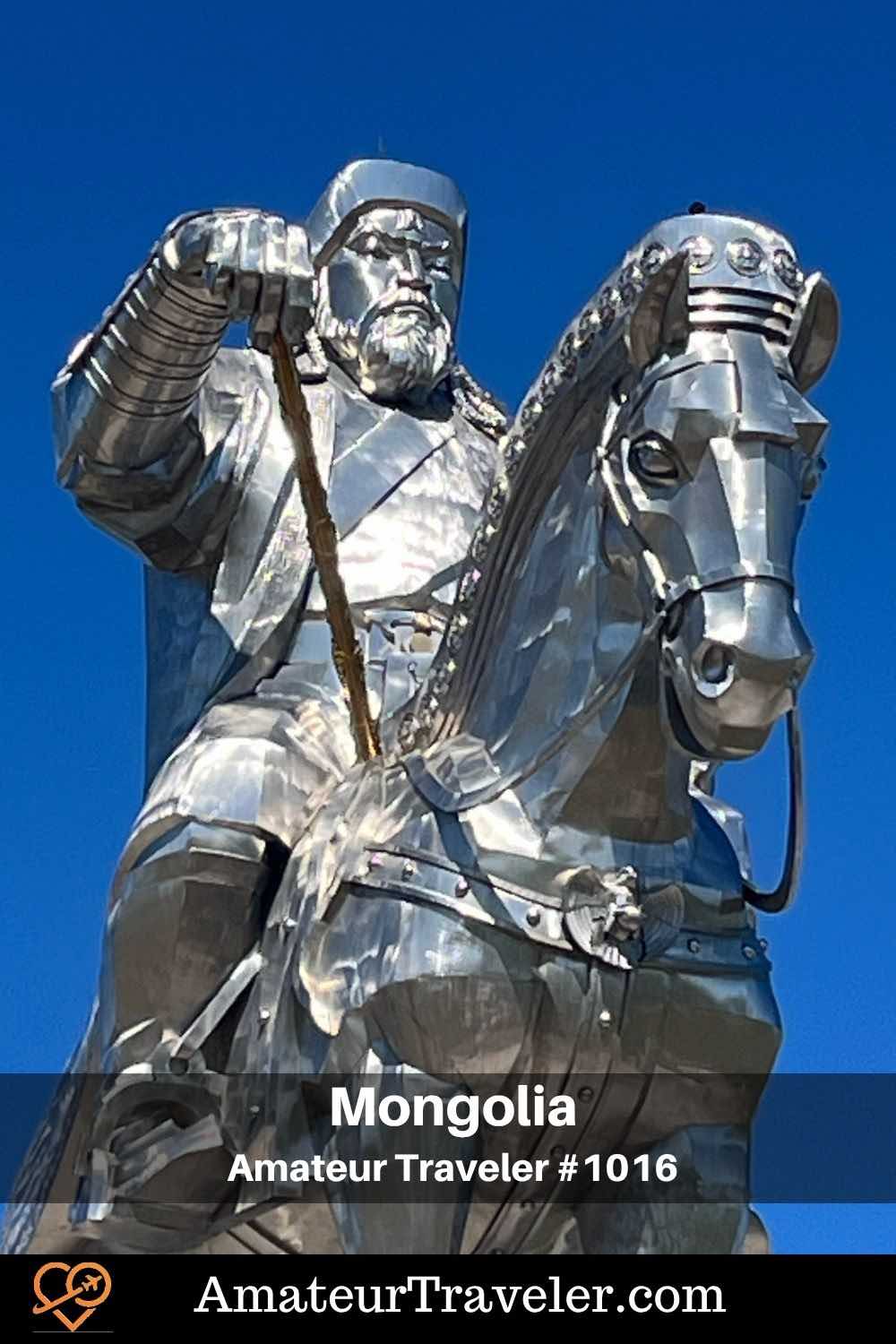
If flight timing allows, add the enormous Chinggis Khan Equestrian Statue outside Ulaanbaatar. The 40-meter-high statue includes a museum and a viewing platform reached through the horse’s interior.
If You Have More Than a Week
Randy’s complete trip took 13 days, allowing more time for Naadam and for the long overland journey between Ulaanbaatar, Karakorum, and the Gobi.
Possible extensions include:
Lake Khövsgöl in northern Mongolia near the Russian border.
Western Mongolia and the Altai Mountains, where travelers can visit Mongolia’s famous eagle-hunting communities.
Getting Around Mongolia
Outside Ulaanbaatar, Randy traveled primarily in Toyota Land Cruisers.
Many countryside routes were effectively off-road, with drivers choosing tracks across the open landscape rather than following conventional highways. Randy does not recommend assuming this is a trip you would simply drive independently.
Because Mongolia is enormous and attractions are widely separated, expect several hours of driving on many travel days.
A combination of overland travel and domestic flights makes sense for travelers with limited time.
Staying in Gers
Once Randy left Ulaanbaatar, most nights were spent in gers, Mongolia’s version of the round nomadic dwelling often called a yurt elsewhere in Central Asia.
Ger accommodations range widely.
Randy’s Wilderness Travel trip was toward the comfortable end of the spectrum. Many camps had:
- Electricity
- Beds
- Private bathrooms
- Flush toilets
- Hotel-like amenities
More basic camps may have shared bathrooms and showers.
When to Visit Mongolia
Randy strongly recommends visiting during summer.
Ulaanbaatar experiences extremely cold winters, and snow covers much of the countryside.
He suggests roughly:
June through August, possibly extending into early September.
For the most distinctive cultural experience, try to coordinate a July visit with Naadam.
Food in Mongolia
Randy says the food was perfectly adequate, but cuisine would not be his primary reason for visiting Mongolia.
Traditional food is heavily meat-based, including goat and other livestock raised by Mongolia’s herding communities.
Vegetarians on Randy’s tour were nevertheless accommodated without difficulty, and salads and other alternatives were available.
Travel resourcesAffiliate links
Getting to Mongolia
Despite Mongolia’s remote reputation, Ulaanbaatar has convenient air connections with major Asian hubs.
Randy notes direct flights from:
His flight from Seoul to Ulaanbaatar took approximately three hours.
[tours]
Sponsors

- This month, Amateur Traveler is supported by Smart Travel, a new podcast from Nerd Wallet that helps you travel smarter and spend less.

- Upgrade your wardrobe with high-quality essentials and get free shipping and 365-day returns at Quince.com/TRAVELER.



- NOBL gives you real travel peace of mind — security, design, and convenience all in one. Head to NOBLTravel.com for 46% off your entire order!
subscribe: rss feed | Apple podcasts

right click here to download (mp3)
Show Notes
Mongolia
Ulaanbaatar
Wilderness Travel
Custom-Made Mongolia Tours & Authentic Adventures
Naadam
Sükhbaatar Square
Gandantegchinlen Monastery
Chinggis Khaan National Museum
Mongolian Natural History Museum
Zaisan Monument: Hilltop Memorial With The Ultimate View – Jetset Times
Hustai National Park
Karakorum
Kharakhorum Museum
Ongi Monastery (Ongiin Khiid)
Gobi Gurvansaikhan National Park
Gobi Mirage Lodge
Yol Valley
Khongoryn Els Sand Dunes
Flaming Cliffs (Bayanzag)
Dalanzadgad
Gobi Museum of Nature and History
Gorkhi-Terelj National Park
Equestrian Statue of Genghis Khan
Lake Khövsgöl
Mongolia (July 2026) – Google Photos
Community


![Loneliness, not weakness, is driving women out of medicine [PODCAST]](https://fivemor.com/wp-content/themes/rehub-theme/images/default/noimage_336_220.png)


