
The Sable Quean | Tinted Edges

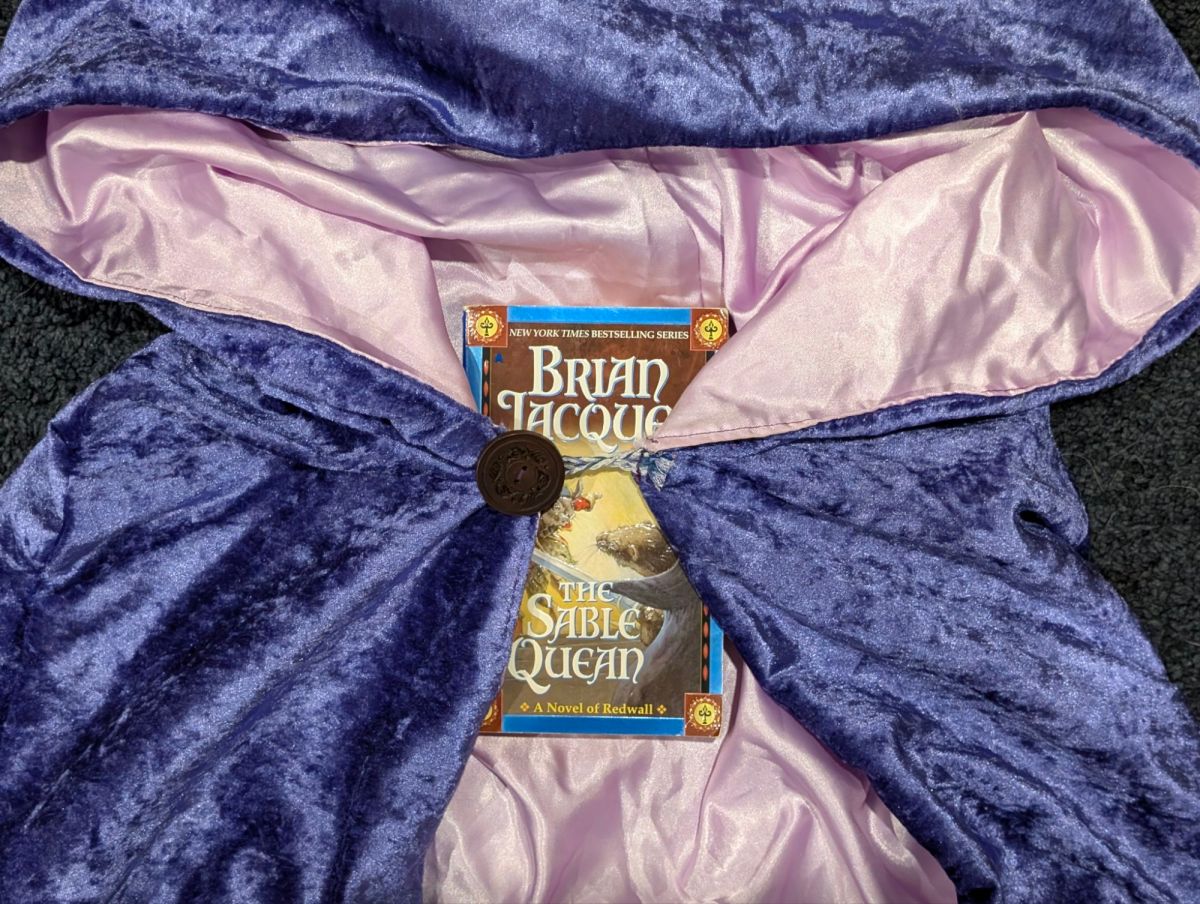
21st book in the “Redwall” series
When I was a kid, I was obsessed with the “Redwall” series. I had collected a large number of the books, especially from secondhand bookshops when visiting my grandparents in the Gold Coast, and was very sad when I had to start my collection again from scratch when they weren’t returned. Now, with my adult money, I’ve been slowly trying to build my collection again with a particular focus on these particular paperback editions with the metallic borders. One of the reading challenges I have been doing this year is to tackle my TBR pile(s) and make a dent in some of the stacks of physical books hanging around. Technically, this one was on one of my shelves as part of the series, but the last published before the author died (there was one more published shortly afterwards, though a new book has been recently announced!) I never got around to reading it.

“The Sable Quean” by Brian Jacques is the 21st book in the “Redwall” animal fantasy series about anthropomorphic European woodland animals who are generally divided into noble creatures (e.g. mice, squirrels, hedgehogs, moles, hares, badgers and otters) and “vermin” (e.g. rats, weasels, stoats and foxes). This book begins at the badger mountain known as Salamandastron where a young hare called Buckler is growing restless and is sent off by the Badger Lord on a quest to Redwall Abbey in nearby Mossflower Wood. However, along the way to the peaceful community, it becomes clear that the woods are overrun with a nefarious group of vermin who call themselves the Ravagers, led by ruthless sables. It soon becomes clear that a plot is on foot to kidnap young animals (including very young ones called Dibbuns) in an attempt to gain access to Redwall and the perceived riches within. Buckler and his friends new and old must work together to save the young ones and Redwall Abbey from peril.
For fans of the Redwall universe, this is a classic example of the series with all the hallmarks of Jacques’ stories: familiar landmarks, good vs. evil, naughty Dibbuns, feasting, singing, sword fights, gambits and riddles. All of the beloved groups of woodland creatures mix together like the Guosim shrews, the Salanmandastron hares and the Redwall Abbey residents. If you are looking for a fresh take on familiar themes, then this story is extremely true to the vibe of the series as a whole.
However, I have to say, it was not my favourite. My favourite books in the “Redwall” series are ones that deal with either interesting questions of morality and nature vs. nurture, like “The Outcast of Redwall”, present well-crafted mysteries like “Marlfox” or weave in more modern social issues like family violence in “The Taggurung” or disability in “Loamhedge”. This book just didn’t really have any additional layers or interesting social commentary that my favourites in the series does. It was really a stock-standard “Redwall” story, revisiting well-trodden paths with perhaps slightly less engaging characters. While this book had the same jocular tone as the others in the series, I also noticed a bit of a mean streak that hadn’t stood out to me previously. I’m not sure if it is because I’m older or it wasn’t as apparent in earlier books, but even the so-called “noble” creatures were often dispropotionately cruel to “vermin”.
A fun and spirited installation of the renowned “Redwall” series, though without the same impact as some of my favourites.