Many Medicare Part D Stand-Alone Drug Plan Enrollees Will See Modest Premium Increases for 2027, But Others Could Pay Much More If They Don’t Switch Plans

The Centers for Medicare & Medicaid Services (CMS) has just released information about Medicare Part D plans for 2027, including plan availability and premiums for the coming year. The agency emphasized stability in the Part D prescription drug plan (PDP) marketplace for 2027 (as it did for 2026) and estimated only a modest $1 increase in the average monthly PDP premium from $35 to $36. KFF analysis of PDP availability and premiums for 2027 shows a mixed picture, with modest premium increases for many Part D enrollees for their current plan but steeper increases for others, and a reduction in the number of PDP options for the fourth year in a row. Key takeaways include:
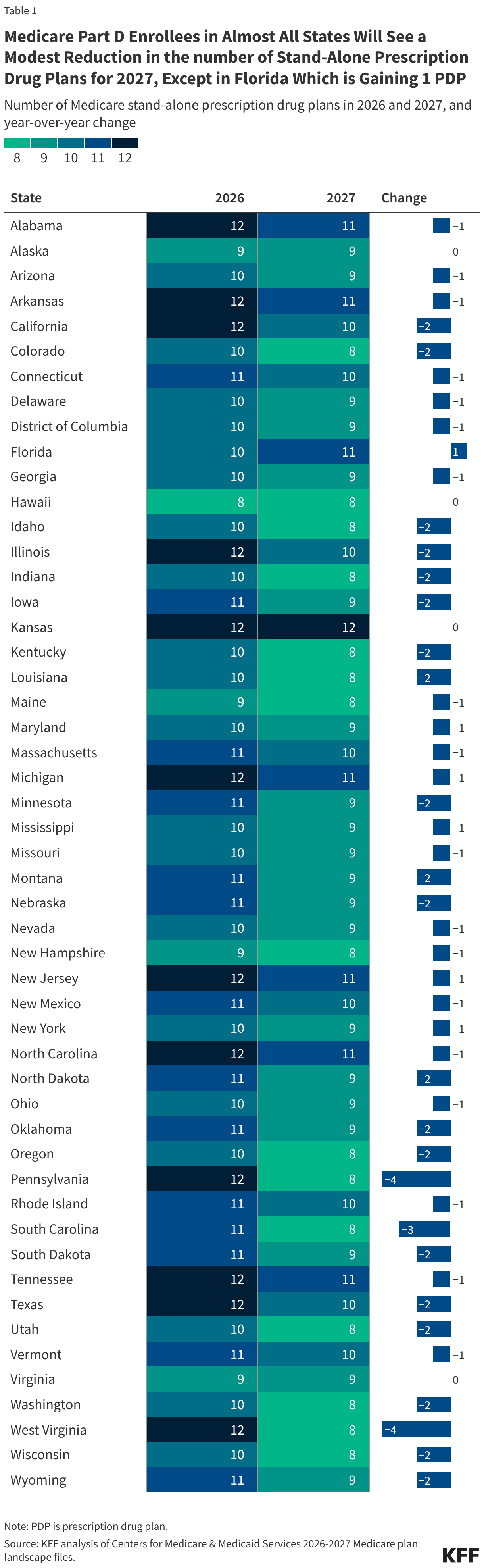
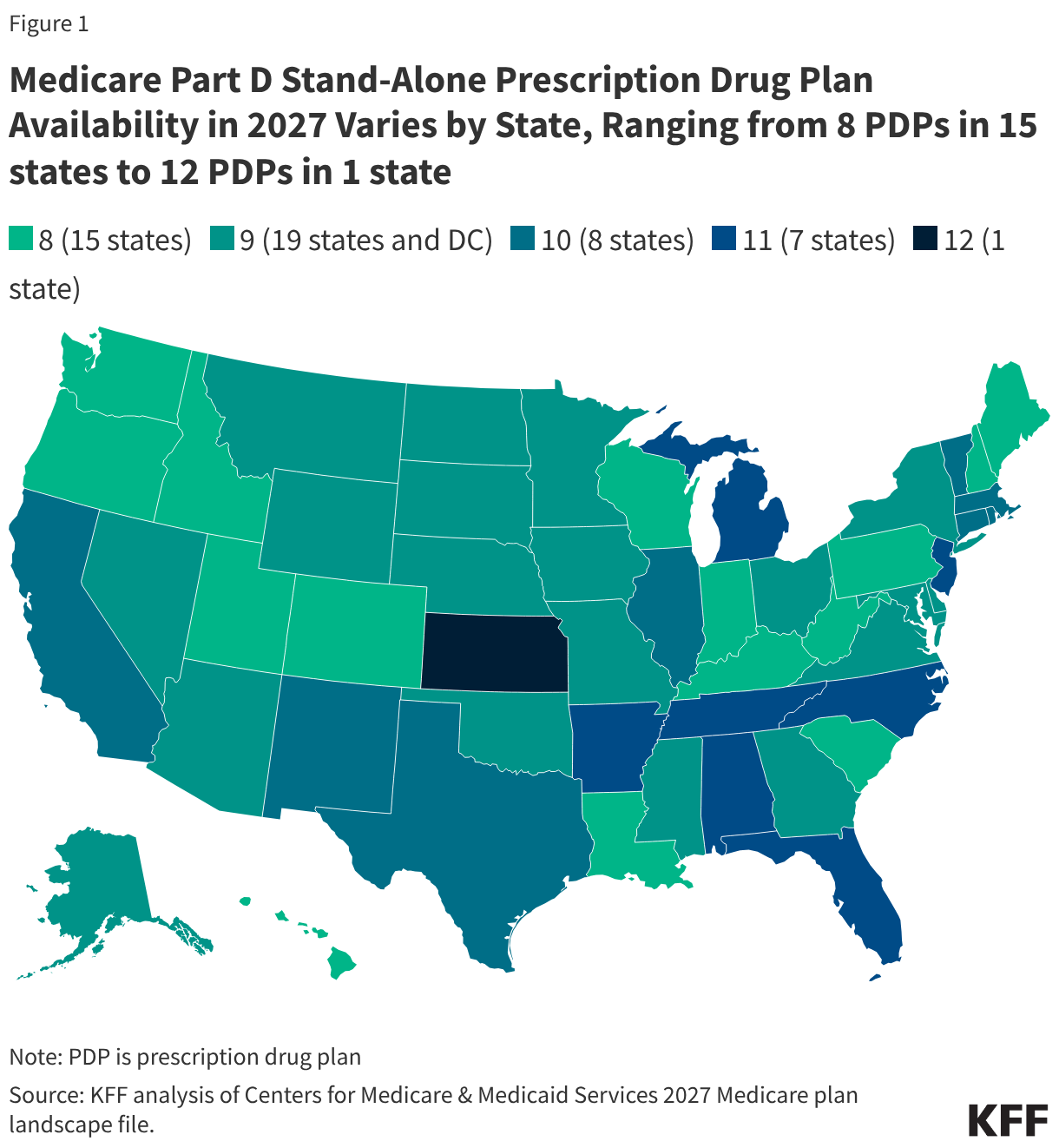
- The number of stand-alone PDPs available to the average beneficiary will fall for the fourth year in a row, from 11 in 2026 to 9 in 2027. PDP availability in 2027 varies by state, ranging from 8 PDPs in 15 states to 12 PDPs in 1 state, the same range as in 2026 but with most states having 8 or 9 PDPs rather than 10 or more.
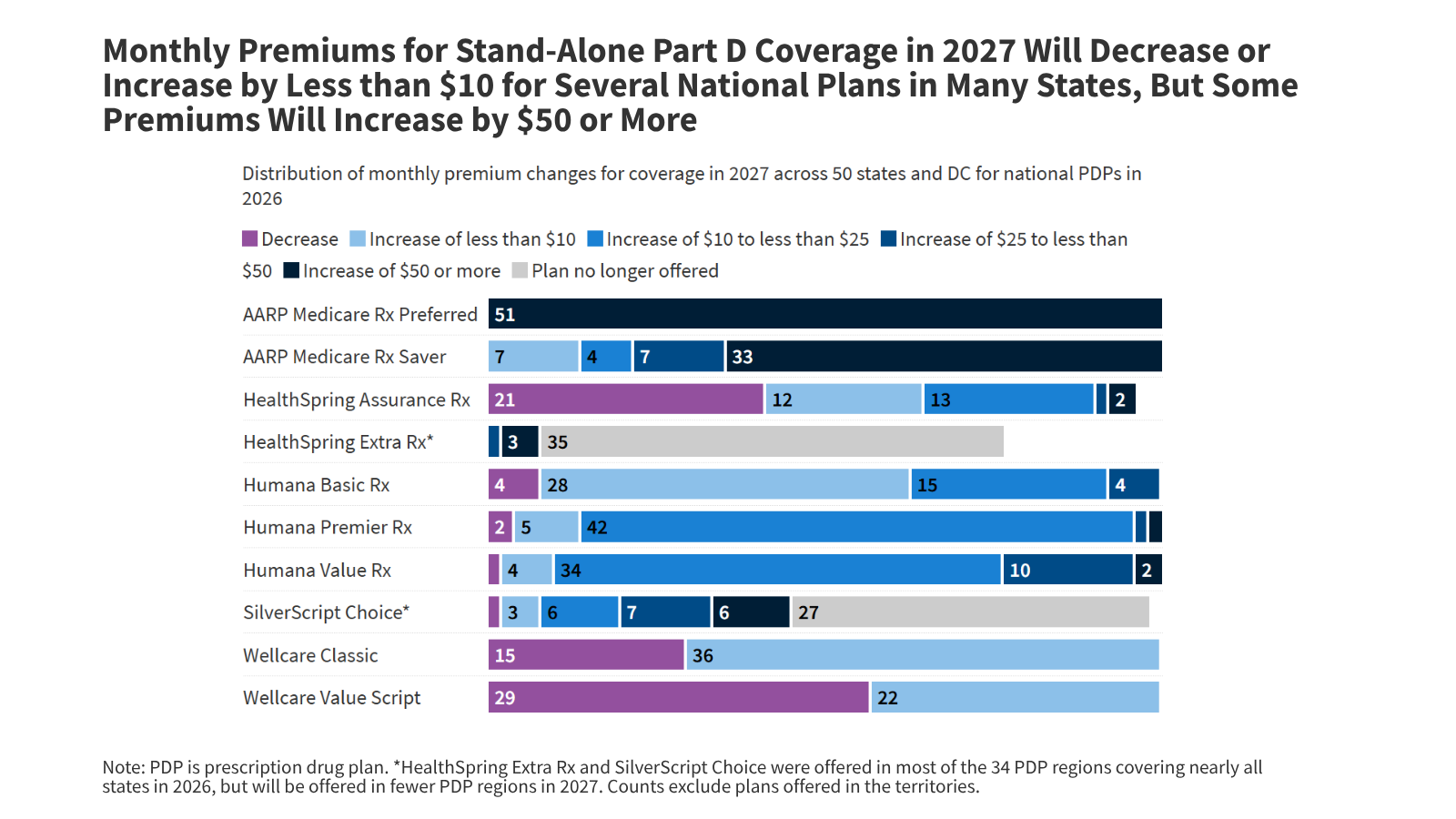
- Many PDP enrollees will see premium reductions or only modestly higher premiums in 2027 if they keep their current plan, but others will face substantially higher premiums. Enrollees in six of the eight PDPs that will continue to be offered on a national basis in 2027 will see premium reductions in some states if they keep their current plan, but enrollees in many other states will see higher premiums for these same plans if they don’t switch. Centene continues to offer the lowest-premium PDPs in 2027, with premiums for both Wellcare PDPs under $10 per month in many states, while enrollees in United’s AARP-branded PDPs will face substantially higher premiums and monthly increases of $50 or more in many states if they keep their current plan.
- There will be no zero premium PDPs available for Part D enrollees who do not receive low-income subsidies (LIS) in 2027. All 4 million PDP enrollees who paid no monthly premium in 2026 will face higher premiums in 2027 whether they keep their current plan or switch to a new PDP.
- With 56% of all Part D enrollees in Medicare Advantage drug plans in 2026, a majority of Part D enrollees will not be affected by PDP premium changes and may not face premium increases of any magnitude. Medicare Advantage plans can use rebate dollars from the federal government to reduce premiums for prescription drug coverage, funds that are not available to plan sponsors for PDPs.
- Ending the Part D Premium Stabilization Demonstration did not result in substantially higher across-the-board PDP premiums but still likely affected premium levels for 2027. The disappearance of zero premium PDPs for Part D enrollees without low-income subsidies and monthly premium increases greater than $50 for some PDP enrollees if they keep their current plan are possibly related to the termination of extra subsidies that were provided to PDP plan sponsors under the demonstration.
The number of stand-alone PDPs available to the average beneficiary will fall for the fourth year in a row, from 11 in 2026 to 9 in 2027, while the total number of stand-alone drug plans available will fall from 360 plans nationwide offered by 17 parent organization in 2026 to 316 plans offered by 15 parent organizations in 2027. The reduction in PDP offerings is largely due to two plan sponsors scaling back: Health Care Service Corporation is withdrawing the HealthSpring Extra Rx PDP from 22 regions, and CVS Health is withdrawing the Silverscript Choice PDP from 13 regions. Humana remains the only insurer offering three PDPs in all 34 PDP regions. PDP availability in 2027 varies by state, ranging from 8 PDPs in 15 states to 12 PDPs in 1 state (Figure 1) – the same range as in 2026 but with most states having 8 or 9 PDPs rather than 10 or more. Medicare Part D enrollees in almost all states will see a modest reduction in the number of PDPs for 2027, except Florida which is gaining 1 PDP and no change in 4 other states (Table 1).
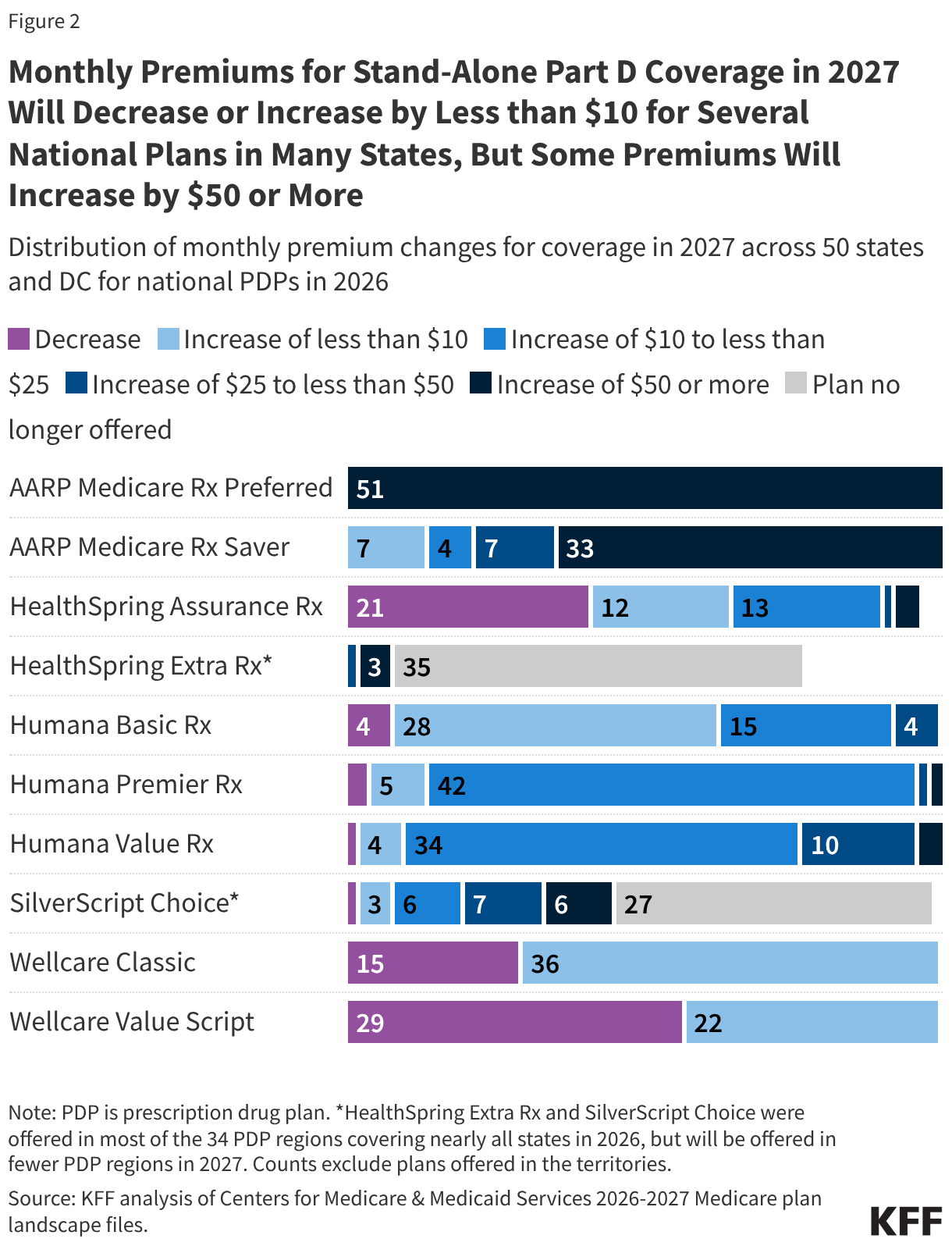
Many PDP enrollees will see premium reductions or only modestly higher premiums in 2027 if they keep their current plan, but others will pay substantially higher premiums. Enrollees in six of the eight PDPs that will continue to be offered on a national basis in 2027 will see premium reductions in some states if they keep their current plan, but enrollees in many other states will see higher premiums for these same plans if they don’t switch (Figure 2).
Other takeaways from an initial analysis of 2027 PDP premiums and changes from 2026 include:
- There will be no $0 premium PDPs available for Part D enrollees who do not receive low-income subsidies (LIS) in 2027. According to KFF analysis, 28% of PDP enrollees without LIS, or 4 million PDP enrollees, paid no monthly premium in 2026. All these enrollees will face higher premiums in 2027 whether they keep their current plan or switch to a new PDP. This includes:
- Humana Basic Rx PDP enrollees in 28 states, facing premium increases of $6.30 to $30.60 per month if they keep this plan;
- Wellcare Value Script and Wellcare Classic enrollees in 16 states, facing monthly increases of $5.30 and $7.30 respectively;
- HealthSpring Assurance Rx enrollees in 11 states, facing monthly increases of $9.30 to $14.70;
- Humana Value Rx enrollees in 5 states, facing monthly increases of $17.20 to $22.30; and
- AARP Medicare Rx Saver enrollees in 3 states, facing a monthly increase of $10.30.
- Centene continues to offer the lowest premium PDPs, with 2027 monthly premiums of $5.30 for Wellcare Value Script in 45 states and $7.30 for Wellcare Classic in 33 states. For the 5.9 million non-LIS enrollees in Wellcare Value Script in 2026, those in 29 states will see premium reductions in 2027 ranging from less than $1 to $17.50 if they keep their current plan, while those in another 22 states will see premium increases in 2027 ranging from less than $1 to $5.30.
- Enrollees in United’s AARP-branded PDPs will face substantially higher premiums in many states if they keep their current plan, with monthly premium increases of $50 or more in all 50 states and DC for AARP Medicare Rx Preferred (including 37 states with premium increases greater than $75 and 4 states with premium increases of more than $100) and increases of $50 or more in 33 states for AARP Medicare Rx Saver. Together, these plans enroll more than 2 million non-LIS enrollees in 2026. Switching to a less expensive PDP is an option in all areas, but KFF analysis shows that many enrollees don’t compare plans or switch during open enrollment.
With 56% of all Part D enrollees in Medicare Advantage drug plans in 2026, a majority of Part D enrollees will not be affected by PDP premium changes and may not face premium increases of any magnitude. According to CMS, the average Medicare Advantage drug plan premium for 2027 will continue to be considerably lower than the average monthly PDP premium, and it’s likely that most MA-PD enrollees will be in plans charging zero premium in 2027, as in 2026 and previous years. This is because Medicare Advantage plans can use rebate dollars from the federal government to reduce premiums for prescription drug coverage, funds that are not available to plan sponsors for PDPs.
Ending the Part D Premium Stabilization Demonstration did not result in substantially higher across-the-board PDP premiums but still likely affected premium levels for 2027. CMS’s decision to terminate the Part D Premium Stabilization Demonstration for 2027, rather than continue it for a third year as originally planned when the demonstration was announced, seemed to point in the direction of higher premiums for PDP coverage in 2027. The demonstration provided extra subsidies to PDP plan sponsors, and by extension PDP enrollees, in two ways – reducing the base beneficiary premium, which is used in the calculation of individual plan premiums, and capping the year-over-year increase in the monthly premium. CMS determined that the extra financial support provided to PDP sponsors under the demonstration was no longer needed after 2026, and in fact, across-the-board substantial PDP premium increases for 2027 didn’t materialize. However, the disappearance of zero premium PDPs for Part D enrollees without low-income subsidies is a possible outcome of the termination of the demonstration, and eliminating the cap on the year-over-year increase in the monthly PDP premium has meant that monthly premium increases greater than $50 are possible for some PDP enrollees if they keep their current plan.
Even if the monthly premium for a given Part D drug plan is decreasing or increasing only modestly, premiums are only one feature for beneficiaries to consider when evaluating their Part D coverage. As is commonly advised during open enrollment, Medicare beneficiaries may want to evaluate what other features of their Part D plan might be changing, including what drugs are and aren’t covered on the plan’s formulary, tier placement of covered drugs, deductibles, and cost-sharing requirements. With Part D costs overall on the rise, the tradeoff Part D enrollees might face as their premium increases are kept in check is that their coverage may be getting less generous, which could mean fewer drugs covered, higher cost-sharing requirements, or greater utilization management restrictions – or possibly a combination of all three.