

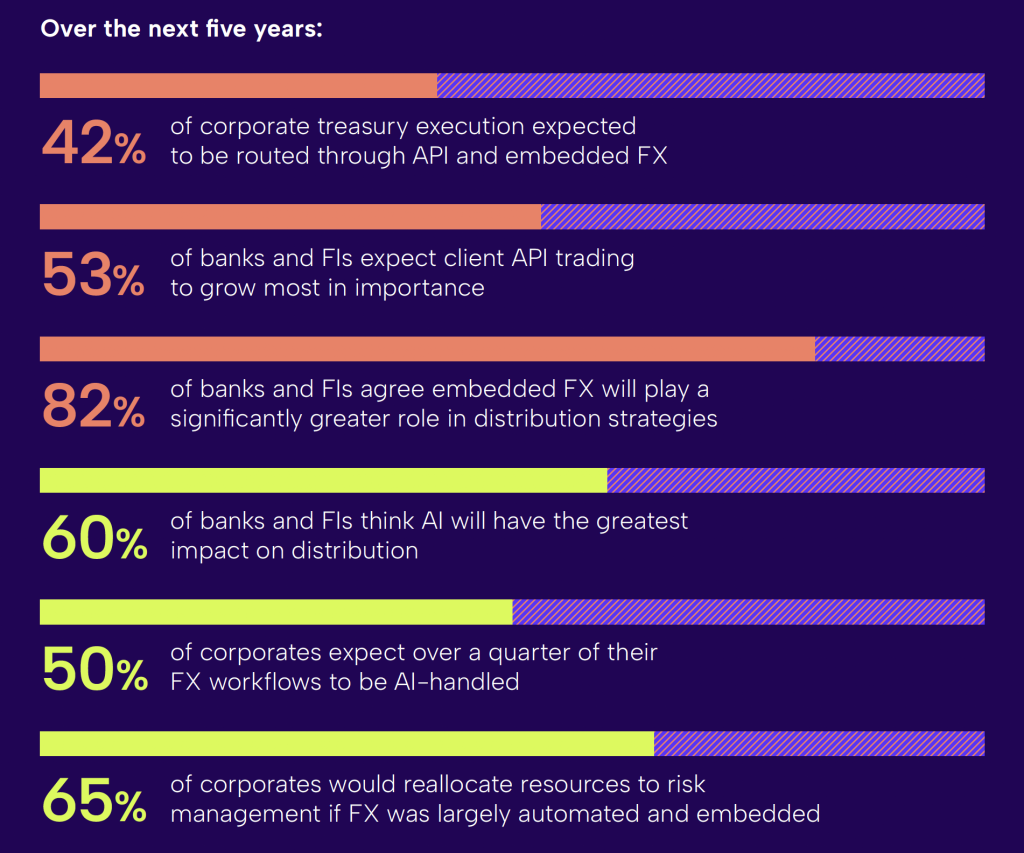
Research conducted by Integral, including survey data from 143 corporate treasuries and financial institutions globally, identified a significant shift toward embedded FX and API execution, as the industry looks to leverage AI and advanced automation.
The rise of embedded FX and API execution
Corporate treasurers expect embedded FX – execution integrated directly into their systems, such as ERPs and TMS solutions, to more than double, from 12% to 26%, as execution moves out of standalone screens and into their core workflows. User-triggered API execution is expected to grow in tandem, from 6% to 16% of treasuries’ trading volume.
The API maturity gap
While both the sell-side and buy-side agree on an automated future, they are misaligned regarding technical readiness. 83% of corporate treasurers report significant barriers to full automation.
For large corporates, the barrier is internal: 56% cite legacy systems and fragmented IT. For mid-market and growth firms, it’s external: 43% point to bank API infrastructure that’s too complex or non-standardized.
AI: high ambition vs. reality gap
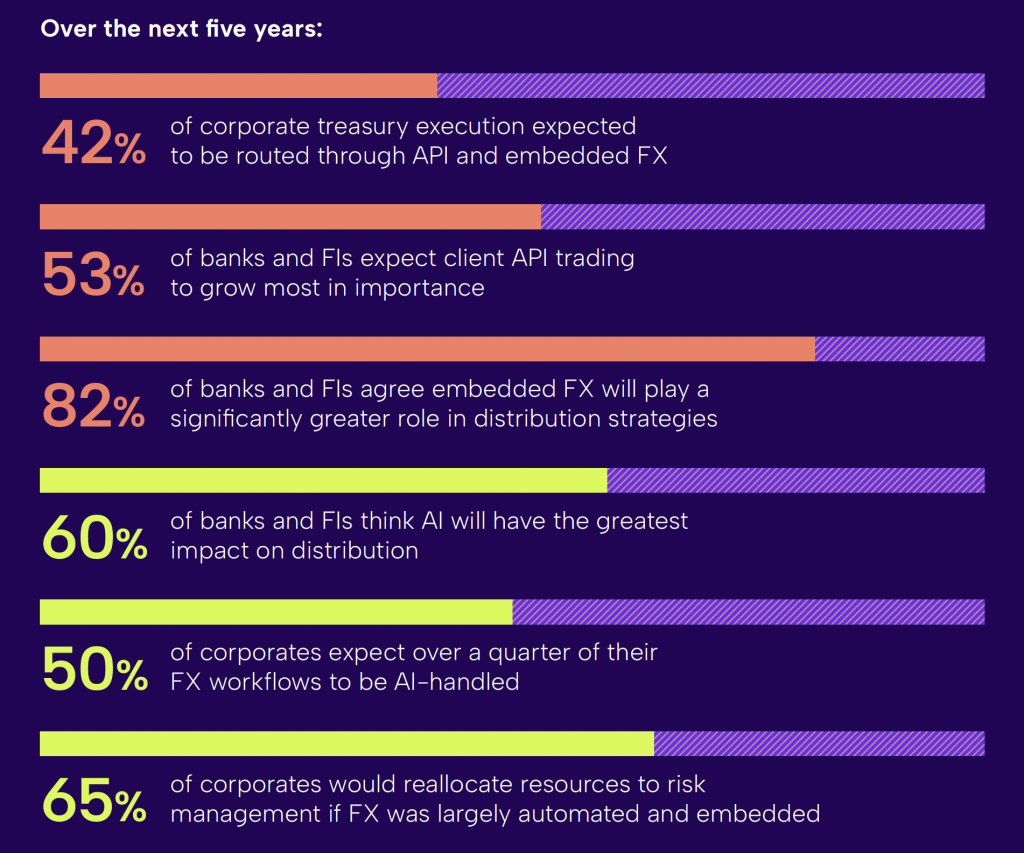
While there is clear intent for AI-enabled workflows, current adoption lags. Corporate treasuries remain in the monitoring or conceptual phase, with only 8% running active pilots. A ‘human-in-the-loop’ model is strongly advocated for by treasurers, particularly for capital-at-risk decisions.
Strategic implications
Nearly two-thirds of corporates say advanced automation and embedded FX execution would let them reprioritise toward risk management strategy. Banks can play a crucial role as treasurers want FX management embedded in core systems, a shift that reshapes not just how treasury teams trade, but how they spend their time. Competitive differentiation will separate market leaders from firms content with merely maintaining legacy infrastructure.
Why this report matters
As market volatility, disrupted trade flows and balance sheet pressure make treasury operations more complex, corporates are looking for more streamlined, automated ways to manage FX.
Readers can access the complete survey findings, exclusive qualitative feedback from sell-side and buy-side participants, and strategic recommendations on how to prepare for the new automated era at this link: www.integral.com/future-of-fx-report/


