

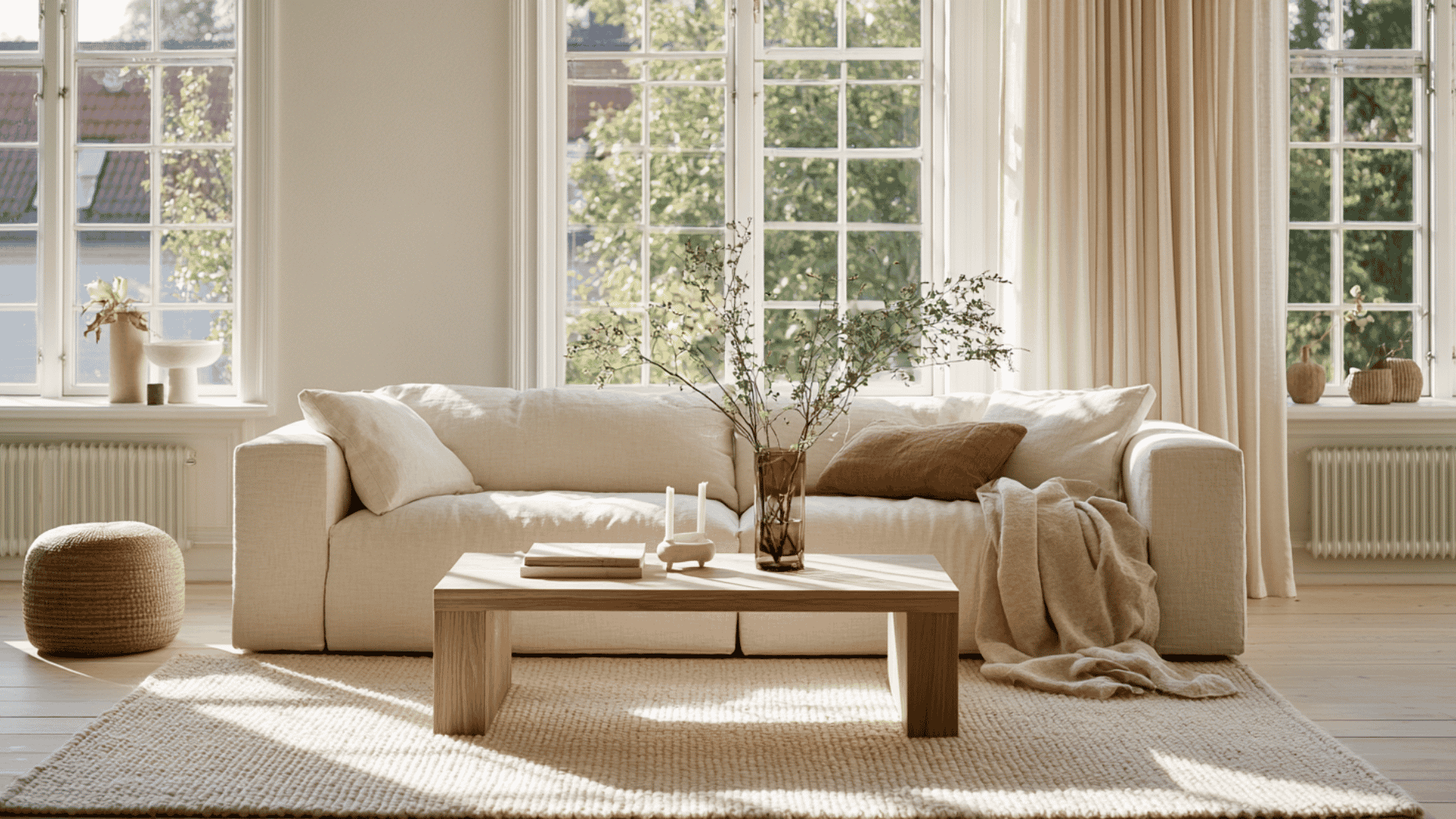
A room can feel calm and welcoming without being filled with decoration. Natural textures, purposeful furniture, and balanced layouts work together to create spaces that feel open without feeling empty.
Growing up, I learned that Scandinavian interiors are not defined only by pale colors, clean lines, or simple furniture, but by the thoughtful connection between light, function, materials, and everyday living.
The style reflects a way of creating homes that feel comfortable, practical, and connected to the people who use them.
This guide explores the origins, defining characteristics, and practical ways to bring Scandinavian interior design into different areas of the home.
What is Scandinavian Interior Design?
Scandinavian interior design is a style that developed in Denmark, Norway, and Sweden, shaped by the region’s climate, culture, and approach to everyday living. Long, dark winters played an important role in shaping these interiors.
I view this style as more than a preference for neutral colors and minimal decoration; its foundation lies in creating practical, comfortable, and thoughtfully arranged homes.
The style follows the principle of combining form and function, where furniture, materials, and layouts serve a clear purpose while maintaining visual balance.
Concepts such as hygge and lagom also influence Scandinavian homes by emphasizing comfort, moderation, and balance.
Light colors, uncluttered layouts, and carefully placed lighting help maximize brightness and create welcoming spaces that support everyday life.
The Core Characteristics of The Scandinavian Aesthetic
Four elements define the Scandinavian aesthetic in almost every space. Together, they create the light, calm feeling the style is known for.
1. Light, Neutral Colors

White, off-white, and soft neutral shades form the foundation of Scandinavian interiors because they help reflect natural light and create a brighter atmosphere.
I noticed how important light can be in shaping the feeling of a room, especially in regions with long, darker seasons. This restrained approach helps Scandinavian spaces feel open, peaceful, and visually balanced.
Soft gray, warm beige, cream, and pale blue add gentle contrast while keeping the overall palette calm. Stronger colors are usually introduced through smaller details such as artwork, cushions, rugs, or accent furniture.
2. Natural Materials

Natural materials bring warmth and texture to Scandinavian interiors while maintaining the style’s simple appearance.
Light woods such as birch, ash, and pine are commonly used for flooring, furniture, shelving, and architectural details, while materials like wool, linen, leather, stone, and woven fibers add softness.
I often approach Scandinavian design through its connection with nature rather than only its appearance. This balance helps interiors feel grounded, inviting, and connected to their surroundings.
These materials create a sense of comfort and authenticity, allowing the texture and quality of each element to remain visible without relying on excessive decoration.
3. Functional, Uncluttered Furniture

Scandinavian furniture reflects the idea that every piece should serve a practical purpose while maintaining a simple and balanced appearance.
I see this approach as a reflection of how Scandinavian homes prioritize comfort, usability, and thoughtful choices rather than filling rooms with unnecessary items.
Sofas, tables, chairs, and cabinets often feature clean lines, gentle curves, and slim or tapered legs that keep spaces feeling open.
This appreciation for natural materials and visible textures also connects with wabi-sabi interior design, which focuses on simplicity, natural elements, and the beauty of imperfection.
Storage solutions such as built-in cabinets, practical shelving, and furniture with hidden compartments help maintain an organized environment without detracting from the room’s overall design.
4. Cozy Textures and Layered Light

Scandinavian interiors balance simplicity with warmth through carefully chosen textures and lighting. I often see these details as what makes Scandinavian rooms feel lived-in rather than overly minimal.
A single light source rarely creates the inviting atmosphere associated with these spaces, so floor lamps, table lamps, wall lights, and candles are often layered throughout the room.
Soft materials such as wool throws, linen fabrics, cushions, sheepskin, and woven baskets add comfort while maintaining a clean appearance.
Together, warm textures and gentle lighting create spaces that feel relaxed, welcoming, and comfortable throughout the day.
How to Bring Scandinavian Style into Different Rooms

Scandinavian design adapts naturally to different rooms because it focuses on how people use a space rather than following a fixed appearance. The goal is to create functional spaces that feel organized, welcoming, and easy to live in.
Entryway
A Scandinavian entryway combines practicality with a clean, welcoming appearance. A slim bench, wall hooks, and concealed shoe storage help keep everyday essentials organized while maintaining an open feel.
I often see the entryway as the first reflection of Scandinavian design principles. Keeping the area uncluttered with a simple mirror, a woven basket, or a useful accessory creates a calm transition between the outdoors and the rest of the home.
Living Room
Scandinavian living rooms focus on comfort, connection, and easy movement rather than filling every corner with furniture. A low-profile sofa, simple coffee table, streamlined storage, and a large rug can create a balanced seating area.
Personal touches such as artwork, plants, or carefully selected accessories add warmth without overwhelming the space. The room should feel relaxed and functional while allowing each piece of furniture to serve a clear purpose.
Kitchen
A Scandinavian kitchen prioritizes efficient layouts, clear surfaces, and practical storage. Cabinets with simple fronts, understated hardware, and natural materials create a clean foundation while keeping the space functional.
For more ideas on achieving this balance, Scandinavian kitchen design emphasizes practical layouts, natural materials, and storage solutions that support everyday routines.
Frequently used items such as pottery or cookware can be displayed selectively on open shelving, while appliances and everyday supplies remain stored away.
Bedroom
A Scandinavian bedroom creates a restful atmosphere through simplicity, comfort, and thoughtful furniture choices. The bed remains the main focus, while surrounding pieces are limited to essential items such as simple bedside tables and practical wardrobes.
I view this approach as creating a space that supports everyday routines rather than focusing only on decoration. Soft textiles, neutral colors, and minimal accessories help maintain a peaceful and balanced environment.
Bathroom
Scandinavian bathrooms use streamlined storage and simple finishes to create a spacious, organized feel. Wall-mounted storage, concealed toiletries, and clean fixtures help reduce visual clutter.
Small details such as quality towels, a simple mirror, and natural textures can add warmth while maintaining the style’s restrained character. The result is a practical space that feels comfortable and easy to maintain.
Home Office
A Scandinavian home office combines focus, comfort, and organization. Positioning the desk near natural light, keeping supplies within reach, and using closed storage for paperwork helps maintain a clear workspace.
A comfortable chair, practical task lighting, and limited desk accessories support productivity without creating distractions. The space should feel calm and purposeful while still reflecting personal style.
People often use “Scandinavian” and Nordic interior design interchangeably, but regional differences shape the colors, furniture, and overall approach of each style.
|
Style |
Region |
Main Characteristics |
Typical Colors |
Furniture and Decor |
|---|---|---|---|---|
|
Scandinavian |
Denmark, Sweden, Norway |
Functional, simple, comfortable, natural |
Light neutrals, pale woods |
Clean-lined practical furniture |
|
Danish |
Denmark |
Warm, comfortable, hygge-influenced |
Warm neutrals, earthy accents |
Rounded forms, crafted furniture |
|
Swedish |
Sweden |
Bright, restrained, organized |
White, gray, pale tones |
Lightweight, simple furniture |
|
Norwegian |
Norway |
Natural, grounded, landscape-influenced |
Neutrals, wood tones, broader accents |
Timber, tactile materials, sturdy forms |
|
Finnish |
Finland |
Functional with stronger pattern and organic forms |
Neutrals with bolder accents |
Simple furniture, expressive textiles |
|
Icelandic |
Iceland |
Restrained, tactile, nature-influenced |
Stone, gray, warm neutrals |
Wool, wood and raw textures |
Note: Scandinavian design refers specifically to Denmark, Sweden, and Norway, while the broader Nordic category also includes Finland and Iceland.
How Scandinavian Interiors Balance Simplicity and Comfort
Scandinavian interiors combine simplicity with everyday comfort, creating rooms that feel organized and calm without becoming empty, cold, or overly minimal.
1. Keep Space Visually Open: Limit unnecessary furniture and decoration so rooms remain easy to move through while maintaining a relaxed, uncluttered appearance.
2. Add Comfortable Textures: Use wool throws, cushions, rugs, linen, and other soft fabrics to introduce warmth without filling rooms with excessive decoration.
3. Choose Furniture With Purpose: Select comfortable, functional pieces that support everyday activities while maintaining clean shapes, practical proportions, and simple visual details.
4. Include Personal Details: Display a few meaningful objects, ceramics, books, artwork, or plants so the room feels lived in rather than carefully staged.
5. Create a Warm Atmosphere: Combine natural materials with lamps, candles, and gentle lighting to soften simple surfaces and make spaces feel welcoming.
Conclusion
Scandinavian interior design is built around the idea that a home should feel comfortable, functional, and connected to everyday life. Scandinavian design creates interiors that feel timeless, practical, and genuinely inviting.
From light color palettes and natural materials to purposeful furniture and layered lighting, each element contributes to a balanced and welcoming atmosphere.
A Scandinavian-inspired home does not require a complete transformation. By combining simplicity, comfort, and personal details.
Which Scandinavian element would you add to your home first? Share your favorite ideas in the comments below.
Frequently Asked Questions
Can Scandinavian Interiors Include Dark Colors?
Yes. Black, charcoal, deep blue, or forest green can provide contrast when used sparingly alongside lighter walls, woods, and furnishings.
What Type of Curtains Suit Scandinavian Interiors?
Lightweight linen, cotton, or sheer curtains work well because they soften windows without significantly reducing the natural daylight entering the room.
Are Patterns Common in Scandinavian Interiors?
Patterns are usually restrained. Simple geometric, striped, botanical, or traditional Nordic motifs can appear on cushions, rugs, bedding, and other smaller accents.


