
This is not a story about another milky, sour African beer. Ethiopia is a world unto itself, after all, and it’s one rife with flavorful identity.
Case in point: It’s the only African country never to have been successfully colonized—the only one. As a result, its many cultures—Amhara, Tigrinya, and Oromo, to name a few—have remained almost perfectly intact for no less than 1,000 years. And their brews have accompanied them all this time.
Hostile geopolitical neighbors, inhospitable desert regions, and periodic famines have created a cultural and physical isolation that is, ironically, perfect for protecting unique culinary and brewing traditions—such as tella, korefe, and tej.

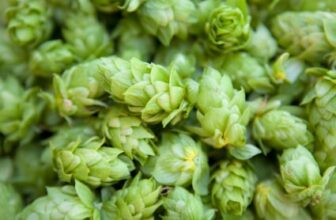
From right: gesho at the market; a young man drinking tej; more tej in Addis Ababa. Photos: Martin Thibault
Traditional Beers: Tella and Korefe
For a foreigner, drinking an ancestral beer in Ethiopia isn’t just a tasting experience. It can lead to a complete reevaluation of what beer represents in a person’s life.
Although little documented, this brewing culture seems to be as old as that of coffee. Depending on the region—and there are many in this vast territory inhabited by close to 138 million people—their base grain can be sorghum, teff, millet, barley, or even wheat. They mostly flavor their wort with gesho, a plant related to sea buckthorn that’s widely cultivated around the Horn of Africa. Whether its branches (gesho kitel) or leaves (gesho entchet) are used, its connection to brewing and meadmaking is so strong that locals speaking to us in English translate “gesho” as “Ethiopian hops.” Gesho is readily available at outdoor markets, from the capital city of Addis Ababa to the most remote hamlets.
Tella brewers prepare a gesho infusion and add it to the wort before fermentation. The infusion imparts a woody, earthy, green character—similar to how some English hops enhance an ordinary bitter. Also like a cask bitter, the traditional Ethiopian beer is low in alcohol and barely carbonated. And because its ingredients typically come from the brewer’s own farm or from neighboring fields, it’s a beer that tastes of the place where it’s made.
The number of people brewing tella can be staggering. In Aksum, a historic town near the Eritrean border, there are more than 100 brewers of tella—or suwa, in the local Tigrinya language—selling their production. Yet there are countless other households brewing smaller quantities for their own consumption.
While tella or suwa variations are almost omnipresent across Ethiopia, korefe appears to be more of an occasional drink. Korefe has no equivalent in the Western world—while its slightly roasted and tangy notes intrigue from the first sip, its lumpy texture, somewhere between kefir and oatmeal, couldn’t be further removed from the clear, watery, bubbly beers of today’s mass-produced brands.
Besides its texture, there’s another sign that korefe comes from an entirely different perspective on brewing: During religious festivals, such as the great festival of Gena—Ethiopia’s Orthodox Christmas, celebrated on January 7—korefe is served free of charge to anyone who wants it. In Lalibela, for example, Ethiopian families literally come out of their houses, full jugs in hand, offering gifts to thirsty pilgrims coming in from afar. In other regions, such as the northern university city of Gondar, they may serve korefe instead of wine at Orthodox Mass.
There is very little published information about this table beer. In a nutshell: It’s a living ancestor of ancient farmhouse brewing, simply meant to quench and nourish. Its flavor—like rustic bread with a barely burnt crust—and its somewhat coarse body both point to that old saying: Beer is “liquid bread.”
So, korefe is not a fine brew designed for the world of beer tasting. Unlike tella—which has potential thanks to its refreshing texture, delicate grains, and gesho flavoring—korefe will likely remain an experience best enjoyed in the homes of Ethiopian hosts.

From left: pilgrims at the Festival of Gena; a woman prepares coffee and korefe in a farmhouse.
How They Brew Tella
A recipe for tella can be quite simple or more elaborate—and every household does it a bit differently—but a basic one follows these precepts.
The brewers malt the available grain—often barley, millet, sorghum, or teff—or they source it locally. They then grind the malt and gesho, combine them in water that’s been previously boiled and cooled, and leave the mash to sit for a couple of days.
Meanwhile, they prepare the fermentation culture separately from the mash. Many houses rely on a starter culture composed of various microorganisms. (A 2025 study by biologists at Aksum University associated a plethora of yeasts and bacteria with tella and korefe fermentations; they can include Saccharomyces cerevisiae, Acetobacter, and Lactobacillus, as well as Lactococcus and Enterobacteriaceae.)
Some houses use their culture to cook a rustic flatbread, which they later break into the mash of gesho, malt, and water. Over two or three days, the yeast in the bread gets the fermentation going—much like it does in Lithuanian gira, for example. Whatever the technique, the Ethiopian tella brewers add no commercial yeast.
The mash eventually becomes thicker, less watery, and alcoholic. And perhaps only a few hours before serving the beer, they filter out the grains and add water one last time, to taste.

From left: A server pours tej at a restaurant in Gondar; Berbere spice in a market.
How They Brew Korefe
When producing korefe, the first stage is to steep the gesho in water. They might leave the infusion for about three days to extract flavor, aroma, bitterness—and some fermenting microorganisms, too.
Meanwhile, they use a powdered form of unmalted, roasted barley called besso to make a dough, which they bake into an unleavened bread. They mix a small quantity of that bread with the gesho infusion plus a bit more water, leaving it to ferment for perhaps two days. Then they add more of the besso and continue to ferment for three more days.
Finally, they add water—about one part water per three parts of the mixture. After a couple of hours of this final dilution stage, the low-alcohol brew is ready to drink.
The Traditional Mead: Tej
When an Ethiopian man wants to woo a woman, he might say, “You are an October honey.” It’s a compliment worthy of the ingredient, powerful and refined.
Mead made from raw local honey can easily seduce a lover of bold flavors. Rich and fragrant, the first glass of tej is as captivating as the first bite of blue cheese or the first bottle of lambic.
The flower most renowned for its tej honey is called adey abeba—Bidens macroptera is its scientific name, and it’s a plant native to Ethiopia. They can make tej from other types of honey—but if you’re visiting the northern plateau toward the end of the year, there’s a good chance that the tej on offer will be made from the honey of this bright yellow flower.
You can typically find tej in a tejbet—literally, a tej house—anywhere in the country. Some only make one variety of mead, but many offer it in three different strengths: light, strong, and medium.
The light version is very sweet and has very little alcohol—it’s a drink for children and those who like fizzy beverages. On the other end of the spectrum, the strong version is considered the most serious: Often exceeding 10 percent ABV, it is dry, tangy, and rustic, with an inimitable aroma of honey, flowers, and wood—the latter character coming from a gesho infusion.
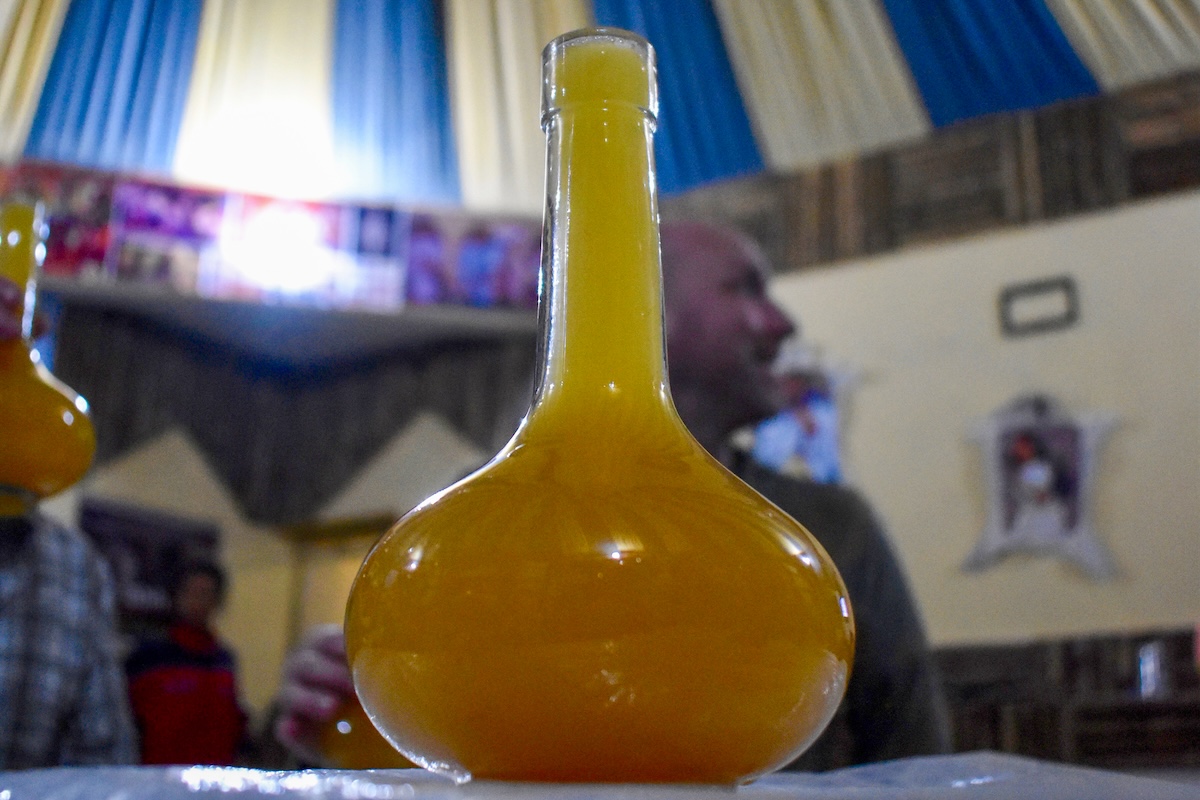
However, at Topia Tejbet in Addis Ababa, they serve only a medium-strength tej. Its honey aroma is powerful, also releasing notes of tropical fruit and flowers. The initial sip is sweet, but the whole thing gives way to a refreshing acidity. The usual pairing—with raw meat in berbere sauce, served by the butcher located just steps from the tables—is delightful.
Served in emblematic pear-shaped glasses, the tej’s striking yellow haze—not unlike that of a hazy IPA—is a sight to behold.
Of Identity and Hospitality
For the gastronomic traveler, the aromas of Ethiopian cuisine—from the ubiquitous teff pancakes called injera to glasses of tej, and from spicy doro wat chicken stew to the gesho infusion being prepared for the week’s beer—impress every bit as much as the Gheralta Mountain panoramas and the hundreds of gelada baboons frolicking freely atop the high cliffs of Simien National Park.
Given that these are typically homemade beverages, however, how might the typical foreign tourist experience them? The answer lies within the simple shout of a mountain guide echoing toward the nearest small farm. The generosity of the Ethiopian people is such that it’s perfectly normal to show up at a stranger’s home and ask for food and drink.
Whether it’s korefe or coffee matters little in this spectacular country where hospitality reigns supreme and brewing is an integral part of daily life.
Dive Deeper
For a more academic overview of these beverages, with a focus on tella and tej fermentations, see A Review on the Microbiology of Ethiopian Traditional Fermented Beverage Products, Frontiers in Nutrition, 29 January 2025.