
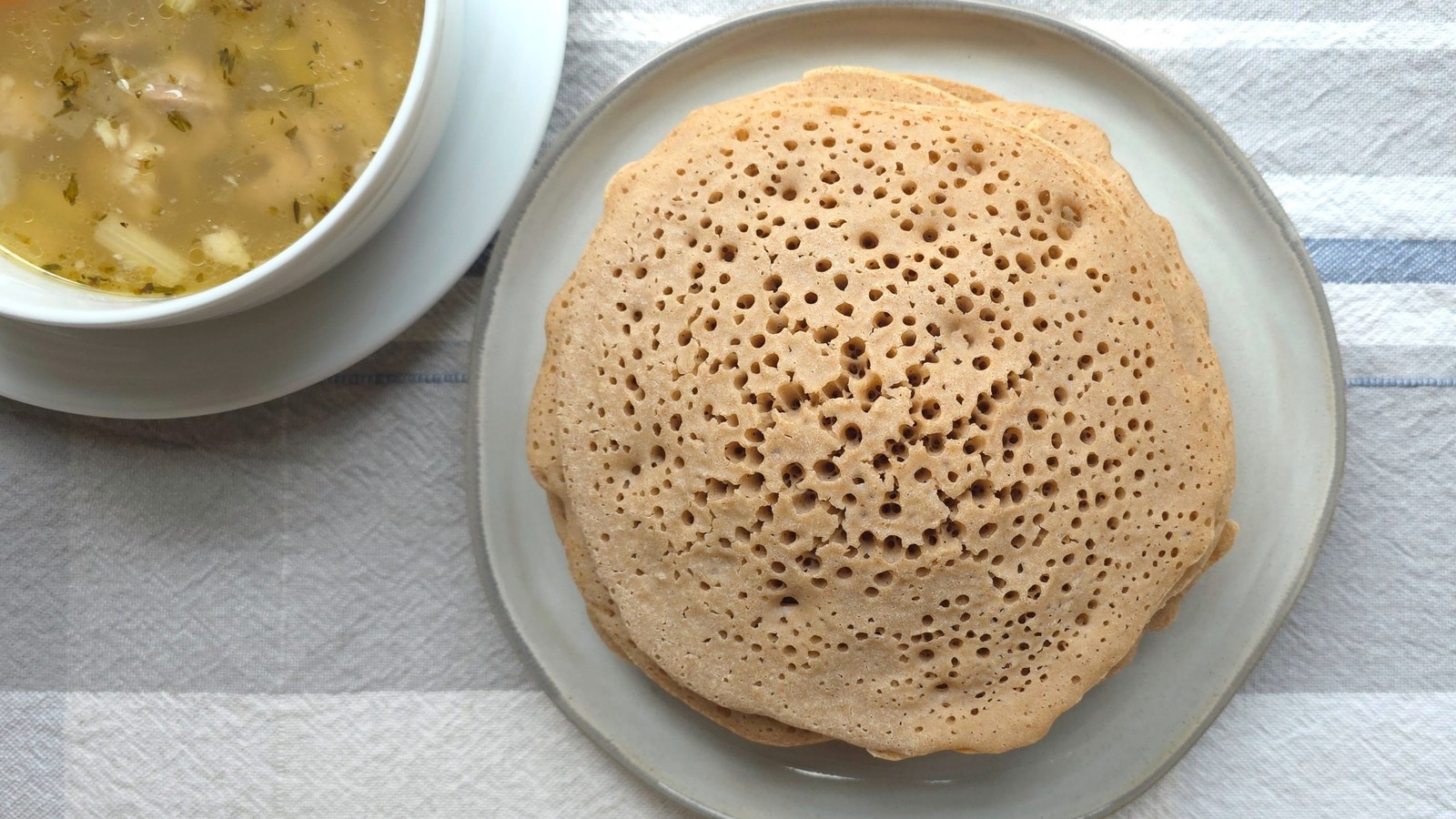
Ployes (rhymes with “boys”) are healthy, delicious, quick flatbreads in Acadian and Brayon cuisine—cultural groups in the Canadian Maritime provinces and parts of eastern Maine and Quebec. Ployes are so delicious and easy to make. Almost a hybrid of crepes and crumpets, ployes are on the thin side and covered in bubbles or eyes that hold butter, syrups, spreads, sauces, stews and soups. They’re made from a mix of buckwheat and wheat flours, baking powder, salt, and water; and are best cooked in a well-seasoned cast iron pan—one side only, no flipping. The batter should be about the consistency of heavy cream, as shown in the brief video below.
Buckwheat is the dominant flavor in ployes, and the type of buckwheat grown in the Acadian region for ployes is silverhull, which has a relatively mild nutty and grassy flavor. Breadtopia’s buckwheat groats are also the silverhull variety and perfect to mill for ployes. For the wheat flour, I chose Breadtopia’s all purpose high extraction flour, which is milled from hard red winter wheat. I wanted the germ flavor and winter wheat tenderness in the ployes. You can make flour substitutions to fit what you have on hand or flavor preferences.
Traditional uses for ployes include serving them sweet for breakfast or dessert: buttered and drizzled with brown sugar, molasses, or maple syrup. And savory uses for ployes include topping them with a pork spread called cretons, or buttering, rolling, and dipping them in stews, baked beans, or soups like Acadian fricot. As the weather gets cooler, I was inspired to make this fricot recipe. It uses chicken thighs, which I find more flavorful in a long simmer. I substituted the traditional herb savory, which I couldn’t find in the store, with a mix of marjoram and thyme.
Acadia was a colony of New France and its cultural border extended into Maine. During the French and Indian War, British forces expelled many Acadians from the region in what’s called “the Great Expulsion.” Later in 1758, some Acadians were sent to France and then recruited by the Spanish government to settle in Louisiana. The word Cajun comes from Acadian.
Photo Gallery


Ployes are delicious buckwheat and wheat flatbreads from Acadian and Brayon culture in Maritime Canada and eastern Maine and Quebec. They’re easy to make and can be served both sweet and savory. The holes or “eyes” are perfect for holding butter, syrups, and spreads; or soaking up sauces, stews and soups.
Ingredients
- 215 grams freshmilled buckwheat groats or buckwheat flour (1 2/3 cups)
- 100 grams all purpose high extraction flour (3/4 cup)
- 12 grams baking powder (1 Tbsp)
- 4 grams salt (scant 1 tsp)
- 300 grams cold water (1 1/4 cups)
- 155 grams boiling water (2/3 cups)
Instructions
- Combine the dry ingredients (flours, baking powder, salt) in a large bowl.
- Add the cold water, mix, and let sit about 5 minutes during which you can preheat a pan on the stove. Use a seasoned cast iron pan if possible. If using another type of pan, you may need a little butter or oil on the pan.
- Holding back some of the boiling water if you’ve substituted flours, add it in and mix until smooth. Add any reserved water and more cold water if needed to arrive at a batter consistency of heavy cream. See video.
- Scoop about 1/3 cup of batter onto the hot pan, spreading it thinner with the back of a metal measuring spoon or spatula.
- Cook until the surface of the ploye is covered in popped bubbles and the wet areas have dried out. See gallery pics.
- Place the cooked ployes on a rack on a baking sheet in the oven at 200°F to stay warm if serving immediately or on a rack to cool if serving later. Store in a bag in the refrigerator and reheat on a plate, uncovered, in the microwave.