


Bedtime Routine Tips That Help You Sleep Better
Bedtime routine tips can turn the last part of a busy day from one more thing to manage into a clear cue that it’s time to rest. If you often finish chores, scroll your phone, or replay tomorrow’s to-do list in bed, start small: a steady schedule and a short, low-stimulation wind-down can help your brain and body shift toward sleep.
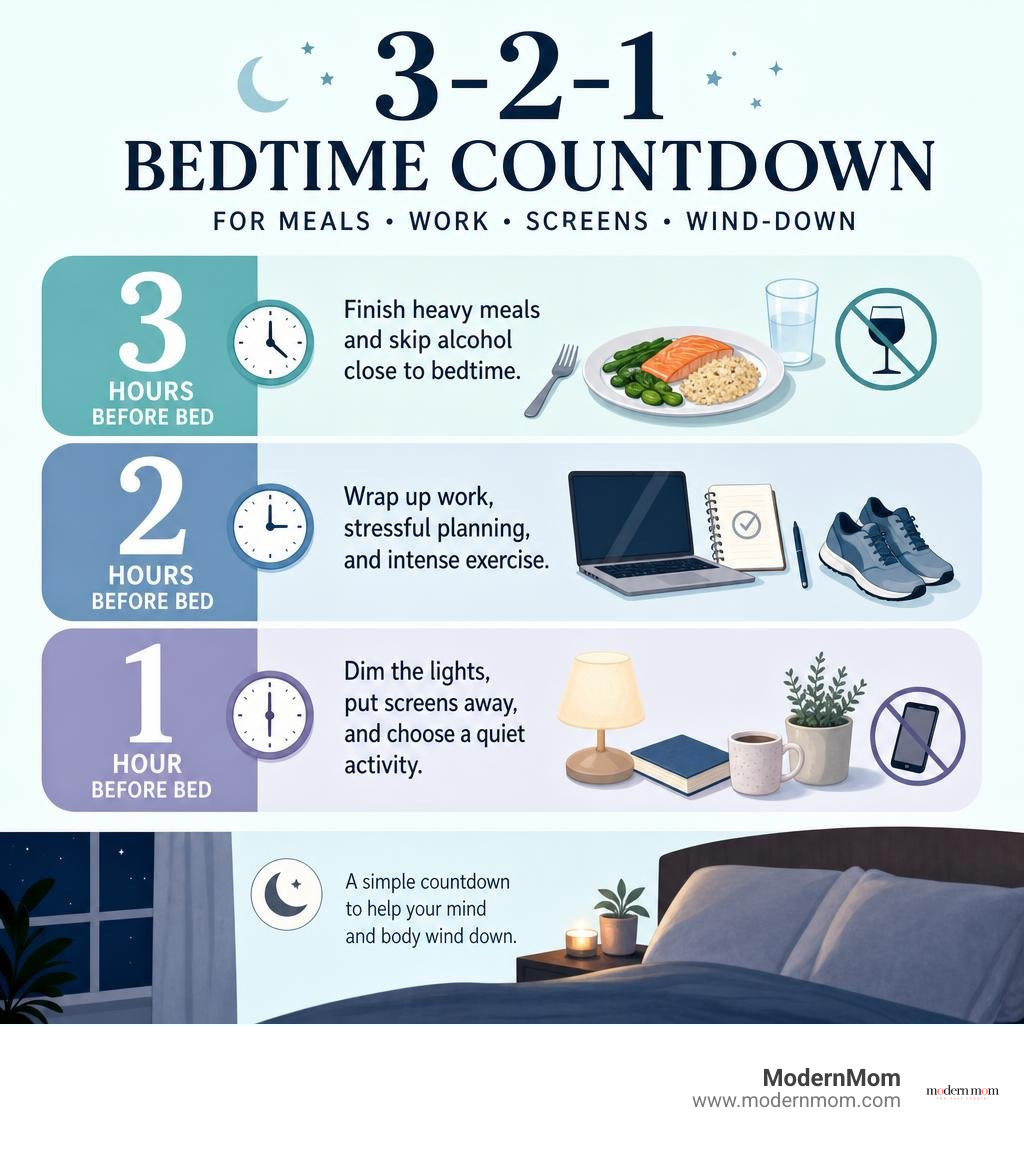
For a quick reset, try this simple bedtime countdown:
- 3 hours before bed: Finish heavy meals and skip alcohol close to bedtime.
- 2 hours before bed: Wrap up work, stressful planning, and intense exercise.
- 1 hour before bed: Dim the lights, put screens away, and choose a quiet activity such as reading, stretching, or journaling.
A bedtime routine isn’t about creating a perfect, 12-step evening. It’s a repeatable set of cues that supports your natural sleep rhythm. That matters: more than one-third of U.S. adults don’t get the sleep they need, and many women are carrying the mental load of work, family schedules, and tomorrow’s logistics late into the night.
The goal is simple: make bedtime feel predictable, calm, and realistic enough to repeat.
Understanding the Science of Sleep and Pre-Bed Preparation
Our bodies rely on complex internal systems to make sleep feel natural. Sleep timing is driven by two main forces: our circadian rhythm (our internal 24-hour clock) and homeostatic sleep drive (our biological pressure to sleep that builds up while awake).
When evening arrives, darkness triggers natural melatonin synthesis in the pineal gland. At the same time, our core body temperature must drop by 1 to 2 degrees Fahrenheit to allow rapid sleep latency—the speed at which we fall asleep.
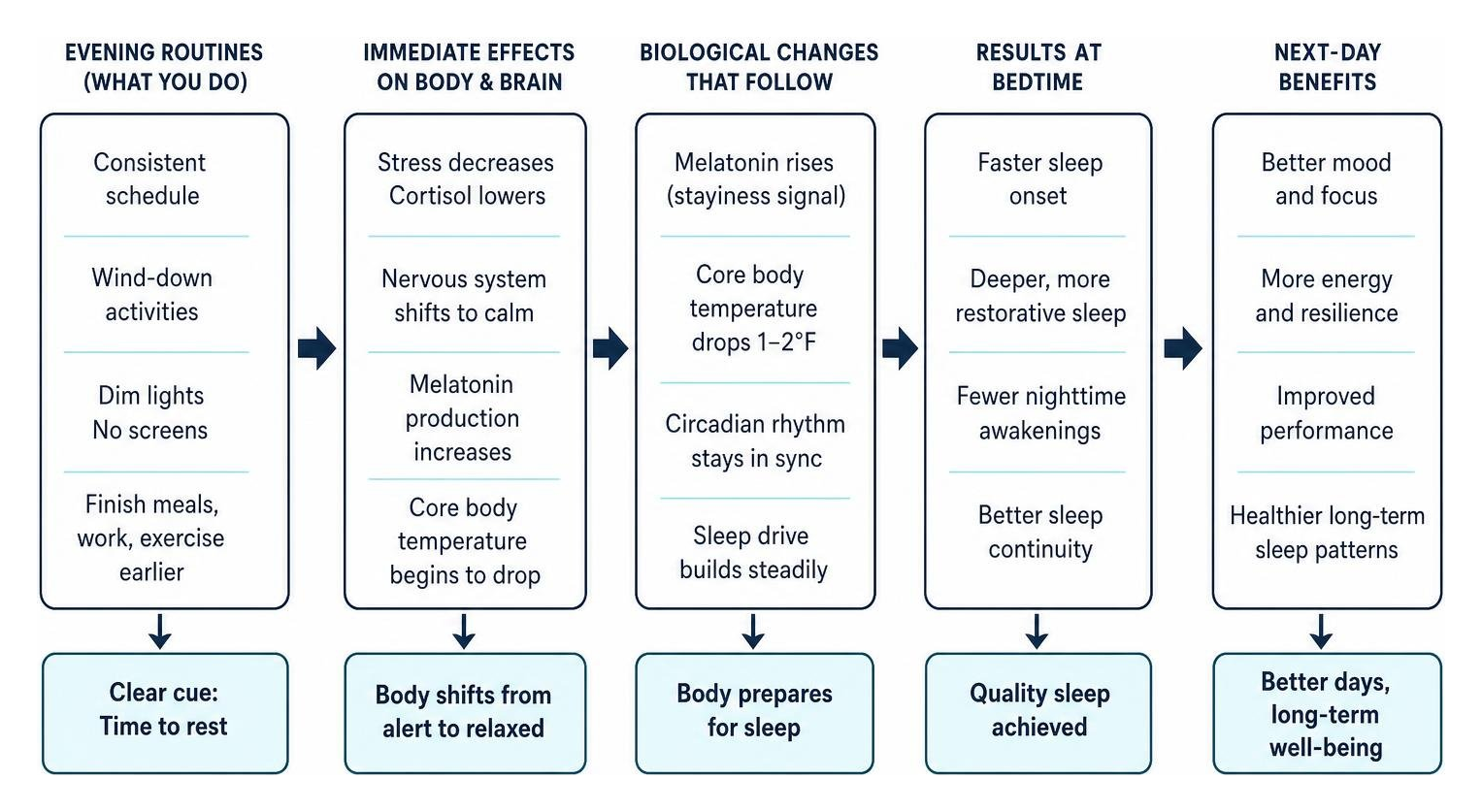
If evening stress keeps cortisol levels high, melatonin production stalls. Setting up science-backed wind-down routine guidelines gives your nervous system time to shift from active alertness to quiet relaxation. Paired with simple self-care rituals for mothers, a predictable evening helps clear mental clutter before your head hits the pillow.
The Ideal Timing and Duration for Nightly Wind-Downs
Sleep researchers recommend dedicated wind-down periods lasting between 30 and 90 minutes. This window provides sufficient time for your autonomic nervous system to downshift from sympathetic “fight or flight” mode into parasympathetic “rest and digest” mode.
The popular 3-2-1 rule provides a gentle timeline for your evening:
- 3 Hours Before: Stop eating large meals and drinking alcohol to protect digestive rest and REM sleep quality.
- 2 Hours Before: Shut down high-stakes cognitive tasks, stressful budget discussions, and work emails.
- 1 Hour Before: Power down electronic screens and switch overhead lights to soft, warm lamps.
Following a realistic countdown preserves your homeostatic sleep drive without making bedtime feel like another stressful deadline.
The 20-Minute Rule and Cognitive Offloading
Lying awake with a racing mind weakens the mental connection between your bed and restful sleep. Sleep specialists base this on stimulus control theory: if you remain awake for more than 20 minutes, your brain begins associating the mattress with stress and wakefulness.
To break this cycle, try cognitive offloading before turning out the lights:
- Spend 5 minutes writing a task list: Research shows that taking five minutes before bed to write out a specific to-do list for upcoming days significantly speeds up sleep onset compared to reviewing completed tasks.
- Practice worry journaling: Expressing lingering thoughts on paper externalizes anxieties so your brain feels safe letting them go.
- Use the 20-minute reset: If sleep doesn’t happen within 20 minutes, step out of bed, do a quiet activity under dim light, and return only when drowsy.
Essential Bedtime Routine Tips for Adults and Parents

Building solid sleep habits doesn’t require a complete lifestyle overhaul. Adopting a few evidence-based sleep hygiene habits can dramatically improve your nightly rest.
Start by addressing three key sleep stealers: late blue light exposure, afternoon caffeine, and evening alcohol. Blue light suppresses melatonin release by simulating daylight, while caffeine consumed up to six hours before bed lingers in your system. Meanwhile, alcohol might make you feel drowsy initially, but it fragments late-night rest and disrupts critical REM sleep cycles.
Audio environments also matter. Sound-masking tools help block out background noises, domestic hums, or street traffic:
| Audio Type | Frequencies Included | Primary Sleep Benefit | Ideal For |
|---|---|---|---|
| White Noise | Equal power across all audible frequencies | Masks sudden environmental noises and disruptions | Falling asleep faster in noisy settings |
| Pink Noise | Deeper, lower frequencies (like steady rain or ocean waves) | Enhances deep sleep waves and overall sleep quality | Staying asleep longer throughout the night |
Science-Backed Bedtime Routine Tips to Downshift Cortisol
When cortisol remains high late in the evening, drifting off feels nearly impossible. Exploring structured evening routines to balance cortisol helps lower your heart rate and ease physiological tension.
Simple, proven relaxation techniques include:
- Box Breathing (4-4-4-4): Inhale for 4 seconds, hold for 4 seconds, exhale for 4 seconds, and hold empty for 4 seconds. Repeat for 2 to 3 minutes.
- Extended Exhale Breathing: Inhale for 4 counts and exhale slowly for 8 counts to stimulate the vagus nerve.
- Progressive Muscle Relaxation (PMR): Tense individual muscle groups for 5 seconds, then release for 10 seconds, moving from your toes up to your face.
Optimizing Your Sleep Sanctuary: Temperature, Light, and Sound
Your bedroom environment plays a huge role in how well you sleep. To support your body’s natural thermoregulation, set your bedroom thermostat between 65°F and 68°F (18°C to 20°C). As core body temperature drops, your brain receives a strong signal that it is time to sleep.
Light control is equally vital. Use blackout shades or a soft eye mask to eliminate ambient light. Switch off bright overhead lighting an hour before bed in favor of low-wattage, warm amber reading lamps.
Evening Snacks and Drinks That Support Natural Sleep Onset
Eating a massive meal right before bed causes acid reflux and forces your body into active digestion when it should be resting. However, going to bed hungry can also disrupt sleep.
If you need a light evening snack, focus on options rich in magnesium, L-theanine, and natural tryptophan:
- Tart cherry juice: Contains natural melatonin and antioxidants that support rest.
- Warm chamomile tea: Binds to calming GABA receptors in the brain to reduce mild anxiety.
- A small portion of Greek yogurt or a banana: Provides protein, potassium, and magnesium to settle muscles.
- Magnesium glycinate: Studies suggest taking 200 to 400 mg of magnesium glycinate shortens sleep latency and promotes physical muscle relaxation.
Tailoring Nighttime Habits for Children, ADHD, and Unique Needs

Nighttime routines look very different across different stages of life and neurodiverse needs. What calms a busy adult might not work for a energetic toddler or a teen managing academic stress.
Caregivers frequently balance multiple bedtime timelines at once. Customizing predictable steps for each family member helps reduce bedtime friction and nighttime power struggles across the entire household.
Age-Specific Bedtime Routine Tips for Toddlers and Kids
Children thrive on predictable rhythms. Establishing consistent habits aids childhood development, mood regulation, and physical growth.
If you suspect bedtime struggles stem from health issues, look into detecting sleep disturbances in children. Otherwise, these simple steps keep evenings peaceful:
- Set up visual cues: Using visual routine charts for sanity helps toddlers understand what step comes next (bath, teeth, books, bed) without repeated nagging.
- Encourage self-soothing skills: Put infants down drowsy but awake so they learn to navigate brief middle-of-the-night awakenings independently.
- Offer limited choices: Let toddlers pick their pajamas or choose between two books to give them a sense of autonomy and prevent power struggles.
- Address fears gently: Validate nighttime anxieties or fears of the dark with a warm nightlight or comforting stuffed animal.
Managing Screens, ADHD, and Neurodivergent Evening Challenges
For adults and kids with ADHD, evening wind-downs carry unique hurdles. ADHD brains often experience hyperfixation flow states late at night, racing thoughts, or delayed circadian shifts.
Combining smart electronics management tools for kids with targeted sensory adjustments can make a world of difference. When learning establishing bedtime routines with ADHD, expert advice recommends starting small with just one habit change at a time.
Try these neurodivergent-friendly adjustments:
- Schedule hyperfixation time: Dedicate time earlier in the day for deep-dive hobbies so they don’t derail your wind-down window.
- Use brown noise: Richer and deeper than white noise, brown noise effectively calms an overactive, racing mind.
- Incorporate a warm bath or shower: Taking a warm shower 1 to 2 hours before bed accelerates core temperature drops, reducing sleep latency by an average of 10 minutes.
How Long Does It Take to Reset Your Circadian Rhythm?
Updating your sleep habits rarely produces overnight transformations. Neural pathways and biological clocks adapt gradually through repeated practice.
Most people notice meaningful sleep improvements within 7 to 14 days of consistent routine changes. Your body’s internal circadian rhythm requires roughly a week to lock into a new schedule.
To speed up habit adaptation, try habit stacking: anchor a new habit to an existing one, such as practicing 2 minutes of box breathing immediately after brushing your teeth. Pair your evening routine with a consistent morning anchor—getting 5 to 10 minutes of direct sunlight shortly after waking resets your circadian clock for the entire day.
Following a structured, comprehensive sleep optimization framework ensures long-term success without feeling overwhelmed.
Frequently Asked Questions about Bedtime Routines
What activities should I completely avoid during the hour before bed?
Avoid intense workouts, high-stakes work projects, checking work emails, and scrolling social media. You should also skip emotionally charged family discussions and heavy, high-sugar meals, as both trigger cortisol spikes and elevate heart rates when your body wants to rest.
What should I do if I cannot fall asleep after 20 minutes in bed?
Follow the 20-minute stimulus control rule: get out of bed and move to another dimly lit room. Engage in a relaxing, non-screen activity like reading a physical book, practicing light stretches, or listening to calm music. Return to bed only when your eyes feel heavy and you feel genuinely drowsy.
When should I consult a doctor or sleep specialist for ongoing insomnia?
Consult a healthcare provider if sleep difficulties persist for more than three months, occur at least three nights per week, or cause severe daytime impairment, fatigue, or mood changes. A medical professional can evaluate you for underlying sleep disorders like sleep apnea, restless legs syndrome, or chronic insomnia.
Conclusion
Creating an effective bedtime routine isn’t about perfection; it’s about giving yourself permission to slow down and recharge. By focusing on consistent sleep timing, a cool and dark bedroom sanctuary, and a gentle wind-down, you offer your mind and body the restorative sleep they deserve.
Choose just one or two bedtime routine tips to try tonight, and build your routine at a pace that feels easy and supportive. For more helpful ideas on family sleep habits, explore our ultimate resources on sleep with children to keep every member of your household resting easy.