

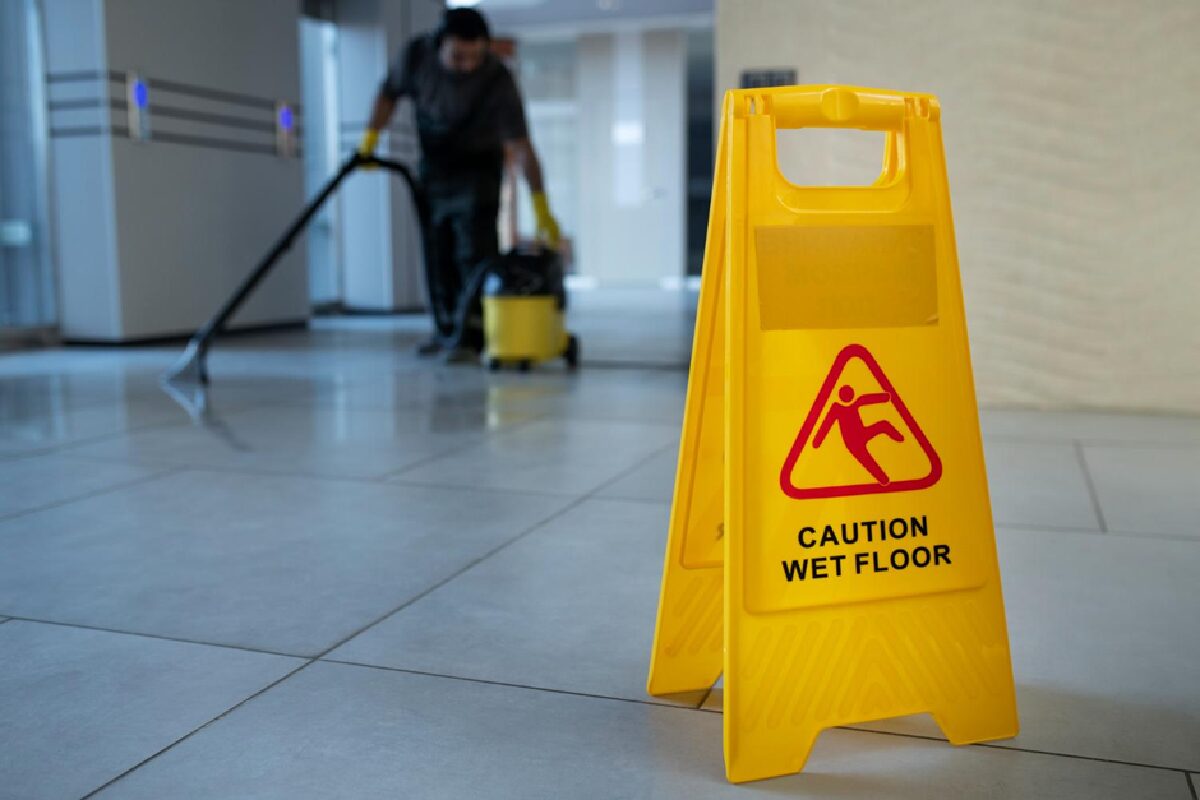
Someone falls on a wet floor in a store, on a poorly lit staircase, on a sidewalk that hasn’t been repaired in years. In the moment, the logic feels simple: the property was unsafe, they got hurt, the owner is responsible. Then an insurance adjuster starts asking different questions. Was the person looking at their phone? Did they see the warning sign? Were they somewhere they weren’t supposed to be? Suddenly, a straightforward injury becomes a dispute over percentages, and the outcome of a comparative fault premises liability California claim rarely turns out to be as simple as the initial injury made it feel.
That shift catches people off guard, but it’s how the system is actually built to work. Understanding it before deciding what to do next changes how someone approaches the weeks after an injury like this.
Understanding Premises Liability and Occupier Negligence in California
Premises liability is the legal principle that a property owner or occupier has a duty to keep their property in a reasonably safe condition for people who come onto it. That duty covers a wide range of situations: a grocery store with a spill left unattended, an apartment complex with a broken stair railing, a business with inadequate lighting in a parking area.
California’s approach to this duty has a specific legal history worth knowing. Cornell Law School’s Legal Information Institute explains, in its entry on invitee status, that California courts moved away from older classifications that treated visitors differently depending on whether they were invited guests, licensees, or trespassers. Instead, property owners now generally owe a single standard: reasonable care to maintain safe conditions for anyone lawfully on the property. A breach of that duty, meaning the owner knew or reasonably should have known about a hazard and failed to address it, is the foundation of occupier negligence claims.
Breach can take several forms. It might be an unsafe condition the owner created directly, like a freshly mopped floor with no warning sign. It might be a known hazard the owner failed to fix within a reasonable time, like a loose handrail reported weeks earlier. Or it might be a failure to warn, where the owner knew about a danger but didn’t take reasonable steps to alert visitors to it. A pattern of prior similar incidents, such as earlier falls in the same location that were never addressed, can also strengthen a claim that the owner knew or should have known about the hazard well before the injury occurred.
These same building blocks, proof of liability, a clear duty of care, and a breach that caused real harm, are the foundation of personal injury claims generally, not just premises cases specifically.
How Comparative Fault Works in California Premises Liability Claims
Establishing that a property owner breached their duty is only the first half of the equation. What happens next is where most premises liability claims actually get decided: California follows a pure comparative fault rule.
Cornell Law School’s Legal Information Institute defines comparative negligence as a framework that reduces, rather than eliminates, a person’s ability to recover compensation based on their own percentage of fault. In states that follow a contributory negligence system, a small amount of fault on the injured person’s part can bar recovery entirely. California doesn’t work that way. Under its pure comparative fault system, a person found to be significantly at fault, even more than half, can still recover a reduced amount reflecting the property owner’s share of responsibility.
In practice, this plays out as a percentage split. If a jury or insurer determines a property owner was 70 percent responsible for a hazard and the injured person was 30 percent responsible for their own inattention, the recovery gets reduced by that 30 percent rather than eliminated. This is different from a modified comparative fault system, used in some other states, where a plaintiff who crosses a certain fault threshold, often 50 or 51 percent, loses the right to recover anything at all. California’s pure version has no such cutoff.
Common Myths About Comparative Fault and Premises Liability
Two misconceptions tend to trip people up. The first is that any degree of personal carelessness kills a claim entirely. Someone who wasn’t watching their phone, or who was walking quickly, or who didn’t notice a small crack in the pavement, often assumes they have no case at all. Under California’s pure comparative fault rule, that isn’t how it works. Fault gets divided and weighed, not treated as a switch that turns liability on or off.
The second misconception runs the other direction: that a property owner is automatically fully liable for anything that happens on their premises, regardless of how the visitor was behaving. Property owners and their insurers routinely push back on this, arguing that visible hazards, posted warnings, a visitor being somewhere clearly off-limits, or a visitor’s own inattention shifted some or all of the responsibility onto the injured person. Neither extreme reflects how these claims actually get resolved. The real question in most contested cases isn’t whether fault exists on one side, it’s how the percentage gets divided between both.
When to Consider Speaking With a Premises Liability Lawyer
Some premises liability situations are straightforward enough that the fault question barely comes up. Others become genuinely contested: the property owner disputes how visible the hazard was, witnesses give conflicting accounts of what happened, or an insurer pushes back hard on the injured person’s share of responsibility after initially seeming cooperative.
In situations like these, understanding how fault is likely to be argued, and what evidence supports one percentage over another, matters more than it might seem at first. Court House Lawyers, a Glendale, California-based law firm that handles premises liability and slip and fall claims across Los Angeles County, notes that this pattern shows up regularly in practice: property owners or their insurers often argue that the injured person’s own inattention, not watching where they stepped, missing a posted warning, was the primary cause, even when the underlying hazard itself was left unaddressed for a preventable length of time. That gap between what actually happened and how it gets characterized afterward is often where a claim is won or lost.
For readers trying to sort through a disputed fault situation, seeking premises liability guidance from a Glendale firm before responding to an insurer’s initial position can clarify what the actual dispute is about and what evidence matters most to it.
Practical Steps After a Slip and Fall or Premises Injury
Falls of this kind are far more common, and far more serious, than most people assume until they’re dealing with one directly. According to data from the CDC on older adult falls, falls remain a leading cause of injury nationally, and the evidence gathered in the immediate aftermath of one often shapes how a comparative fault dispute eventually gets resolved.
A few steps tend to matter most in the days after an injury like this:
- Photograph the hazard itself, along with the surrounding area, before conditions change or the hazard gets cleaned up or repaired
- Note whether any warning signs were present or absent at the time
- Get contact information for anyone who witnessed the fall
- Seek medical attention promptly, even if the injury seems minor at first, since a documented timeline matters later
- Avoid giving a detailed recorded statement to a property owner’s insurer before understanding how the fault question is likely to be framed
None of these steps require legal training to complete. They simply preserve the kind of evidence that tends to disappear or get disputed once an insurer becomes involved.
Frequently Asked Questions About Comparative Fault in Premises Liability Claims
Does being partly at fault mean I can’t recover anything?
No. Under California’s pure comparative fault rule, a person can still recover damages even if they were significantly at fault, with the recovery reduced by their percentage of responsibility rather than eliminated.
How does a fault percentage actually get decided?
It’s based on the specific facts of the incident: what the hazard was, how visible or known it was, what warnings existed, and how the injured person was behaving at the time. In a contested claim, this is often the central point of disagreement.
Can an insurer dispute fault after initially seeming to accept the claim?
Yes. An insurer’s early tone isn’t a guarantee of how they’ll ultimately characterize fault. Positions can and do shift once a formal claim is fully evaluated.
Does an “open and obvious” hazard mean the property owner isn’t liable?
Not automatically. A hazard being visible or obvious is one factor that can affect how fault gets divided, but it doesn’t by itself eliminate a property owner’s responsibility to maintain reasonably safe conditions.
Is California’s comparative fault rule the same as what other states use?
No. California’s pure comparative fault system differs from modified comparative fault systems used elsewhere, which can bar recovery entirely once an injured person’s fault crosses a certain threshold. California has no such cutoff.
Conclusion
Being injured on someone else’s property doesn’t guarantee full recovery, and it doesn’t close the door either, even if the injured person was partly careless in the moment. California’s comparative fault system is built around percentages, not an all-or-nothing outcome, which means both the property owner’s conduct and the injured person’s own actions typically get scrutinized once a claim is contested. Understanding how that percentage is likely to be argued, before responding to an insurer or deciding how to proceed, is often the difference between an outcome that reflects what actually happened and one that gets shaped entirely by the other side’s version of events.