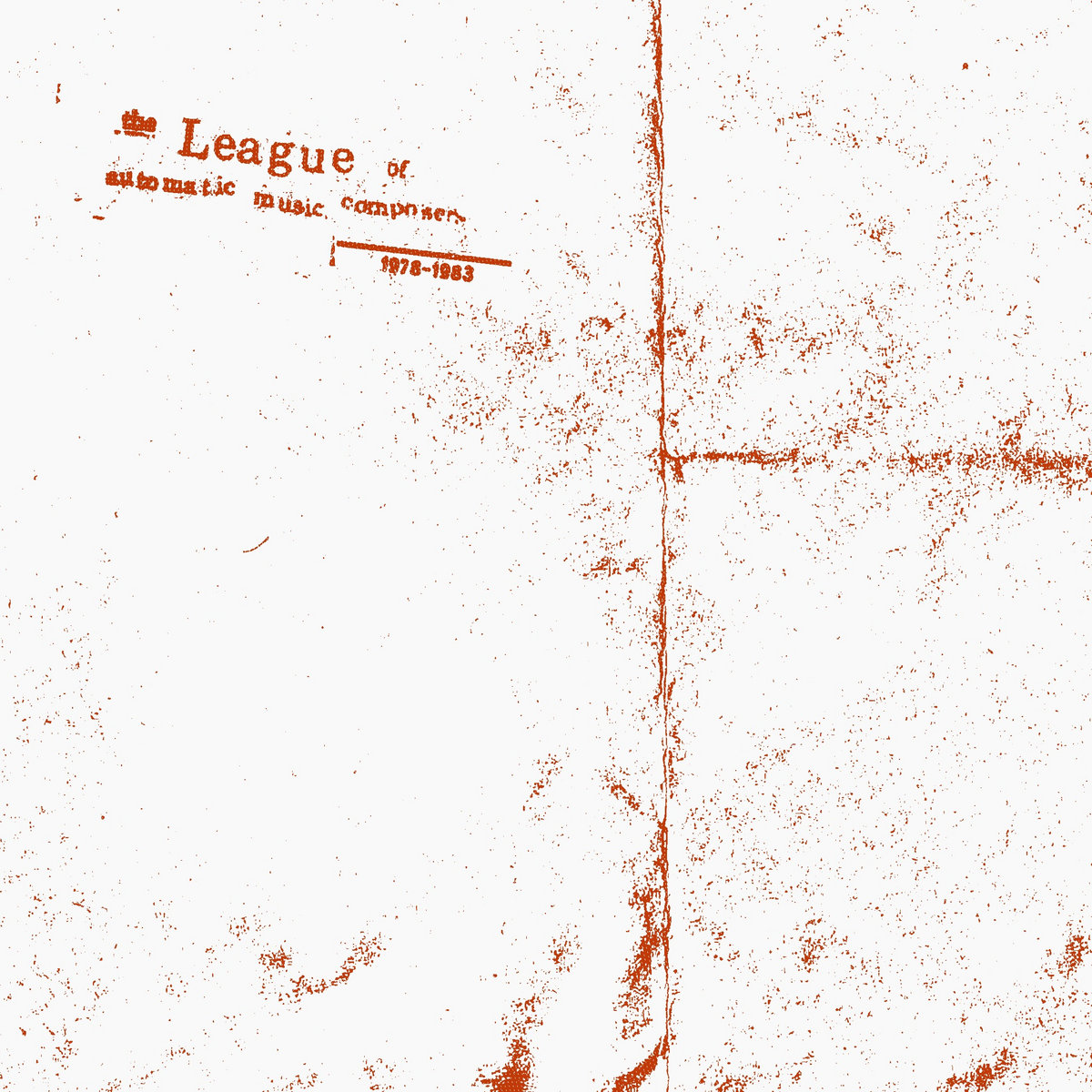
Jim Horton, John Bischoff & Tim Perkis – The League of Automatic Music Composers 1978-1983 (2007/2026; New World; Death Is Not The End) – Avant Music News

I didn’t expect to write about–or even enjoy–this album. I figured a compilation of 45-year-old computer music would be dense, dated, and borderline unlistenable, but I had just enough curiosity to press play. It is indeed dense, I suppose it’s technically dated, and some sections will test your aural patience. But it is utterly fascinating, both as a document of computer music history and as unique sound art in its own right.
The League of Automatic Music Composers was a Bay Area collective of experimentalists working with the then-new “microcomputers” in the late 1970s and early ’80s. They didn’t release any music at the time. This compilation of home recordings and live performances was issued by New World Records back in 2007. You can still get a CD from New World, and that edition is on streaming services. The Death Is Not The End label just “reissued” the collection on Bandcamp, offering vinyl and cassettes as well.
The equipment at hand was primitive by today’s standards, so virtually all of the sounds fall in the category of “bleeps and bloops,” the sort of thing that has survived only as retro video game music. But the League–primarily Jim Horton, John Bischoff, and Tim Perkis–recognized the major opportunity that (relatively) affordable, personal machines offered: interaction. While there was plenty of experimental electronic and computer music in the decade or two before 1978, it was centered on mainframes and (almost out of necessity) carefully prepared.
Networked machines programmed to listen to each other don’t exactly make for free jazz, but there is a definite family resemblance. The League set up their circuits to respond to human voices, resolve harmonic tensions (or not), and accentuate pitches coming from other machines. Beyond the other-worldliness of bleeps and bloops, the sounds are even more unsettling because they are typically set on a just-tuned scale. Like Harry Partch before them, the League’s composers set out to invent a new language for previously-unknown instruments, and in that they succeeded.
I can’t quite say that the programmed interaction is audible. I suppose a composer might put down these particular sets of notes. But these pieces have a vitality that is often missing from computer music, and I think the network-based approach is the reason. The project fits somewhere between fully-composed work and aleatoric composition. Again, the link to collective (human) improv is hard to deny.
While the League’s music was unreleased during its lifetime, the group was influential. Bischoff and Perkis are still active, and Horton continued to work with electronic music and just intonation until his death in 1998. Still, it feels like interactive machines represent a bit of a missed opportunity in the near-half-century since. The idea has survived mostly as an academic pursuit, while electronic/computer musicians tend to a pick a lane: Either settled, sculpted sounds, or live improvisation with humans at the controls.
So it’s tempting to listen to these 1978-83 pieces and wonder what might have been, what paths might yet be unexplored. But it’s not entirely a matter for speculation: With the basic tools at hand, the League puzzled out a new way to bridge the human/computer divide, creating some fresh sounds in the process.