

Wake up and live your life on your own terms, you are a king in your own kingdom, a god in your own universe.
— Bangambiki Habyarimana
We’d been discussing life stuff. End of life stuff, actually. Wills and obituaries and eulogies and celebration of life arrangements. That kind of thing. The kind of thing I’d scarcely thought about until a few years ago. A day may come when I have it all in order. But — as Aragorn might say — it is not this day. This day I have something different in mind. Related, but different.
Because all this end of life talk got me thinking about what’s most important about a person. How can we hope to capture the essence of a lifetime, a life, a whole entire person, in a few hundred words? A “standard comprehensive obituary” is somewhere between two hundred and four hundred words. A eulogy is usually longer, between five hundred and a thousand words, “lasting approximately three to five minutes when spoken.” Forgive me for thinking this is scarcely enough to do anyone justice. It’s the time it takes to boil a kettle or microwave popcorn. (Note to self: add “microwave popcorn” to the menu for my celebration of life event.)
Writing your own life summaries allows you to include more of what matters to you. Or at least get the details right. I’ve attended too many funerals where the eulogy was factually incorrect. I’ve drafted my obituary. Fran is working on hers. We intend to write our own eulogies. To that end, Fran’s been reading a couple of books on the subject. I’ll link them below if you fancy checking them out yourself. It’s not simply a matter of including more detail, though. A timeline or checklist of achievements can only go so far. I’m more than a list of things I’ve done and places I’ve visited. At least, I hope so. I haven’t been many places or done very much. But what is that more than? What is the me that asks these questions? What will disappear when I’m no longer here? And then it came to me.
Your inner world is your own private kingdom. Your thoughts, memories, and feelings. Your stories. No one knows them as intimately and completely as you do. They’re yours in ways nothing else you will ever lay claim to or own is yours. They are not just yours they are you.
It’s hardly original that our thoughts and feelings are private but my insight goes further than that. “Your stories” isn’t just stories about your life. It’s also the ones you imagined. Dreamed. Created. My mind goes to the short stories I wrote years ago. I’ve shared some of them here but there are others few have seen and even fewer will remember. In any case, no one knows them as I do. They’re part of who and what I was when I wrote them. Who and what I am now. Their characters are well known to me and well loved. Malcolm, Stitch, Devon, and Halt. Aleysha. Bill Stokes and the unnamed girl he meets in Wolvercote Cemetery. Josef Betz. Kai and Ellen of the Ylfe. At their best they exemplify traits I’m proud to claim as mine. At their worst they display attitudes and behaviours I’d be embarrassed or ashamed to explore in any other way.
But if these are the inhabitants of my private kingdom, what of the kingdom itself? The tales play out at the intersection of objective reality and my imagination. Tynemouth Priory and Castle. Oxford. Leazes Park. A decrepit cottage in Mid Wales. I know these fictional settings as well as I know the corresponding locations in the physical world. I’ve followed Malcolm and Stitch along the winding track that skirts the outer walls of Tynemouth Castle. I’ve watched Stitch evoke her spells of protection against unwanted attention at her market stall, and Bill Stokes poring over his copy of The Lord of the Rings in Maisie’s Cafe. I’ve climbed the hill to the cottage beside Jon (“Really it isn’t so much a ‘cottage’ as a two room hut but the word ‘Cottage’ seemed more homely — and Homely this little house certainly is.”) and sat with the wizard of Berry Hill in the growing gloom of evening.
It was all Story. Patterns across the land and down the years. He sighed — and the sound fell upon the air with an Age’s soft sadness.
It was all Story. Fran offered me a line from one of the books she’s been reading. “Death steals everything except our stories.” I looked it up. It’s from the poem “Larson’s Holstein Bull” by American poet, novelist, and essayist Jim Harrison. The poem records the death of a girl “gored by the bull on her way home from school.” It’s more than a record, though. It’s a memorialisation. It concludes “She’s lived in my memory for sixty years. | Death steals everything except our stories.” There’s nothing new, of course, in the idea that we live on in the memories of those who outlive us. James Wrubel expressed it as “No one truly dies who is remembered. No one truly dies who is loved.”
In my short story “And Men Myrtles” the author JRR Tolkien lives on in the ritual observance of fans who gather each year at his graveside. Bill Stokes’ wife Joan lives on in the time and energy he devotes to maintaining her plot in the same cemetery. But these acts say more about the mourners than the mourned. The most passionate devotee of Middle-earth will never know what that realm, its peoples, their languages and lives and stories and relationships meant to Tolkien. Bill knew nothing of his wife’s inner realm — her griefs and fears and secret pain — as she bore the degradation of cancer with stoic grace. His devotion to her grave is the product of unresolved guilt at having failed to save her. Guilt of a different kind runs through my unpublished novella “Playing at Darkness.”
Halt cleared his throat but Stitch spoke before he could intervene. “There was a girl called Stella once,” she repeated. “A long time ago.” Her voice held no trace of emotion. It seemed to Malcolm that she was reciting words she had long ago and many times rehearsed. “There was a boy too. I’ve no idea what his name was.” A pause, so that he thought she had finished speaking. “They weren’t very nice.”
“By some she is remembered,” Stitch declares on another occasion. That’s true but it’s not enough. As awful as the girl and boy were they were nonetheless queen and king, respectively, of their inner kingdoms. In death they became part of Stitch’s story and Denny’s and Halt’s. Of Malcolm’s as he learned the horrific truth of how they died. Of mine as the tale’s author. But their inner realms ended as surely as ours will end. They weren’t very nice. Beyond being gored by a bull the girl in Harrison’s poem is remembered only for being unable to read or write in seventh grade (“She was ‘simpleminded,’ we all said.”) and for not being a virgin. How, we might ask ourselves, will we be remembered? What accident or quirk will sum us up when our inner tales are lost?
All this might seem bleak but I find it empowering. I have scant agency in the physical world. My inner realm will be lost when I die but while I live it is mine to explore. To navigate and tend and order. Writing is a way of sharing my domain, akin to publishing an atlas of my lands. A travel guide to my kingdom. It’s not the first time I’ve attempted this. Inner landscapes have been a recurrent theme in my writing. An early example is my poem “What happened to the Lovetrees?”
And through my lands you softly came; exploring scenes
you’d once conceived as if amazed at what a little time
had wrought: found shadows cast about my heart by
trees formidable. I wished you would by some judicial felling let the summer in, but I lay impotent
as mountains and could only watch you turn
dismayed, a little disillusioned,
to some fresher view.
“Erratic Whernside” is a horror story notable only for being the first reference in my writing to mental illness. Jordache is a psychiatrist, Eric Stone his most perplexing patient to date and — spoiler alert — his last.
Jordache crested the ridge. Before him stood a rough sphere of dark grey stone. Five, maybe six, feet in diameter. Slowly he walked up to the rock, then around it. It was deeply fissured as if by aeons of rain, wind and frost, crowned with grass and tiny flowers. This, then, was the object of Eric’s obsession.
Inspired by the 3D computer graphics program of the same name “Poser” explores the boundary between inner and outer realms and the exercise of power within each domain.
She had spent the last weeks revisiting her favourite haunts, as if for the last time. It might well be so. In a little while she would climb the steps out of her garden: set her feet upon a path that would take her further than she had ever journeyed before. Perhaps never to return. She loved this land but in the past year she had exhausted its secrets. It was her realm but she had outgrown it.
One part of her realm she had not revisited, though she could not fully purge it from her mind. It was a region like none other in her demesne: a region mazed in enchantments. Protected from invasion and escape by a forest of thorns, their savage spears sheathed in clouds of crimson flowers.
Within the bounds of that little realm a man languished endlessly, lost in the bitterness of unsatiated lust.
It was a pretty defense.
The Lady rose and with a last look about her climbed the steps that led out of her garden. Turning to her left beneath the trees she set her feet upon her new road. Beyond the forest she had glimpsed the Mountains.
And beyond the Mountains lay the Sea.
I’d hazard to say the tale is well-written but it’s not an easy read, even to its author. Especially to its author. But perhaps that’s the way with the stories that matter most.
Afterword
What I’ve gained most from the idea of my inner world — my thoughts, memories, and feelings — being my own private kingdom is just how potent, beautiful, majestic, hideous, and extraordinary that kingdom is. I owe it to myself to explore it as fully as possible while I’m able to do so. To paraphrase Rwandan writer and blogger Bangambiki Habyarimana, to wake up and live my life on my own terms.
Further Reading
Having the Last Say: Capturing Your Legacy in One Small Story by Alan Gelb
Yours Truly: An Obituary Writer’s Guide to Telling Your Story by James R Hagerty
Collected Poems 1977–1984 by Martin Baker
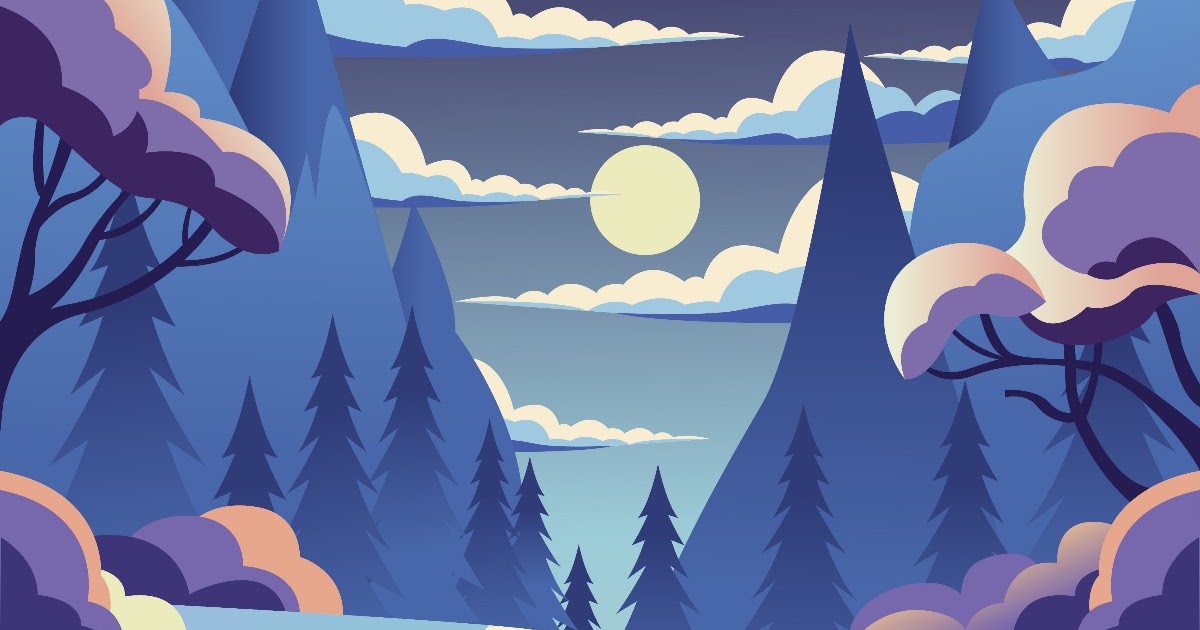
Illustration by Gilang Fahmi at Unsplash.