
Subscription required
By Bjorn Fehrm and Scott Hamilton
September 3, 2026, © Leeham News: After the tough Covid-19 years and the breakup of its joint venture with Boeing, Embraer hunkered down and focused on driving sales, deliveries, and efficiency for its divisions: Commercial Aircraft, Executive Jets, Defense, and Services.
In the years after Covid, the E-Jet E2 had less sales success than the longer-range Airbus A220. Sales were acceptable but not good in a post-pandemic market that boomed for civil airliners. Embraer had enough backlog to meet its capacity, but the pipeline of jets to be delivered in the coming years had question marks.
From 2024, E2 sales picked up. The A220, sharing the Pratt & Whitney PW1500/1900 geared turbofan (GTF) family with the E2s, developed engine problems. Though the E2 used the same engine type, it was a lighter aircraft that did not stress the engines as much. Airlines took notice; fewer E2s were grounded, waiting for repaired engines, than A220s.

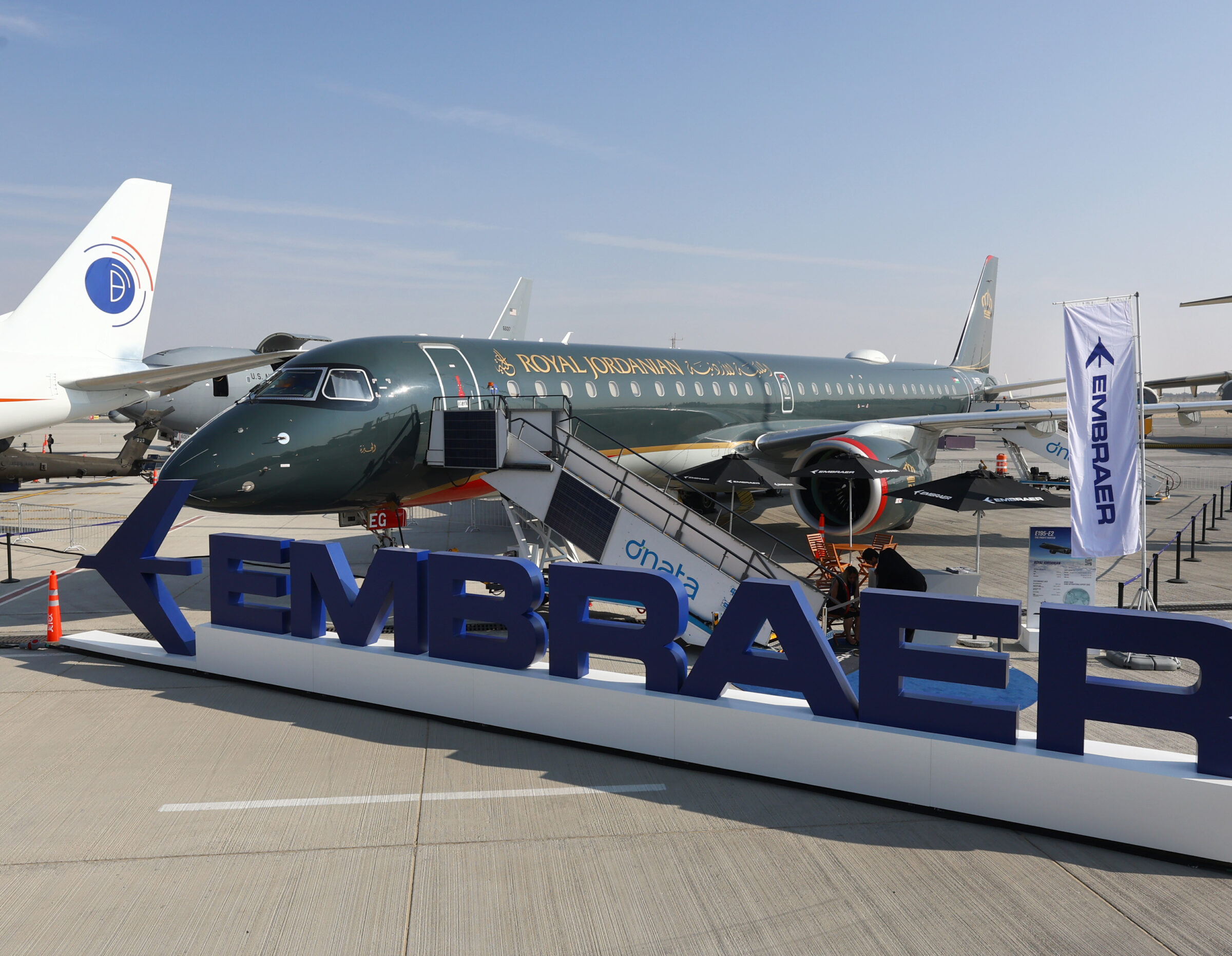
After years of slow sales, orders for the largest E2, the E195, began to pick up significantly. Photo credit: David McIntosh/AIN
The business jet division had a better run through Covid, as companies and high-net-worth individuals valued private flight. With Executive Jets now the best performer its segment, the division went from strength to strength.
The third division, Defense, also had the wind in its sails. The KC-390, from a hesitant start, was now lining up one country win after another, replacing the venerable C-130 Hercules.
As all three operating divisions grew, the Services division also grew and delivered strong margins.