
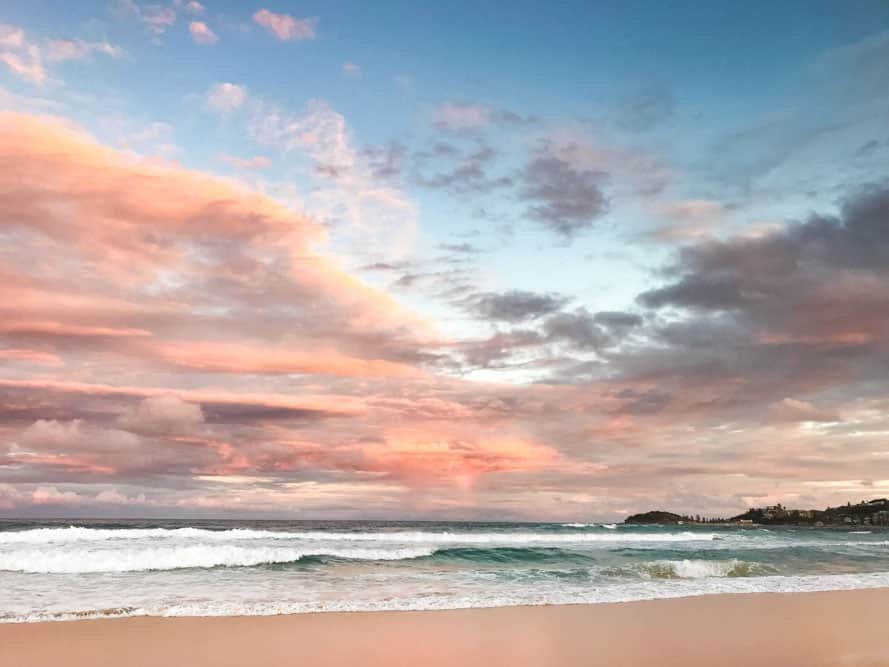
Use this as a quick start guide for sunrise and sunset photography settings then follow these next steps to perfect your images and experiment with your camera settings.
When you are experimenting with fast-changing light it is a good idea to bracket your images ( find out about that here ). Another tip is to always set your settings to suit the brightest part of the image and go towards underexposing your images rather than overexposing as it is easier to tweak this in post-processing.
Set Up Your Camera Gear
Set your camera on the tripod and make sure it is level ( you don’t want crooked horizons ruining your sunset images). You are going to be doing long exposures to make sure you get the best light and don’t want them spoilt with camera shake.
You will also need to have some kind of remote shutter release. Some cameras allow you to do this with an app, or you could use a Cable Release, or even just set the timer on your camera for 2-5 seconds.
Head to your camera settings and lock your mirror up. Then turn off the image stabilization on your lens.
All this will help you have clear, crisp photographs with no camera shake or blur.
Which Mode Is Best For Sunrise Photography?
There are a couple of modes you can use. Aperture Priority ( Unsure about how to change these on your camera? Watch a couple of YouTube clips on your camera make and model) or Manual.
Aperture Priority will allow you to set the aperture and the camera will work out the Shutter Speed for you ( great for photography beginners if it’s all a little daunting).
Manual will allow you the freedom and creativity to create the best images and will let you capture the best sunset or sunrise photos.
A mode that you should really not be using is Auto. If you are not brave enough to get out of Auto mode you are just lugging around an expensive point and shoot. It may take a while to learn how to use your camera but it will be worth it in the long run.
Experimenting and practicing are the only way you are going to be able to make those photographs exactly how you want them. And the great thing about digital photography is you can quickly delete any images you aren’t happy with.
Manual Focus
With low light situations, your lens may struggle with autofocus. Putting it into manual focus will allow you greater control and freedom to choose the focal point you want in your image.
ISO Camera Settings For Sunrise And Sunset
ISO is how sensitive the camera is to the light you let in through the lens.
This should be set on your lowest setting. On my camera, this is ISO 50 but this will depend on your camera. Between ISO 50 and ISO 100 is best.
Aperture Setting For Sunrise Photography
The Aperture is how much light is let into the camera.
Set your aperture to an f-stop value of at least F/11. The higher the f-stop value the smaller the aperture ( so less light let into the camera) and the greater the depth of field ( what is in focus on your image).
For landscape photographs you will usually want as much of your image in focus as possible, so a higher f-stop number is ideal. Try with f/16 first then experiment to see what effects you can get.
If you want to get into all the gory tech detail here is a great article.
Best Shutter Speed For Sunrise Photography
Shutter Speed is how long light is let into the camera for.
If you have your camera in Aperture Priority mode the camera will automatically set this for you.
In Manual Mode then you will need to play with shutter speed until you get the correct exposure and effect you want. To compensate for the lower amount of light let into your camera due to natural light and aperture setting, the shutter speed will get slower ( under 1/60 which means 1/60th of a second). When the light is minimal you may be using shutter speeds up to 30 seconds.
This is works together with the aperture to create the perfect capture. So if you change the aperture you will have to change the shutter speed too.
As the light will be changing quickly at these times of day you may have to be constantly changing the shutter speed to get the best exposure.
Working Out Exposure For Sunrise Photography
The sun can create high-contrast situations. Make sure you expose for this by pointing your camera at the brightest point in the area you want to capture to set the exposure.
Also, bear in mind this will make the darker parts of your image even darker. The light will be changing very quickly during sunrise and sunset so make sure you keep adjusting and checking your exposure.