
Spaces for Black Women to Discuss Menopause – Women’s eNews

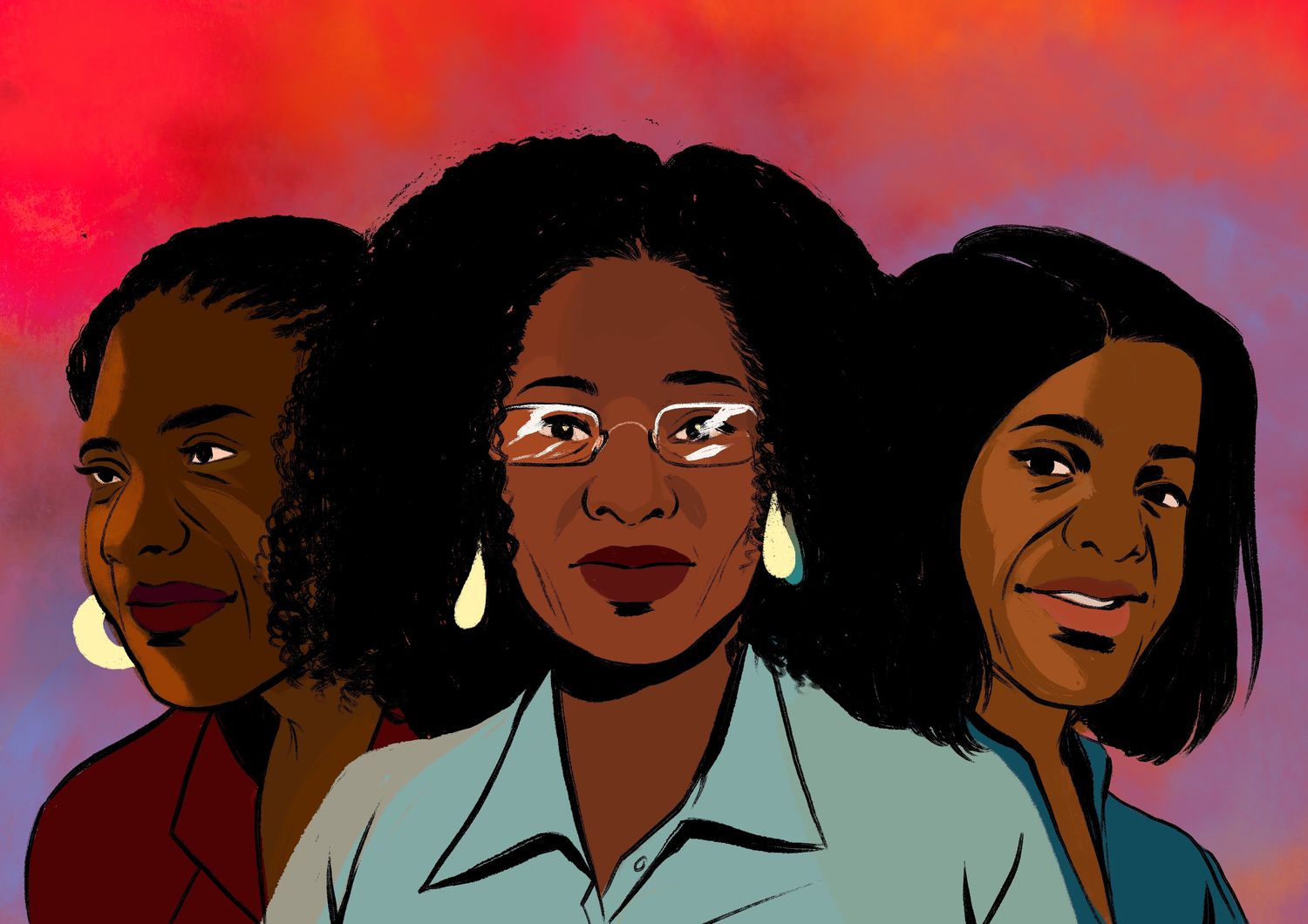
I was sitting in a hotel lobby in Atlanta, catching up with a friend about what turning 50 had brought into her life. We laughed about the things nobody warns you about — the brain fog, the aches and pains that show up for no reason, the night sweats that wake you up at 2 a.m. like clockwork. Then, almost as a joke, I asked her, “Who told you about menopause?”
Her answer wasn’t a joke at all. “Nobody,” she said. I nodded, because I already knew. My own mother never talked to me about it either — not because she was withholding it from me, but because nobody had ever talked to her about it. Two generations of women, sitting in the same silence.
I curate high-end brunch experiences for Black women over 40 through Bougie Brunchers, and my friend didn’t hesitate with her next thought. It was less of a suggestion and more of a directive: “You should host a brunch to talk about this.” I laughed and said, “Mimosas and Menopause!” half-joking. Weeks later, I had two doctors standing in a room full of women dressed in kaftans, muumuus, and goddess gowns, asking the questions we’d all been carrying alone.
What Was Missing
The more I sat with that Atlanta conversation, the more I understood that what we were missing wasn’t information — it was permission. Many of us grew up in households where this simply wasn’t discussed. Our mothers didn’t explain it because their mothers didn’t explain it to them. It became a kind of inherited silence, passed down the way other things get passed down, except this one left us unprepared instead of equipped.
That silence had a cost. Women didn’t know where to take their questions without feeling embarrassed or dismissed. So they didn’t ask. They white-knuckled their way through symptoms they didn’t have language for, assuming it was just something to endure quietly, the way the women before them had.
What Happens When Women Feel Safe
After Atlanta, I brought the conversation to Phoenix, then Houston, then Chicago. In each city, I watched something similar happen. Women who walked in as strangers left as sisters in a common struggle. Embarrassment gave way to honesty, and honesty gave way to relief.
I’ve watched women open up about symptoms they’d never said out loud to anyone — not their friends, not their doctors, sometimes not even their husbands. I’ve listened as women described doctors who brushed off their concerns entirely. I experienced this myself when I asked to have my hormones tested and was told, essentially, that I was just severely overweight — as if that closed the conversation instead of opening it.
I’ve seen friendships form out of shared symptoms and shared silence. And more than once, the conversation turned to our mothers, so many of whom had hysterectomies at a relatively young age. One of the doctors in the room made a point that stuck with me: the root of the word “hysterectomy” traces back to “hysterical.” Women have long been labeled hysterical simply for being expressive about what we’re experiencing in our own bodies. That is not a coincidence, and it is not ancient history — it still shapes how we’re heard, or not heard, in exam rooms today.
By the end of each gathering, something had shifted. Women weren’t leaving with all the answers, but they were leaving with better questions — questions they now felt entitled to ask their own doctors.
Why Professionals Belong in the Room
I want to be clear about something: Bougie Brunchers is not trying to replace healthcare, and I am not a doctor. What I’ve built is a room, not a clinic. We always welcome research-based, scientifically grounded insight on how to navigate this transition, and we intentionally invite physicians and other qualified experts into the conversation so that women hear accurate information directly from the people trained to give it.
What I’ve come to understand is that community and expertise aren’t competing with each other — they work together. The community is what builds the trust. And that trust is what gives women the courage to finally ask the questions they’ve been too afraid, or too embarrassed, to ask anywhere else.
Why Community Matters
This isn’t really just about menopause. It’s about what community does for women, period. Confidence grows when we’re not carrying something alone. Connection grows when we realize the woman next to us has been quietly dealing with the exact same thing. Shared experience becomes a form of advocacy, and advocacy chips away at stigma.
Sometimes women don’t need someone in the room who has all the answers. They need someone willing to create the room in the first place — a space honest enough for the real conversation to actually happen.
The Bigger Vision
My hope is that this doesn’t stay confined to a few cities or a few brunch tables. I want to see more organizations creating spaces like this one. I want to see more women talking openly across generations, so that daughters aren’t inheriting silence the way I did. I want to see more partnerships between community leaders and healthcare professionals, because we need both the trust and the science.
Most of all, I want to see a future where no woman feels isolated by something that nearly every woman will eventually go through. Menopause doesn’t have to be a solitary passage. Sometimes the most powerful thing you can do for another woman is simply create the room — and trust that once she’s in it, she’ll finally feel free to say what she’s been carrying in silence.
Lainika E. Johnson is the founder of Bougie Brunchers, a curated brunch experience for Black women over 40, and Eco in the City, a sustainability-focused venture rooted in environmental leadership. She speaks and writes on women’s empowerment, women in leadership, women entrepreneurs, midlife reinvention, women’s health advocacy, and building community across generations.






К слову, в XVII веке при французском дворе наоборот ценились пышные женские формы – пышная грудь, округлые бедра, но талия при этом тонкая https://petyadress.ru/
Век XVII можно назвать временем, когда эталоном красоты считалась зрелая женщина, век XVIII – противоположность, теперь идеал красоты юная девушка https://petyadress.ru/catalog/eje_platya
В прежние времена фигура приобретала геометрическую форму за счет использования пластинчатого корсажа и райфрока https://www.petyadress.ru/catalog/all/tproduct/770149871-747326529481-bomber-tsveti
Теперь же фигура становится очень разнообразной https://petyadress.ru/o_petya
Наибольшее разнообразие появляется во второй половине XVIII века https://petyadress.ru/catalog
Если в начале рококо прическа значительно уменьшилась, то теперь она снова становится выше https://petyadress.ru/catalog
Вместе с ней юбка становится существенно шире https://petyadress.ru/kontakti
Как общий вид платья, так и его украшение хорошо приспособились к стилю того времени, отличавшемуся склонностью к декорации https://petyadress.ru/catalog/teatralnoe
Используя ткани, тогда смогли «соединить» человека и природу https://www.petyadress.ru/catalog/yubki/tproduct/478678365-735471918921-yubka-schaste-pudra
Во дворцы природа могла проникнуть только через окна салонов https://petyadress.ru/petya_girls
Но ее отражение появилось в материалах и более всего прическах https://petyadress.ru/catalog/moskva
На прическах зачастую воспроизводились фонтаны, деревья, цветы и очень часто даже архитектурные садовые сооружения https://www.petyadress.ru/catalog/new/tproduct/1049616931-672273058182-palto-iz-shersti
Появились и новые разновидности одежды, которые тоже вошли в придворную моду https://www.petyadress.ru/catalog/all/tproduct/770149871-608115967881-kardigan-pushistik-chyornii
Основной вид – манто https://petyadress.ru/catalog/bestsellers
Это можно определить как достаточно свободный плащ, который плавно спадал с плеч https://www.petyadress.ru/catalog/barkhatniy_petya/tproduct/478674857-163824088361-barhatnii-petya-s-rukavami
Но все-таки такой плащ имел форму https://www.petyadress.ru/catalog/barkhatnie_platya/tproduct/733991846-387825525181-barhatnoe-plate-leo-s-rukavami
Форма была определена покроем нижней одежды с кринолином и прилегающим корсажем https://petyadress.ru/catalog/larina
В те времена модницы очень увлекались лентами https://petyadress.ru/catalog/lebed
Ими украшали всю одежду сверху донизу https://petyadress.ru/catalog/palto/tproduct/733991370-305596676961-petya-palto
Очень модны были цветы, как живые, так и искусственные https://www.petyadress.ru/catalog/all/tproduct/770149871-951116739401-kardigan-pushistik-zhemchuzhno-serii
В прежние времена искусственные цветы в основном изготавливали в монастырях https://petyadress.ru/policy
Их использовали для украшения храмов https://petyadress.ru/rococo/all
Но в то время во Франции появилось производство искусственных цветов https://petyadress.ru/catalog/bluzi_rubashki
И их использовали уже как модное дополнение к одежде https://petyadress.ru/catalog/moskva
Почти все украшения из мужского костюма исчезли после 1778 года https://petyadress.ru/catalog/bruki
Но шьется мужское платье еще из тканей очень нежных расцветок, таких же, из каких шили и женские наряды https://www.petyadress.ru/catalog/palto/tproduct/733991370-504295845611-petya-palto
Женщины как можно больше утягивали корсетами талию, также в это время прекрасной считалась небольшая грудь https://petyadress.ru/catalog/svitshoti
Были даже специальные планшетки, которые женщины подкладывали под лиф платья с целью грудь уменьшить https://www.petyadress.ru/catalog/palto/tproduct/733991370-994615079951-petya-palto
Лица белились и румянились, выделялись глаза и губы https://petyadress.ru/catalog/barkhatniy_petya
По-прежнему, как и в XVII веке носили искусственные родинки-мушки https://petyadress.ru/rococo