
369
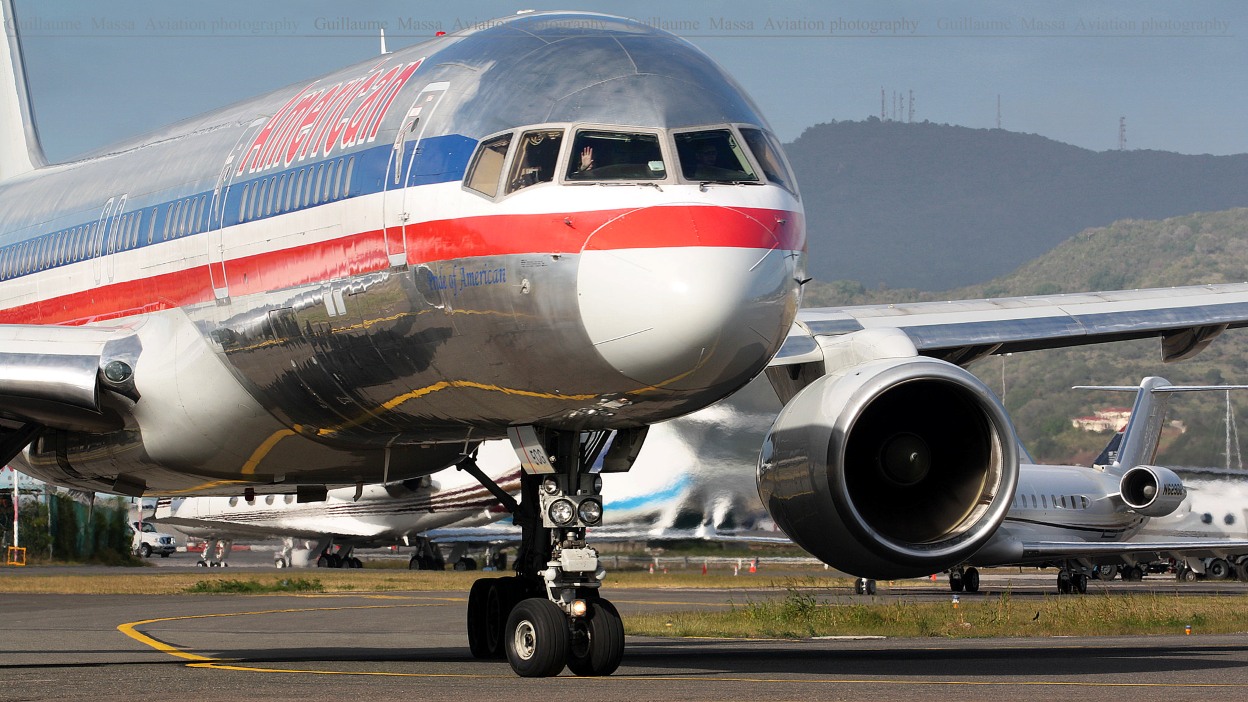
For more than 30 years, the Boeing 757 was one of the most familiar aircraft in the American Airlines fleet.
Its distinctive long, narrow fuselage could be seen almost everywhere across the airline’s network. It flew busy domestic services between major US cities, crossed the country to Hawaii, headed south to the Caribbean and Latin America, and even crossed the Atlantic to Europe.
Over the years, a total of 177 different Boeing 757-200s would appear in American Airlines colours, making it one of the largest operators of the type.
Yet today, not a single 757 remains in the American fleet.
So, what happened to American Airlines’ Boeing 757s – and where are they now?
American Airlines Introduces the Boeing 757
American Airlines became a Boeing 757 operator relatively early in the type’s career.
The 757 had entered airline service with Eastern Air Lines in 1983, having been developed as a replacement for ageing Boeing 727s. Its combination of powerful engines, excellent runway performance, good range and a capacity of roughly 180 passengers made it an extremely versatile aircraft.
American received its first examples in 1989.
One of the earliest was N616AA, delivered in September that year. It reportedly entered service between Dallas/Fort Worth and Chicago O’Hare on 30 September 1989.
The timing was significant. American was expanding rapidly, particularly at its Dallas/Fort Worth hub, and needed an aircraft larger and more capable than the Boeing 727 without requiring the capacity of a widebody.
The 757 fitted that role almost perfectly.
American’s aircraft were Boeing 757-223s – the final two digits being Boeing’s customer code for American Airlines – and were powered by Rolls-Royce RB211 engines.
More aircraft followed throughout the 1990s and early 2000s, and the 757 soon became a mainstay of the American Airlines fleet.
American’s 757 Fleet Grows
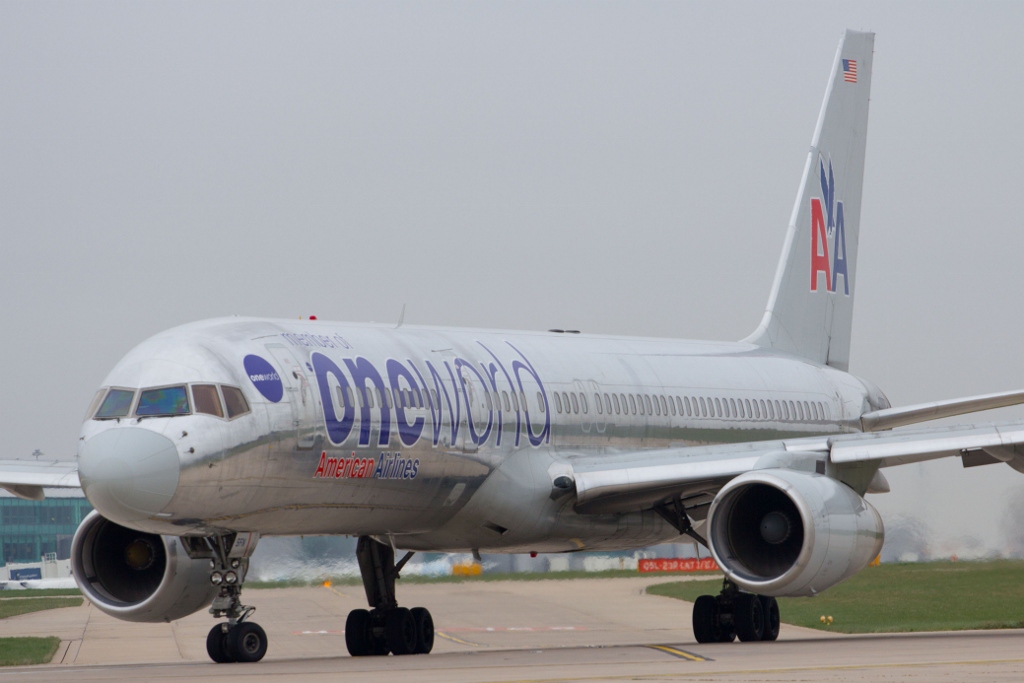
At its height, the Boeing 757 was one of American’s most important aircraft types.
By the beginning of 2001, American itself had 102 Boeing 757s in service, with another 22 on order.
The acquisition of Trans World Airlines (TWA) in 2001 complicated the picture further. TWA had 27 Boeing 757s of its own, and these briefly became part of the enlarged American operation.
Unlike American’s Rolls-Royce-powered aircraft, the former TWA 757s used Pratt & Whitney engines. Maintaining a small subfleet with different engines made little long-term sense, and most did not remain with American permanently.
Several of these former TWA aircraft eventually found a particularly interesting new home: Delta Air Lines.
Later still came another influx of 757s following the merger of American Airlines and US Airways in 2013. At the time, US Airways had 24 Boeing 757-200s, which were gradually absorbed into the new American.
Across all of these different sources, 177 individual Boeing 757s are recorded as having flown with American Airlines during the type’s career.
Not all 177 were present at the same time. At the end of 2003, for example, American was operating 140 757s, while by September 2013 the pre-merger American fleet had fallen to 104.
Where Did American Airlines Fly the 757?
Part of the reason the Boeing 757 became so important to American was its extraordinary versatility.
For much of its career, it was primarily a domestic workhorse.
From hubs such as Dallas/Fort Worth, Chicago O’Hare, Miami and New York JFK, 757s could be found linking major cities across the United States.
Typical services connected airports such as Boston, Los Angeles, Miami, New York, Orlando, Phoenix and San Diego, alongside many other destinations.
The aircraft was particularly useful on routes where a Boeing 737 or MD-80 was too small, but a widebody would have offered too much capacity.
Its performance also made the 757 particularly well suited to longer flights.
American’s 757s Head to Hawaii
One of the most memorable assignments for the American Airlines 757 was Hawaii.
The aircraft’s range allowed American to deploy it on long overwater sectors between the US mainland and the Hawaiian Islands, with Honolulu and Kahului among the destinations regularly seeing the type.
For many passengers, therefore, the 757 became synonymous with the beginning and end of a Hawaiian holiday.
Even as newer aircraft began arriving, Hawaii remained one of the type’s core assignments. American itself described the 757’s work towards the end of its career as being concentrated primarily on mainland domestic and Hawaiian routes.
South to Latin America and the Caribbean

The 757 was equally at home heading south.
American developed one of the largest networks between the United States, Caribbean and Latin America, centred particularly on its huge Miami hub.
Again, the 757 was almost ideally suited.
It had enough capacity for busy leisure and business markets, yet also possessed the range and performance necessary to operate longer sectors into Central and South America.
At various times, American 757s could therefore be seen at destinations throughout Mexico, the Caribbean and Latin America.
Even late in the aircraft’s career, the type was still being scheduled from Miami to destinations such as St Lucia.
The 757 was also used on longer routes from Dallas/Fort Worth. In 2013, for example, American launched a daily DFW-Lima service using the type.
But arguably the most interesting chapter of the American Airlines 757 story came when the narrowbody began flying in the opposite direction – across the Atlantic.
Taking the 757 Across the Atlantic
The Boeing 757 became famous for opening up thinner transatlantic routes which could not necessarily support a Boeing 767, 777 or other widebody aircraft.
American was among the airlines to take advantage.
A specially configured group of 757s was fitted out for international operations, allowing American to use the aircraft on routes between the US East Coast and Europe.
In June 2013, for example, American launched a daily New York JFK-Dublin service with a two-class 181-seat Boeing 757-200.
Following the US Airways merger, the enlarged airline gained even more experience of operating 757s across the Atlantic.
Philadelphia became particularly associated with these operations. Former US Airways 757s could be found crossing the Atlantic to European destinations, while a 757 was even used on one of American’s Philadelphia-London Heathrow frequencies.
Over time the type appeared on routes linking the US with destinations including Dublin, Edinburgh, Manchester, Shannon and other European cities.
These routes demonstrated one of the 757’s greatest strengths: it could fly long distances while carrying fewer passengers than the widebody jets traditionally associated with transatlantic flying.
It is a capability airlines are now replicating with modern aircraft such as the Airbus A321LR and A321XLR.
American Airlines Flight 77

Sadly, one of American’s Boeing 757s is also remembered for one of the darkest days in aviation history.
On 11 September 2001, Boeing 757-223 N644AA was operating American Airlines Flight 77 from Washington Dulles to Los Angeles.
The aircraft was hijacked after departure and subsequently deliberately flown into the Pentagon in Arlington, Virginia.
All 64 people aboard the aircraft, including the five hijackers, were killed, along with 125 people inside the Pentagon.
Flight 77 was one of four aircraft hijacked during the September 11 terrorist attacks. Another American Airlines aircraft, Boeing 767-223ER N334AA operating Flight 11, was flown into the North Tower of the World Trade Center in New York.
N644AA had been delivered new to American Airlines in May 1991.
It was not the only American 757 to be lost during the aircraft’s career. N651AA was destroyed while operating Flight 965 near Cali, Colombia, in December 1995.
The Fleet Begins to Shrink
By the 2010s, however, the future of the Boeing 757 was becoming increasingly clear.
Production of the type had ended in 2004 and American’s aircraft were ageing. Newer jets offered lower fuel burn, reduced maintenance requirements and more modern passenger cabins.
American consequently began reducing its 757 fleet.
The arrival of large numbers of Airbus A321s was particularly important. These aircraft could perform many of the domestic, Caribbean and transcontinental missions previously handled by the 757, but with much newer technology and better economics.
The Boeing 737-800 also took over many shorter assignments, while Boeing 787 Dreamliners and other widebodies covered longer international routes.
By early 2020, just 34 Boeing 757s remained in the American Airlines fleet.
Their days were numbered, but American had originally expected them to remain in service a little longer.
Then COVID-19 arrived.
An Abrupt End in 2020

The collapse in air travel during the early months of the pandemic caused airlines around the world to accelerate retirement plans.
American was no exception.
In 2020 it announced the early retirement of five aircraft types: the Airbus A330-200 and A330-300, Boeing 767-300ER, Embraer E190 and Boeing 757-200.
The decision brought the curtain down on more than three decades of American Airlines 757 operations.
The 34 aircraft still listed in the fleet at the beginning of 2020 would not return to normal passenger service.
But that was not necessarily the end of their flying careers.
What Happened to American Airlines’ Boeing 757s?
For aircraft enthusiasts, this is perhaps the most interesting part of the story.
Despite the type disappearing from American Airlines, a surprising number of former American 757s have continued flying elsewhere.
Their destinations have been remarkably varied.
Delta Air Lines

Perhaps the most unusual examples are those which subsequently flew for one of American’s biggest competitors.
A number of the former TWA Boeing 757s which briefly became part of American Airlines eventually moved to Delta Air Lines.
Some have enjoyed extraordinarily long careers.
N717TW, for example, was delivered to TWA in 1999, became part of American in 2001 and joined Delta in 2008. More than a quarter of a century after it was built, it has remained active with Delta.
N721TW and N727TW followed similar paths.
For enthusiasts, these aircraft represent a fascinating physical link between three giants of US airline history: TWA, American and Delta.
Icelandair

Other former American 757s found their way to Icelandair, an airline which arguably made better use of the 757’s unique capabilities than almost any other carrier.
The Icelandic airline built much of its network around connecting North America and Europe through Keflavik, a role for which the 757’s capacity and range were exceptionally well suited.
Former American airframes have therefore gone on to spend years crossing the North Atlantic in Icelandair colours.
However, Icelandair itself is now in the process of retiring the 757 as Airbus A321LR and A321XLR aircraft take over.
A Second Life Carrying Cargo

An even larger number of former American Airlines 757s found a new purpose after their passenger-carrying days ended.
The 757 has become one of the world’s most successful converted freighters.
Its powerful engines, strong airframe, useful payload and good runway performance make it extremely attractive to cargo operators. As passenger airlines retired the type, many aircraft were acquired for passenger-to-freighter conversion.
Former American aircraft have subsequently appeared with operators including:
- DHL and associated operators
- Cargojet
- Amerijet International
- SF Airlines
- YTO Express Airlines
- other freight and express cargo operators around the world.
In many cases, these aircraft look very different today. Passenger windows have been blanked, a large freight door has been cut into the forward fuselage, and cabins which once carried hundreds of holidaymakers and business travellers have been transformed into main-deck cargo compartments.
It has given some of American’s former 757s a remarkable second career hauling overnight parcels around North America, Europe or China.
Others Never Flew Again

Not every former American 757 was so fortunate.
Age, condition and the availability of suitable conversion slots meant many aircraft simply reached the end of their useful lives.
Around 80 of the 177 aircraft associated with American Airlines are now believed to have been scrapped, parted out or placed into long-term storage.
Some spent their final years parked at desert storage airports in the United States, where useful components could be removed to support the remaining worldwide 757 fleet.
Others were acquired by leasing, maintenance or aircraft trading companies before ultimately being dismantled.
As the worldwide 757 fleet continues to age, this number will inevitably increase.
Discover the Full Story of the Boeing 757

https://destinworld.com/product/boeing-757-timelines/
American Airlines was just one chapter in the remarkable story of the Boeing 757.
If you enjoyed looking back at American’s fleet, Boeing 757 Timelines takes the story much further, exploring the development, evolution and career of one of Boeing’s most distinctive and capable airliners.
Packed with large colour photographs, archive images, technical information, fleet lists and informative captions, the book follows the 757 from its origins and development through its passenger heyday, transatlantic operations and its continuing second life with cargo, military and specialist operators.
With many 757s now disappearing from passenger service – but others still flying around the world – it’s an ideal addition to the bookshelf of any airliner enthusiast.
Find out more and order Boeing 757 Timelines here:
https://destinworld.com/product/boeing-757-timelines/
Title image: Guillaume Massa