

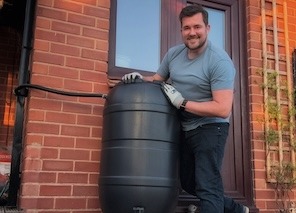
Water butts – the best water saving feature for your garden
I was slightly suspect when I was readily recommended by fellow gardening geeks to get one, especially one that connects to your gutter drainpipe. I thought they looked ugly, take ages to fill up with rainwater, might attract mosquitos due to standing water and it might be difficult to install.
Well, I’m glad I listened and got over my doubts, grabbing a 210 litre one at my local B&Q store.
See more: Water butts at B&Q
Today, it’s one of my proudest items in the garden and, what’s more, this water butt is the best thing to save water in my garden!
Let’s break it down.
Water butts collects SO much water!
This was my biggest surprise literally on the night I installed the water butt. We were forecasted moderate rain in the evening, and sure enough, we had a rain shower lasting for about an hour – quite strong. I remember looking out of the window and thinking:
Ah good, it’ll fill the water butt a few centimetres of water. A few more showers and I’ll have water to use in the garden.
I could not be more wrong.
When I went to check the water butt later that night, lifting the lid, my jaw dropped. The damn thing was full to the brim of water!
If you think about it, during a rain shower, water collects all over the roof and drains into the gutters and down the downpipes, which my water butt connector siphons water from into the water butt. According to the Royal Horticultural Society:
Even a small roof can collect large volumes of water. In dry south-east England, 2,500–3,500 litres of rainwater each year can be collected from the roof of a small shed – enough to fill around 10–15 standard 240‑litre water butts. – RHS
So, literally within hours of installing the water butt, I was a total convert. Nowadays, I use the water butt to water my greenhouse plants, my potted plants and my rockery – and I’ve yet to run out of water from the water butt. (Let’s see what happens at the next heatwave).
But even in warm weather, I don’t need to worry about the water evaporating as the water butt comes with a lid to keep the bank of water cool and back percolating within.
Water butts really helps your water bills
I confess, pre-water butts, I was very stingy with water being used in the garden on hot days – purely because I was thinking of my water bill. Every time I used the garden hose connected to my water supply, I used to think of literally money being poured down the drain (hey, I’m a Yorkshireman, of course I think about saving money all the time).
Since using the water butt, I think of it as using ‘free water’ and my plants thank me for it.
More so, you can use this ‘free water’ for anything. It’s not always about plants or gardening. You can use it to wash your car, help with washing muddy items, rinse your garden furniture and loads more.
If you’re worried about running out, don’t forget they can be topped up really quickly as mentioned above.
Water butt LIDS KEEP PESKY MOSQUITOS AND STOPS BAD SMELLS
I thought that having a water butt (particularly next to my back door), I would attract unwanted flies and mosquitoes along with bad smells – simply for having the water standing there.
But I forget. Water butts have lids that can stop debris, leaves and other organic falling in. Also, keeping it secured can stop mosquitos and flies very little opportunity for them to breed too.
Rainwater is fairly clean too so there’s no chemicals that can cause algal blooms.
Plants love water from water butts
Following the theme about how rainwater is clean, plants absolutely love water from water butts due to its softness (no chalk elements), naturally free from chemicals (particularly chlorine) and it’s the same temperature as outside so they don’t get a shock from really cold water. If you have acid-loving plants such as rhododendrons (one of my other pride and joys in the garden) or camellias – they often do better with rainwater than tap water.
It’s not that difficult to install a water butt
Before, I put off getting a water butt connected to my drainpipe because I simply thought it would be complicated to install it. Also, I didn’t want to ruin my downpipes just in case it went wrong.
In fact, it took me less than an hour to install it on one sunny evening at 7pm. Most of the modern water butts just involve positioning the butt on a stand, then cutting a hole in the downpipe (it’s a lot easier than you think), fitting the supplied diverter and then, hey presto, you connect the hose. Make sure that the diverter is just slightly higher than where the connector pipe leads into the water butt – this will aid gravity to do its job.
One water butt or two?
Well, seeing the success of having a water butt at one end of the garden, I’m sorely tempted to get another one at the other end where my garage is. However, I would need to install guttering there to collect the water and lead into a water butt there. But on the plus side, it’s where my vegetables are going to be so it would be handy to have one there instead of filling up a watering can or bucket at my current one and traipsing across the garden, spilling here and there.
So, watch this space!
There you have it. A water butt is a sure-fire way on saving water in your garden. Do you have more tips on saving water? Let me know in the comments below!
Looking for garden tips? Check out my range here: Home & Garden