

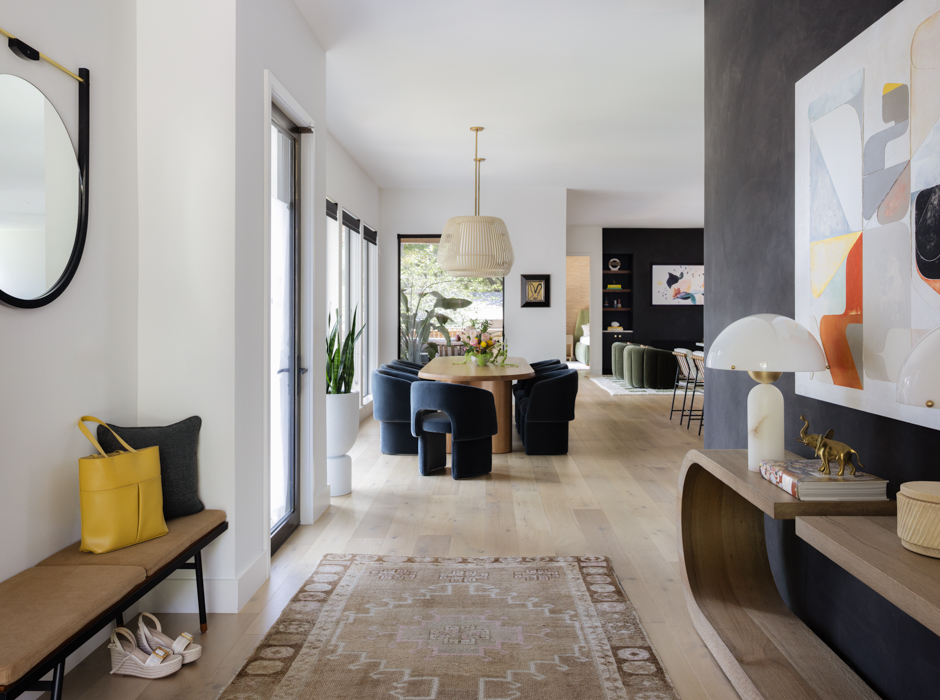
Luxury Is Craftsmanship, Not Cost
The single biggest misconception about luxury design is that it’s a shopping exercise, that you achieve it by buying the most expensive version of everything. In reality, the most luxurious rooms are defined by how well things are made and how precisely they’re executed, not by their sticker price.
Consider joinery. A mass-produced cabinet and a custom, hand-built one might both be “wood cabinets,” but the custom piece has drawers that close with a whisper, grain that runs continuously across the doors, and hardware set at exactly the right height for the way you live. That level of resolution is what the eye reads as luxury, even when it can’t name why. Craftsmanship is felt before it’s understood.
This is why true luxury often costs more, not because the materials are flashier, but because skilled makers, precise installation, and uncompromising quality control take time. The value lives in the execution.
The Details That Separate a $50k Room From a $500k Room
If you walked through two beautifully furnished living rooms, the differences that matter most would be almost invisible at first glance. Luxury lives in the details that reward a second look:
Proportion and Scale
In a luxury room, every element is sized in relation to the architecture and to the other pieces. Ceilings, furniture, art, and lighting are in conversation. Get proportion wrong and no amount of expensive furniture will save the room.
Millwork and Transitions
How a wall meets the ceiling, how one flooring material passes into another, how a door casing is profiled, these transitions are where craft either shows up or disappears.
Hardware and Fixtures
The weight of a door handle, the finish on a faucet, the way a drawer glides. Tactile quality is a hallmark of luxury because you experience it with your hands, every day.
Lighting Layers
A luxurious space is never lit by a single overhead source. It’s layered, ambient, task, and accent, often on dimmers, tuned to flatter both the room and the people in it.
Considered Negative Space
Knowing what to leave out is as important as what to include. Restraint reads as confidence.
None of these are about spending more for its own sake. They’re about spending deliberately on the things that shape how a room feels.