

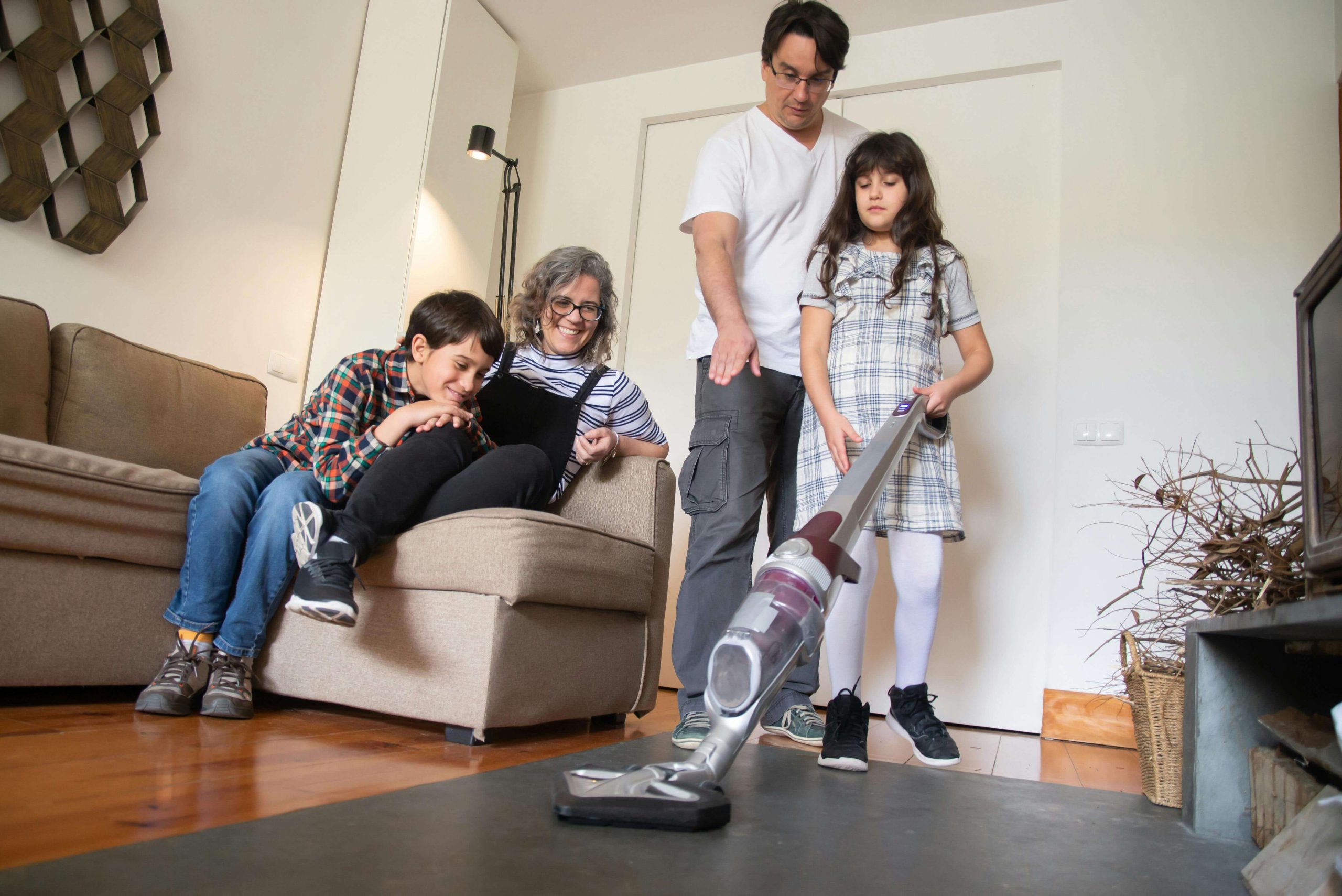
I still remember the first time I tried to get my daughter involved in spring cleaning. I had hopes of a Snow White-style montage: birds chirping, children giggling while happily dusting baseboards, and the whole house sparkling by noon.
The reality? A tipped-over bucket of soapy water, two meltdowns over who got the blue sponge, and a very tired mama who ended up cleaning around her instead of with her.
If you’ve ever felt that pit in your stomach when looking at a messy house, knowing you need help but dreading the battle to get it, you are not alone. Spring represents fresh starts, blooming flowers, and open windows, but for parents, it often just looks like a daunting to-do list.
But here is the secret I’ve learned after a few more years (and a few more tipped buckets): It doesn’t have to be a battle. There are ways to keep your home tidy as a busy parent.
In fact, spring cleaning with kids can actually be… fun. Okay, maybe not “Disney movie” fun, but certainly a time for connection, music, and shared accomplishment. By shifting our mindset from “getting it done” to “doing it together,” we can turn these chores into valuable life lessons and even building blocks for self-esteem.
Let’s dive into how we can make this season a fresh start for our homes and our family routines.

If you’re looking for an easy way to freshen up your laundry appliances, this washing machine cleaner is a simple solution worth trying!
Why Involving Kids in Spring Cleaning Actually Matters
It is so tempting to just do it ourselves. I know the feeling well.
When we clean, It’s faster, it’s done “right” the first time, and there’s significantly less whining. But when we exclude our kids from the process of caring for our home, we miss out on some massive parenting wins.
Life Skills Start at Home
We want our children to grow up to be capable, independent adults. Teaching them how to care for their environment is just as important as teaching them to read or ride a bike. When a child learns how to organize a drawer or wipe down a table, they aren’t just cleaning; they are building competence.
There is a unique confidence that comes from contributing to the household. Even a toddler carrying a laundry basket (or dragging it!) feels a sense of pride. They think, I am helpful. I am capable. That is a powerful message to instill early on.
Cleaning Together Strengthens Family Bonds
This might sound counterintuitive, especially if your current reality involves disagreements over unmade beds. However, shared goals create teamwork. When the whole family is working toward a common objective (like getting the living room ready for a movie night) it fosters a sense of “we are in this together.”

It also teaches cooperation (“I’ll hold the dustpan, you sweep”) and accountability. Plus, it opens the door for conversation and fun. I’ve had some of the best dance parties with my kiddo while we jamming to tunes while decluttering.
Spring Cleaning as a Reset for the Whole Family
Have you ever noticed how your kids seem more irritable when the house is a disaster? Clutter affects our mental health, and kids feel that stress just as much as we do, even if they can’t articulate it.
Involving them in the “reset” helps them connect the dots. They learn that a tidy space feels calm and inviting. It empowers them to take control of their environment, teaching them that if things feel chaotic, they have the tools to make it better.
How to Make Spring Cleaning Fun (Yes, Really)
If we approach cleaning with a heavy sigh and a grumble, our kids will mirror that energy. If we bring a little creativity to the table, we can change the vibe entirely. Here are a few tricks that have worked wonders in my house.
Reframe Chores as Games
Gamification is a parent’s best friend. Suddenly, picking up Legos isn’t a chore; it’s a race against the clock.
- The 10-Minute Tidy Blitz: Set a timer for 10 minutes. Put on high-energy music. See how much everyone can get done before the buzzer sounds. The adrenaline rush makes it surprisingly fun.
- Before/After Photo Contests: Kids love seeing tangible progress. Take a picture of a messy shelf. Have them organize it, then take an “after” photo. Swipe back and forth to show them the transformation. They will be amazed at what they accomplished.
- Color Hunts: For younger kids, tell them to pick up everything that is red first. Then everything blue. It turns tidying into a scavenger hunt.
Add Music, Movement, and Motivation
Music changes everything. Create a collaborative “Family Cleaning Playlist.” Let every family member add three songs. You might end up with a mix of Disney soundtracks, 80s hip-hop, and the latest pop hits, but that’s part of the charm.
Encourage dance breaks. If a favorite song comes on, pause the vacuuming and have a 30-second dance party. It releases tension and reminds everyone that you don’t have to take yourselves too seriously.
Turn Tasks into Mini Missions
Kids love to roleplay. Instead of asking them to sort socks, ask them to join the “Sock Rescue Team” to reunite lost pairs.
- Toy Sorting Heroes: The toys are lost and need to find their way back to their “homes” (bins).
- Dust Detectives: Give them a flashlight and a microfiber cloth. Their mission is to find the hidden dust bunnies under the sofa or on the baseboards.
Age-Appropriate Spring Cleaning Tasks for Kids
One of the biggest mistakes we make is giving kids tasks that are too hard (which leads to frustration) or too easy (which leads to boredom). Here is a breakdown of chores for kids by age to help you find that sweet spot.
Toddlers & Preschoolers (Ages 2–4)
At this age, they want to help. Capitalize on that enthusiasm, even if it’s imperfect.
- Putting toys in bins: Broad categories work best (e.g., “soft things go here,” “hard things go here”).
- Wiping surfaces: Give them a damp cloth (water only) and let them wipe baseboards or low cupboards.
- Matching socks: It’s a great matching game for cognitive development!
Early Elementary (Ages 5–7)
They can follow multi-step directions now and have better motor skills.
- Sorting toys or books: They can organize by color, size, or type.
- Making beds: It won’t look like a hotel bed, and that is okay. The habit is what matters.
- Dusting low surfaces: Coffee tables, TV stands, and plant pots are fair game.
Older Kids (Ages 8–12)
This group is capable of real, helpful cleaning.
- Organizing closets or desks: They can decide what clothes fit and what trash needs to be thrown out from their school bags.
- Decluttering shared spaces: Ask them to reorganize the video game shelf or the coat rack.
- Vacuuming or sweeping: These are great gross motor tasks that show immediate results.
How to Keep Kids Motivated Without Bribing
Sometimes, it’s tempting to bribe our kiddos into cleaning.
We’ve all been there. Standing in the hallway holding a chocolate bar hostage in exchange for a clean room.
While rewards have their place, we want to build intrinsic motivation over time.
Praise Effort, Not Perfection
If your 6-year-old makes their bed and the comforter is lumpy, praise them anyway. “Wow, I see how hard you worked to pull those covers up! The room looks so cozy.”
Avoid the urge to “fix” it in front of them. Nothing kills motivation faster than watching Mom redo the work you just finished. If it really bothers you, fix it later when they aren’t looking, but try to let it go.
Use Visual Progress Trackers
There is something so satisfying about checking a box.
- Sticker Charts: For younger kids, a sticker for every completed task is gold.
- Checklists: For older kids, give them a clipboard with a room-by-room checklist. Being able to cross things off gives a dopamine hit that keeps them going.
Reward the Experience, Not Just the Outcome
Instead of “If you clean, you get a toy,” try framing it as, “When we finish cleaning, we will have time for movie night (or whatever fun activity your kiddo may enjoy).”
- The Reveal: Close the door to the clean room, then do a dramatic “reveal” opening. Let them bask in how good the clean space feels.
- Family Rewards: “Since we all worked together to finish the cleaning by noon, we have time to go to the park/get ice cream/watch a movie.”
Decluttering with Kids Without the Meltdowns
Spring cleaning often involves decluttering, which can be an emotional minefield for kids. To them, that broken plastic toy from a fast-food meal is a treasure.
Teach the “Keep, Donate, Toss” Method
Grab three boxes or bags and explain the concept simply:
- Keep: Things we use and love.
- Donate: Things we have outgrown that another kid would love to play with.
- Toss: Things that are broken or missing pieces.
Let them have the final say on most items. If you force them to get rid of something, they will cling tighter to everything else.
Use Emotional Language Kids Understand
Instead of saying, “This is trash,” try asking questions that prompt their own decision-making:
- “When was the last time you played with this?”
- “Does this toy still feel fun to you, or is it for younger kids?”
- “We have so many toys. Do you think we could share some with a child who doesn’t have any?”
Empowering them to be kind and generous often overrides the desire to hoard.
Creating a Family Spring Cleaning Day Tradition
Make cleaning an event! Instead of dragging it out over weeks of nagging, pick one Saturday to be “Family Spring Cleaning Day.”
In my home, I actually designate one major day every month to be “cleaning & care” day. Is has become a part of our normal family routine. We spend the morning cleaning, & in the evening, we soak our feet & get to relax. Its become a great routine that we look forward to.
Plan It Like an Event
When planning a major cleaning day, it’s often beneficial to put it on the calendar. Build hype around it (ie “Next Saturday is our Big Clean Day!”).
Assign roles beforehand so everyone knows what they are responsible for. And, keep the timeframe realistic. For instance, setting some time out in the morning (9 AM to 12 PM) to clean can leave the afternoon open for other activities. Anything longer than a few hours and you risk burnout.
End with a Family Celebration
Whatever you do, it is crucial to end the cleaning day with a big celebration. After you’ve worked hard, then you can play hard.
When planning a cleaning celebration, you may want to plan a special meal (pizza night is a classic for a reason), a family bike ride, or simply spend time collapsing on the couch together for a movie marathon in your fresh, clean living room.
At the end of it alll, you can also take time for intentional discussion with your kiddo(s). Ask them, “Doesn’t the house feel lighter? What feels better now?” Help them connect the hard work to the positive feeling. When you do this, you help your children to remember the reward of having a clean home.
Common Mistakes Parents Make When Cleaning with Kids
I have made every single one of these mistakes, so no judgment here!
- Expecting adult-level results: Your 8-year-old’s version of a clean bathroom will not match yours. Lower your standards for the sake of their participation.
- Doing everything yourself: It’s faster, yes. But it teaches them that someone else will always clean up their mess.
- Turning cleaning into punishment: “Go clean your room because you were naughty!” makes cleaning the enemy. We want cleaning to be a form of self-care and home maintenance, not a penalty.
- Skipping breaks: Kids (and adults) need rest. Pushing through hunger or fatigue leads to meltdowns. Hydrate, snack, and rest often.
Final Thoughts: Clean Homes, Connected Hearts
At the end of the day, having a spotless house isn’t the ultimate goal. The goal is a home that functions well for the people living in it.
Spring cleaning with kids is messy. It takes longer. There will probably be moments where you want to toss the sponge in the trash and turn on the TV. But there will also be moments of laughter. There will be the pride on your child’s face when they organize their bookshelf. There will be the shared relief of sitting down in a tidy room together.
Start small, invite grace, and laugh when the water spills. Whenever you takt time to clean with your children, you are building memories and skills that will last long after the dust settles.
Need some help in getting started? Check out the FAQs below to help guide you:
FAQs
At what age should kids start helping with chores?
Kids can start helping as early as age 2! Toddlers love to mimic their parents. Simple tasks like putting a toy in a basket or wiping a spill with a cloth are great starting points. The earlier you start, the more “normal” helping out becomes.
How long should spring cleaning with kids take?
Keep sessions short to match their attention spans. For toddlers, 10-15 minutes is plenty. Elementary kids can handle 20-30 minute bursts. It’s better to do short, focused bursts over a few days than one marathon session that ends in tears.
What if my child refuses to help clean?
First, validate their feelings (“I know, I don’t really feel like cleaning today either”). Then, offer a choice: “Would you rather dust the living room or organize the shoes?” Giving them autonomy can reduce resistance. Also, try the “we do it together” approach and work alongside them.
How do I make chores fun for kids who hate cleaning?
Add an element of play! Use music, set timers for “speed cleaning” races, or turn it into a role-playing game. If they are competitive, challenge them to beat their “high score” (time) from the last cleanup.
Do you have family cleaning advice that works for your household? Share in the comments below to help out a fellow parent! We’d love to hear from you.

After becoming a published poet in middle school, DayJah Danielle felt called to inspire others through writing. At the young age of 15, DayJah began her journey of encouraging others through her writing when she started a text-based ministry called “Word of the Day”. Since then, she has gone on to perform spoken word on various stages, write a children’s book, and even founded an organization for poets (with 3 of her close friends from college). Now, she uses her wisdom and love of writing to help better the lives of families everywhere by bringing words of hope, knowledge, and inspiration through this platform. DayJah serves as the sole owner and editor-in-chief at FamilyFelicity.com. She is so grateful that you are here today and hopes that you will gain strength and motivation as you consume this content and engage with the FF community.