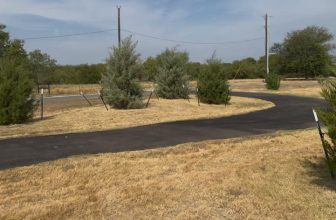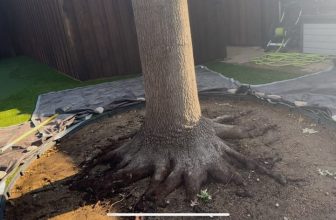


Today we’re here in Granbury, Texas, inspecting several trees that are experiencing significant environmental stress caused by improper mulching practices.
Mulch can be one of the best cultural tools we have for maintaining healthy trees.
But when mulch is installed incorrectly, too much of a good thing can become a serious problem.
On this property, mulch has been piled approximately 8 inches deep and pushed directly against the trunks of the trees. The natural root flares are completely buried, creating what I commonly describe as the telephone-pole effect—the trunk disappears straight into the landscape instead of widening naturally at the base.
That immediately gets my attention.
A healthy mature tree should normally display a visible root flare where the trunk transitions into the major structural roots.
When I cannot see that flare, I want to know why.
Was the tree planted too deeply?
Was additional soil installed?
Has mulch accumulated year after year?
Are girdling roots developing underneath?
Is moisture being trapped against the root collar?
In this particular case, excessive mulch accumulation is creating an artificial environment around the base of these trees.
My recommendation is straightforward:
The excess mulch needs to be removed and the natural root flare properly exposed.
Mulch Is Beneficial When Used Correctly
Before discussing the problems, it’s important to understand that mulch itself is not bad.
Proper organic mulch can provide tremendous benefits.
A good mulch layer helps:
- Moderate soil temperature
- Reduce evaporation
- Suppress turfgrass competition
- Protect soil from compaction
- Add organic matter as it decomposes
- Support soil microorganisms
- Protect absorbing roots from temperature extremes
In a natural woodland environment, trees grow beneath decomposing leaves, twigs, and other organic material.
Proper mulch attempts to reproduce some of those conditions in the urban landscape.
The problem begins when we confuse mulching with burying the tree.
Eight Inches of Mulch Is Excessive
The mulch layer on this Granbury property is approximately eight inches deep in areas.
That’s far more than these trees need.
For most established landscape trees, approximately 2 to 4 inches of coarse organic mulch is generally sufficient, with around 3 inches being an excellent practical target in many North Texas landscapes.
More is not automatically better.
Excessively deep mulch can change moisture movement, soil temperature, and gas exchange within the upper root environment.
It can also conceal developing problems for years.
The tree may look beautifully landscaped above ground while its root collar is deteriorating underneath.
Never Pile Mulch Against the Trunk
One of the most common landscaping mistakes I see is commonly called volcano mulching.
Mulch is piled high around the trunk, sometimes creating a mound several inches or even a foot tall.
It may look neat.
Biologically, it creates an unnatural environment.
Tree bark above the natural root flare is not designed to remain continuously buried in moist organic material.
When mulch is pushed directly against the trunk, moisture can remain against the bark for extended periods.
That can contribute to bark deterioration and create favorable conditions for opportunistic pathogens.
The root flare should remain visible.
Mulch should be pulled several inches away from direct contact with the trunk.
Think donut, not volcano.
What Is the Root Flare?
The root flare is where the trunk begins widening as it transitions into the major structural roots.
A properly planted tree should not look like a telephone pole entering the ground.
You should see that gradual widening at the base.
That flare is extremely important because it represents the transition between above-ground stem tissue and the structural root system.
When the root flare disappears beneath eight inches of mulch, we lose our ability to visually inspect one of the most important areas of the tree.
We may also create environmental conditions that encourage abnormal root development.
The Telephone-Pole Effect Is a Warning Sign
Whenever I see a trunk entering the ground perfectly straight without any visible basal flare, I consider it a diagnostic clue.
It doesn’t automatically tell me what the problem is.
It tells me to investigate.
The tree may have been planted too deeply.
The grade may have been raised.
Mulch may have accumulated.
Or some combination of these conditions may be occurring.
The solution is to determine where the true root flare actually exists.
Tree Roots Need Oxygen
This is where soil biology becomes extremely important.
Roots are living tissue.
They require oxygen for cellular respiration.
During respiration, carbohydrates produced by photosynthesis are converted into usable energy that supports:
- Root growth
- Nutrient absorption
- Membrane transport
- Cell division
- Defense responses
- Tissue maintenance
Most of the actively absorbing roots of landscape trees occur relatively close to the soil surface because that’s where oxygen availability is generally greatest.
Anything that significantly changes that environment deserves attention.
Understanding Root-Zone Hypoxia
Hypoxia means insufficient oxygen.
We commonly associate root-zone hypoxia with waterlogged or severely compacted soils because water or compacted soil structure reduces the amount and movement of air through the pore system.
Excessive mulch does not automatically create hypoxia by itself, but an extremely deep, continuously wet mulch layer—especially when combined with poor drainage, irrigation, compacted underlying soil, or a buried root flare—can contribute to an unfavorable root environment.
This distinction is important.
The objective isn’t blaming mulch for every root problem.
The objective is understanding how several environmental factors can work together.
Too Much Moisture Around the Root Collar
An eight-inch mulch layer can retain significant moisture.
During dry weather, some moisture retention is beneficial.
During wet periods, however, excessive organic material around a buried root collar can keep that environment wetter for longer than intended.
Now add irrigation.
Then add North Texas rainfall.
Then consider poorly drained or compacted soil beneath the mulch.
The tree can experience a chronic moisture imbalance.
That can increase susceptibility to root and collar problems.
Root Rot and Opportunistic Pathogens
Chronically unfavorable root conditions can predispose trees to root decline and opportunistic pathogens.
Root rot isn’t simply caused by “water touching roots.”
Healthy roots obviously require moisture.
Problems develop when drainage, oxygen availability, host susceptibility, and pathogen activity combine in the wrong way.
When roots remain physiologically stressed, their natural defense capabilities decline.
That is when certain fungal and oomycete pathogens may become more damaging.
This is why we focus so heavily on correcting the environment.
Healthy roots growing in properly aerated soil have a much better opportunity to defend themselves.
Canker Development and Chronic Stress
The same principle applies to canker diseases.
Many canker organisms become most damaging after the host tree has already been weakened.
Chronic root stress reduces vigor.
Reduced vigor decreases carbohydrate reserves.
Lower carbohydrate availability can weaken defense and compartmentalization responses.
The visible canker may therefore represent one part of a much larger stress sequence.
The root environment matters even when the symptoms appear above ground.
How Over-Mulching Affects Water Relations
Trees operate through an interconnected hydraulic system.
Water enters through absorbing roots.
It moves upward through the xylem.
Eventually it reaches the leaves, where a portion is released into the atmosphere through transpiration.
Transpiration creates tension within the xylem that helps drive water movement through the soil-plant-atmosphere continuum.
Healthy water movement therefore begins with a functional root system.
If roots are chronically stressed by poor oxygen availability, compaction, root disease, excessive moisture, or abnormal planting depth, their ability to support canopy water demand can decline.
The canopy eventually reflects what is happening underground.
Respiration and Transpiration Are Different
These two terms are sometimes confused.
Respiration is the metabolic process through which living cells release usable energy from carbohydrates.
Roots respirate.
Leaves respirate.
Living woody tissues respirate.
Transpiration is the loss of water vapor primarily through leaf stomata.
The two processes are different, but both depend upon healthy tree physiology.
When the root environment deteriorates, the entire biological system becomes less efficient.
Excess Mulch Can Hide Girdling Roots
Another concern with deeply buried root flares is the development of stem-girdling roots.
Roots developing within moist mulch or excessively deep soil may grow in abnormal orientations around the trunk.
As those roots and the trunk increase in diameter, mechanical pressure can develop.
Eventually the root may begin compressing tissues along the root flare or lower stem.
The homeowner sees mulch.
Underneath, a significant structural and physiological problem may be developing.
That’s another reason root-flare visibility matters.
We need to be able to inspect the base of the tree.
Proper Mulching Practices
The correction is relatively simple when caught early.
Our goal is to create a broad, shallow mulch bed rather than a deep mound.
For these Granbury trees, I recommend:
- Removing excessive mulch
- Locating and exposing the natural root flare
- Inspecting for girdling roots
- Evaluating the underlying soil
- Maintaining approximately 2–4 inches of mulch
- Keeping mulch several inches away from the trunk
- Extending the mulch outward rather than upward
A wider mulch ring is generally more beneficial than a deeper mulch pile.
Wide and shallow beats narrow and deep.
Why Coarse Organic Mulch Works Well
I prefer a coarse organic mulch because its physical structure allows better air movement than heavily compacted fine material.
As organic mulch gradually decomposes, it contributes carbon and organic matter to the upper soil profile.
That supports microorganisms and helps create a more biologically active soil environment.
Again, we’re trying to imitate a forest floor.
Forests don’t naturally pile eight inches of tightly packed mulch against tree trunks.
Organic material is distributed across the soil surface.
That’s the model we want to follow.
Newly Planted Japanese Maples Are Also Declining
We’re seeing the same fundamental problem affecting newly planted Japanese Maples (Acer palmatum) on this property.
These trees are becoming severely stressed, with some progressing toward complete mortality.
Newly planted trees are particularly vulnerable because their root systems have not yet expanded extensively into the surrounding native soil.
They are already experiencing transplant stress.
Now add excessive mulch around the root flare.
Add improper planting depth.
Add chronic moisture.
Add North Texas summer heat.
The young tree has very little margin for error.
Young Trees Need an Exposed Root Flare Too
The same rules apply to young trees.
A newly planted tree should not look like a telephone pole disappearing into mulch.
We should identify the natural root flare during planting and establish the tree at an appropriate depth.
Then mulch should be spread outward while remaining away from direct trunk contact.
Correcting this during installation is dramatically easier than attempting to repair the problem years later.
Why Japanese Maples Are Especially Challenging in North Texas
Japanese Maples can perform beautifully in the right microclimate, but Granbury summers can be demanding.
Extreme heat, intense afternoon sun, reflected heat, moisture imbalance, and transplant stress can already place substantial pressure on these trees.
When the root flare is then buried beneath excessive mulch, another stressor is added.
This becomes another example of the cascade effect we frequently discuss in Plant Healthcare.
One environmental problem may be manageable.
Several occurring simultaneously can overwhelm the plant.
Correct the Cultural Problem Before Reaching for Chemicals
This is one of the most important messages in this video.
If the problem is eight inches of mulch piled against the trunk, the first treatment isn’t fertilizer.
It isn’t fungicide.
It isn’t insecticide.
Remove the excess mulch.
Expose the root flare.
Evaluate the roots.
Correct the moisture environment.
Then determine whether additional Plant Healthcare treatments are justified.
Systemic treatments cannot compensate indefinitely for poor cultural practices.
The Landscape Should Work With Tree Biology
Beautiful landscaping and healthy trees do not have to compete with each other.
The best landscapes accomplish both.
Mulch can look professional while still protecting the root flare.
Irrigation can maintain plants without keeping trunks continuously wet.
Beds can suppress weeds without burying trees.
The key is designing the landscape around tree biology instead of forcing the tree to adapt to decorative practices that work against its physiology.
Final Thoughts
These trees in Granbury, Texas demonstrate how something as simple as mulch can become a serious environmental problem when installed incorrectly.
Mulch is beneficial.
Over-mulching is not.
Eight inches of mulch piled against the trunk can bury the natural root flare, retain excessive moisture, conceal girdling roots, alter the root-zone environment, and contribute to chronic physiological stress.
For established trees, the solution is straightforward:
Find the root flare.
Expose it.
Keep mulch away from the trunk.
Maintain a broad layer approximately 2 to 4 inches deep.
And allow the root environment to function normally.
The same principles apply to newly planted Japanese Maples.
Starting them correctly today can prevent years of decline tomorrow.
At Arborist USA, we always come back to the same principle:
Correct the environment first.
Healthy soil supports healthy roots.
Healthy roots support healthy canopies.
And healthy canopies allow trees to produce the carbohydrates they need to defend themselves, grow, and survive.
Sometimes saving a tree doesn’t begin with adding another product.
Sometimes it begins by removing eight inches of mulch.
For general tree-care best practices, homeowners can also reference guidance from the Texas A&M Forest Service, https://tfsweb.tamu.edu/trees/, a trusted authority on Texas tree health.
Schedule a professional inspection. Early detection and scientific intervention are the difference between preservation and loss. If you’d like to speak to an arborist, please call us at 817-880-6130 or visit https://www.arboristusa.com
Hello Community, I’m Henry Friar with Arborist USA. Today we’re in Granbury, Texas, looking at a landscape problem that is extremely common but often misunderstood—over-mulching trees and burying the root flare.
On this property, we’re finding approximately 8 inches of mulch piled around the trees and pushed directly against the trunks.
Instead of seeing a natural root flare where the trunk widens into the structural roots, these trees have what I call the telephone-pole effect. The trunk disappears straight into the mulch.
That’s a warning sign.
Mulch itself is extremely beneficial when used correctly. It helps moderate soil temperatures, conserve moisture, reduce turfgrass competition, add organic matter, and protect the upper root system.
But more mulch does not mean a healthier tree.