
The Dog Days of August in the Municipal Library — NYC Department of Records & Information Services

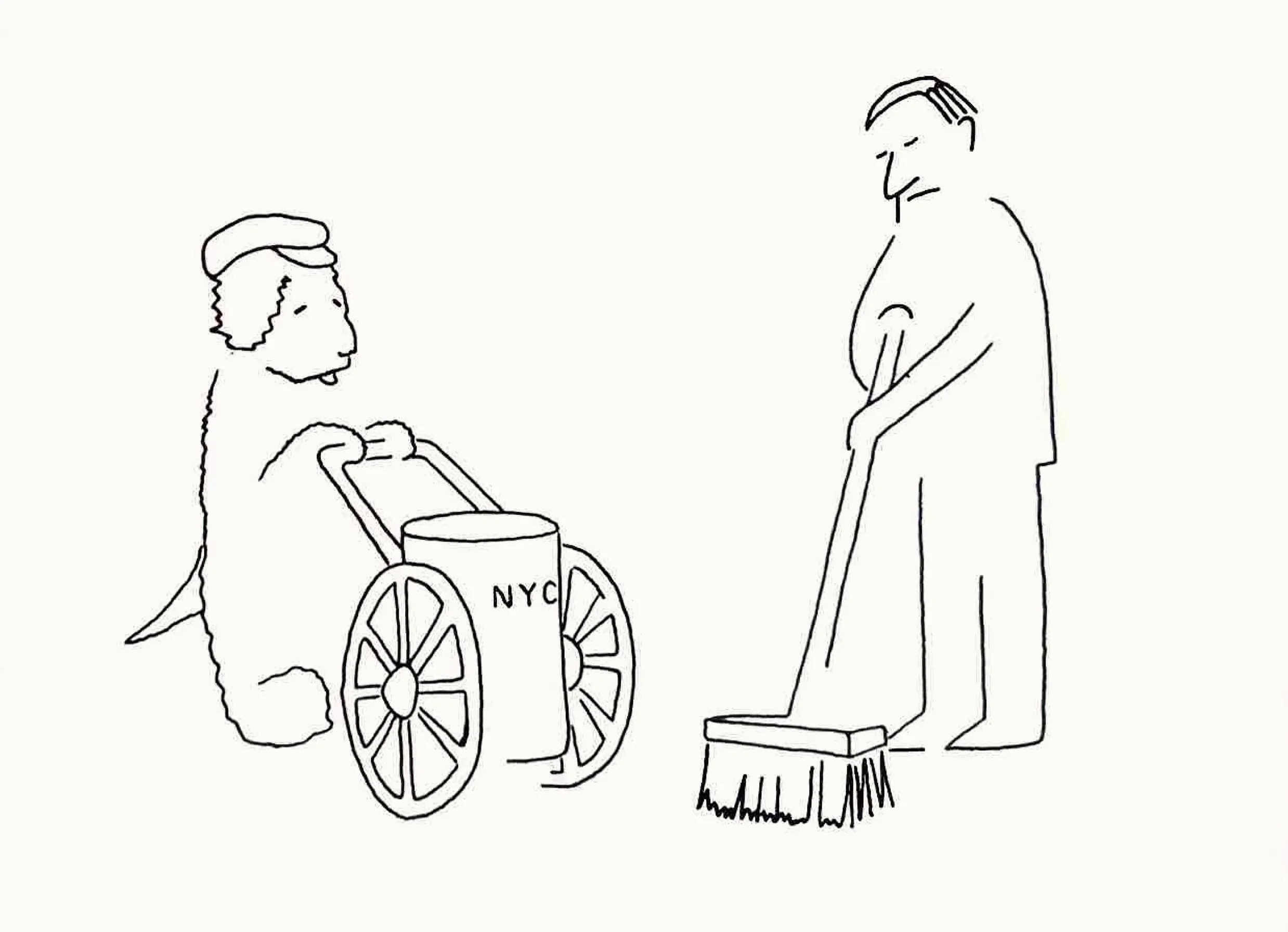
In 1878, as reported in the daily City Record, Mayor Smith Ely, Jr. issued a proclamation establishing a dog pound at 16th Street and the East River, where all seized dogs would be delivered by the appointed dog catchers. Rather harshly, any dog “not claimed within forty-eight hours, and redeemed by the owner, by paying the sum of three dollars” was to be “killed and destroyed by drowning.”
A small 1919 pamphlet from the NYC Department of Health, Information for Dog Owners: Why Dogs Must Be Muzzled When at Large, cited a new sanitary code Section 17, which stated that “no unmuzzled dog shall be permitted to be … in any public park or place in the City of New York.” The reasoning for this new mandatory muzzling provision was that rabies, which was “almost always caused by the bite of rabid (mad) dogs,” was an “absolutely fatal disease.”
The 1919 pamphlet also reminded dog owners that they were required to “procure a yearly license and pay the sum of two dollars for each dog” and provide their dog with a collar bearing the license number. Failure to comply could result in seizure of the animal, followed by the same severe penalty noted in 1878: “if not claimed and redeemed within forty-eight hours thereafter, they may be destroyed.” Fortunately, while the licensing requirement remains on the books, the enforcement provision now simply states that officials may issue “notices of violation for failure to comply.” (Since at least 2017, as recorded in their annual reports, NYC shelters have completely stopped euthanizing healthy animals.)
Beginning in 1934, an amendment to the Sanitary Code specified that all dogs in public should be restrained by a leash of less than six feet in length, with muzzling no longer required. As reported in the New York Times that year, the Health Department believed this would be easier to enforce than the struct muzzling provision, and that greater compliance would reduce the then-growing number of dog bites in the city. The leash law remains in effect today, except in designated dog runs and during off-leash hours in public parks.