Easy Oven Roasted Turkey Breast Recipe (Bone-in)

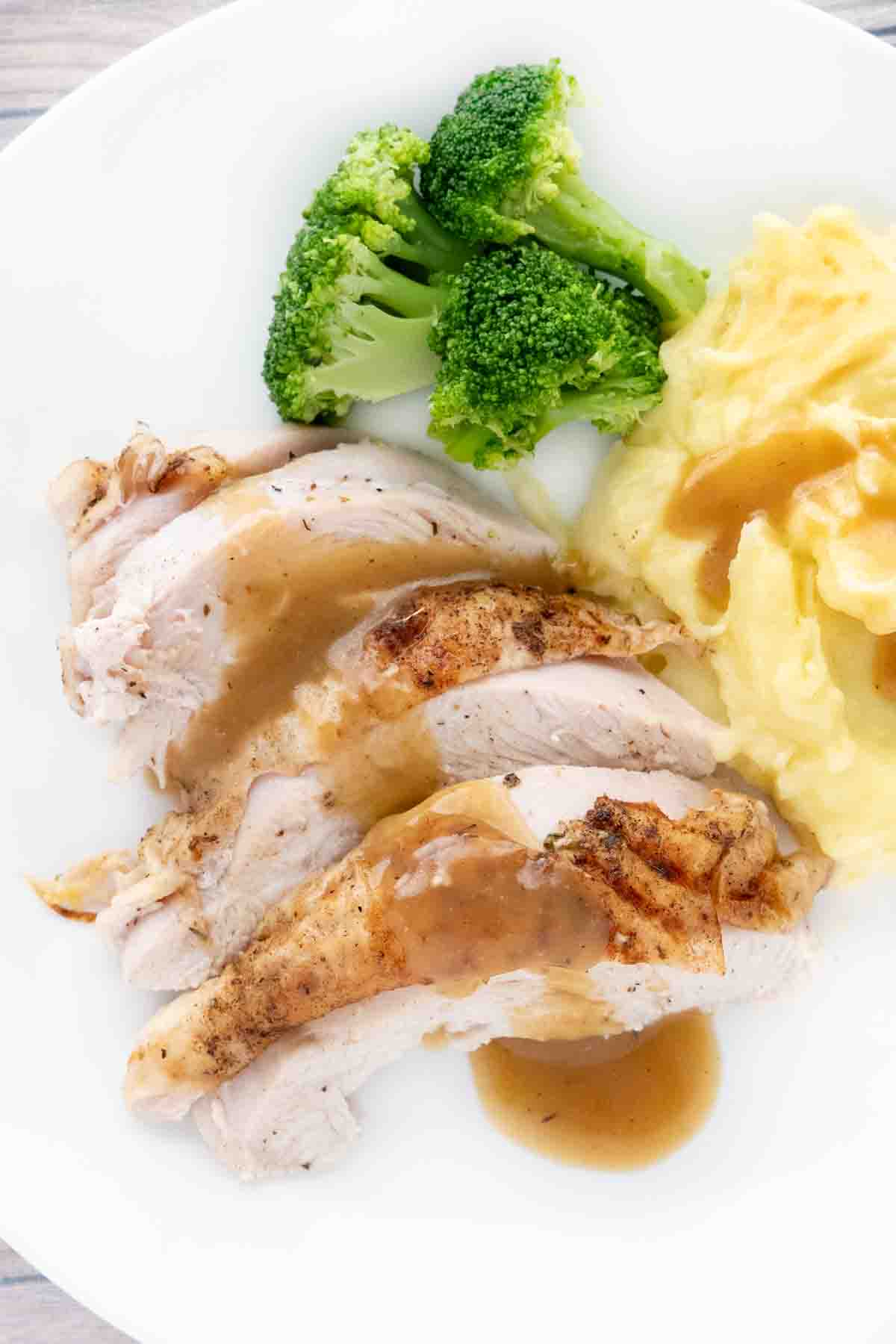

You don’t need to roast a whole turkey to put a beautiful holiday dinner on the table. Our oven roasted turkey breast recipe gives you juicy, tender meat and crispy golden-brown skin with considerably less work, making it perfect for Thanksgiving, Christmas, Sunday dinner, or anytime you’re craving turkey.

If you love roast turkey but don’t need enough to feed a small army, a roast turkey breast is the answer.
You get everything you want from a traditional turkey dinner, including crispy skin, juicy meat, and those wonderful savory herb flavors, without wrestling a 20-pound bird in and out of the oven.

Learning how to roast a turkey breast is easier than you might think. With a simple blend of herbs and seasonings, butter, and a few basic roasting techniques, you can make an oven-roasted turkey breast that’s juicy on the inside with beautifully browned, crispy skin on the outside.
To enhance the turkey breast’s flavor and moisture, we used our wet-brine turkey recipe. If you are looking for a simpler version of a brine, try out our dry brine turkey breast recipe.
Table of Contents:
Why This Recipe Works
Three simple techniques make the biggest difference.
Dry skin browns better. Patting the turkey dry before seasoning removes surface moisture that can interfere with browning.
The initial higher oven temperature encourages browning. The original method then reduces the oven to 350°F for the remainder of the roast.
Resting protects the juices. After roasting, the recipe calls for tenting the turkey with foil and resting it for 20 minutes before removing the breast from the bone and slicing against the grain.
That last step isn’t optional if you want juicy turkey.
Ingredients

Gather the ingredients for our easy oven roasted turkey breast recipe. Culinary professionals call this the “Mise en Place,” which means “everything in its Place.”
Setting up your ingredients not only speeds up the cooking process but also ensures you have everything you need on hand to make the recipe.
Ingredient Substitutions
- Poultry seasoning: Replace the individual herbs with your favorite poultry seasoning for a convenient shortcut. The existing recipe notes specifically recommend this option.
- Smoked paprika: Substitute smoked paprika for sweet paprika for a subtle smoky note.
- Olive oil: Use olive oil instead of melted butter if desired.
- Fresh herbs: Fresh rosemary, sage, and thyme can be used when available, although the quantities will need to be adjusted from the dried herbs.
- Broth: Adding chicken or turkey broth to the roasting pan can give you additional flavorful drippings for gravy.
Recipe Variations
- Garlic Herb Oven-Roasted Turkey Breast Recipe: Coat the turkey with garlic herb butter to add depth of flavor.
- Hot Honey Oven Roasted Turkey Breast: Add hot honey to the butter and coat the bird’s exterior for a spicy kick and a layer of sweetness.
- Garlic Sage Butter Roast Turkey Breast Recipe: Make a compound butter with garlic and sage, then rub or brush it over the turkey during cooking.
- Maple Herb Roast Turkey Breast: Add a small amount of pure maple syrup to the butter. Keep the sweetness restrained. This is roast turkey, not breakfast.
- Cajun Roasted Turkey Breast: Replace the traditional herb mixture with Cajun seasoning for a bolder, spicier version.
- Lemon Rosemary Roast Turkey Breast: Use lemon instead of orange and emphasize rosemary in the seasoning mixture for a brighter Mediterranean-inspired version.
How to Make Roasted Turkey Breast
Follow my simple step-by-step instructions to learn how to make a roast turkey breast in your home kitchen.
- Remove the turkey breast from the refrigerator an hour before cooking. If using a wet brine, remove the turkey breast and drain off any excess liquid.
- Preheat your oven to 425 degrees F.

- Add the marjoram, rosemary, thyme, sage, garlic powder, black pepper, nutmeg, sweet paprika, and sea salt to a small bowl.
- Mix to combine all the ingredients.
- Set the turkey breast on a wire rack over a lined baking sheet (or casserole dish) and pat the turkey dry with a paper towel on all sides.
- Cover the turkey breast with the seasoning blend and let it sit for at least 30 minutes. Do not cover. This allows the seasoning to soak into the meat and dry the skin, so you get that crispy skin everyone loves.
- Stuff the bird’s cavity with quartered oranges or your favorite stuffing mixture.
- Place your turkey breast on the center rack of the oven and turn the temperature down to 350 degrees. The initial higher temperature will help lock in moisture and create crispy skin. After about an hour of cooking, brush the bird’s skin with the melted butter. (Cook for 15-20 minutes per pound. About 1.5 to 2 hours, depending on the size.
- Once the internal temperature reaches 165 degrees in the thickest part of the bird, remove the turkey from the oven.
Tent the turkey with aluminum foil and let it rest for 20 minutes to redistribute the juices. Slice the breast off the bone, cutting against the grain for delicious, moist turkey.

Chef Tips
- Dry the skin thoroughly: Moisture is the enemy of crispy turkey skin. Pat every exposed surface dry with paper towels before seasoning.
- Season ahead when possible: The recipe calls for letting the seasoned turkey sit uncovered for at least 30 minutes. If your schedule allows, seasoning further in advance can give the salt more time to work.
- Use a rack: Elevating the turkey improves airflow around the breast. The original recipe specifically recommends roasting on a rack for more even airflow.
- Use a meat thermometer: Don’t cook turkey by the clock alone. The size and shape of the breast, as well as your oven, all affect cooking time.
- Check the thickest part: Make sure the thermometer isn’t touching bone while taking the temperature.
- Don’t skip the rest: Give the turkey its 20-minute rest before carving.
- Remove the breast before slicing: Cutting thin slices straight down the breast while it’s attached to the carcass looks nice in photographs, but removing the breast first makes it much easier to slice properly against the grain.
- Save the drippings: There’s flavor sitting in that roasting pan. Turn it into gravy.
Don’t rely on minutes per pound to tell you when your turkey breast is done. Cooking time is useful for planning dinner, but your meat thermometer makes the final decision. Turkey breasts aren’t identical, ovens don’t behave the same way, and bone structure affects how the meat cooks. Check the thickest portion without touching the bone. That’s how you stop cooking turkey by hope and start cooking it like a chef.

If you want the flavor and comfort of a holiday turkey without cooking an entire bird, our roasted turkey breast is one of the easiest ways to make an impressive meal.
With its crispy skin, juicy meat, and rich flavor, our recipe delivers everything people love about holiday dinners while keeping things simple and manageable.
Serving Suggestions
A roast turkey breast can anchor anything from a full Thanksgiving spread to an easy Sunday dinner. Since the turkey itself is relatively lean, pair it with a combination of creamy, savory, sweet, and acidic sides so the meal doesn’t become one long note.
Beverage Pairing
- White Wine: Chardonnay pairs perfectly with roasted turkey; its buttery texture complements it. The Crisp acidity of a Pinot Gris makes it especially good when richer sides are part of the meal. And a dry or off-dry Riesling pairs beautifully with the flavors.
- Red Wine: Pinot Noir is my first red-wine choice. Its moderate body and acidity complement turkey without steamrolling it. A Beaujolais is fruity, light, and food-friendly, making it particularly good with a Thanksgiving spread.
- Beer Pairing: The malt character of an Amber Ale complements browned turkey skin and roasted flavors. A Lager is clean and refreshing when you don’t want the beverage competing with the food. The herbal and lightly spicy notes of a Saison work particularly well with sage, rosemary, and thyme
- Non-Alcoholic Beverage: Sparkling apple cider and cranberry spritz add brightness and cut through the richness of the roasted turkey.
Make-Ahead Instructions
- Seasoning the turkey ahead of time is one of the easiest ways to take work out of the day you’re serving it.
- Prepare the seasoning mixture in advance and store it in an airtight container.
- The turkey can also be seasoned and refrigerated uncovered ahead of roasting. This gives the seasoning more contact time and helps keep the skin dry.
- If preparing for Thanksgiving, get as much chopping, seasoning, and side-dish prep done the day before as possible. Your oven will be valuable real estate.
How to Store and Reheat
Store leftovers in an airtight container for up to 4 days. For best results, keep larger pieces intact rather than slicing every bit of turkey immediately. Larger pieces generally retain moisture better.
Reheat gently with broth to keep the turkey moist, or crisp slices lightly in a skillet with butter before serving.
Freeze sliced or larger pieces of the roast turkey breast for up to two months. Use leftover turkey for sandwiches, soups, or pot pies.
Recipe FAQs
Don’t overcook it, use a meat thermometer, and let the turkey rest before slicing. Brining your turkey helps retain moisture and keep it from drying out.
A turkey breast should be roasted uncovered. If the turkey skin begins to get too dark or too crispy, you can loosely tent the top with aluminum foil until the thickest part of the bird reaches an internal temperature of 165 degrees.
With a bone-in breast, ¾ -1 pound per person is recommended. To have leftovers, increase the amount to 1½ pounds per person.
Plan on approximately 15-20 minutes per pound, but use a meat thermometer to determine when it’s done. Cook to 165 degrees F.
More Recipes You’ll Love!

Roasted Turkey Breast Recipe (Bone in)

Our easy oven-roasted turkey breast recipe has crispy skin, great flavor, and juicy meat. Perfect for Thanksgiving, Christmas dinner, or small holiday gatherings.
Ingredients
- 6 lb turkey breast
- 1 teaspoon dried marjoram
- 1 teaspoon dried rosemary
- 1 teaspoon dried thyme
- 1 teaspoon dried sage
- ½ teaspoon garlic powder
- ½ teaspoon black pepper
- ½ teaspoon ground nutmeg
- ½ teaspoon sweet paprika
- 1 teaspoon sea salt
- 1 orange quartered
- 2 tablespoons butter melted
Instructions
-
Add the marjoram, rosemary, thyme, sage, garlic powder, black pepper, nutmeg, sweet paprika, and sea salt to a small bowl.
-
Mix to combine all the ingredients.
-
Set the turkey breast on a wire rack over a lined baking sheet (or casserole dish) and pat the turkey dry with a paper towel on all sides.
-
Cover the turkey breast with the seasoning blend and let it sit for at least 30 minutes. Do not cover. This allows the seasoning to soak into the meat and dry the skin, so you get that crispy skin everyone loves.
-
Stuff the bird’s cavity with quartered oranges or your favorite stuffing mixture.
-
Place your turkey breast on the center rack of the oven and turn the temperature down to 350 degrees. The initial higher temperature will help lock in moisture and create crispy skin. After about an hour of cooking, brush the bird’s skin with the melted butter. (Cook for 15-20 minutes per pound. About 1.5 to 2 hours, depending on the size.
-
Once the internal temperature reaches 165 degrees in the thickest part of the bird, remove the turkey from the oven.
-
Tent the turkey with aluminum foil and let it rest for 20 minutes to redistribute the juices. Slice the breast off the bone, cutting against the grain for delicious, moist turkey.
Notes
- Three simple techniques make the biggest difference.
- Dry skin browns better. Patting the turkey dry before seasoning removes surface moisture that can interfere with browning.
- The initial higher oven temperature encourages browning. The original method then reduces the oven to 350°F for the remainder of the roast.
- Resting protects the juices. After roasting, the recipe calls for tenting the turkey with foil and resting it for 20 minutes before removing the breast from the bone and slicing against the grain.
- That last step isn’t optional if you want juicy turkey.
Ingredient Substitutions
- Poultry seasoning: Replace the individual herbs with your favorite poultry seasoning for a convenient shortcut. The existing recipe notes specifically recommend this option.
- Smoked paprika: Substitute smoked paprika for sweet paprika for a subtle smoky note.
- Olive oil: Use olive oil instead of melted butter if desired.
- Fresh herbs: Fresh rosemary, sage, and thyme can be used when available, although the quantities will need to be adjusted from the dried herbs.
- Broth: Adding chicken or turkey broth to the roasting pan can give you additional flavorful drippings for gravy.
Recipe Variations
- Garlic Herb Oven-Roasted Turkey Breast Recipe: Coat the turkey with garlic herb butter to add depth of flavor.
- Hot Honey Roasted Turkey Breast: Add hot honey to the butter and coat the bird’s exterior for a spicy kick and a layer of sweetness.
- Garlic Sage Butter Turkey Breast Recipe: Make a compound butter with garlic and sage, then rub or brush it over the turkey during cooking.
- Maple Herb Turkey Breast: Add a small amount of pure maple syrup to the butter. Keep the sweetness restrained. This is roast turkey, not breakfast.
- Cajun Roasted Turkey Breast: Replace the traditional herb mixture with Cajun seasoning for a bolder, spicier version.
- Lemon Rosemary Turkey Breast: Use lemon instead of orange and emphasize rosemary in the seasoning mixture for a brighter Mediterranean-inspired version.
Chef Tips
- Dry the skin thoroughly: Moisture is the enemy of crispy turkey skin. Pat every exposed surface dry with paper towels before seasoning.
- Season ahead when possible: The recipe calls for letting the seasoned turkey sit uncovered for at least 30 minutes. If your schedule allows, seasoning further in advance can give the salt more time to work.
- Use a rack: Elevating the turkey improves airflow around the breast. The original recipe specifically recommends roasting on a rack for more even airflow.
- Use a meat thermometer: Don’t cook turkey by the clock alone. The size and shape of the breast, as well as your oven, all affect cooking time.
- Check the thickest part: Make sure the thermometer isn’t touching bone while taking the temperature.
- Don’t skip the rest: Give the turkey its 20-minute rest before carving.
- Remove the breast before slicing: Cutting thin slices straight down the breast while it’s attached to the carcass looks nice in photographs, but removing the breast first makes it much easier to slice properly against the grain.
- Save the drippings: There’s flavor sitting in that roasting pan. Turn it into gravy.
Serving Suggestions
A roast turkey breast can anchor anything from a full Thanksgiving spread to an easy Sunday dinner. Since the turkey itself is relatively lean, pair it with a combination of creamy, savory, sweet, and acidic sides so the meal doesn’t become one long note.
Beverage Pairing
- White Wine: Chardonnay pairs perfectly with roasted turkey; its buttery texture complements it. The Crisp acidity of a Pinot Gris makes it especially good when richer sides are part of the meal. And a dry or off-dry Riesling pairs beautifully with the flavors.
- Red Wine: Pinot Noir is my first red-wine choice. Its moderate body and acidity complement turkey without steamrolling it. A Beaujolais is fruity, light, and food-friendly, making it particularly good with a Thanksgiving spread.
- Beer Pairing: The malt character of an Amber Ale complements browned turkey skin and roasted flavors. A Lager is clean and refreshing when you don’t want the beverage competing with the food. The herbal and lightly spicy notes of a Saison work particularly well with sage, rosemary, and thyme
- Non-Alcoholic Beverage: Sparkling apple cider and cranberry spritz add brightness and cut through the richness of the roasted turkey.
Make-Ahead Instructions
Seasoning the turkey ahead of time is one of the easiest ways to take work out of the day you’re serving it.
Prepare the seasoning mixture in advance and store it in an airtight container.
The turkey can also be seasoned and refrigerated uncovered ahead of roasting. This gives the seasoning more contact time and helps keep the skin dry.
If preparing for Thanksgiving, get as much chopping, seasoning, and side-dish prep done the day before as possible. Your oven will be valuable real estate.
How to Store and Reheat
Store leftovers in an airtight container for up to 4 days. For best results, keep larger pieces intact rather than slicing every bit of turkey immediately. Larger pieces generally retain moisture better.
Reheat gently with broth to keep the turkey moist, or crisp slices lightly in a skillet with butter before serving.
Freeze sliced or larger pieces of the roast turkey breast for up to two months. Use leftover turkey for sandwiches, soups, or pot pies.
Recipe FAQs
How do you keep turkey breast from drying out in the oven?
Don’t overcook it, use a meat thermometer, and let the turkey rest before slicing. Brining your turkey helps retain moisture and keep it from drying out.
Should a turkey breast be cooked covered or uncovered?
A turkey breast should be roasted uncovered. If the turkey skin begins to get too dark or too crispy, you can loosely tent the top with aluminum foil until the thickest part of the bird reaches an internal temperature of 165 degrees.
How much turkey breast do I need per person?
With a bone-in breast, ¾ -1 pound per person is recommended. To have leftovers, increase the amount to 1½ pounds per person.
How long do you roast turkey breast?
Plan on approximately 15-20 minutes per pound, but use a meat thermometer to determine when it’s done. Cook to 165 degrees F.

Nutrition
Calories: 430kcalCarbohydrates: 1gProtein: 86gFat: 10gSaturated Fat: 3gPolyunsaturated Fat: 2gMonounsaturated Fat: 3gTrans Fat: 0.2gCholesterol: 222mgSodium: 1109mgPotassium: 973mgFiber: 0.3gSugar: 0.3gVitamin A: 242IUVitamin C: 2mgCalcium: 63mgIron: 2mg