
Subscription Required
By Karl Sinclair
August 17, 2026, © Leeham News: In the second part of our examination of Boeing’s heavy use of program accounting, Leeham News & Analysis (LNA) dives into the mechanisms (which are completely legal) by which losses can be understated, inventories are inflated and cash flow crunches drive the company into selling off parts of itself.
Part I explained how individual aircraft production costs are capitalized and accrued in inventory, to be expensed over time and averaged out–smoothing earnings over the life of an aircraft program.
Capitalizing Expenses and Negative Margins
Since 2018, Boeing commercial has not had a year in the black. Substantial certification, production and delivery challenges have severely hampered the division. This is despite the ability of the finance department to squirrel away excessive production costs in inventory.
As a comparative tool, the company provides unit-cost basis figures (total production costs associated with deliveries during a quarter), which provides insight into how much it actually costs Boeing to deliver aircraft.

Analyzing the company’s financial disclosures reveals two trends.
Program accounting allows Boeing to understate losses in any given period. For example, in the first quarter of 2026, it reported a $563 million loss, on the 130 aircraft delivered ($4.33 million per delivery). However, the actual cost to produce them resulted in a $1.36 billion loss ($10.45 million per delivery), on a unit-cost basis.
In the second quarter of 2026, the difference between reporting methods results in a $1 billion difference across 143 aircraft handovers. That difference has been added to the inventory account and capitalized.
Secondly, in almost every year (save 2023), Boeing brings program accounting figures into line with unit-cost numbers, with a charge.

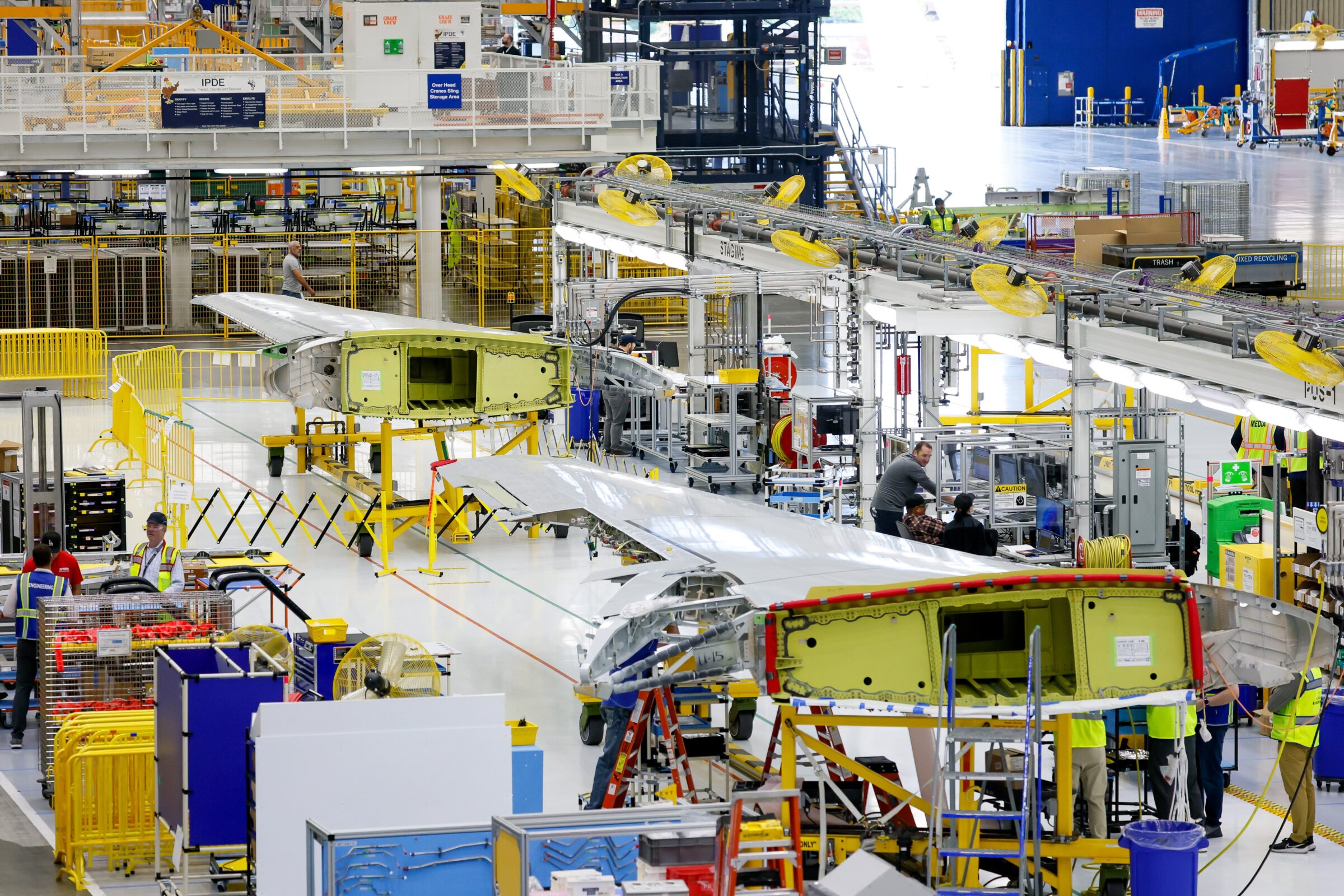
During the full years of 2024 and 2025, Boeing took two write-offs on the 777X program, for $3.5 billion and $4.9 billion, respectively. Photo credit: Jennifer Buchanan/Seattle Times/Pool
For example, in the third quarter of 2025, a $4.9 billion charge on the 777X program levelled the two methods, at around $7 billion in losses.
In 2023, Boeing held steady, even declaring a $41 million profit during the final period, while production costs resulted in a $521 million loss. On a yearly basis, the difference was $2.8 billion.