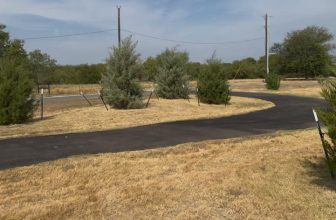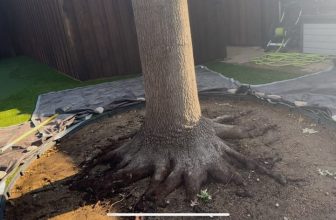

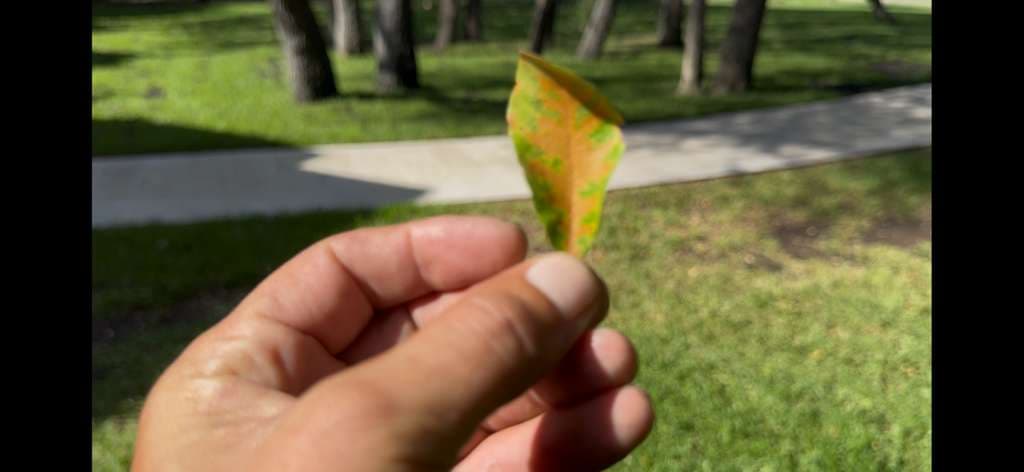
Today we’re here in Lake Worth, Texas, inspecting a group of mature Southern Live Oaks (Quercus virginiana) that appear to be moving into a very serious Oak Wilt contamination pattern. Based on what we are observing on this property, the client may ultimately lose approximately fifteen large, mature Southern Live Oaks if immediate action is not taken.
This is one of the most difficult conversations we have as arborists because these trees are not small ornamental trees that can simply be replaced next season. These are large, established Southern Live Oaks that have likely been part of the property for decades. Once Oak Wilt enters a live oak grove, the disease can move aggressively through underground root systems and begin killing tree after tree.
During this inspection, I observed multiple oaks showing symptoms consistent with vascular decline, premature leaf discoloration, canopy thinning, and progressive stress. In a high-risk Oak Wilt zone like Lake Worth, these symptoms must be taken very seriously, especially when multiple live oaks are growing close together.
One of the biggest mistakes homeowners make is waiting until every tree looks sick before responding. With Oak Wilt, by the time symptoms are obvious, the fungus may already be moving underground through interconnected feeder root grafts. That is why early diagnosis, preventative treatment, and containment are so critical.
What Is Oak Wilt?
Oak Wilt is one of the most destructive vascular diseases affecting oak trees in Texas. The disease is caused by the fungal pathogen Bretziella fagacearum. Unlike a leaf spot disease that only damages foliage, Oak Wilt attacks the vascular system of the tree.
Specifically, Oak Wilt colonizes the xylem.
The xylem is the water-conducting tissue responsible for moving water and dissolved minerals from the root system into the canopy. Once the fungus enters this vascular system, the tree responds by trying to defend itself. It begins producing tyloses and gums to block the movement of the fungus.
Unfortunately, that defense response also blocks water movement.
The tree essentially begins shutting down its own plumbing system in an attempt to stop the pathogen.
When water movement becomes restricted:
- Leaves begin wilting
- Foliage discolors
- Canopies thin rapidly
- Branches begin declining
- Entire trees can become postmortem
This is why Oak Wilt can appear to move so quickly once symptoms become visible.
Why Southern Live Oaks Are Extremely Vulnerable
Southern Live Oaks are especially vulnerable to Oak Wilt because of the way they grow underground.
Live Oaks naturally form interconnected root systems. Over time, neighboring trees develop feeder root grafts where roots grow together and share vascular connections.
Under normal conditions, this is beneficial.
Root grafts allow trees to share moisture, nutrients, and structural support.
But when Oak Wilt enters the system, those same root grafts become a highway for the disease.
The fungus can move from one infected tree directly into the next healthy tree without ever being exposed above ground. This is one of the primary reasons entire clusters of Southern Live Oaks can decline together.
According to Texas A&M Forest Service, root-graft transmission is the dominant method of Oak Wilt spread in live oak populations.
That is exactly why this Lake Worth property is concerning.
When fifteen mature live oaks are positioned within potential root-graft range, one infected tree can place the entire group at risk.
The Role of Sap-Feeding Beetles
Oak Wilt does not spread only through roots.
It can also spread above ground through Nitidulid sap-feeding beetles.
These beetles are attracted to fresh wounds on oak trees.
Those wounds may come from:
- Improper pruning
- Broken limbs
- Storm damage
- Bark injury
- Construction damage
When sap-feeding beetles visit fungal mats on infected Red Oaks, microscopic spores can attach to their bodies. The beetles then travel to healthy oaks and introduce the fungus into fresh wounds.
This is one of the reasons pruning timing is so important in Texas.
Improper pruning during high-risk Oak Wilt periods can create entry points for infection.
If pruning becomes necessary, wounds should be sealed immediately according to current Texas A&M recommendations.
Why Oak Wilt Can Devastate a Neighborhood
Oak Wilt becomes especially dangerous once it is introduced into neighborhoods with dense oak populations.
Lake Worth, Fort Worth, Azle, and surrounding North Texas communities contain many mature live oak properties where trees are growing close together. Once a pathogen like Bretziella fagacearum becomes established, it does not respect property lines.
It can move:
- From one yard to another
- Through underground root grafts
- Across connected oak clusters
- Into healthy trees before symptoms appear
This is why Oak Wilt is not just a tree problem.
It becomes a neighborhood problem.
When one homeowner delays treatment, multiple surrounding properties may eventually be affected.
Why Early Treatment Matters
The best time to treat Oak Wilt is before the tree is severely symptomatic.
Preventative treatment is far more effective than trying to reverse advanced vascular collapse.
Once a live oak has already lost a significant portion of its vascular function, treatment becomes much more difficult. The tree may not be able to move fungicide efficiently throughout the canopy because the xylem is already blocked.
Healthy trees absorb treatment better.
Healthy vascular systems distribute fungicide more effectively.
That is why protecting asymptomatic or lightly stressed trees near infected specimens is one of the most important strategies in Oak Wilt management.
In this Lake Worth case, the goal is no longer just diagnosing one tree.
The goal is protecting the remaining Southern Live Oaks before the disease progresses further.
Low-Volume Macro Infusions with Alamo® Propiconazole
Following my inspection, I recommended immediate preventative treatment using Low-Volume Macro Infusions with Alamo® (Propiconazole). This treatment has become one of the industry standards for Oak Wilt prevention and suppression and is widely recognized by Texas A&M Forest Service, the International Society of Arboriculture (ISA), and the Tree Care Industry Association (TCIA).
Unlike foliar sprays or soil applications, low-volume macro infusions introduce the fungicide directly into the vascular system of the tree. Small infusion ports are installed around the root flare, allowing the tree to absorb the fungicide naturally through the xylem.
Once inside the vascular system, the fungicide moves upward with the transpiration stream, helping suppress fungal colonization while protecting healthy vascular tissue.
One of the advantages of modern low-volume macro infusion systems is that they require fewer injection sites than older high-volume methods. This minimizes wounding while providing excellent uptake efficiency and long-term protection.
Our objective is simple:
Protect healthy trees before Oak Wilt becomes established.
Why Preventative Treatment Is Better Than Reactive Treatment
Many homeowners wait until they begin seeing severe canopy decline before calling an arborist.
Unfortunately, Oak Wilt rarely gives homeowners that luxury.
By the time a Southern Live Oak begins exhibiting severe wilt symptoms, the fungus has often been present for months and may already be spreading through the surrounding root system.
Preventative treatment provides several important advantages:
- Protects healthy vascular tissue
- Helps suppress fungal establishment
- Reduces the likelihood of root-graft transmission
- Preserves mature canopy
- Protects surrounding trees
Treating healthy trees located within an active Oak Wilt footprint is often far more successful than attempting to rescue trees already in advanced decline.
Why Integrated Pest Management Is Included
Oak Wilt may be a fungal disease, but maintaining healthy trees requires much more than fungicide alone.
One of the most important components of our Plant Healthcare Program is Integrated Pest Management (IPM).
Lake Worth and the surrounding North Texas region support large insect populations throughout the growing season. Trees under environmental or disease stress often become more attractive to secondary insect pests.
Our IPM program helps reduce unnecessary stress caused by:
- Leaf-feeding insects
- Scale insects
- Aphids
- Secondary boring insects
- Opportunistic pests
Healthy trees devote tremendous amounts of energy toward defending themselves.
By reducing insect pressure, the tree can redirect that energy toward maintaining healthy vascular tissue and producing carbohydrates necessary for long-term survival.
Micronutrients and Tree Vigor
Disease prevention begins with healthy trees.
Trees with strong carbohydrate reserves, healthy foliage, and vigorous root systems are naturally more resilient than trees already suffering from nutrient deficiencies.
Our Plant Healthcare Program includes a comprehensive micronutrient program designed to support:
- Chlorophyll production
- Photosynthesis
- Root development
- Enzyme activity
- Stress tolerance
- Canopy density
Healthy foliage produces carbohydrates.
Carbohydrates fuel every physiological process within the tree.
Everything from root growth to disease resistance depends upon the tree maintaining adequate energy reserves.
The healthier the tree becomes, the greater its ability to tolerate environmental stress while responding positively to preventative treatments.
Monitoring the Entire Oak Population
Treating one tree is not enough.
When working within an active Oak Wilt footprint, we evaluate the entire oak population.
During every inspection we evaluate:
- Overall canopy density
- Leaf color
- New shoot development
- Root flare condition
- Neighboring oak populations
- Environmental stress
- Insect pressure
- Potential root-graft connections
This allows us to identify changing conditions before widespread decline occurs.
Annual monitoring remains one of the most valuable components of a successful Oak Wilt prevention program.
Why Mature Live Oaks Are Worth Protecting
The Southern Live Oaks on this Lake Worth property represent decades of growth.
These are not easily replaced landscape trees.
They provide:
- Shade
- Wildlife habitat
- Cooling of the landscape
- Stormwater interception
- Increased property value
- Historic character
Once mature Live Oaks are lost to Oak Wilt, it may take generations before similar canopy can be restored.
Protecting mature trees is almost always more economical than replacing them.
Final Thoughts
This Lake Worth property demonstrates exactly why Oak Wilt prevention has become one of the most important services Arborist USA provides throughout North Texas.
Approximately fifteen mature Southern Live Oaks now appear to be at significant risk because Oak Wilt has become established within the surrounding area.
The disease spreads aggressively through interconnected feeder root grafts beneath the soil and can also be introduced by Nitidulid sap-feeding beetles carrying fungal spores to fresh wounds.
Our objective is to interrupt that process before additional trees become infected.
Through:
- Low-Volume Macro Infusions with Alamo® Propiconazole
- Long-term preventative treatment
- Integrated Pest Management
- Micronutrient supplementation
- Annual monitoring
we can significantly improve the opportunity to preserve these mature Southern Live Oaks before widespread mortality occurs.
At Arborist USA, we don’t simply respond to Oak Wilt after trees begin dying.
Our mission is protecting healthy trees before the disease has the opportunity to spread throughout an entire landscape.
For general tree-care best practices, homeowners can also reference guidance from the Texas A&M Forest Service, https://tfsweb.tamu.edu/trees/, a trusted authority on Texas tree health.
Schedule a professional inspection. Early detection and scientific intervention are the difference between preservation and loss. If you’d like to speak to an arborist, please call us at 817-880-6130 or visit https://www.arboristusa.com/
Today we’re in Lake Worth, Texas inspecting approximately fifteen mature Southern Live Oaks (Quercus virginiana) that are showing signs consistent with Oak Wilt pressure within a high-risk neighborhood.
This is one of those properties where time is critical.
Several mature Live Oaks appear to be moving toward significant decline, and based on the surrounding contamination footprint, our immediate goal is preserving every healthy tree that still has recovery potential.
Oak Wilt is caused by the fungal pathogen Bretziella fagacearum, one of the most destructive vascular diseases affecting oak trees throughout Texas. Once the fungus enters the xylem, it restricts water movement throughout the tree, leading to wilted foliage, canopy decline, branch dieback, and eventual tree mortality.