
From Bottleneck to Breakthrough: How the New Intuit ProAdvisor Program Solves the Problem I’ve Been Fighting for Three Years


If you’ve been around here a while, you know I’ve been a QuickBooks ProAdvisor since the days when “cloud” meant something you looked out the window to see. Over the years, I’ve cheered, complained, and occasionally rolled my eyes at Intuit’s training programs. (We all did; c’mon, admit it.)
For a long time, the ProAdvisor Program felt like homework. The certifications taught you how to use QuickBooks to run your own bookkeeping firm inside QBO Accountant (QBOA); but, if you’re like me and you 1) didn’t like their firm management tools and used ones from third parties, and/or 2) aren’t really a solo practitioner anymore, that felt beside the point. I never bothered carefully tracking who on my team was certified, because honestly, it didn’t make much difference in how well we served clients. The people actually spending time in QBOA weren’t the people running the firm, they were the people doing the client work, and what I needed was to know that they understood how to use QBOA to deliver accurate financials efficiently, to clients who trust us with their small businesses.
True story: I once hired someone who already had her QuickBooks Online Certification (the one that’s now referred to as Level 1). Seemed solid on paper, interviewed well, had been referred by a client who knew her personally. Turned out she didn’t understand the slightest bit about how QBOA actually worked… in fact, the CPA firm she’d worked at previously had one login that everyone shared (!) and used as a regular user on each client’s file (!!!). They didn’t even know about accountant-users or the QBOA toolbox. How is that possible? A certification that doesn’t ensure you actually understand the fundamentals of how the system works? That’s the old program in a nutshell. (Side note: I’ve since started using Accountests as part of my hiring process, which has been a game-changer. Worth checking out if you’re hiring. They got the Queen of QuickBooks herself, Alicia Katz-Pollock, to write the QBO tests, and I helped beta-test the bookkeeping exams.)
Point being, I didn’t care much either way.
But now? Now I care. Because Intuit finally figured out what actually matters to firm-runners.

The problem I’ve been trying to solve
For some background: three years ago, I made a decision. I was tired of being the bottleneck. (Actually, I’ll be honest. My team was tired of me being the bottleneck.) Previously I was the only person in my firm who could finalize and analyze financials or do complex reconciliations, and I successfully transitioned that stuff to my senior accountant. She did awesome. Then I transitioned managing the junior accounting and bookkeeping team to her. Again, she did a great job. And then… surprise! She had too much work. We had a new bottleneck.
So then we implemented Double (formerly Keeper) to streamline our workflow so that more was moving to the monthly close instead of the annual process; to provide insight into the junior team’s progress (or lack thereof); and to transition a lot of the analysis to make sure our client books were squeaky clean and meaningful for advisory work. And eventually we started moving things off her plate and into our junior team members’ hands. Major progress.
But here’s where I got stuck: I’m the only person in my firm who does advisory work, as in, the stuff that creates bonds with clients who come to us as a trusted advisor and partner in their success… the strategic analysis, the “what does this mean for your business?” conversations, the recommendations that help them make better decisions. Everything else I do is either holding that back or enabling it.
I couldn’t hand off the advisory work, because nobody else knew how to do it. Which meant I was still the constraint. Or rather… I was the constraint all over again. I wanted to take this further—to build a team where multiple people could look at a set of financials, see what matters, and help a client actually use that information. But there was no training pathway that made that possible. The ProAdvisor Program was teaching my team how to click buttons. It wasn’t teaching them how to think.
What changed
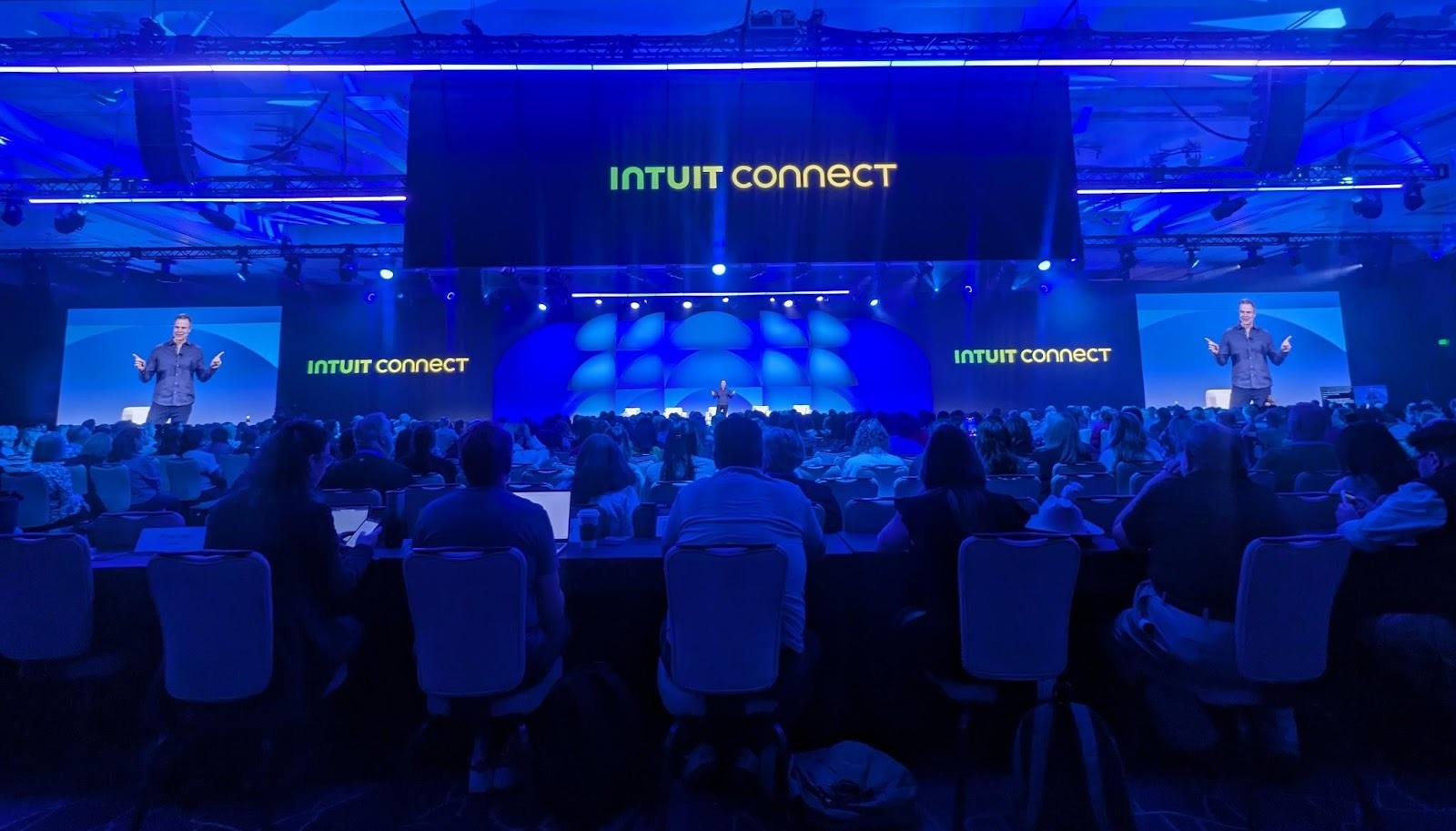
Just in time to include it in my talk at Intuit Connect, I got a sneak peek into the new Intuit Accountant Suite and the evolved Intuit ProAdvisor program wrapped up inside it. When I read the internal memos I got excited. When I met with Intuit staff, I got hopeful. And when I saw the demos of the Client Advisory Services (CAS) Foundations pathway, it actually made me stop mid-recording and say: “Oh, they finally get it.”
Intuit has realized that what we actually need is education on how to do the work better (not necessarily on how to manage the work itself; that’s a different set of skills), and they built a curriculum around that.
CAS Foundations: the pathway I’ve been waiting for
Inside this curriculum, you’ve got what you need to make sure your team knows the underlying foundation of what we do: bookkeeping skills and how to do it in QuickBooks Online. And it also contains what we need to upskill our team members, so they can carry that torch all the way to providing analysis and advisory services and building trust with clients through human connection.
· Bookkeeping Certification: This isn’t “here’s where the button is.” It’s solid accounting fundamentals that build critical thinking. For training juniors or people switching careers, this is the real context for what they’re doing and why it matters.
· QuickBooks Online Level 1: The updated version that came out earlier this year. Finally, training that’s actually about platform fluency; the stuff that lets everyone work faster and smarter.
· Analyzing and Interpreting Financial Reports: Analysis and interpretation. Looking at those financials, as I often say to my ‘Ask a CPA’ members, to read them like a story—the unique story of the life and times of your client’s business. So when they ask “what does this mean?” someone other than me can answer confidently. Or better yet… sharing what something means before they ask. This is the thing I’ve been desperately wanting to pass on to my team.
· Communicating to Build Trust: This one surprised me in the best way. Emotional intelligence and conversation skills; the basis of advisory work. Because knowing how to read the financials is only part of the puzzle… the rest is knowing how to talk about them in a way that lands with a client.
· Finish the pathway and yay, your firm earns the CAS Foundations badge. But what you’ve actually built is a team that understands the why behind every click. It’s the bridge between accurate books and meaningful advice.
Here’s the part that surprised me
Look, I know why Intuit is doing this: they’re moving up-market. They want to serve mid-market and higher firms better, and those firms need training that scales beyond the solo practitioner. I’m not naive about that, so hold off on blowing up the comments with angry fist-shaking.

Because here’s what matters: even if you are a solo practitioner, you should care about this. Because this training isn’t just for people managing teams. It’s for anyone who wants to deliver higher-value services to their clients. Advisory skills aren’t just for partners at bigger firms; they’re for anyone who wants to go deeper with their clients, understand their situation, and actually help them.
And honestly, I’m surprised Intuit isn’t leaving us behind in the process. In fact, I’m thrilled that they’re bringing us with them.
The real-world payoff
For my firm specifically, this curriculum solves a real problem: it gives me a path to build advisory capacity without burning myself out. I can train my team on how to do this work. I can step back. And the work still gets done (better, actually, because they’re following a structured pathway instead of just learning by watching me do it, or worse, not learning at all because I’m too busy to teach them).
Again: this isn’t just for partners or larger firms. If you’re a solo practitioner, this training makes you more valuable. It positions you to move toward advisory work, to deepen client relationships, and to charge for expertise that small business clients value. Whether you’re scaling a team or scaling your own impact, this curriculum is built for that.
To the extent that I’m going to take these trainings myself. Advisory work isn’t new to me (I have a Masters in Accounting & Financial Management and have run my own hyperlocal firm for 25 years), but using AI tools to expedite and amplify what I can do—that’s still fresh. Right now, the only experience I have relied upon is via RightTool, which has an amazing feature that scrapes personally identifying information out of your clients’ financials and runs them through ChatGPT to generate feedback on things to flag or investigate. (Quick shout-out to Hector Garcia and Mark Corum, who built what is one of my favorite tech tools ever. Intuit is taking a lot of great ideas from RightTool and building them into other parts of QBO, and I’m here for it; we’re all excited about it.) But there’s so much more I want to explore with AI and advisory work. This training will help me think through how to do that strategically, using a lot of the features that are now (and increasingly) embedded in QBO and its Intuit Accountant Suite.
And don’t sleep on the ProAdvisor Training Manager (launching January 2026). Once it goes live in the Intuit Accountant Suite, you’ll have unprecedented visibility into your team’s learning journey. You can assign courses, track progress, celebrate wins, and build a culture of continuous learning without micromanaging. For someone like me who wants to scale but stay sane, that’s exactly what I need.

The ecosystem that supports it all
Not surprisingly, the new-and-improved Intuit ProAdvisor program works hand-in-hand with the new Intuit Accountant Suite. Like the old ProAdvisor training section of QBOA, they’re designed to work together, creating one unified foundation for your firm to grow. The scaffolding includes some really practical pieces. The firm-level points system that rewards collaboration instead of lone-wolf badge collecting; everyone on your team contributes to your firm’s milestones and tier achievements, but in a more cohesive way than previously. The ProAdvisor Widget sits inside Intuit Accountant Suite and gives you a real-time view of your firm’s points status and progress, so your goals stay front and center.
There’s also Solutions Spotlight, a quarterly virtual event exclusively for the ProAdvisor community where you can connect directly with Intuit Care leaders for advanced troubleshooting, best practices, and productivity hacks. Like the monthly In the Know webinar series, one of my favorite continuing education options, it’s just real humans who are experts at helping you solve complex challenges and unlock tools you didn’t even know existed. (At least… I didn’t. Because sometimes I miss a month of Jaclyn Anku’s series and then one of my team members has to tell me what’s up. Totally embarrassing, but I know it’s not just me. Again, c’mon, admit it.)
The brand new enablement toolkits are another resource Intuit provides us with the launch of Intuit Accountant Suite: similar to their previous resources for promoting QBO, these are customizable, co-branded marketing assets you can use that cover Enterprise Suite, Human Capital Management, Money (Bill Pay and Payments), and Desktop migration. Intuit’s always been good about helping us create messaging so we can focus on the actual work (anyone else here remember teaching courses on QBO to their local Chamber of Commerce members, using Intuit’s slide deck?).
Why I’m genuinely excited
For years, Intuit has been saying “we want to empower accountants.” Most of the time, that meant building features inside QBOA that were clunky, and that nobody really used. This time, they actually listened to what we need.
They built a curriculum that treats advisory work like the skill it is. They’re treating bookkeepers and accountants like professionals who want to grow, not like button-clickers. They created tools that let managers actually see what’s happening with their team’s development. And they’re doing it in a way that works for solo practitioners happy with their space in the industry, as well as those scaling up and established firms scaling out.
I believe technology can strip away drudgery, but it can’t replace the human element. At my Intuit Connect session, I spoke about balancing advisory, automation, and keeping the client experience personal. Tech OR Touch isn’t the answer; it’s Tech FOR Touch. We use automation and AI to get rid of the busywork so our teams can lean into the relationships and conversations that actually matter. That’s what makes us different than an algorithm.
The evolved Intuit ProAdvisor program helps get us there. It’s not just good program design. It’s Intuit finally understanding the actual work we do—and building something that helps us do it better.
Find out more below or reach out directly to me on LinkedIn! Always happy to chat.
New and improved Intuit ProAdvisor program
ProAdvisor Academy
Note! As my readers know, I’m downright fanatical about transparency and full disclosure (often to my detriment, as you may have noticed that I have a wildly popular award-winning blog that is non-monetized). Though this particular post is a paid partnership with Intuit, I want you to know that a) I wanted to write about the evolved ProAdvisor Program and new Intuit Accountant Suite anyway, but couldn’t find the time; getting paid allowed me the break from client work I needed to make it happen; and b) they didn’t edit a single thing when I presented it. In fact, they were totally cool with all my candid takes… which impressed me quite a bit, to be honest.