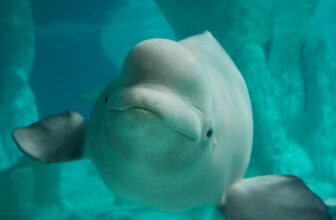


Two orcas and twelve dolphins are suffering at the former marine park Marineland in France, which is owned by Parques Reunidos.
Over the past decade, public concern about animal welfare at marine parks and zoos has grown dramatically.
People are more informed than ever about the needs of animals. They understand that animals like orcas and dolphins are intelligent, social, and wide-ranging creatures.
Modern science and changing values are pushing governments to act. France is one example. In 2021, the French Parliament passed a law banning whale and dolphin shows by 2026.
This decision changed the future of Marineland, located in Antibes in the Côte d’Azur region, which closed on January 5, 2025.
Marineland: From acquisition to crisis
Parques Reunidos is a major global amusement park operator. Founded in Spain in 1967, the company grew quickly through acquisitions. In 2006, they bought Marineland in Antibes. The French park included orcas, dolphins, sea lions, and more.
This move supported Parques Reunidos’ expansion in Europe. The company owns 57 parks worldwide, including zoos, aquariums, and amusement parks. Keeping animals became a key part of its business model.
But its fast growth now appears to lack enough planning for animal care, especially when they have to close a park. At Marineland, the animals are paying the price.
2021 animal welfare law in France
In 2021, French lawmakers passed a law banning marine animal shows and captive breeding. The law gave parks a deadline to stop these activities. Marineland had to either change its business model or close.
By late 2024, Parques Reunidos knew it could not legally keep the orcas and dolphins. The company chose to shut the park down.
Closure of Marineland
On January 5, 2025, Marineland closed permanently, creating an urgent animal welfare crisis.
The dolphins and orcas that once made profits for the park suddenly became a problem. The cost and difficulty of relocating them made the animals a burden.
Animal rights groups like TideBreakers, In Defense of Animals, World Animal Protection, Sea Shepherd France, PETA, One Voice, and Dolphin Project called for urgent action.
They said the animals were trapped in poor conditions and demanded the French government intervene.
Current conditions post-closure
Photos and drone footage from May 2025 showed dirty, algae-covered tanks. Some decorative fish were still there, but the tanks clearly showed signs of neglect.
After the park closed, most trained animal caregivers were let go. A small crew remained to feed and clean, but they could not properly care for the animals.
The orcas Wikie (23), her son Keijo (11), and 12 bottlenose dolphins are still there. Unlike other animals, they have not been moved.
Parques Reunidos said in January 2025 that it was “seeking alternative solutions,” but nothing has worked so far.
Kobe Suma Sea World (Japan)
In November 2024, Parques Reunidos suggested moving Wikie and Keijo to Kobe Suma Sea World in Japan. Animal welfare organizations opposed the plan.
French authorities also did not approve the plan. The journey would be over 13,000 kilometers and involve high stress for the animals. Japan’s animal welfare laws were also seen as weaker.
Loro Parque (Spain)
In April 2025, there was a plan to send the orcas to Loro Parque. But experts rejected the plan, saying the tanks were too small and did not meet the minimum requirements.
Animal groups supported the decision and said Loro Parque’s record with captive marine mammals was already troubling.
Whale Sanctuary Project (Canada)
A third and more hopeful plan came from the Whale Sanctuary Project (WSP) in Canada. The group offered to take Wikie and Keijo into their seaside sanctuary.
They said the facility would be ready by summer 2025 and was suitable for the orcas, who descend from Icelandic wild populations and could handle colder water.
Still, the French government rejected the offer in January 2025, citing concerns over timing and temperature. But in May, officials reopened the discussion.
“French government re-engages with us, and we respond that we remain committed to working with the government, with Marineland Antibes, and with other animal protection organizations to help provide the best possible future for the two whales (Wikie and Keijo),” WSP said.
The legal and ethical debate
Since the closure, animal rights groups have continued calling for government action.
Sea Shepherd asked for the orca tank to be repaired and for experts to be hired to care for the animals. One Voice said Marineland had abandoned the animals that made it rich. PETA said sea sanctuaries are the only ethical option.
The main question is: did Parques Reunidos do enough to protect its animals after closing the park? The company says yes.
But animal welfare organizations argue the current conditions break French animal welfare laws, and that authorities must step in.
Past animal welfare problems in Marineland
Marineland in Antibes has a long history of animal welfare problems. Between 1970 and 2025, there have been at least 12 orca deaths.
Moana died in March 2024 due to blood poisoning. She was only 12 years old. Inouk, age 25, also died last year under unclear circumstances.
Many bottlenose dolphins have also passed away, at least 34, of whom 23 were wild-caught. These statistics expose a pattern of chronic illness or poor animal management rather than one-time mishaps.
Problems at other Parques Reunidos zoos and aquariums
The crisis at the marine park in France is not unique. Reports of poor conditions, high death rates, and animal stress have come from other parks owned by Parques Reunidos.
Zoo Aquarium Madrid, Spain
In April 2025, the Spanish animal protection group FAADA reported a sun bear pacing in its exhibit, behavior that shows clear chronic stress. The animal also looked underweight and in poor condition. Workers admitted the bear seemed “bored.”
A 2011 Animal Equality investigation described many problems at the zoo, including small cages, concrete pits, poor sanitation and no shelter. The park’s approach included breeding to replace animals when they died.
Oceanarium, Bournemouth, UK
A Freedom of Information request revealed that 3506 animals died at the Oceanarium in Bournemouth between 2018 and 2023. The causes of their death included stress and water contamination. Reptiles were kept in bare concrete tanks.
A public petition demanded the park’s closure. The park is operated by Real Live Leisure, a division of Parques Reunidos, and shows clear trouble in zoo operations.
Blackpool Zoo, UK
In July 2024, PETA opposed a planning application to expand elephant enclosures. Elephants exhibited repetitive rocking and head swaying. Two elephants died between 2014 and 2024, leaving a single elderly female.
Miami Seaquarium and Sea Life Park (USA)
Parques Reunidos sold its U.S. parks in March 2025, including Miami Seaquarium and Sea Life Park in Hawaii. Both parks had been under pressure for years.
At Miami Seaquarium, animal welfare organizations had long fought to free the orca Lolita from poor conditions. PETA even bought shares in the company to push for the release of Lolita.
At Sea Life Park, official reports showed high death rates and injuries in dolphins, seals, and sharks, signs of stress and poor care.
Parques Reunidos’ public commitments vs real-world conditions
Parques Reunidos claims all its zoos and aquariums follow an “Animal Welfare Improvement Programme.” The company says it operates with integrity and ethics and uses scientific tools to track animal care.
But real-world reports show a very different story. Orcas in dirty tanks, dolphins dying young, and high animal deaths at aquariums do not match the company’s promises.
These signs point to weak oversight, poor planning, and a focus on profit over animal welfare.
Conflicts of interest
There are essential issues related to how parks like Marineland are managed. First is the tension between profit and ethics.
When parks close, the animals no longer bring in money and become expensive to maintain. Without strong plans, the animals are often neglected.
Another issue is fast growth. Parques Reunidos has quickly bought parks across Europe. But growing fast can mean that long-term planning for animal care is forgotten.
There are also gaps in regulation. Park closures may follow legal rules but still leave animals behind. Laws often don’t require safe transitions for captive wildlife.
Chance for change
The Marineland crisis may help create change. One growing idea is the use of seaside sanctuaries. These are protected, ocean-based areas where orcas and dolphins can live in more natural environments after leaving marine parks.
These sanctuaries offer an ethical alternative to traditional tanks and have gained strong support from animal rights groups and marine experts.
There are also louder calls for stronger laws. Campaigners want every marine park to have a clear plan for its animals before closing.
Governments are also urged to ensure companies like Parques Reunidos are held responsible for the animals they profit from.
For Wikie and Keijo, born and raised in captivity, time is running out. Their future remains uncertain if the French government doesn’t step up. So far, the only suitable option would be the Whale Sanctuary Project in Canada.
Your support helps us share animal news
We’re an independent animal news platform based in the Netherlands. We want our coverage of animal-related issues, conservation efforts, and human impacts on wildlife to remain free for everyone.
But running an independent newsroom costs money. That’s why we need your help. Even a one-time donation of €1 or a small monthly gift can make a big difference to our work. Because we are a small news team, your support really counts.
Thank you for considering supporting us.