
During my first week as a writer, all I did was write meta titles for web pages. Hundreds of them.
For those unfamiliar, a meta title is the blue, clickable headline you see when you search for something on Google.
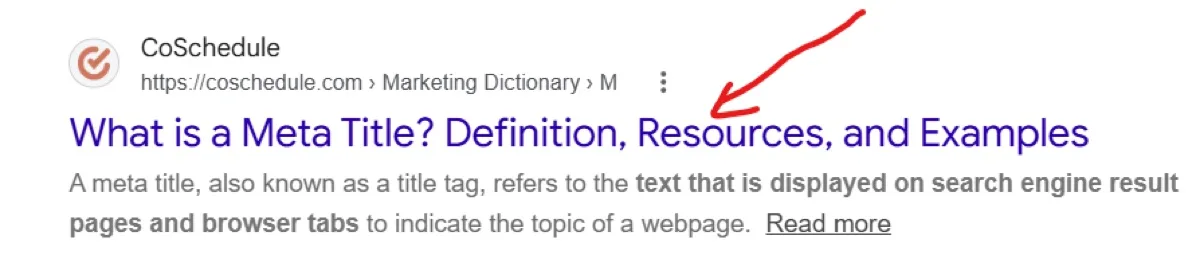
It was painful, boring, soul draining grunt work, but it taught me how to write like a professional.
Fast forward to 2026, and my Gen Z colleagues can produce thousands of these titles in seconds using Claude. The results are significantly better than my first attempts.
On the surface, this seems like a straightforward win. The business saves thousands of hours, while junior employees spend less time on repetitive work. But it raises an important question: if AI removes the work at the bottom of the ladder, where do people learn to do the work above it?
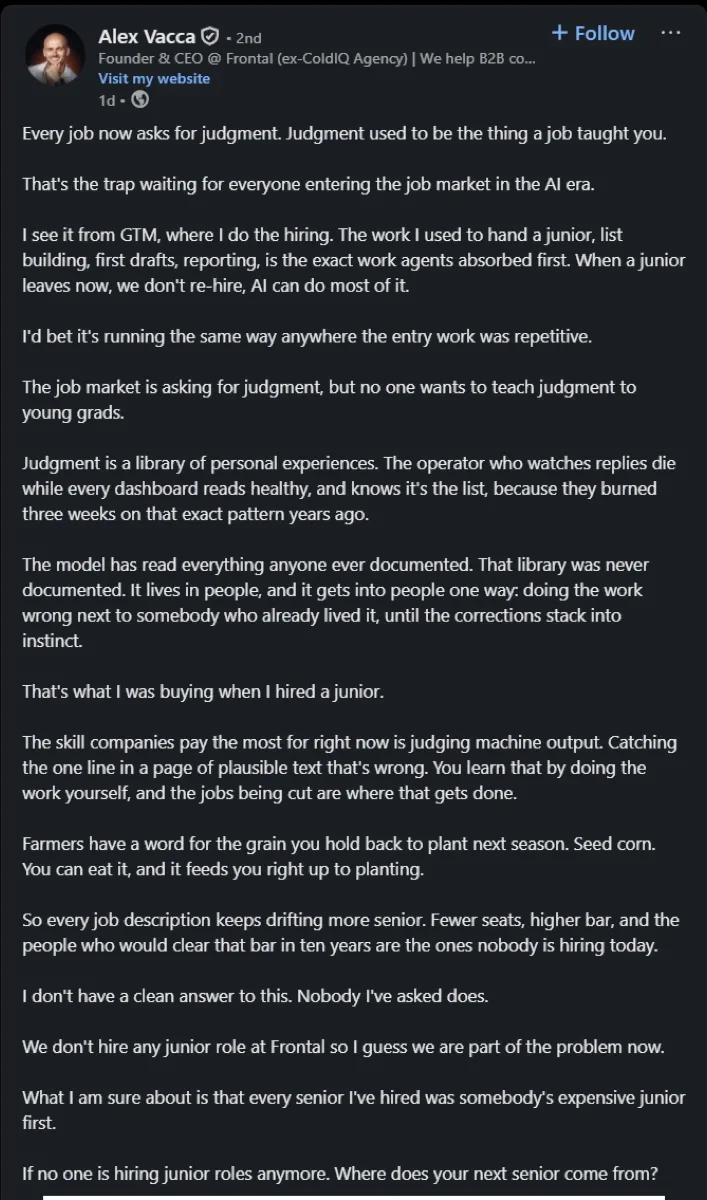
Turns out I wasn’t the only one thinking along these lines. Last week, I came across a LinkedIn post by Alex Vacca, founder and CEO of Frontal. He had put into words a question I had been circling around: what happens when AI takes away the work that teaches you how to work?
Source: LinkedIn
The shifting sands of time
Last year, OpenAI’s Sam Altman said that if AI wipes out your job, maybe it wasn’t real work to begin with. Hiring trends suggest companies have taken that statement to heart.
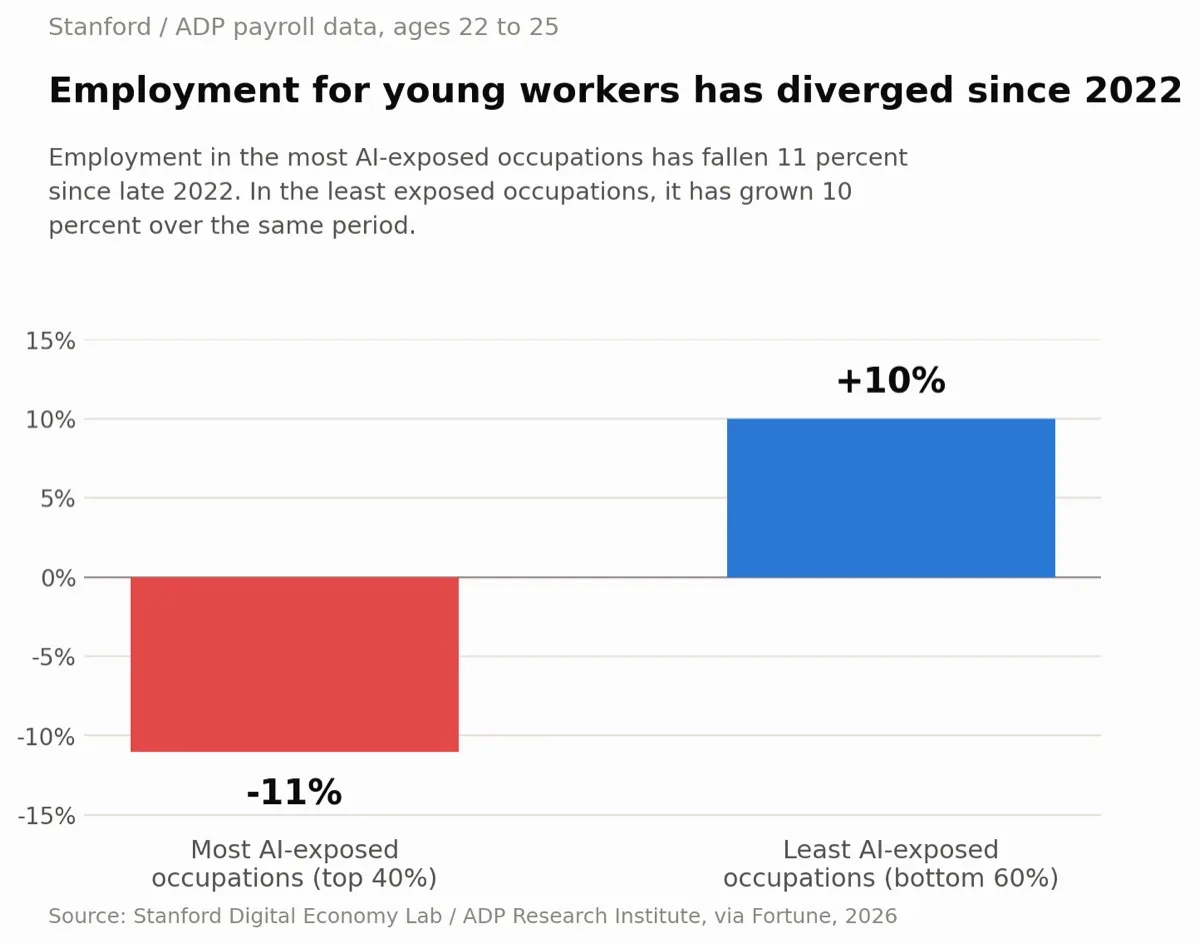
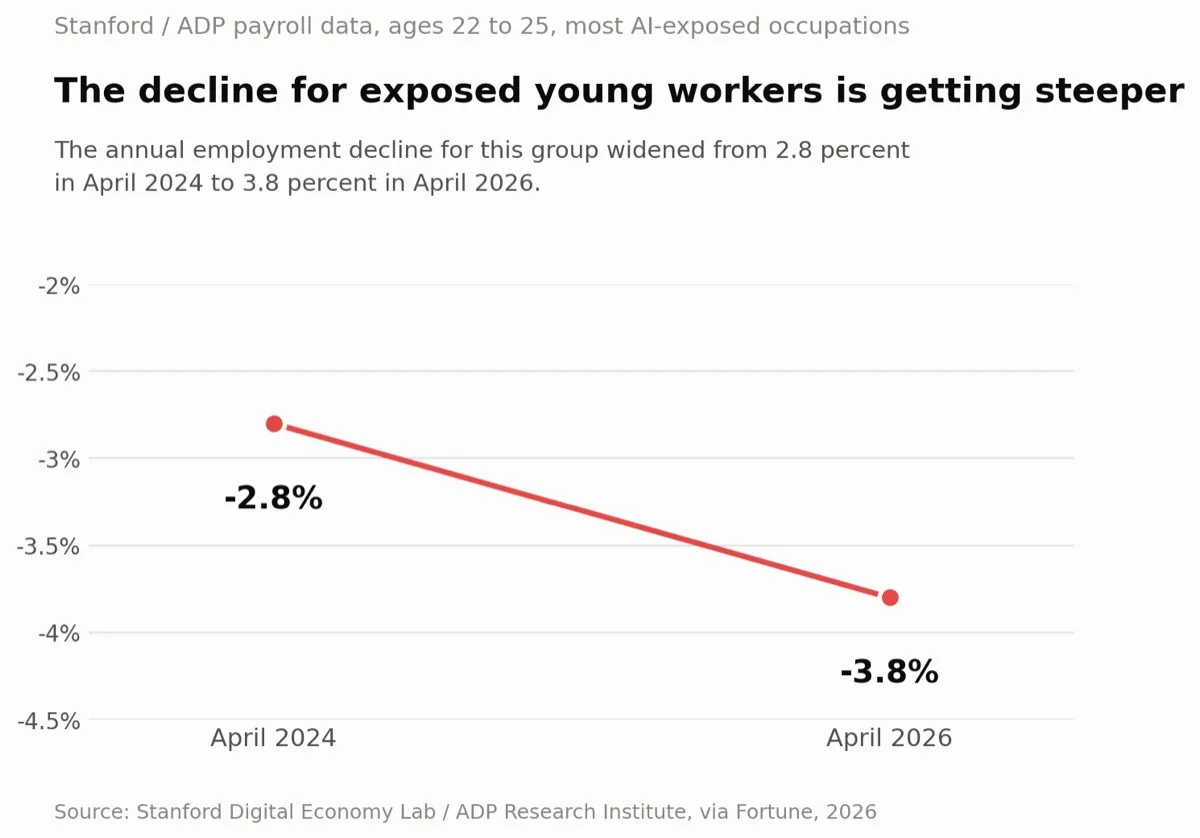
A joint dashboard from Stanford’s Digital Economy Lab and ADP Research, led by economist Erik Brynjolfsson, tracks 4.6 million workers across more than 730 occupations in near real time. Since ChatGPT arrived in late 2022, employment among 22- to 25-year-olds in the most AI-exposed occupations has fallen roughly 11 percent.
Meanwhile the same age group in the least exposed occupations has grown roughly 10 percent. Brynjolfsson has run the finding against every counterargument thrown at it so far, interest rates, remote work, the tech sector alone, and the pattern holds every time. “Whatever it is,” he told Fortune, “It’s not going away.”
What the data shows
PwC’s 2026 Global AI Jobs Barometer examined more than a billion job postings across 27 countries. It found:
-
Entry-level roles most exposed to AI are now seven times more likely to require senior-level skills such as judgment, leadership, and creativity.
-
These seniorized roles have grown 35 percent since 2019.
-
Traditional entry-level roles, the ones built from routine, repeatable tasks, have shrunk 10 percent over the same period.
“AI is removing some of the routine work that once acted as an apprenticeship, while increasing demand for judgement, leadership and adaptability much earlier in careers,” – Pete Brown, PwC’s global workforce leader.
The squeeze in India
India is feeling a version of the same squeeze.
Fresher hiring in the country’s IT sector fell from roughly 600,000 in FY22 to around 120,000 in FY25, according to research firm Xpheno, cited by Business Today. That gap represents an entire generation of engineering graduates finding a much narrower door than the one their seniors walked through.
A more hopeful read
While this may paint a grim picture at first glance, it’s not all bad news.
Anthropic CEO Dario Amodei, once among Silicon Valley’s loudest doomsayers on AI and jobs, has leaned on an older idea called the Jevons Paradox: making something more efficient tends to expand demand for it, rather than shrink it.
“The 10% kind of expands to be 100% of what people do,” – Dario Amodei, Co-Founder and Chief Executive Officer (CEO) of Anthropic
For example, as AI makes writing code faster and cheaper, teams may end up building more software than they used to. This leads to the overall demand for engineers growing along with it, or so the argument goes.
Amodei added a caveat of his own, though. AI is moving faster than any previous technology shift, he said. The market may not get the time it usually needs to create those new jobs before today’s graduates are stuck waiting for one.
The bottom rung breaks first
Aneesh Raman, LinkedIn’s chief economic opportunity officer, put it plainly in his now viral 2025 New York Times op-ed. Entry-level paralegals who once cut their teeth on drafting are now handing that same work to AI tools that finish it in hours instead of weeks.
So what fills that time? Much of the time is now spent towards reviewing and improving AI-generated drafts. The kind of work that needs judgement calls senior lawyers used to make. But judgment on AI output is hard when one has never done the repetitive work that judgment used to come from. Christina Cheung, a lawyer who has studied this shift, calls it a “chicken-and-egg problem.”
The rung breaks quietly, one document at a time, long before anyone notices the ladder is shorter.
The cost compounds well beyond the job search itself. The Center for American Progress, cited in Raman’s piece, found that young adults who experience six months of unemployment at age 22 can expect to earn roughly $22,000 less over the following decade.
Employers have something to lose here too.
Emily Rose McRae, a senior director analyst at Gartner, told HR Dive that once the traditional experience ladder breaks, companies lose a reliable way to judge who is actually ready for more responsibility. There is “no easy proxy for competency,” she said, once years on the job stop meaning what they used to.
Rebuilding the ladder: The RUNG framework for HR leaders
Raman’s own description of what should come next is a useful place to start, entry-level roles that “teach adaptability, not repetition, and serve as springboards, not stalls.” Turning that sentence into an actual practice takes more deliberate redesign than most companies have attempted so far. A simple framework helps, RUNG, one letter for each place HR leaders can act.
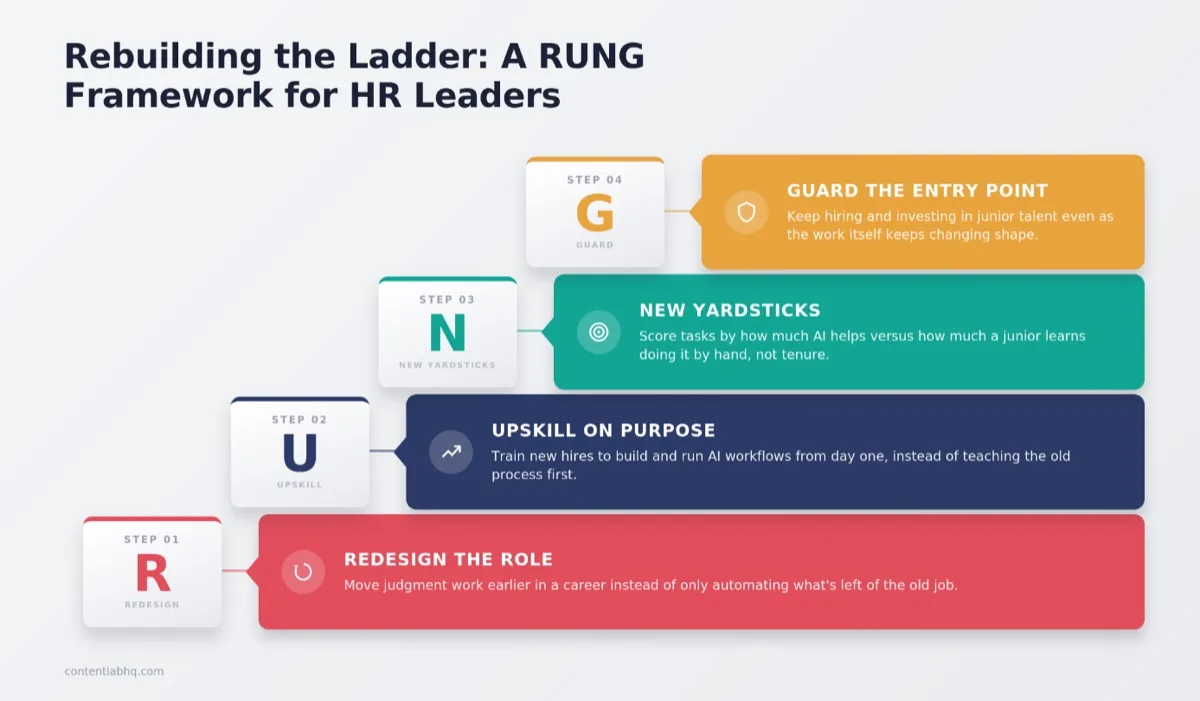
Redesign the role
Map what a role will require in the future, not what it required three years ago. Companies doing this right are building a “job architecture“. They’re defining the skills junior employees need today, the skills they’ll need next, and redesigning the work around them.
Companies doing this
Randstad, a global recruitment and HR services company, is redesigning entry-level work around judgment, oversight and human connection, while giving employees AI training. Its new job architecture maps skills required today and those needed in the future, creating more flexible, skills-based career paths.
Upskill on purpose
Put AI training into the core curriculum for new hires, not a supplementary module bolted onto the old one. The junior employee who learns to build and audit AI workflows from week one ends up doing work that used to take a full team.
Companies doing this
Deloitte’s AI Academy gives early-career professionals hands-on training in AI and generative AI, with curricula developed alongside universities and technology institutes. The programme is designed around real-world AI and data science projects, making AI skills part of the learning path.
“The workforce is ready and willing to embrace AI, but they are currently doing so without clear direction or adequate training,” says Himanshu Palsule, CEO of Cornerstone
Design new yardsticks
Score each task on two axes: how much productivity AI adds, and how much a junior employee learns from doing it by hand. Protect the tasks that build judgment even when AI could finish them faster and automate the rest.
Companies doing this
Unilever is redesigning jobs by identifying which tasks AI can automate and which require distinctly human capabilities. It is shifting employees toward work that builds skills such as judgment, creativity and problem-solving, while using AI to handle more routine tasks.
Guard the entry point
Treat entry-level hiring as deliberate workforce planning, not a line item to cut when AI makes headcount optional. The World Economic Forum’s own research on this warns that shrinking entry-level recruitment weakens the talent pipeline a company will need for its next generation of leaders.
Companies doing this
Accenture uses skills data and market signals to anticipate the talent it will need, while apprenticeships expand its entry-level pipeline. Apprentices made up 20% of its US and Canada entry-level hiring in fiscal 2025, giving the company a structured route to build skills for future roles.
Back to Alex Vacca’s question
I want to close this article by revisiting Alex Vacca’s question. What happens when AI takes away the last rung of the ladder? The honest answer is that someone has to rebuild it.
Every task you hand to AI and every junior hire you cut is a bet on who runs the place in ten years. So ask yourself, honestly, what your own entry-level hires are actually learning right now?
If you can’t answer that in one sentence, you don’t have a talent pipeline. You have a subsidized internship, and AI just made that a lot more expensive to keep pretending otherwise.