Can Tom Perriello’s ‘bold politics’ flip a red House district?


Better Know a Democrat is an interview series to give voters a closer look at candidates in competitive races across the U.S.
When it comes to solving an issue, the nation’s attention span can be short. Dozens of issues bounce across the screens of our computers and phones every day, sometimes every hour, demanding our attention.
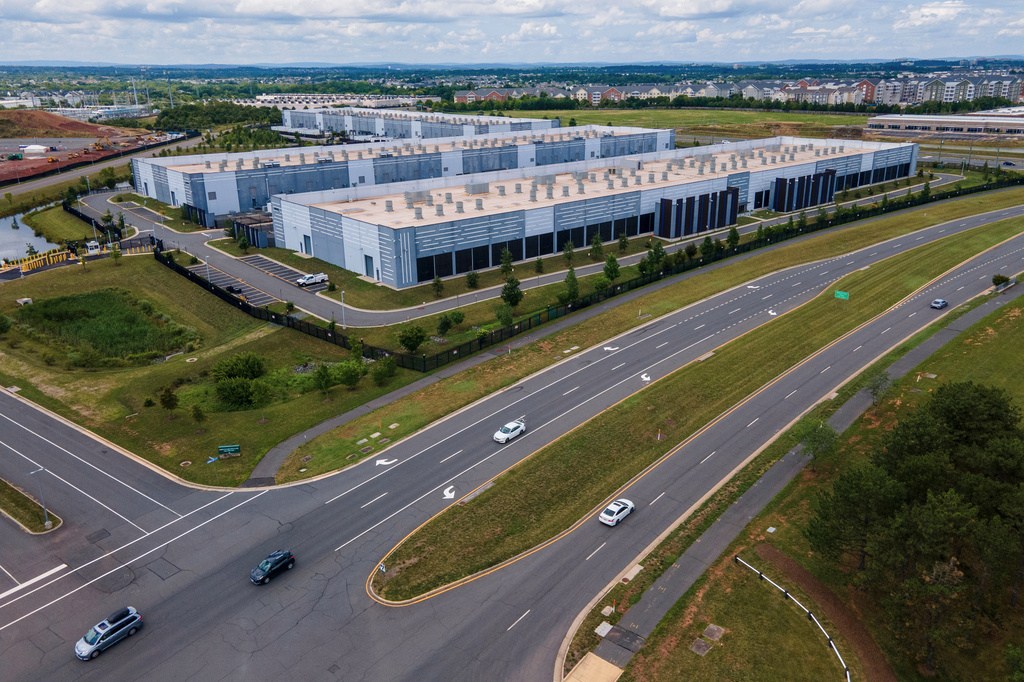
But in Virginia’s Data Center Alley, the problems facing locals aren’t going away when a new topic hits the headlines.
In the state’s 5th Congressional District, which President Donald Trump won by 12 percentage points in 2024, Democratic nominee Tom Perriello said in conversation with Daily Kos that the people are in pain and looking for a solution through what he called “bold politics.”
“I think most voters I talk to, regardless of their political home, just think politics are broken, and they are looking for politicians that are willing to actually be bold enough to take on the corporate capture of both parties, that are willing to take on really tough questions, and I think that that’s what I’ve tried to do in the past, and will continue to do,” he told us.
Perriello is not new to running for office. The former U.S. special envoy for Sudan, among many other titles, held Virginia’s 5th District from 2009 to 2011, though its lines are different these days.
Now, years after his time in Congress, Perriello is hoping to flip his red-tinted district and bring change to the area.
Check out our conversation with him below.
This interview has been edited for length and clarity.
Daily Kos: I’m here with Tom Perriello, who is running in Virginia’s 5th District. And Tom, I know this isn’t your first time around. You’ve previously been in Congress in Virginia. You’re running again after a previous loss against a Republican candidate back in, I think, the early 2000s.
Tom Perriello: 2010, a long time ago, but let’s not push it.
Daily Kos: How are things going right now?
Perriello: Things on the campaign are going incredibly well. We’re in a great position to pick up a Trump+12 district. We’ve already pulled even. But the truth is, we’re doing well in the campaign because people are in so much pain. This is an area that’s been brutally hit by Trump and [incumbent Republican Rep. John] McGuire’s decisions, particularly on healthcare. We’re seeing rural health clinics close down, we’re seeing maternity wards shut down. Eleven of the 24 counties in my district no longer have an ob-gyn practicing. So it’s a horrific time on the health side.
We have farmers who can’t make margins because of the diesel prices and the fertilizer prices, and people, particularly in communities of color, feel the dehumanization and the fear from the corruption and the repression in Washington. So it’s a very tough environment for us and for all of our neighbors. But politically, I think we’re seeing this coalition emerge of people from very different political viewpoints who can all agree that this has got to end. We’ve got to stop this corruption. We’ve got to get some sanity back. Restore some of our constitutional freedom. So it’s a really dynamic time.

Daily Kos: You built a reputation in previous runs for holding an aggressive amount of town halls, especially linked to healthcare, and so when you’re talking to voters now, how does that compare to previous runs, to previous conversations with people in similar areas, similar situations?
Perriello: I was in Congress during the Affordable Care Act vote. In fact, I had the chance to cast the deciding vote for the Affordable Care Act and vote for the first version that had a public option in it. From a red district, people really wanted to see leaders that were willing to stand up to the insurance companies. I promised that I wouldn’t take money from lobbyists or corporate PACs, and I kept to that promise. I think what people appreciated was that I did town halls, not just in the blue areas, but the red areas, and I met with stakeholders, whether that was small business owners, nurses, doctors, etc.
We’ve continued to do that on this campaign. In fact, last week, we had over 200 doctors and nurses from across the district sign a letter endorsing me and criticizing my opponent, John McGuire, for voting for this horrific bill that has just been an assault on healthcare, not just in rural communities but across the system more generally. And so I think if you want to be a representative, you’ve got to represent, and you can’t represent without listening.
People see that difference versus John McGuire, who hasn’t done a single public town hall. He’s running away from public debates and really doesn’t spend that much time in the district because he works for the donors for the dark-money groups. That’s who tells him how to vote, and every single one of his votes has been consistent with that instead of with the people. So the contrast is there; it’s pretty clear. That’s why we were able to win a very red district in ’08. We lost in ’10, but we outperformed the Democratic average by 12% that year, and why we’ve already pulled even in a very red district this year with the momentum pulling us ahead.
Daily Kos: You were pitching the Affordable Care Act then, and now we’re facing cuts that are, I’m assuming, impacting the district that you want to represent. Have you noticed that shift, with people who were apprehensive about ACA, and now they’re noticing that it’s disappearing.
Perriello: Yeah, I mean it is something where now we’re running ads talking about my vote for the Affordable Care Act, where many people thought that’s why I lost in 2010. And I think it’s not just that people have come around to understand that the Affordable Care Act was crucial for both the middle-class healthcare rates and rural healthcare. It’s also the kind of credibility you build with people when you do something that was politically costly up front because I knew it was going to be good for the community over time.
And then when the community sees that it proved to be good over time, then you have credibility on the next issue to talk about the fact that “Hey, I’m not just doing what’s quick and easy for the next Twitter cycle. I’m going to do what’s right for the community,”
[…]
So now, as we’re fighting data centers and transmission lines, people understand I’m not just showing up because this is the cool issue right now. They’ve seen me show up year in and year out as an activist, as an organizer, and briefly as a politician, and that means we can have a different kind of conversation about what it means to protect our rural communities.
So you see it with healthcare. You see it with taking on corporate power and corporate corruption. And I think that’s why we’re not just going to win this race. We’re actually trying to build a new political coalition across areas that weren’t previously united, because I think the threats we have now require that bigger coalition, particularly if we’re going to be able to get things done in Washington
Daily Kos: About data centers—they are seen very clearly as a threat to the communities in your district. Is that what you’re hearing from everyone?
Perriello: We’re in Virginia, which is Data Center Alley, and what we’re seeing is not just the data centers themselves … That’s actually only about 10% of the footprint compared to the water, the transmission lines, and the baseload power. I think a lot of communities had these being offered up in the dead of the night with nondisclosure agreements, and it seemed to some county leaders like that was just going to be free money. I think they have really, really shifted to understand how strongly these are opposed in almost every community, and my view is that we’ve got to stand with communities where they’re trying to block data centers.
We’re in that fight in situations where either communities want the data centers, which is rare, or have the data centers whether they want them or not. I’m fighting to make sure they get the best deal possible. The consumers are protected, the environment’s protected, but this is really a question of what Trump has brought to the surface, which is kind of his disdain for rural communities.
When he tweeted about the fact that rural communities either should take data centers or die an economic death, that’s really what he’s done with the Big Ugly Bill as well. I think that the Trump era of the Republican Party sees the rural communities as a place for extracting wealth and extracting resources instead of investing.
[…]
And I’ll tell you what: Rural communities are waking up. The fact that they are under attack from the modern Republican Party, the question is: Are Democrats showing up to be part of the answer as people turn away from Trump? And if we’re not showing up in those areas, and we’re not showing up with candidates that understand those communities and have been fighting for those communities, we’re going to miss an opportunity not just to help some people, but also to build that bigger coalition.
Daily Kos: You’ve talked about diesel [prices], you’ve talked about data centers, you’ve talked about healthcare, and these are things that, across the board, are impacting people. But when it comes to specifically District 5, the voters you’re speaking to, what is something local to your area that you would like to help improve that speaks to a larger issue as well?
Perriello: When I voted for the American Recovery Act to try to prevent a depression, I came in when Wall Street had wrecked the economy, and we were trying to shift the focus from Wall Street to Main Street. We helped some dairy farmers in our communities capture methane from cow manure and turn that into clean energy to sell back to the grid. So you can help farmers take their single biggest expense, which is usually electricity, and turn that instead into a revenue stream. When farmers didn’t have very narrow profit margins in these areas, despite how hard they work, we had folks who were definitely not traditional Democrats who were getting excited about green industrial policy.
The biggest barrier was the monopolies. So the power companies, actually in Virginia at least, are agnostic between clean energy and dirty energy. They only care that it’s their energy. So what they’ve been incredibly vigilant about here is preventing distributed energy production, and that’s an example of where our farmers can be part of solving our energy problems, part of our clean energy and climate problems, and it can be part of keeping our agricultural communities robust.
And it was the monopolies that were standing in the way of that. So over the last 20 years, I’ve been trying to fight against those monopolies so that we can have our communities be a source of creating wealth in those communities while protecting our environment.
Daily Kos: You’re running in a district that historically is pretty red, and I know you have a label of a moderate Democrat, but when you’re speaking with voters with constituents who typically lean more to the right, are you met with any specific apprehension about where you’re coming from and what you would like to do for the district?
Perriello: I think that the right-left-center spectrum is something honestly that media and pundits talk about and voters rarely do. I talk about politics as being “bold politics versus old politics.” I think most voters I talk to, regardless of their political home, just think the politics are broken, and they are looking for politicians that are willing to actually be bold enough to take on the corporate capture of both parties, that are willing to take on really tough questions, and I think that that’s what I’ve tried to do in the past, and will continue to do.
[…]
My hope with this election cycle is that it’s not just going to be the last election of the Trump era; it’s going to be the first election of the post-Trump era because I think voters want— yes, they’re upset with Trump, as am I, but they also want us to move on and say, “Don’t you realize he’s more the puppet than the puppet master?”
He has the attention span of a hummingbird that goes here and there, and meanwhile, these big, huge things are going on that are affecting our lives, our ability to parent, and the rest. And the sooner we can move to having really bold ideas, which do not necessarily fit right, left, or center, they just need to work, you know.
Daily Kos: Yeah, I think that whether you’re in cities or rural areas, people are wondering, “How is this going to directly impact my life?”
And like you said earlier, AI [data] centers are a big topic in Virginia, and we even have OpenAI, we have Anthropic going to the U.N. saying we need protections on this. This is growing immensely, and so you have senators, you have people in Congress proposing—like [Vermont Sen.] Bernie Sanders’ wealth fund for AI, for example, that would give ownership of AI to people—are you saying that’s something that’s on your radar as well?

Perriello: Absolutely, and I do want to distinguish here between OpenAI and Anthropic, because they’re both raising alarm bells now, which is good. But OpenAI was one of the companies that funded $8 million to prevent Alex Bores from winning his primary [in New York’s 12th District] when he was going to be one of the strongest voices for AI safety.
So you can’t, on one side of your mouth, be defeating people who are actually trying to put AI safety seriously into the federal conversation, while then being like, “Oh, we really care about this.”
Anthropic is not a perfect company, but on AI safety, they have actually been pretty consistent in saying we need regulations, potentially liability. They tried to create a red line with [Defense Secretary] Pete Hegseth on their AI not being used for autonomous lethal drones or surveillance state usage, at least domestic surveillance state usage. So I think that it’s good that we are seeing more of the industry speak up about this, but it’s also something where your dollars speak a lot, and are they going to stop trying to defeat candidates who are actually willing to demand this kind of safety?
[…]
Daily Kos: There’s no looking away from AI right now or moving forward. You know, looking at your long political resume and people you’ve worked with in the past, whether they’re in office now or previously, is there someone that you see as more of an idol or a blueprint for how you do your job?
Perriello: Yeah, probably I’d go back to [Haja Zainab Hawa Bangura]. She was the head of the Market Women’s Association in Sierra Leone when I started to work on supporting the peace process there. And I went over, and we’d been helping to set up a human rights clinic. And she sat me under this tree, and she was just like, “You need to move here.”
I was just finishing law school, and I was like, “What do you mean?” She was like, “We got 12 months to get a peace deal, to hold these warlords accountable, to try to disarm the child soldiers, and have our first democratic elections in a generation. And I said, “That’s all well and good, but how can I help? I’m a white guy from Virginia. I don’t even speak the local languages.”
And she said, “Well, if you’re standing next to me, I’m less likely to get shot, and that would be really helpful to me.” And it was the best job description I’d ever had. And so I decided to move to West Africa to help this set of women who had been told by every country, including the U.S. and the U.K., that the country was just hopeless. The war. This was the ninth year of the civil war there. It was the blood-diamonds war.
[Bangura] would just say to people, “That’s not even a comprehensible statement. This is our country. These are our families. These are our kids. We are not giving up on this country, She was just willing to challenge the sense of what was possible. And over the course of that year, one of the biggest breakthroughs was simply getting women a seat at the table.
[…]
And we did some things that would be a longer conversation to help get the women a seat at the table. And it took less than a month for them to get a peace deal. And that peace deal has held, and it was peace with justice.
We had a truth commission and helped set up a war crimes tribunal for the worst warlords in the country, which I helped set up. And that country has never gone back to war in 30 years.
So when I think about someone who was willing to take a country that everyone else said would just be at war forever, and was simply not willing to accept that as an answer and challenge our sense of what’s possible, and I could be, you know, have the honor to just be in partnership with those people and watch over the years how that held.
And you know, again, and when I’ve gone into politics and people have said things like, “Wow, you have political courage for you know voting for the Affordable Care Act,” I’m always like, “No. I’ve seen real courage. We have set the bar way too low for what political courage looks like, and when people say, “Oh, that’s just not possible. We couldn’t pass that bill. You couldn’t possibly vote for the climate bill from such a red district.”
I’m like, actually, I think we need to be a little bit bolder about our sense of what’s possible, and act as if our families and country depended on it. And when we act that way and practice that kind of politics, then folks in some of these communities that don’t trust Democrats, for good reason, start to notice and say, “Hey, this is something worth sticking my neck out for.”
So [Bangura] would be the first person that comes to mind on that.
Daily Kos: To that point, I think about how a lot of people who voted for Trump had liked him because he had, and presently maybe still do like him because he, whether good or bad, was doing things very, very rapidly, and you know Democrats seem to lose that sort of edge. Do you feel similarly?
Perriello: People care about the results. I think this is actually something that the abundance folks got part right and part wrong and trying to blame the groups. The issue is leadership. I think people actually do care about executive leadership because we all know in our lives that we have to make decisions with incomplete information, and there are trade-offs in life. And I think we’ve had a lot of democratic leaders who, when faced with those trade-offs, want to try to default to consensus.
[…]
And I think people do feel like there have not been enough leaders, particularly on the Democratic side, who are willing to look people in the eye and say, I get it. There’s some trade-offs here. I see this and that, and this is the decision I’m making. And I want you to hold me accountable to that decision. And I think we hide behind—we’ve seen too many, particularly Democrats, hide behind the process. That doesn’t mean, though, that you just steamroller through with things like the Valley Link transmission line. You make that executive decision by deciding the end goal is something that people really want, and that you have considered agency and listening and all these things into the process.
So I think right now that’s part of what people hoped for Trump, and I think what most upset people is that they finally realized Trump’s actual goal was making himself rich, even if it meant making everyone else poor.
And so the idea of getting rid of all of our norms and all of our processes to help Trump get rich is not something that people are interested in. Had he been saying, “Hey, we’re going to be more executive. We’re going to break some china along the way in order to rebuild the American middle class or manufacturing base,” people would have felt differently about it, and I think that in Trump 2.0, it’s become very, very clear.
[…]
But what’s been harder to get progressives to do is to define the North Star vision of what is the world we want AI to help us create, and the reason that’s important is because we are progressive, and we tend to win when we are defining the space we want to be progressing to, and we tend to lose when we become the people that are on the side of blocking or slowing change.
[…]
And if we are progressives, then we need to be part of thinking about problems this could help solve. And this is a place, I think, where my perspective is helpful because it’s not hard to think about a world better than the world that we have.
Daily Kos: Tom, I’m not going to keep you much longer because I know we’re already a little over time. So, is there anything we haven’t talked about that maybe you want to hit on now?
Perriello: There’s a lot we haven’t covered. I will just say that I think our race, the 5th District in Virginia, is one of the majority-maker races. We are on “Red to Blue,” and I’m the only Democrat that’s flipped a seat west of Richmond, Virginia, this century, and we’re going to do it again.
Daily Kos: Tom, thank you so much.
Perriello: Thank you, Alix.
Donate to help elect Tom Perriello for VA-05.