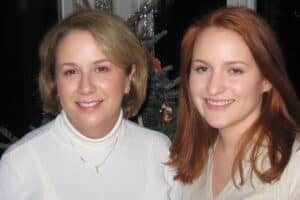
My mom, Barbara Green, died two years ago this week. I wrote this for her. It is not about work.
My mother scheduled her death for 10 a.m. on a Wednesday.
Two years earlier, she had been diagnosed with pancreatic cancer — metastatic, we learned one horrible afternoon at Johns Hopkins, which meant surgery wasn’t an option, which meant terminal. When it comes to timelines for when you’ll die, doctors don’t like to commit to specifics but after she pressed them, they guessed she had eight to eleven months.
My mom was not afraid to die, but she was deeply afraid of suffering. And pancreatic cancer is not an easy death.
So very early on she began telling my sister and me: Switzerland. When the pain got too bad, she said, we would fly to Switzerland, where medically assisted dying is legal, and we would sit with her as she peacefully ended her life. There was no question for her that this is what she would do; I didn’t see her waver even once. In fact, not only did she not waver, but knowing she had a way to prevent the worst of the disease was what let her make peace with the diagnosis.
My mom had always lived life on her own terms, so it wasn’t surprising to anyone who knew her that she was determined to die on her own terms too. From the time my sister and I were very young, she always taught us that you should think for yourself and choose a life path without concern for what other people thought, as long as you felt your choices were ethical ones.
She also taught us that when something is wrong in the world, you speak up about it. Throughout my childhood, she was always writing letters to the editor to our local paper and to legislators, or even just to the phone company to take issue with a charge she felt was an error. She brought that same ethos to the rights that she wanted in death: she lobbied elected officials to legalize medically assisted dying in our home state of Virginia, testified at state hearings, and talked to multiple reporters about her battle to die with dignity. She also talked with every doctor and nurse she came into contact with about medical aid in dying for the terminally ill; she wanted to know where they stood on it, and she wanted to try to persuade them to support it if they didn’t. Many of her doctors were visibly uneasy with the topic, while the nurses — who generally had more hands-on experience caring for the dying — already all supported it, every last one of them.
She also talked about it to me, my sister, and my two nieces constantly. I must have heard “Alison, you have to accept that I’m going to die” at least weekly. My mom saw those frequent reminders — very frequent — as an act of love, something she did to make sure we were prepared.
After multiple rounds of chemotherapy, she ended up getting more time than we had been told to expect. A year went by, then a second Thanksgiving, when we had thought we might have none, and she was still here. We knew the reprieve was temporary, but no one knew how temporary. But then, in June of 2024, she started having abdominal pain that no drugs could ease.
She could see what was coming and by that time, the Switzerland plan had morphed into Washington, D.C. instead. She and I both lived in northern Virginia, about 15 minutes from D.C., where medical aid in dying is legal, and she decided to establish residency there so she could use it.
If you’re thinking that moving is awful under the best of circumstances and must be particularly nightmarish when you’re sick and exhausted … yes. It made my mom angry, too — angry that she had to leave the place she’d lived in for decades just so she could have the right to die peacefully instead of spending weeks or months in agony.
But she did it. She found an apartment and met all the other requirements of the law, and after getting multiple physicians to attest that she had less than six months to live, and multiple appointments to confirm she was mentally capable and not being coerced into the decision, a doctor wrote her a prescription for a drug that would, at the time of her choosing, kill her.
Once she had the prescription in hand, her relief was palpable. Knowing she wouldn’t need to suffer brought her an enormous amount of comfort.
The abdominal pain kept worsening and she started spending part of every day in pain. In late September, she told us she was ready. In fact, she said she had waited a week too long — she hadn’t meant to let the pain get to that point, but it’s hard to know until you’re already in the middle of the thing you wanted to avoid.
* * *
My mom, who excelled at the practical aspects of caretaking, was never super comfortable with the mushier side of mothering. Throughout my life, when there were deeply emotional things to be said, she would sometimes communicate them through other people’s words. A few months after her terminal diagnosis, she sent my sister and me a Donna Ashworth poem titled “The Loss of a Mother”: “She built all of her love into you / cell by cell / thought by thought / lesson by lesson … mothers cannot leave / they are in you / look inside / she’s there.”
And so the day before the date she had picked to die, she told my sister and me to sit with her while she played us A Bad Goodbye by Clint Black (“I’m still bound to leave you, I surely don’t know how, my heart won’t let me put you through what my mind says should happen now”). Earlier that morning, she had been blasting Don McLean’s American Pie: “This will be the day that I die.” (“It was particularly badass,” my sister said afterwards.)
Later that day, though, she used her own words: “It’s really hard to leave your kids,” she told me, her voice breaking.
I can’t describe what it’s like going to sleep knowing that the next morning you’ll be accompanying your mom to her death.
“You are my favorite person,” I told her that night. “All the best parts of me come from you.”
The next morning at 10 a.m., my mother hugged my sister and me for the last time and told us she loved us. We got into bed with her, and the death doula who she’d hired handed her a cup of the medicine that would kill her. She did not hesitate for even a moment; before I could process that it was happening, she had drunk it down. The doula gave her a small dish of lemon sorbet to take the bitter taste out of her mouth, and then we held her hands and waited.
Within a few minutes, she told us, “I’m starting to feel something” and closed her eyes. That was the last time she spoke.
Over the next several minutes, she squeezed our hands repeatedly: this is okay.
No more than 15 minutes later, she stopped breathing and was gone.
It was extraordinarily peaceful — exactly the death I’d think anyone would want if they had the choice. It’s the death I would want if I could choose.
When I think about how differently her final months would have gone if she didn’t have the right to make her own medical choices, I’m so angry that she could have been forced to suffer. She had terminal cancer; it was always going to end with her dying, no matter what anyone did. Whose interests would have been served by forcing her to linger in pain for a few extra months?
She viewed her ability to minimize her own suffering as a great gift, one that brought her immense comfort, and so it brought us comfort too.
I hate that she is gone, but I love that she got to die exactly the way she lived: saying, “This is not right, and I’m going to work to change it” and making her own decisions right up until the end.
In honor of my mom’s memory, I hope you will push your legislators to give terminally ill adults legal access to medical aid in dying, no matter where they live.

The post my mom appeared first on Ask a Manager.