

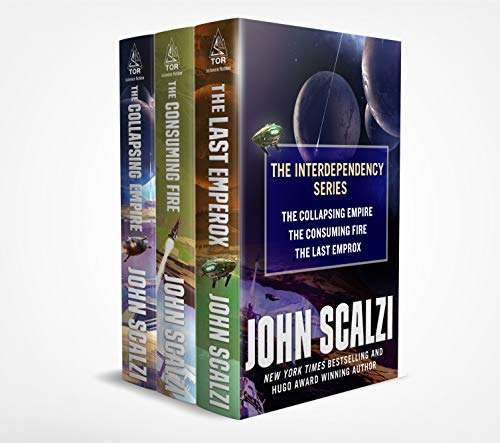
Book Review: The Collapsing Empire by John Scalzi
Introduction
John Scalzi has once again delivered a masterful work of science fiction with “The Collapsing Empire,” the first installment in his Interdependency series. Renowned for his sharp wit and compelling storytelling, Scalzi invites readers into a universe on the brink of monumental change. As we explore this intricately woven narrative, we will delve into the storyline, examine the richly crafted characters, analyze significant themes, assess Scalzi’s distinctive writing style, and provide a critical evaluation of the overall impact of the book.
Plot Summary
Set in a far-future universe, “The Collapsing Empire” introduces us to a vast interstellar empire known as the Interdependency, which hinges upon a network of “Flow”—a complex space-time conduit that enables faster-than-light travel. This elaborate setup raises pressing questions about the sustainability of such a system. The narrative kicks off dramatically with the devastating revelation that the Flow is beginning to collapse, jeopardizing the empire’s very existence. This scenario sets the stage for both personal and political strife as the characters scramble to survive the impending doom.
The story unfolds through the perspectives of three principal characters, weaving a complex narrative that underscores both personal stakes and broader implications. Emperox Grayland II, the young and inexperienced ruler of the Interdependency, faces unprecedented challenges in her quest to lead her people amidst chaos. Her struggle symbolizes the precarious balance between authority and vulnerability. Kiva Lagos—a savvy merchant operating on the edges of legality—provides a rebellious yet pragmatic lens through which to view the socio-economic landscape. Lastly, Cardenia Wu-Patrick, a politically astute scholar, contributes analytical depth as she navigates the empire’s treacherous political terrain. Each character’s journey toward self-discovery and resolution becomes a driving force in the narrative, compelling readers to consider the implications of their choices in a collapsing world.
Character Analysis
Scalzi’s characters are richly developed, serving as the backbone of the narrative and reflecting the complexities of human emotion and ambition.
– *Emperox Grayland II*: As the protagonist, Grayland embodies a blend of vulnerability and strength. Unprepared for the intricate political machinations surrounding her, she finds herself thrust into a leadership role at a critical juncture. Her evolution throughout the story highlights resilience and adaptability—qualities essential for any leader in times of crisis. Her struggle with self-doubt juxtaposed with her obligations not only humanizes her but also invites readers to reflect on the burdens of leadership. Grayland’s development illustrates the often-unseen challenges faced by those in power, challenging the reader to empathize with her plight. How does her evolution resonate with contemporary leaders facing crises in governance?
– *Kiva Lagos*: Kiva emerges as a self-sufficient, outspoken merchant who deftly uses her cunning and business acumen to navigate a male-dominated world. Her character challenges traditional gender roles, providing a counterbalance to Grayland’s imperial authority. Kiva is not simply a rebel; she is morally complex, wrestling with loyalty and self-interest. Her drive to protect her own interests raises questions about the limits of personal ethics in a crisis—how far would one go to safeguard loved ones? Through Kiva, Scalzi emphasizes the importance of personal agency in the face of systemic collapse and examines the societal pressure to conform or resist.
– *Cardenia Wu-Patrick*: An intellect in a sea of political turmoil, Cardenia represents the rational voice amidst chaos. Her strategic mind often contrasts with her counterparts, foreshadowing the importance of foresight in leadership. Cardenia’s ability to dissect complex political scenarios emphasizes the value of knowledge and planning, presenting her as a beacon of hope amidst uncertainty. What makes her character essential is her embodiment of the idea that intellect and compassion can be powerful tools of governance, particularly when emotional responses threaten to overwhelm reason. How does her character challenge the stereotypes often associated with academic figures in leadership?
Through these characters, Scalzi intricately explores the interplay between power dynamics, identity struggles, and the human condition as they confront inevitable collapse.
Thematic Exploration
Several critical themes unfold throughout “The Collapsing Empire”:
– *Impermanence and Change*: The looming collapse of the Flow functions as a poignant metaphor for the impermanence of systems and ideologies. Scalzi adeptly examines how societies adapt—or fail to adapt—when confronted with crisis. This theme resonates with current global challenges, prompting readers to ponder the need for adaptability in their lives and the inevitability of change.
– *Power Dynamics*: The intricate struggle for power, both politically and economically, is central to the narrative. As factions within the Interdependency vie for control in a world where allegiances can shift in an instant, Scalzi illuminates the complexities of leadership in uncertain times. The characters’ responses to these changing power dynamics offer insight into how authority is acquired and maintained, encouraging readers to consider the consequences of their own actions. What lessons can contemporary society draw from the power struggles depicted in the novel?
– *Interdependence*: Beyond a physical connection through the Flow, the theme of interconnectedness punctuates the narrative with social and political implications. Scalzi emphasizes that individual actions can yield far-reaching consequences. As characters grapple with their roles in the broader narrative, readers are encouraged to reflect on their own interconnected lives and responsibilities within society. How do the characters’ decisions impact not only their lives but also the lives of others across the empire?
Historical Context
Scalzi’s work often draws connections to real historical events, and “The Collapsing Empire” is no exception. The dynamics of the empire evoke the rise and fall of historical empires, providing a lens through which to analyze the cyclical nature of history. While the story delves into speculative fiction, its themes of political unrest, social upheaval, and ecological crises resonate with contemporary societal challenges. Recognizing these parallels enhances the reader’s appreciation for Scalzi’s narrative, inviting them to question the lessons of history and their applicability to modern life. Can understanding these historical parallels deepen our insight into today’s geopolitical tensions?
Literary Devices
Scalzi employs a variety of literary devices that enhance the storytelling:
– *Humor*: At the heart of Scalzi’s narrative lies his trademark humor, which is masterfully woven into the fabric of the story. This levity provides respite amidst dire circumstances, making complex political discussions not only accessible but also entertaining. How does this humor enhance the story? It serves as both a coping mechanism for characters and a tool for the reader, offering moments of relief that amplify the gravity of the overarching themes.
– *Multiple Points of View*: The incorporation of various perspectives allows for a layered understanding of the empire’s challenges. Each character contributes unique insights, showcasing the complexity of their interdependence. This technique enriches the narrative, illustrating how individual fates intertwine within a broader communal context. How does this multiplicity of views contribute to the reader’s comprehension of the Interdependency?
– *Foreshadowing*: Through skillful foreshadowing, Scalzi hints at the impending collapse of the Flow, building tension that propels the story forward. This not only keeps readers engaged but also prompts reflective thoughts on the implications of their own choices amidst systemic crises. How does Scalzi implement foreshadowing to enhance the story’s emotional stakes?
Critical Evaluation
“The Collapsing Empire” excels not only in its engaging storyline but also in its nuanced exploration of significant themes. Scalzi’s ability to blend humor with weighty subject matter demonstrates a deft balance that renders the novel both entertaining and thought-provoking. While there are moments where pacing may lag during political expositions, the focus remains on character-driven narratives that compel readers to stay invested.
The dialogue shines with sharp wit and authenticity, effectively reflecting the personalities of the characters. Scalzi’s writing style remains accessible, deftly conveying intricate concepts without overwhelming readers. However, those seeking deeper world-building may find themselves yearning for further exploration of the universe’s history, as the narrative prioritizes character interactions and political maneuvering. What could additional world-building add to the existing narrative structure?
Conclusion
In “The Collapsing Empire,” John Scalzi presents a compelling narrative that seamlessly intertwines humor, political intrigue, and character growth. With rich thematic exploration and relatable characters, the novel invites readers to reflect on power dynamics, change, and survival within a framework mirroring contemporary society. As the inaugural entry in a series, it lays an exciting foundation for the exploration of the Interdependency, leaving readers eager for the next installment. Scalzi has crafted not only a page-turner but also a potent commentary on the human experience, ensuring that “The Collapsing Empire” will resonate with readers long after the final page is turned.
Frequently Asked Questions
The novel explores the decline of an interstellar empire reliant on a unique travel method called the Flow. As the Flow starts to deteriorate, characters face the ensuing chaos and the vulnerabilities of their civilization.
Key characters include Ambassador Cardenia, a skilled political strategist; Kiva Lagos, a determined and ambitious merchant; and various leaders and factions vying for power amidst the empire’s collapse.
The book delves into themes such as the fragility of power structures, the consequences of technological advancements, and individual resilience in the face of crises. These themes encourage readers to reflect on societal responses to challenges.
Scalzi is known for his clear, engaging prose and sharp dialogue. His humor and relatable characters enhance the accessibility of complex themes, making the story enjoyable for both seasoned sci-fi fans and newcomers.
Yes, it is the first book in The Interdependency series, which continues to examine the implications of the empire’s collapse and introduces new characters and conflicts in the following installments.
The narrative maintains a brisk pace with short chapters that often conclude with cliffhangers, fostering engagement and motivating readers to continue discovering the characters’ journeys.
Some readers have cited pacing issues and the need for deeper character development. Despite these critiques, many fans enjoy the overall entertaining narrative and the wit that Scalzi brings to his storytelling.
Readers familiar with Scalzi’s earlier works may recognize thematic similarities, such as political intrigue and character-driven plots. However, “The Collapsing Empire” introduces fresh ideas concerning societal breakdown, setting it apart from his earlier narratives.
Absolutely! Scalzi’s approachable writing style and compelling narrative make “The Collapsing Empire” an excellent starting point for those new to the genre, allowing them to engage with complex ideas without feeling overwhelmed.
Readers interested in similar themes might enjoy “The Expanse” series by James S.A. Corey, which features political maneuvering within a space opera context, or “Foundation” by Isaac Asimov, which explores the rise and fall of civilizations.

Get Your Free Copy of Project Horizon
We’re offering this book to you for free because we believe in the power of a great story to captivate and inspire. By sharing Project Horizon, we hope you’ll become as hooked on the series as so many others have—and stay updated with our bi-weekly newsletter, bringing you the latest book-related news.
In this world of advanced AI, shifting alliances, and the fight for humanity’s survival, you’ll discover unforgettable characters, breathtaking twists, and an epic adventure that’s just the beginning of the journey.
Enjoy the read, and if you love it, the rest of The Vanguard Chronicles is ready to take you even further into the saga.