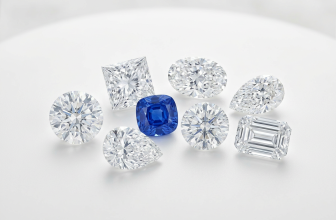
Gold has a spot price that is published every day and is the same for everyone. On the other hand, gemstones have nothing like it. There’s no daily rate for a sapphire or an emerald. The emerald gemstone price on any listing belongs to that one stone, set by a dealer who has looked at it closely and compared it with similar stones sold before.
That makes gemstone value harder to read than most buyers expect. A price that seems high may reflect quality you haven’t noticed yet, and a price that seems low may come with a catch that isn’t in the listing. Dealers, gemmologists and labs all work from the same factors, and knowing them makes a listing much easier to read.
The blog contains eight factors that carry most of the weight in determining a gemstone’s value. Four describe the stone itself: colour, clarity, cut and carat weight. The other four, origin, treatment, rarity and market demand, describe where the stone came from, what was done to it and how many people are looking for one like it.
Understanding Gemstone Value: What It Really Means
A gemstone’s value is what informed buyers and the trade agree the stone is worth. The price on a tag is different, since a seller can put any number there. Value follows quality and demand, and it behaves differently for different stones. Diamonds are graded mostly on cut, clarity, colour and carat weight, while coloured gemstones such as sapphire, ruby and emerald are judged on colour first.
The eight factors fall into two groups:
- Quality factors: Colour, clarity, cut and carat weight describe the stone itself. A loupe or a gem lab can check all four.
- Market factors: Origin, treatment, rarity and market demand describe where the stone came from, what was done to it and how many people want one. A lab report or the seller’s records confirm these.
Each factor also carries a different weight depending on the stone. Clarity matters a lot in aquamarine, for example, while inclusions are expected in emerald.
Factors That Make a Gemstone Valuable
1. Colour
Colour is the factor buyers notice first, and in coloured gemstones it carries the largest share of the price. Gemmologists describe it with three terms. Hue is the basic shade, such as blue or green. Tone is how light or dark the stone looks. Saturation is how strong the colour is.
The top of the market is vivid, and even in blue sapphire, that means a rich, strong blue with a medium to medium-dark tone. In emerald, it means a pure green or slightly bluish green with intense saturation. Stones that are too pale look washed out, and stones that are too dark lose their glow and look nearly black in dim light. Grey or brown mixed into the colour lowers the price. So does a visible patch of deeper colour in an otherwise even stone, which gemmologists call colour zoning.
The effect on cost is large. A vivid blue can push the blue sapphire gemstone price far above that of a pale stone of the same weight. Yellow sapphire follows the same pattern. A golden or canary yellow with strong saturation sells for much more than a pale lemon one.
Pro tip: Colour also changes with lighting, so a stone should be best judged in daylight.
2. Clarity
Clarity describes inclusions, the tiny features inside a stone. Gemmologists group coloured stones by how often they show inclusions. Aquamarine and topaz usually come clean, so buyers expect them to look spotless. Sapphire and ruby usually have some inclusions. Emerald almost always does, and the mossy patterns inside it are called jardin, French for garden.
Because of this, clarity is judged differently from one stone to the next. An eye-clean emerald is rare, so the emerald gemstone price rises sharply when the inclusions are hard to see and falls when they cloud the stone. Yellow sapphires tend to be cleaner than blue ones, so buyers are less forgiving of visible inclusions there.
Inclusions can affect strength too. A crack that reaches the surface can grow after a knock, and emerald is brittle even though it’s fairly hard. Fine needles called silk are common in sapphire. A little can give blue sapphire a soft look, while heavy silk makes the stone hazy.
3. Cut
Cut determines how well a stone handles light. A good cut spreads light evenly across the face and brings out the colour. A poor cut leaves a dull patch in the middle, a window where the stone looks see-through, or dark areas that stay dark when you tilt it.
Cutters of coloured gemstones often keep as much weight as they can, because rough stone is expensive. That’s why many sapphires are cut too deep or too shallow, resulting in a stone that looks smaller or darker than it should. A well-proportioned stone costs more per carat because more of the rough was lost to make it.
Shape matters too. Oval and cushion cuts are popular for sapphire. The step-cut shape known as the emerald cut was developed for emerald, since long, flat facets show clarity and put less stress on the brittle stone. Round stones often cost more per carat than other shapes, since cutting them wastes more rough.
4. Carat Weight
A carat is 0.2 grams. Weight and size aren’t the same thing, because gemstones have different densities. A one carat sapphire is therefore noticeably smaller than a one carat emerald, due to differences in their densities.
Price per carat rises with size. Large stones in good colour and clarity are much harder to find than small ones, so a five carat stone often costs more than five times the price of a one carat stone of the same quality. The yellow sapphire gemstone price per carat climbs the same way, though it starts lower than blue sapphire because fine yellow sapphire is easier to find. There are jumps at round numbers too. A stone just under a full carat usually costs less per carat than one that just reaches it, which is why cutters aim for those weights when the rough allows.
5. Origin
Some places have earned a reputation for fine stones. Colombia is known for emeralds, with the Muzo and Chivor mines among the best known, and Zambia and Brazil also produce emeralds. Sapphires from Kashmir, Myanmar and Sri Lanka carry a premium, with Kashmir the most valued of the three, and Sri Lanka has the strongest name for yellow sapphire.
Origin affects the price mostly at the top end. A fine Colombian emerald can sell for noticeably more than a similar Zambian one, so the emerald gemstone price often moves with the country named on the report. For ordinary stones the difference is smaller, and a pale stone from a famous mine won’t outsell a vivid one from somewhere less known.
Nobody can tell origin by eye. Labs determine origin inclusions and trace elements, and the result is an opinion. A country named in a listing with no report is only the seller’s word.
6. Treatment
Treatments improve a stone after it has been mined. Heating is the most common. Most sapphires are heated to deepen or even out their colour, and the trade accepts this when it’s disclosed. Emeralds are usually filled with oil or resin to hide fractures, and labs grade the amount as minor, moderate, or significant. Dyeing, fracture filling with glass, and diffusion treatment, where colour is added only near the surface, lower the value of a stone.
Untreated fine-quality stones are rare, so they cost more. An unheated blue sapphire with good colour can sell for a large premium over a heated one of similar size, and the same goes for yellow sapphire. The yellow sapphire gemstone price in a listing should be read alongside its treatment status.
Lab-grown stones are a separate category. They’re real sapphire or emerald made in a factory, and they sell for a small fraction of what natural stones cost. A lab report is the only way to confirm which one you have, and it also lists any treatments.
7. Rarity
Rarity is about supply. Alexandrite and Paraíba tourmaline are far scarcer than amethyst or citrine, and their prices reflect it. Within one type of stone, rarity shows up in specific qualities: a vivid colour, high clarity, a large size, or a good origin. Fine blue sapphire above a few carats with strong colour and clean clarity is scarce, which is why the blue sapphire gemstone price rises much faster than that of small commercial stones.
Large clean emeralds are especially scarce, because most emeralds have fractures. Supply can also change. Mines run down, new sources open, and political or environmental limits can slow mining, so the market for a given stone can shift over a few years.
8. Market Demand
A stone’s price follows what people want to buy. Blue sapphire and emerald have stayed popular for engagement rings and fine jewellery for a long time, which keeps their prices steady. Fashion plays a part as well. Colours go in and out of style in jewellery, and a shade that’s in demand this year can cool in a few. Jewellery trends, buyer interest and the economy all move prices, though in small steps compared with the factors above.
Demand also affects resale. Stones with a lab report, a clear description and a well-known type of gemstone are easier to sell later than unusual stones with no documents. Buyers who plan to resell a stone should keep the invoice and the report together.
The Bottom Line
Value in a gemstone comes from how these eight factors combine. A stone with excellent colour can still be held back by heavy treatment, and a rare stone with a poor cut won’t sell for as much as its rarity suggests. Colour, clarity, cut and carat weight can be judged by looking at the stone. Origin and treatment need a lab report, and rarity and market demand require market knowledge.
When you compare the prices of two stones, check the details on each before the number: colour in daylight, treatment, origin, and whether a report backs them up. Stones that look alike can still be priced very differently once these details are known.