Lenore Has Something to Say Until Its Ending Gets in the Way

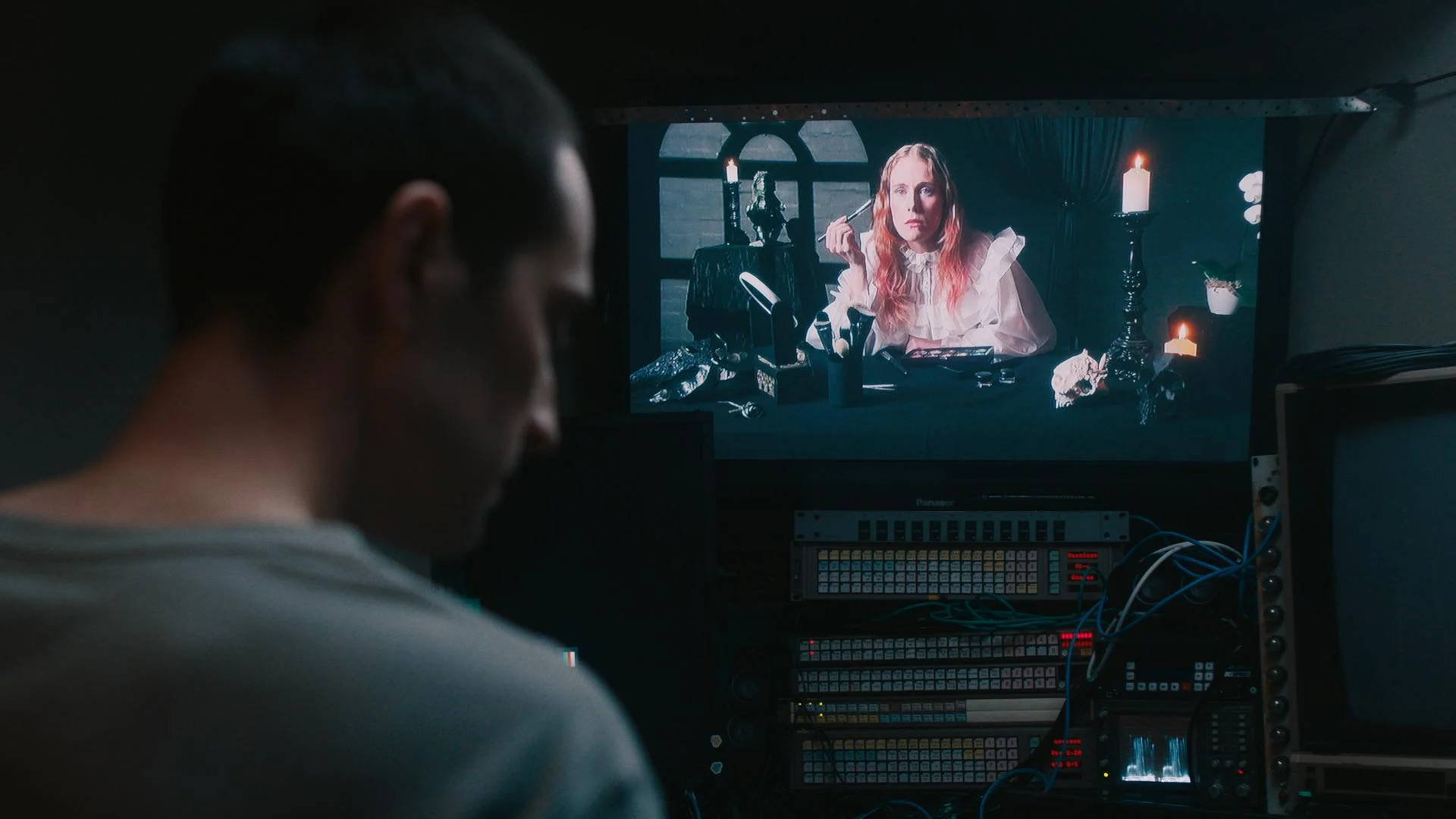
Lenore spends about two thirds of its 88 minutes being the movie I wanted it to be. David Ward directs from a script he wrote with Josie Hess. Nicholas Jaquinot plays Max, a loner documentarian who spends one long night sinking into the online life of Lenore (Ruby Duncan), a performance artist whose audience is souring on her as her persona escalates. Max keeps watching anyway.
The watching is the movie

For two acts this is tight psychological horror with no fat on it. One night, one fixation, a man alone with a screen. Max is already too far in when we meet him, and the film never pretends there’s a clean moment where he turns dangerous. Duncan has the harder job, playing a performance inside a performance for an audience that has decided she owes them a different version. I kept noticing how little the movie needs to raise its voice.
Lenore’s crime, to the people watching her, is changing. Her fans had already agreed among themselves who she was, so her evolving reads to them as betrayal. Her career depends on those people and her safety is threatened by them, and the film stacks those two facts and lets them sit. Most horror about life online stops at “the internet is scary.” Ward and Hess get further.
The Poe references are cheesy. I rolled my eyes, and then they were gone.
Then the third act shows up
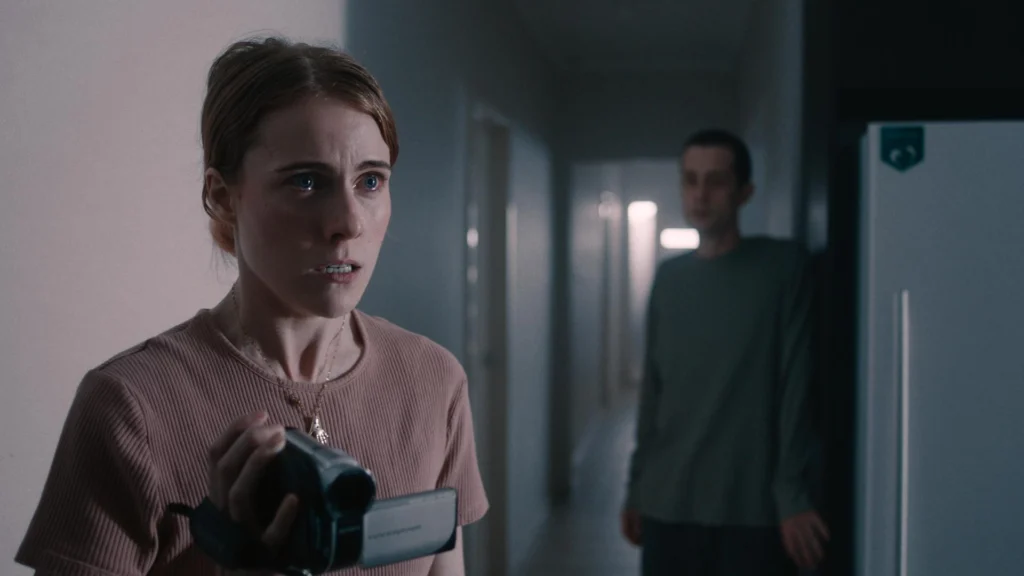
Here is where I stopped buying it. New dynamics arrive that are less interesting than the ones already running, and everything the first hour built about obsession and what an audience believes it’s owed gets nudged aside. A film that spent two acts refusing easy scares reaches for the safe shape of a conventional climax. The ideas don’t get deepened. They get interrupted. It’s the ending of a lesser movie attached to a better one.
Lenore is still worth your time. It’s smart about parasocial obsession, it takes women in media seriously as a horror subject, and Jaquinot and Duncan are both good. It just won’t commit to the conclusion its own material was building toward.
3 out of 5 stars.