Ocean surveillance startup Quartermaster raises another $140M

Arlington, Virginia-based startup Quartermaster in May closed a $43 million Series A around its idea of using weather-hardened sensors to capture data and generate insights about maritime activity. That idea has proven popular, because Quartermaster has already closed a much larger Series B, bringing in $140 million this time.
Founder and CEO Neil Sobin said the round was preempted by software-focused venture firm Insight Partners, and the interest in what Quartermaster is building was helped by the war in Iran and the shipping chaos it’s caused.
“I think we we’ve gained huge amounts of conviction in the core thesis,” Sobin said in an exclusive interview. “A big part of the story for us this year was, events in the world drive that clarity and drive that conviction and urgency, and when you see that, you gotta seize the opportunity.”
About $100 million of the Series B came from Insight and new investor, defense-focused firm Overmatch Ventures, as well as existing backers like First Round Capital. The remaining $40 million came in the form of a debt facility from investment bank Stifel.
“Quartermaster is building a distributed network for the ocean, where reliable, real-time data has been difficult to come by,” Nick Sinai, managing director at Insight Partners, said in a statement to TechCrunch. “The team’s execution and the strong demand for maritime data and awareness made this an investment we wanted to lead, and we’re proud to back Neil and the team as they scale to meet the opportunity with commercial fleets.”
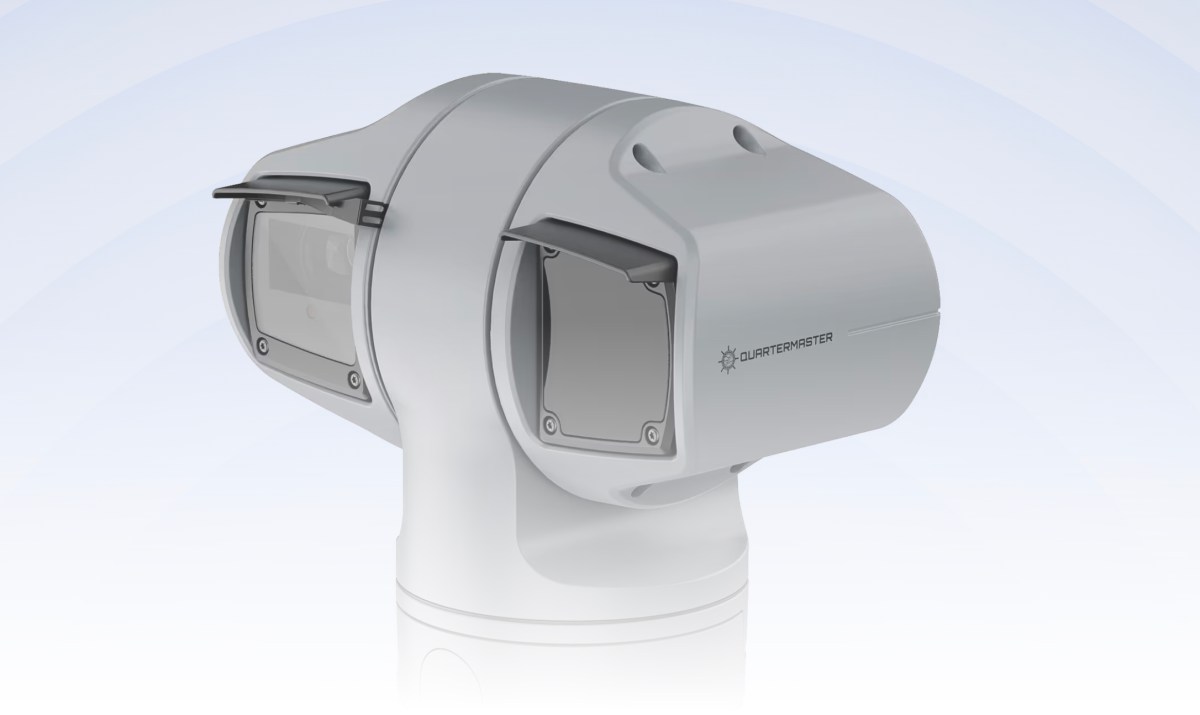
Quartermaster’s hardware, which it calls “SmartMast,” is a fairly straightforward setup. The startup integrates cameras and radios into a package that’s mounted on a ship’s mast, and can capture and relay real-time maritime data. This allows governments, shipping companies and insurance providers to know far more than the current standard of AIS, or the “automatic identification system,” which is more or less just a series of location pings.
This real-time awareness data creates all kinds of opportunities for what Quartermaster calls the “largest blind spot on Earth.” Everything from helping ships avoid collisions, to better understanding congestion in shipping lanes, to rescuing lost mariners is on the table. Sobin said each SmartMast records tens of gigabytes per day, and the startup and its customers are still finding new uses for the data being captured.
“There isn’t a lot of prior art in maritime AI, and so it’s been exciting to, one, have our own source of data,” he said. “But two, there’s just so much low hanging fruit that we’ve been knocking down this summer in what you can start to build and then deliver value for our customers on.”
Sobin said the startup spends a lot of time engaging with people across the maritime industry — and not just vessel owners and operators — in order to find out what they want out of this technology.
“This is an ignored field. Mariners around the world have been ignored by technology for a really long time, and so when they meet us, they’re so excited, because they’re like: ‘Oh, I have so many ideas, let’s work on them’,” he said.
More than 650 vessels are now equipped with SmartMast in 25 countries, Sobin said, and the startup has shipped over 800 to customers. That gap is largely driven by the fact that Quartermaster is about to start deploying the SmartMast system to entire fleets, a sign that early adopters are really buying into the idea.
Quartermaster has had to hustle to keep up with demand, Sobin said. The startup has doubled its manufacturing capacity and continues to tweak its design so its hardware can be manufactured at a quicker clip.
“We know we can do this, and we are seeing a lot of proof that tells us we’re really onto something massive and important in the world,” Sobin said. “So, what do you do when you have that position? You run faster and you move faster and you double down on that strategy.”
When you purchase through links in our articles, we may earn a small commission. This doesn’t affect our editorial independence.