

We’re reader-supported. When you buy through links on our site, we may earn an affiliate commission.
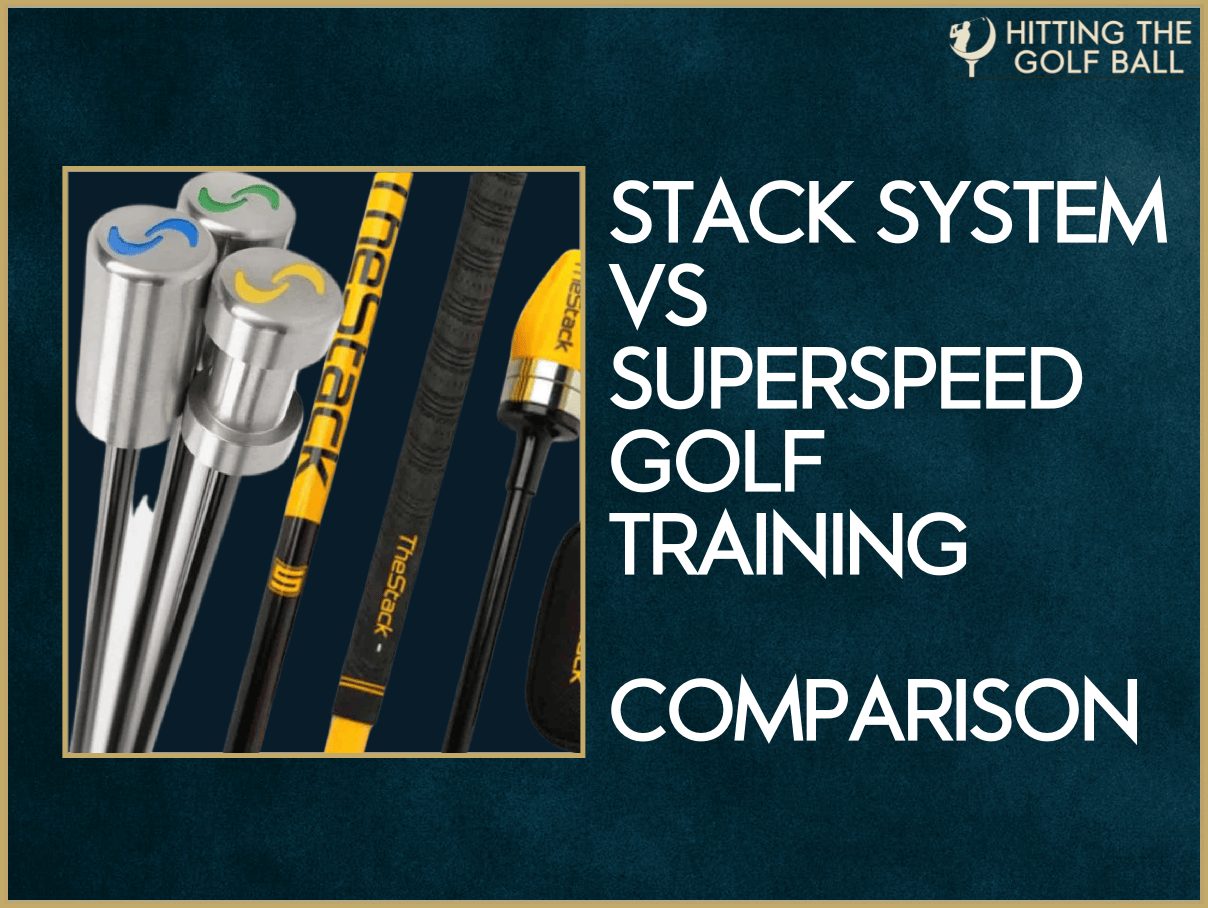
If you’re weighing the Stack System vs. SuperSpeed Golf for swing speed training, the short version is this: the Stack is a single adjustable-weight club paired with an app that builds a custom program around your numbers, while SuperSpeed is three fixed-weight sticks with a simpler, cheaper protocol that now has a free app of its own too.
Both are built on the same overspeed training principle, and both work. The real differences show up in what you pay over time, whether you need to buy a radar just to see your progress, and how much structure you actually want standing between you and the range.
Quick answer: the Stack System runs $299 for the speed trainer alone, but the app effectively requires the separate $289 Stack Radar to be useful, and the app itself costs $99–$129/year after your first free year. SuperSpeed Golf’s current Speed Sticks Pro is $285 (the original 3-stick set is still sold at $199.99), its app is free for life at the core protocol level, and no radar purchase is required to use it.
Related: Best golf training aids | TRS Slider review
The Stack System vs. SuperSpeed Golf: At a Glance
Every mph you add to your clubhead speed is worth roughly 2–3 extra yards off the tee, which is the entire reason speed trainers exist. Here’s how the two leading systems actually compare before you spend anything.
| Feature | The Stack System | SuperSpeed Golf |
|---|---|---|
| Price | $299 (speed trainer) | $199.99 (original 3-stick) / $285 (Speed Sticks Pro) |
| Number of clubs | 1, adjustable weight | 3, fixed weight (light/medium/heavy) |
| Stick length | 41.5″ (shorter than a driver) | ~45″ (driver length) |
| App required to train | Yes, programs are app-driven | No, protocols work without it |
| Radar needed to use the app | Effectively yes (Stack Radar, ~$289) | No, optional (PRGR HS130A, ~$230) |
| App cost after year one | $99–$129/year, no monthly option | Free for life (core protocols); $9.99/mo for full customization |
| Non-dominant-side swings | Not required | Required as part of the protocol |
| Founded | ~2020 | 2014 (the original overspeed system) |
| Reported user base | 75,000+ “Stackers” | 300,000+ golfers, 1,000+ tour pros |
Stack System vs. SuperSpeed Golf Specs: How Each System Actually Works
Both systems are built on overspeed training: alternating lighter and heavier implements than your driver to teach your body it’s capable of swinging faster, then using a normal-weight club to lock that speed in. A 2021 systematic review in the Journal of Strength and Conditioning Research backs the underlying mechanism, finding that golf-specific movements performed at high velocity were the most effective way to increase clubhead speed and driving distance.
Where the Stack System and SuperSpeed Golf diverge is entirely in the equipment and the structure wrapped around it.
The Stack System’s Single Adjustable Club
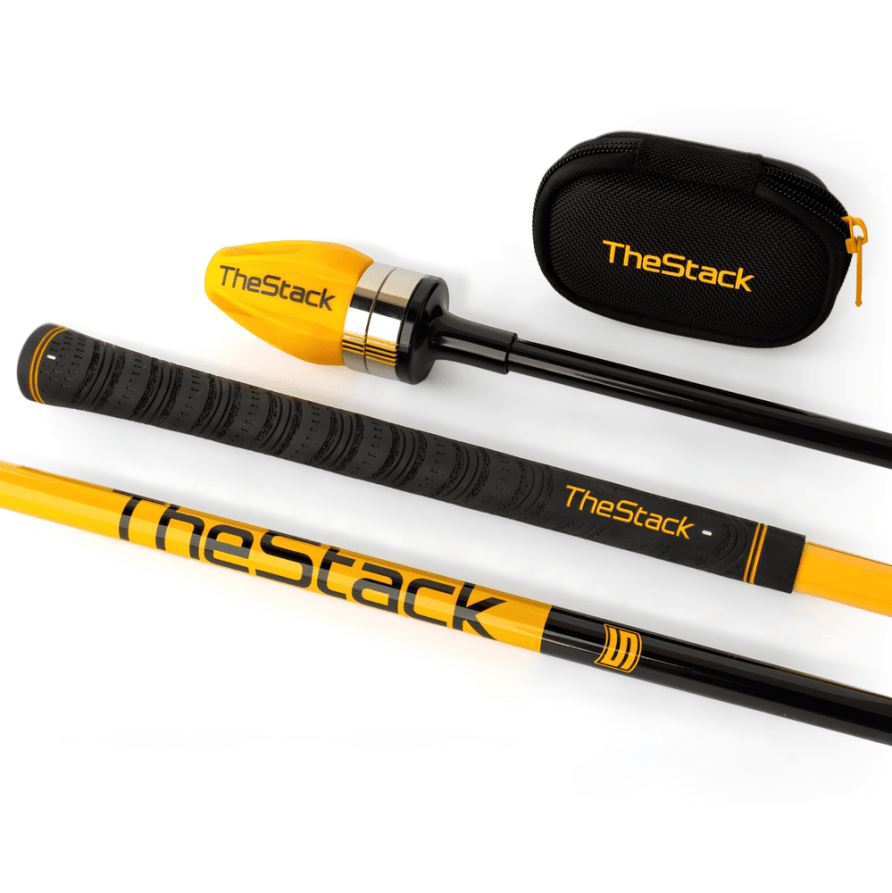
The Stack uses one club with interchangeable weighted attachments on a 41.5″ shaft, noticeably shorter than a standard driver. A “Baseline” session in the app measures your swing speed across a range of weights first, and the app uses that data to build a program tailored to you rather than handing everyone the same routine.
From there you work through numbered programs (Program 1, Program 2, and on) with specific sets, reps, and weight sequences defined for you. The practical effect of that baseline-first approach is that two golfers starting at different swing speeds end up on genuinely different programs from day one, rather than the same fixed routine a simpler system would hand everyone regardless of where they started.
Sasho MacKenzie, PING’s Engineering Consultant and a biomechanics advisor, designed the system, and it carries real competitive credibility: Matt Fitzpatrick has credited the Stack for helping him win the 2022 U.S. Open, and it’s also used by PGA Tour winner Michael Kim, two-time U.S. Women’s Open champion Yuka Saso, and Golf Digest “Best Teachers in America” instructors Mark Blackburn and Chris Como.
SuperSpeed Golf’s Three-Stick System
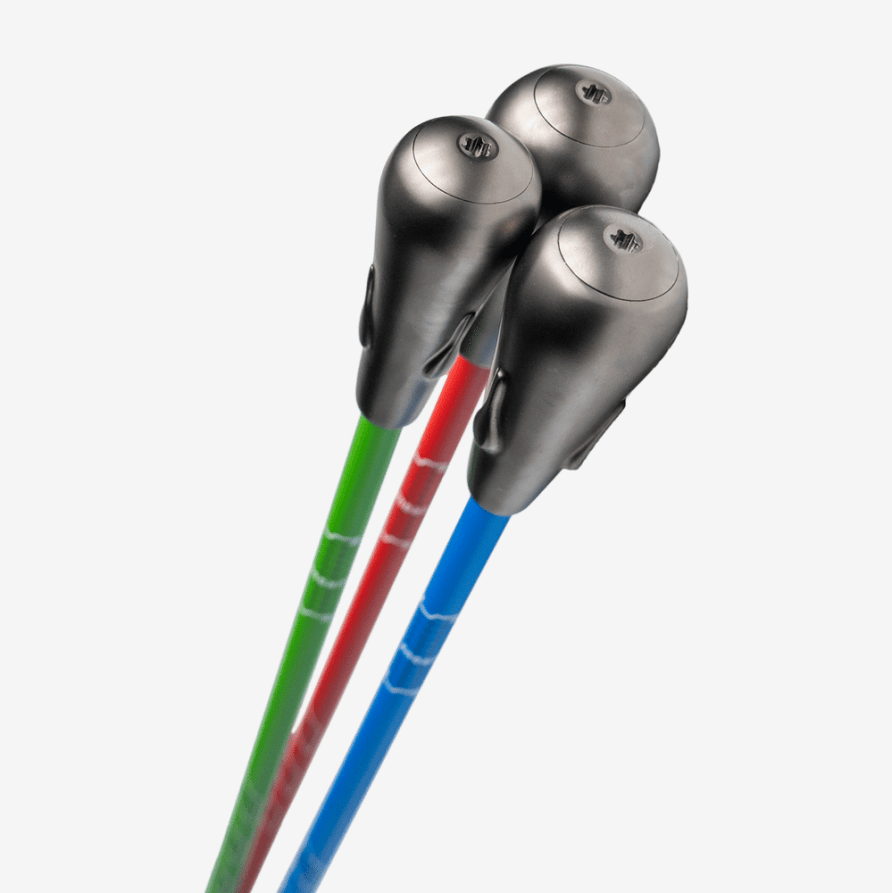
SuperSpeed ships three driver-length sticks in a fixed-weight progression: green (roughly 20% lighter than a standard driver), blue (about driver weight), and red (roughly 5% heavier).
The protocol has you swing each stick at maximum effort, and, notably, on both your dominant and non-dominant side; training the weaker side is meant to help unlock speed on the side you actually play from. Because the weights are fixed rather than adjustable, every session follows the same green-blue-red sequence no matter how your speed changes over time, the tradeoff that pairs with SuperSpeed’s lower price and simpler setup compared to a system that has to measure and rebuild your program every session.
SuperSpeed is the older of the two brands by six years, founded in 2014 as the original overspeed training system in golf, and it’s the more widely adopted option: the company reports 300,000+ golfers and 1,000+ tour professionals have trained with it, including a public endorsement from three-time major champion Padraig Harrington.
Stack System vs. SuperSpeed Golf Price: App Costs and Subscriptions Compared
The sticker price is only part of the Stack System vs. SuperSpeed Golf cost picture. What you pay after the first year is where the two systems really split.
The Stack System’s speed trainer is $299. Its training programs are free for your first year, but after that the app requires a $99–$129 annual subscription, with no monthly option if you’d rather pay smaller amounts more often. That’s a real recurring cost, and it’s on top of the radar purchase covered in the next section.
SuperSpeed’s pricing is layered differently. The original 3-stick “Long Drive” set is still sold at $199.99, while the redesigned Speed Sticks Pro (the current flagship, with an improved grip and feel) runs $285, or $569 bundled with a PRGR launch monitor. Either way, SuperSpeed’s core training protocols are free for life in the app, with an optional $9.99/month tier for full program customization and advanced stats. If you never upgrade past the free tier, SuperSpeed has no recurring cost at all.
Worth flagging: a lot of the comparisons still ranking online quote SuperSpeed at around $200 flat and the Stack at $350–400. Both figures are dated. SuperSpeed’s flagship moved to $285 with the Pro redesign, and the Stack’s actual retail price (confirmed via Dick’s Sporting Goods and other current listings) is $299, not the higher figure older reviews repeat.
Do You Need a Radar for the Stack System or SuperSpeed Golf?
This is the part most comparisons either skip or get vague about, so here’s a direct answer: the Stack System effectively requires a radar to be useful, and SuperSpeed Golf doesn’t.
The Stack’s entire app experience, meaning your baseline assessment, your program’s session-by-session progress tracking, and the “eSpeed” numbers that make the app worth using, depends on a compatible speed radar measuring every swing. Golf Digest’s own coverage of the system calls the radar requirement one of its two defining, non-optional elements. The Stack Radar (built on an older PRGR HS120 sensor) runs about $289 on top of the $299 trainer, so a genuinely useful Stack setup is closer to $590 before you’ve paid a single year of app fees.
SuperSpeed’s protocols were designed to work with nothing but the sticks and a stopwatch, and that’s still true. A radar (SuperSpeed sells the PRGR HS130A for about $230) is optional if you want to log numbers digitally, not a requirement to train.
If you don’t already own a radar or launch monitor and want one regardless of which speed trainer you pick, our guide to the best golf launch monitors under $1,000 covers options that work for swing-speed tracking without the Stack Radar’s specific price tag attached.
How to Buy the Stack System and SuperSpeed Golf
How to Buy the Stack System
The Stack System sells directly through thestacksystem.com, where the speed trainer, the Stack Radar, and a bundle of both are all available. It also shows up occasionally at major retailers like Dick’s Sporting Goods, though direct-from-Stack is the most consistent way to get current pricing and the newest hardware revision.
How to Buy SuperSpeed Golf
SuperSpeed Golf sells the Speed Sticks Pro, the original 3-stick set, and its accessories (the C Club, Force Board Pro, and Squeeze grip trainer) directly through superspeedgolf.com. The original 3-stick set also turns up on Amazon and at some golf retailers, though the newer Speed Sticks Pro is currently sold direct rather than through third-party marketplaces.
Stack System vs. SuperSpeed Golf Results: What the Data and Reviews Show
SuperSpeed publishes real numbers behind its claims: app users with 25 or more training sessions saw an average speed gain of 10.7%, or 11.1 mph, based on over 1.15 million logged swings. That’s the kind of documented, sourced result that’s worth more than a marketing line, since it comes from actual user data rather than a lab study alone.
The Stack System doesn’t publish an equivalent aggregate figure, but its credibility case leans on results at the highest level of the sport, most visibly Matt Fitzpatrick’s 2022 U.S. Open win, which he’s directly credited the system for. Independent, long-term user accounts also back up the app’s core promise: one golfer’s public two-year log documents going from 87 mph to 106 mph over 15 months on the Stack, after two months on SuperSpeed’s older, app-less version produced no measurable gain, worth noting since that comparison predates the free SuperSpeed app that now exists.
Golfers who’ve used both tend to say the Stack is easier to stick with because the app tells you exactly what to do next, while SuperSpeed users cite the lower total cost and not needing extra gear to get started. Neither side describes the other system as ineffective, just less structured or more expensive, depending on which way you’re arguing it.
Speed training tends to work best paired with off-course work too; our guide to exercises that increase swing speed covers the strength and mobility side neither speed trainer addresses on its own.
Is the Stack System Hard to Use? Comfort and Learning Curve vs. SuperSpeed
Equipment specs aside, the two systems feel different to actually use, and that difference is a real factor in whether you stick with either one.
The Stack’s shorter, 41.5″ club doesn’t feel like your driver in your hands, which some golfers find makes the transition back to a real club feel less natural than a driver-length trainer would.
The app also asks more of you upfront: a baseline session, ongoing radar setup, and a fair amount of screen time to read your data, which is a genuine plus if you like structure and a real drawback if you’d rather just swing something and go home. Multiple independent reviewers who’ve used both single out this setup overhead as the Stack’s most common complaint, not the training itself.
SuperSpeed’s driver-length sticks feel closer to your actual clubs from the first swing, and the protocol needs nothing but the sticks to start, no app, no radar, no account. The tradeoff is the non-dominant-side swings built into the protocol, which reviewers who’ve used both consistently flag as the more awkward, unnatural-feeling part of SuperSpeed’s routine, especially early on.
It’s also the bulkier setup day to day: three sticks take up more bag or car space than the Stack’s single club, which matters if you’re hauling a trainer to the range regularly rather than using it in a garage or basement.
Choose the Stack System if… / Choose SuperSpeed Golf if…
Choose the Stack System if you want a fully personalized, data-driven program and are willing to pay for it, meaning the trainer, a radar, and an annual app fee; you already own or don’t mind buying a compatible radar; and you’d rather have an app tell you exactly what to do each session than figure out your own progression.
Choose SuperSpeed Golf if you want the lowest total cost of ownership with no required recurring fee; you’d rather start training the same day your order arrives without buying a second device; or you want sticks that feel like your actual driver instead of a shorter training-specific club.
Frequently Asked Questions
Is the Stack System worth it?
For golfers who want a personalized, data-driven program and don’t mind the added cost of a radar and an annual app fee, yes, the credibility (Matt Fitzpatrick’s 2022 U.S. Open win, PING’s Sasho MacKenzie as designer) and structure back it up. If you just want the cheapest path to a faster swing, SuperSpeed gets you there for less total money.
Is SuperSpeed Golf worth it?
Yes for most golfers starting out with speed training. It has the largest published dataset behind its results (10.7% average speed gain across 1.15 million+ logged swings), no required recurring cost, and now has a free app addressing the old complaint that it lacked structure.
Is Rypstick better than the Stack System or SuperSpeed Golf?
Rypstick is a third option worth knowing about: a single driver-length stick around $199.99 with a simpler, less personalized program than the Stack and no non-dominant-side swings to worry about, unlike SuperSpeed. It’s not a direct replacement for either system in this comparison, but it’s worth researching if neither the Stack’s cost nor SuperSpeed’s protocol appeals to you.
Do you need a launch monitor for speed training?
Not to train, but you do need some way to measure clubhead speed to know if a system is working. The Stack effectively requires its own radar to use the app. SuperSpeed doesn’t require one, though a radar or launch monitor makes tracking progress easier with either system.
Stack System vs. SuperSpeed Golf: Final Verdict
Strip away the marketing and the Stack System vs. SuperSpeed Golf decision comes down to how much structure you want and how much you’re willing to pay for it. The Stack is the more complete, more personalized system, but that completeness costs real money: the trainer, a radar you’ll effectively need, and an annual app fee after year one, putting a genuinely useful setup north of $600 before subscriptions.
SuperSpeed Golf is the better buy for most golfers getting started with speed training: driver-length sticks that feel like your actual clubs, a free app that finally addresses its old accountability gap, and a documented average gain (10.7%, 11.1 mph) across a much larger published dataset than the Stack has released.
Pick the Stack if you want maximum personalization and don’t mind paying for it every year; pick SuperSpeed if you want the proven, lower-cost path to a faster swing.

Last update on 2026-09-27 / Affiliate links / Images from Amazon Product Advertising API

