Carnivore Diet Macros Ratio | Configuring Your Macronutrients on Carnivore – Carnivore Snax

Nailing the carnivore macros is key to unlocking all the benefits this nutritional regimen has to offer, from weight loss to smooth energy, a healthier inflammatory response, and more. That’s the tricky part. What are the right macros on carnivore diet? You’ve come to the right place.
Eating the right foods is only half the battle. Getting them in the right proportions takes a little more thought. Your goal is to get slightly more fat than protein. That’s the simplest way to think about it. Learn more below!
Fast Facts on the Optimal Carnivore Macros
- You don’t eat any carbs on the carnivore diet – unless you incorporate dairy. And even then, carbs are negligible.
- You want around 35% of your calories to come from protein.
- The rest of your calories should come from fat. That’s going to be your body’s main energy source.
- You don’t have to count macros too precisely. Eating fatty cuts of meat and cooking with butter, tallow, or ghee will cover most of your fat needs.
- You can get more fat with our carnivore chips, which are one of the best snacks for anyone on this diet.
Why You Don’t Really Eat Carbs on the Carnivore Diet
The first thing to know about the carnivore diet macros is that you won’t consume many carbs, if any at all. That’s not because you’re purposefully eliminating carbs. But the foods you’re eating are naturally carb-free. You’ll be eating:
- Steak
- Chicken
- Pork
- Fish
- Eggs
None of those have any carbs. You don’t eat any grains, fruits, starchy vegetables, and definitely no sugary, processed junk. So what ends up happening is your body no longer runs on glucose for energy. It adapts to using fat as fuel instead. That’s where a lot of the weight loss benefits come from, and it’s also why energy levels tend to be smoother while on carnivore.
What Carnivore-Friendly Foods DO Have Carbs?
You don’t have to completely eliminate carbohydrates. You may still get some if you include dairy in your carnivore diet food list, as many people do. Milk and cheese both have some amounts of carbs. Not a ton, but a few grams here and there.
Technically speaking, eggs have some carbs as well – albeit less than 1g per egg. Same goes for shellfish. Shrimp, oysters, and mussels have around 2-5g of carbs per serving. Organ meats have carbs as well, and those are among the best meat for carnivore diet – so you’ll get some carbs through those, too.
But for all intents and purposes, you just need to worry about two other macros on carnivore diet: protein and fat. That’s where the vast majority of your calories will come from.
Striking the Right Balance With Macros on Carnivore Diet: Protein and Fat
The interesting misconception we see regarding the carnivore macros is that you should eat more protein. That’s actually not the case. The general consensus is that you want more fat.
Protein-to-Fat Ratio
Most people who have seen good carnivore diet results found that this was the ideal ratio:
- Protein: 20-35% of total calories
- Fat: 60-80% of total calories
We know what you’re thinking. That’s a lot of fat. Yeah, but you have to remember that fat has 9 calories per gram while protein only has 4. So it’s not as dramatic as it looks to be on paper.
A meal that’s equal weight in protein and fat is actually about 70% fat by calories. For example, a ribeye naturally falls close to this ratio of 70% fat, 30% protein. It’s the quintessential perfect carnivore meal.
There aren’t any hard and fast carnivore diet rules you can fall back on regarding the macro split. But we did take a look at a survey featuring more than 2,000 people who followed this regimen. The overall takeaway was that a split of 60% fat and 35% protein worked best.1 The rest of the calories came from trace carbs from dairy and other foods.
So How Many Grams of Protein/Fat Should I Eat Daily?
Turning those percentages into grams is a lot more helpful for someone curious about the carnivore macros. This is where your actual weight management goals come into play.
Are you trying to bulk up or shed down?
How much do you currently weigh?
What’s your activity level?
Those are all questions that must be answered to get a better sense of exactly how many grams of protein/fat you should eat daily, because we have to get an idea of your baseline caloric needs to maintain your current weight. Then, it’s as simple as adding or subtracting a few hundred depending on which direction you want the scale to move.
In general, though, you should aim for 0.8-1g of protein per pound of bodyweight. This range is optimal for maintaining muscle mass and staying full throughout the day. Let’s say you weigh 180lbs. You’d want to get somewhere between 144-180g of protein daily. Then, you’d eat the rest of your daily calories from fat – which would work out to around 1,480 calories from fat, assuming you’re trying to eat 2,200 calories. That’s 164g of fat.
You don’t have to stress about all the math. There are countless calculators online or on your phone that can help you figure out the optimal macros on carnivore diet based on your weight, activity level, and goals.
Really, what we want you to take away from this article is the need for more fat.
Why Fat is Arguably More Important Than Protein
Fat is what makes carnivore work as a sustainable diet. It’s your main energy source in the absence of carbs. It supports hormone production, brain function, and helps your body absorb fat-soluble vitamins A, D, E, and K.
The problem is most newcomers to the diet follow too lean a carnivore meal plan. They think fat is the enemy – that’s what they’ve been told their entire lives, after all. So they load up on chicken breast, egg whites, turkey, lean ground beef, and filets.
This can lead to what a lot of people call “rabbit starvation.” Or simply, protein toxicity. Your body has trouble processing all the extra protein without enough fat in the mix. It leaves you feeling sluggish and fatigued, and it could even cause diarrhea.
Getting More Fat in Your Diet
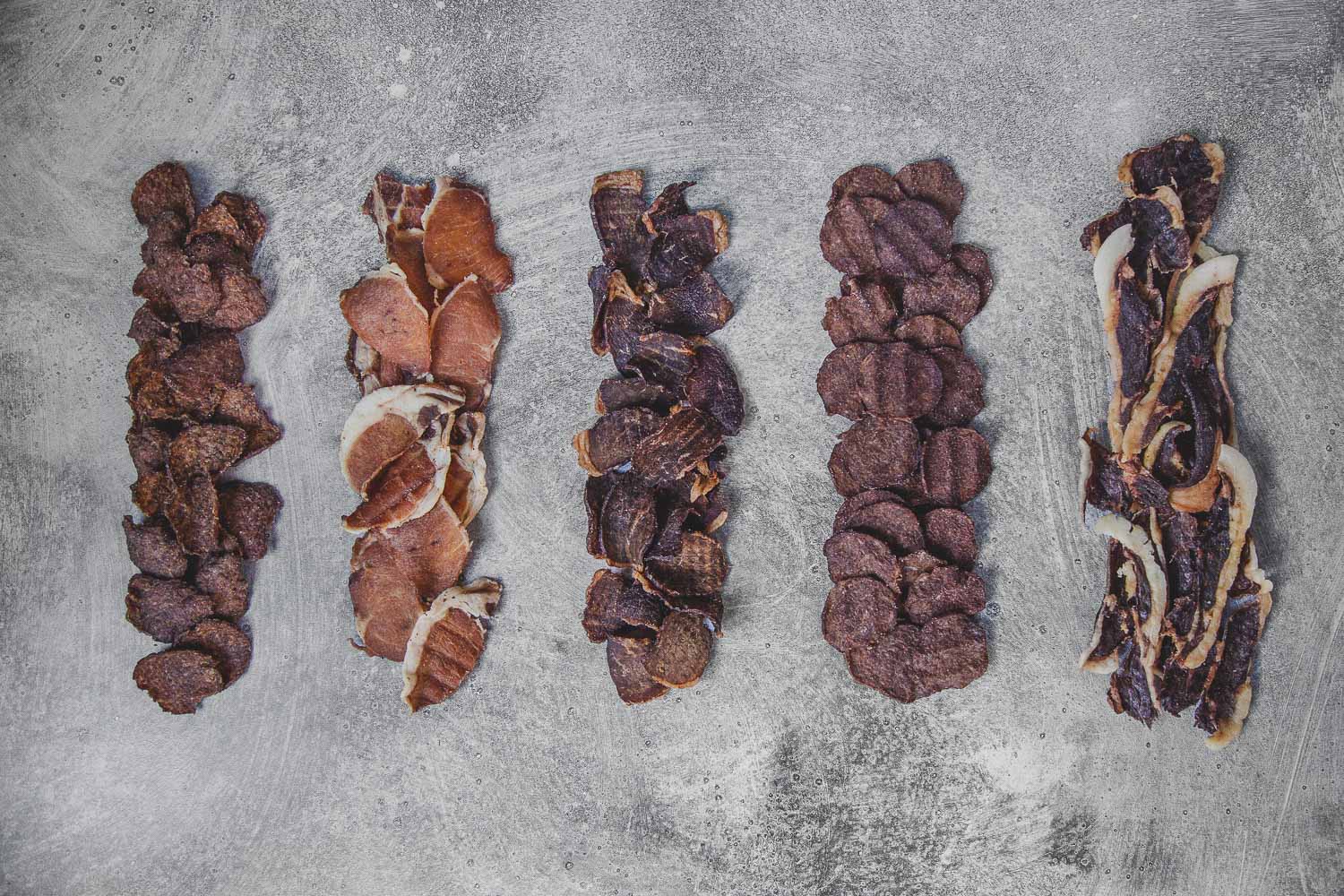
You don’t have to stress about not getting enough fat on carnivore diet. There are easy ways to raise your intake. Start with one of the best snacks for carnivore diet – Carnivore Snax meat chips. Particularly, the ribeye, brisket, pork loin, and other fatty cuts.
They’re just two ingredients – regeneratively raised meat and salt. That’s it. A perfect addition to any carnivore diet regimen. They’re often referred to as a meat pastry because they start out light and crispy, but then begin melting in the mouth as the tantalizing flavors unfold.
Just eating a few servings of these throughout the day can add anywhere from 10-30g of fat to your diet without it feeling like you’re gorging yourself – because they’re so good. Here are some other strategies:
- Choose fatty cuts – ribeye, pork belly, 80/20 ground beef, chicken thighs, lamb shoulder.
- Cook with animal fats (tallow, lard, butter, ghee). Stop using olive oil or avocado oil.
- Add bone marrow and marrow butter to meals.
- Eat egg yolks. Whole eggs, not egg whites.
Getting your carnivore macros dialed in will save you from a lot of the side effects of carnivore diet during the transition, including fatigue. Don’t take this lightly!
Closing Thoughts on the Carnivore Macros
Aim for that 60-80% fat, 20-35% protein split – that’s really all you need to know about the macros on carnivore diet. The rest of the regimen sort of takes care of itself if you make fat a priority. So, if you haven’t already, set yourself up for success with Carnivore Snax!
References
- Lennerz BS, Mey JT, Henn OH, Ludwig DS. Behavioral Characteristics and Self-Reported Health Status among 2029 Adults Consuming a “Carnivore Diet.” Curr Dev Nutr. 2021;5(12):nzab133. Full Text