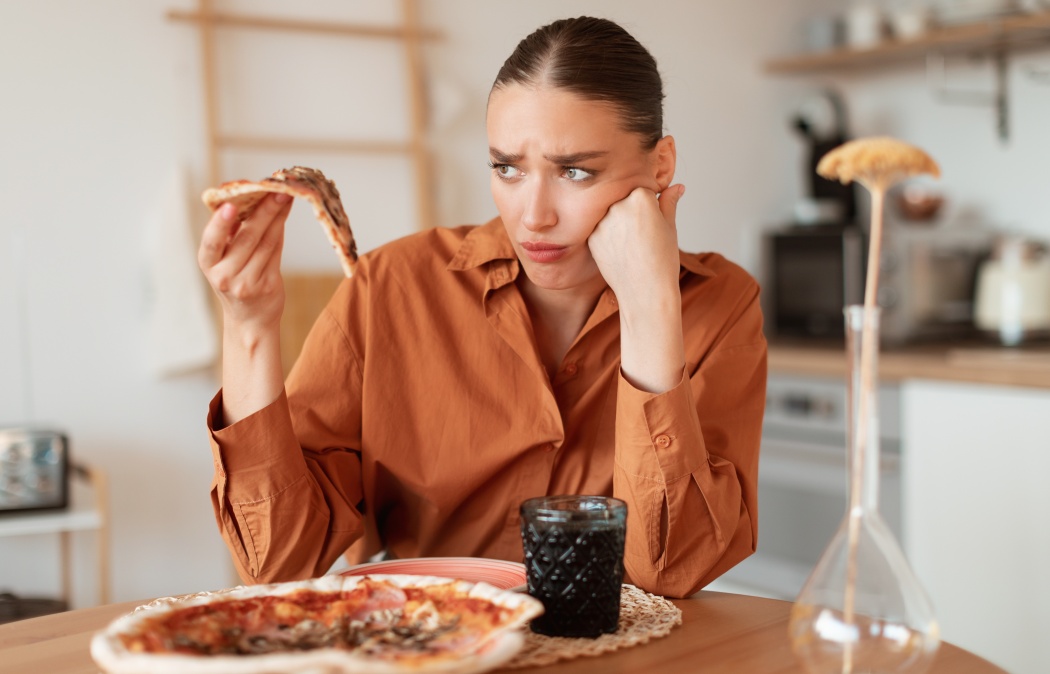

Feeling full after only a few bites has a name: early satiety. If it keeps happening, especially with nausea, bloating, upper abdominal discomfort, or fullness that hangs around long after a meal, a gastroenterology evaluation can help sort out whether dyspepsia, delayed stomach emptying, or another digestive problem is involved.
There’s a big difference between feeling stuffed after a big lunch and sitting down hungry, taking just a few bites, and suddenly feeling like you can’t eat any more.
What Does Early Satiety Mean?
Cleveland Clinic defines early satiety as feeling full after eating only a small amount of food. You may lose interest in finishing a meal because your stomach already feels packed, uncomfortable, or nauseated.
Feeling full after a few bites is a symptom, not a diagnosis. If it becomes your new normal, figuring out why is more useful than continually shrinking your meals or cutting foods at random.
Is Feeling Full Quickly Always Gastroparesis?
No. Gastroparesis is one possible cause, but early satiety can also show up with indigestion, reflux, ulcers, medication side effects, and other digestive issues. Dr. Yamini’s care for indigestion and dyspepsia covers early fullness, post-meal fullness, bloating, burning, and nausea.
Gastroparesis slows down how quickly your stomach empties, which can lead to early fullness, nausea, bloating, upper abdominal pain, and feeling full long after you eat. Since several digestive problems can look similar, your symptoms and health history need to be looked at together.
At his Santa Monica and Beverly Hills offices, David P Yamini, MD, evaluates motility disorders such as gastroparesis along with dyspepsia and other upper digestive complaints. He is double board-certified in Gastroenterology and Internal Medicine.
What Can a GI Evaluation for Early Fullness Involve?
Your gastroenterologist will want to know when the fullness starts, how long it lasts, what other symptoms show up, and whether medications or medical conditions could be affecting digestion. NIDDK explains that evaluation for suspected gastroparesis may include upper GI endoscopy, imaging, or tests that measure how quickly the stomach empties.
It’s a good idea to schedule a visit if you keep dealing with:
- Feeling full after a few bites even when you started the meal hungry
- Fullness that lasts for hours after eating
- Nausea, bloating, vomiting, or recurring upper abdominal discomfort
- Eating much less because your usual portions suddenly feel impossible
You don’t need to figure out the diagnosis before making an appointment. Just bring a clear description of what’s been happening. It’s worth talking about before avoiding food becomes your new routine.
FAQs About Early Satiety
Can early satiety happen without gastroparesis?
Yes. Dyspepsia and several other digestive conditions can cause similar meal-related symptoms. Testing is chosen based on the full picture rather than one symptom alone.
Can medication make me feel full faster?
Yes. Some medications can slow gastric emptying or produce similar digestive symptoms. Review your medications with your doctor rather than stopping a prescription on your own.
See a Gastroenterologist in Santa Monica or Beverly Hills
If early satiety, nausea, or post-meal fullness keeps turning a normal meal into a chore, we can help figure out what’s behind it. Contact David P Yamini, MD, to schedule an evaluation with a gastroenterologist in Santa Monica or Beverly Hills and discuss what testing makes sense for your symptoms.
Medically reviewed by
David P. Yamini, MD
on
Posted on behalf of