
1. Impetigo
Impetigo is a skin rash resulting from the infection with bacteria Streptococcus pyogenes or Staphylococcus aureus. This is the culprit behind 10% of all skin rashes in children, commonly found in children between 2 to 5 years of age, during summer and fall.[3]
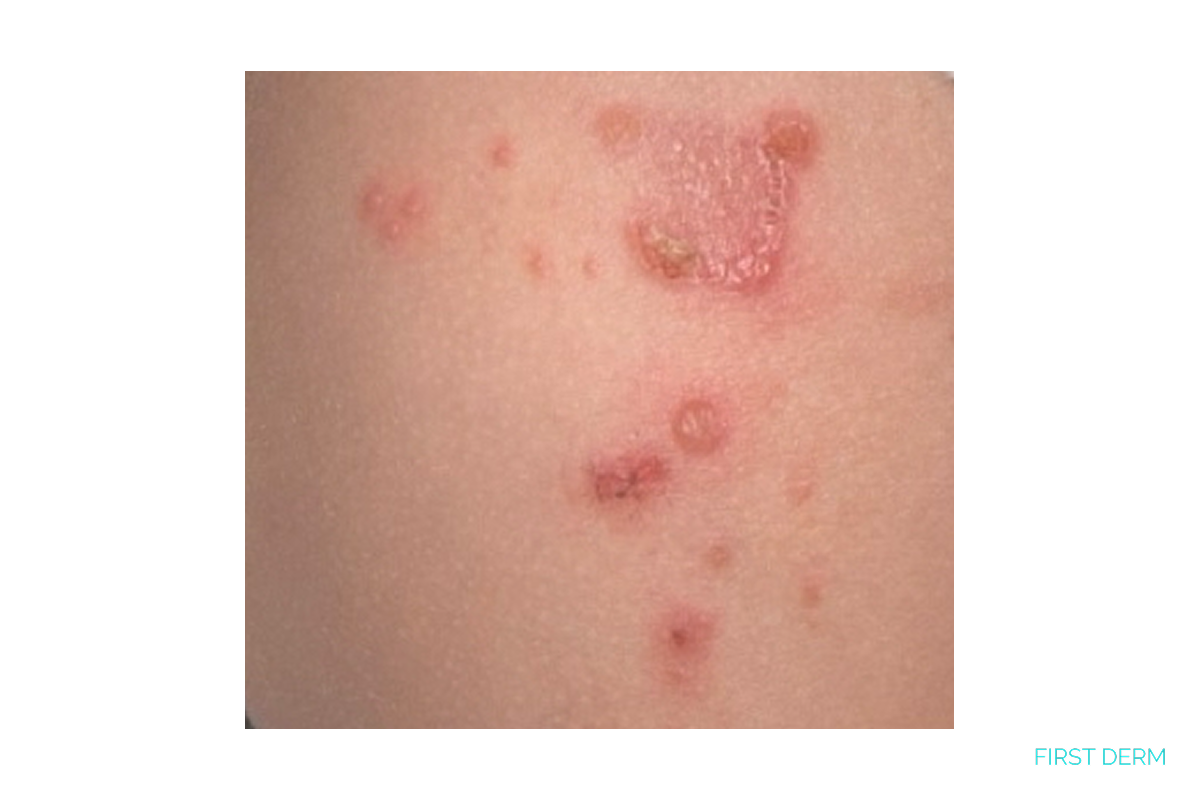
Impetigo: red, blister-like sores that crust over as the infection progresses. Caused by Staphylococcus aureus bacteria.
Appearance: starting with small bumps on the skin, impetigo lesions gradually fill with pus and later break down to form golden or honey-colored crusts, which is characteristic to the disease.[3] As they dry off, the base will appear red in color. They often appear in clusters on the face, around the mouth and nose, or on the limbs.
Disease spread: impetigo can spread very easily from person to person via direct contact. Furthermore, it spreads from one area of the body to another in the same manner. Shared personal items such as towels or drinking cups also transmit it. It is easier for the infection to take place if skin is already damaged, as in case of insect bites, small cuts or scratches on the skin. Once the bacteria are on the skin, it may take 4 to 10 days for the infection to occur and lesion to appear.
School rules: Most of the schools in the UK recommend absence till 48 hours after starting antibiotics or after the lesions have crusted off.[1] US schools allow attendance 24 hours after starting treatment with antibiotics.[2]
What to do at home: the most important measure is to prevent further spread to different body parts, and to the siblings. This can be achieved by not sharing towels/ blankets or cups with the affected child, minimizing the exposure of lesions by covering them up and refraining from touching and scratching them.
When to see your healthcare provider: all children with impetigo need medical attention because the lesions do not fade away on their own. Prescription medication with antibiotics is necessary to cure this condition.
2. Ringworm (Tinea corporis)
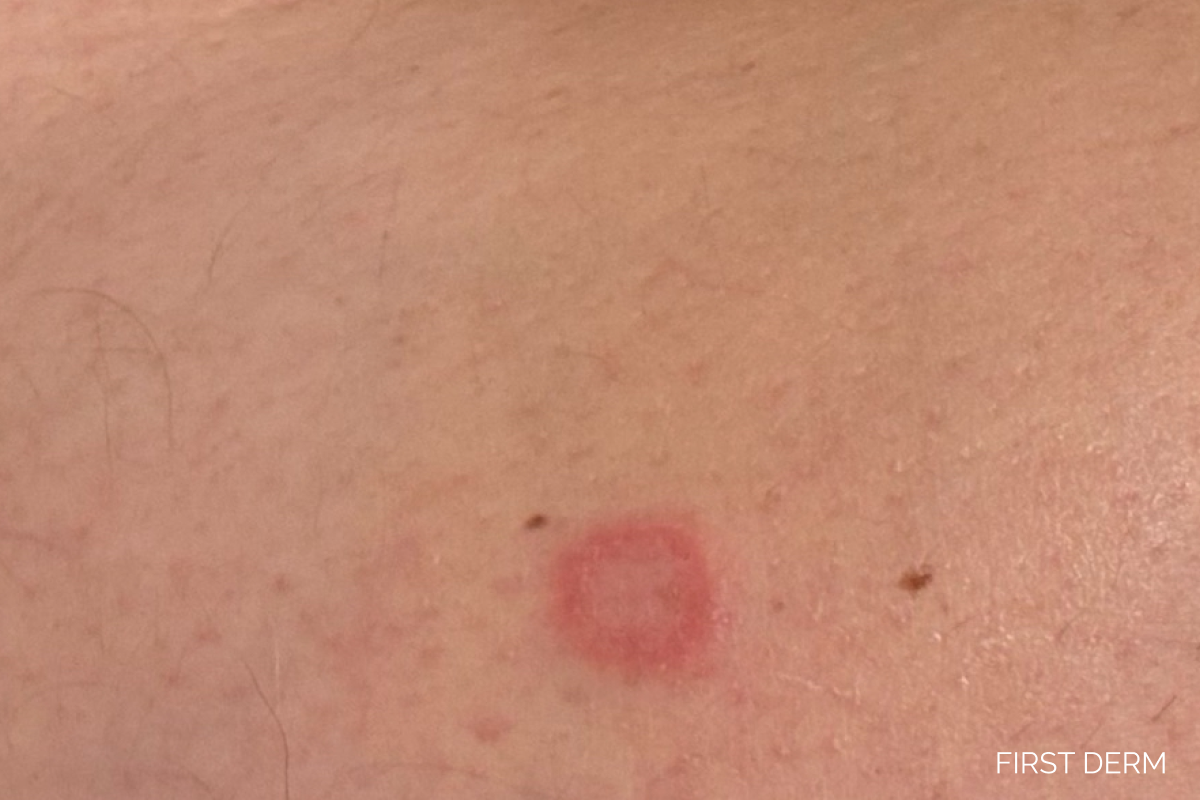
Tinea corporis (ringworm): a circular red, scaly patch with a clearer centre, caused by a fungal skin infection.
When the outermost layers of the skin is infected with the group of fungi called dermatophytes, ringworm rash appears.
Appearance: ring shaped itchy red rash with raised scaly margins and flat center is characteristic of ringworms. It can appear on any part of the body, including scalp, trunk, arms, legs, and the groin area.
Disease spread: direct contact with people or animals (eg: cats, dogs, pet rodents) with ringworm lesions or contact with clothing items, bed linen, contaminated surfaces can cause disease spread. It may take one to three weeks’ time for the rash to appear after skin is contaminated with the dermatophytes.[5]
School rules: most of the schools in both UK and US have no strict rules of exclusion from attendance due to ringworm infection. However, they suggest starting treatment early and keeping the rashes covered up as preventive methods when attending school.[4],[5]
What to do at home: over the counter antifungal cream can be applied to the affected skin in mild cases. Remember to keep using it for a week after the rash has cleared off, as stopping treatment early can lead to reappearance of the disease.
When to see your healthcare provider: long lasting ringworms warrant a visit to your doctor who would prescribe antifungal cream to be applied to the skin involved, or antifungal tablets to drink in severe cases.
3. Hand foot and mouth disease
As the name implies, this rash commonly appears on the hands, feet, and mouth as the result of a viral infection. It is common among children younger than 7 years of age and commonly seen in settings like day care centers and summer camps.[8]
Appearance: the hallmark of hand foot mouth disease is fever and sore throat followed by appearance of fluid filled small blisters with surrounding redness, that later rupture to form small ulcers.8 Usually, they are not itchy or painful.
Disease spread: direct contact with saliva, blister fluid or exhaled droplets from an infected person can spread the disease to another, especially within the first week.[8] However, virus will still be there in stools for 6 weeks after the rash is seen.[8]
School rules: no exclusion from school exclusively due to the lesions. However, keep your child at home if they are having high fever, feeling too unwell or appear too listless.[6]
What to do at home: as it usually resolves on its own, you can keep your child home and make sure they are well rested and drinking plenty of fluids. Over the counter medications like ibuprofen tablets and diphenhydramine to gargle can help ease the pain.[8]
When to see your healthcare provider: if the child is very sick, refusing to drink or passing less urine than usual, bring them to a doctor. Otherwise, the child should improve within 2 weeks without any prescription medications.
4. Head lice (pediculosis)
Appearance: if you carefully look at your child’s head, you may see crawling lice, especially behind the ear or at the nape. Lice eggs, known as nits, may be visible as tiny oval sacks glued to hair strands. Itching almost invariably occurs but may take several weeks to appear after infestation has taken place.[10]
Disease spread: lice crawl from one person’s hair to another with close contact. They cannot jump or fly. Sharing personal items like hats and hair accessories which may contain head lice is another common mode of spread.
School rules: both UK and US schools do not strictly prohibit attendance or advocate for early departure from school due to lice. However, they emphasize the need to start treatment as soon as possible before the child resumes schooling.
What to do at home: combing wet hair with a fine toothed ‘lice comb’ help manually remove lice from the head.[10] It is important to search for other family members for head lice as well, when one is infested. Several over-the-counter medicated shampoos such as Permethrin 1% are available as treatment options.[10] After the initial application, it should be repeated in a week to get rid of the nits.
When to see your healthcare provider: no need to visit your healthcare provider if the problem resolves with the aforementioned methods.
5. Molluscum contagiosum
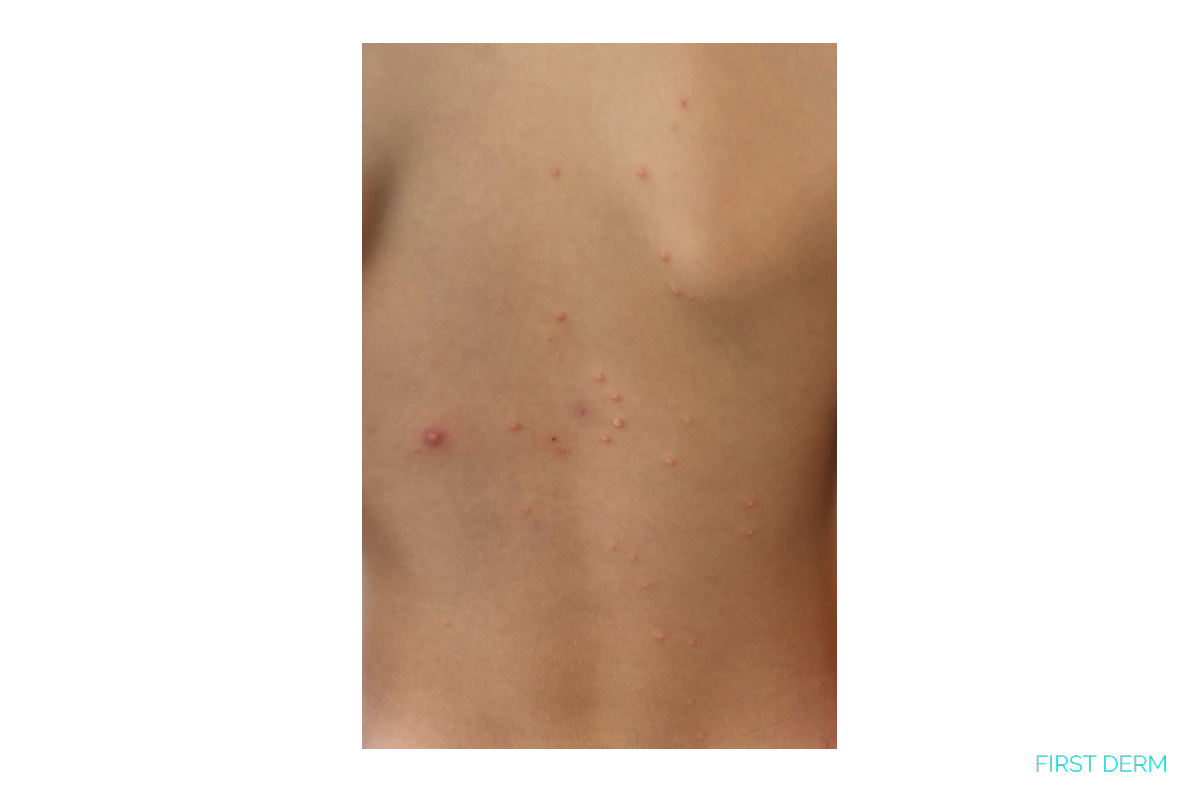
Molluscum contagiosum: small, round, shiny bumps (papules) scattered across the skin, caused by a poxvirus. Lesions often clear on their own without treatment.
Commonly seen in children aged 1 to 10 years, molluscum contagiosum is a viral infection that results in a harmless rash with skin-colored bumps.[12]
Appearance: multiple dome shaped skin-colored bumps are characteristic of molluscum contagiosum.
Disease spread: direct skin to skin contact or sharing objects used by infected children are the common modes you can get the disease.
School rules: no exclusion from school solely due to the lesions. Most schools recommend covering all the visible lesions to prevent infection from spreading further.
What to do at home: these lesions heal on their own, but the process may take up to 18 months.[12] some lesions will not completely clear out till one year.[12] Meanwhile, remember not to share clothing items or any other utensils with the infected child. Do not squeeze or scratch the bumps as it may worsen the condition by involving other body parts as well.
When to see your healthcare provider: if the bumps are on concerning areas like eye lids, you may pay a visit to your healthcare provider. If the bumps become very painful, swollen, red or very widespread and cosmetically concerning, bring your child in for prescription medication or other treatment options like curettage or cryotherapy.[13]
6. Slapped cheek
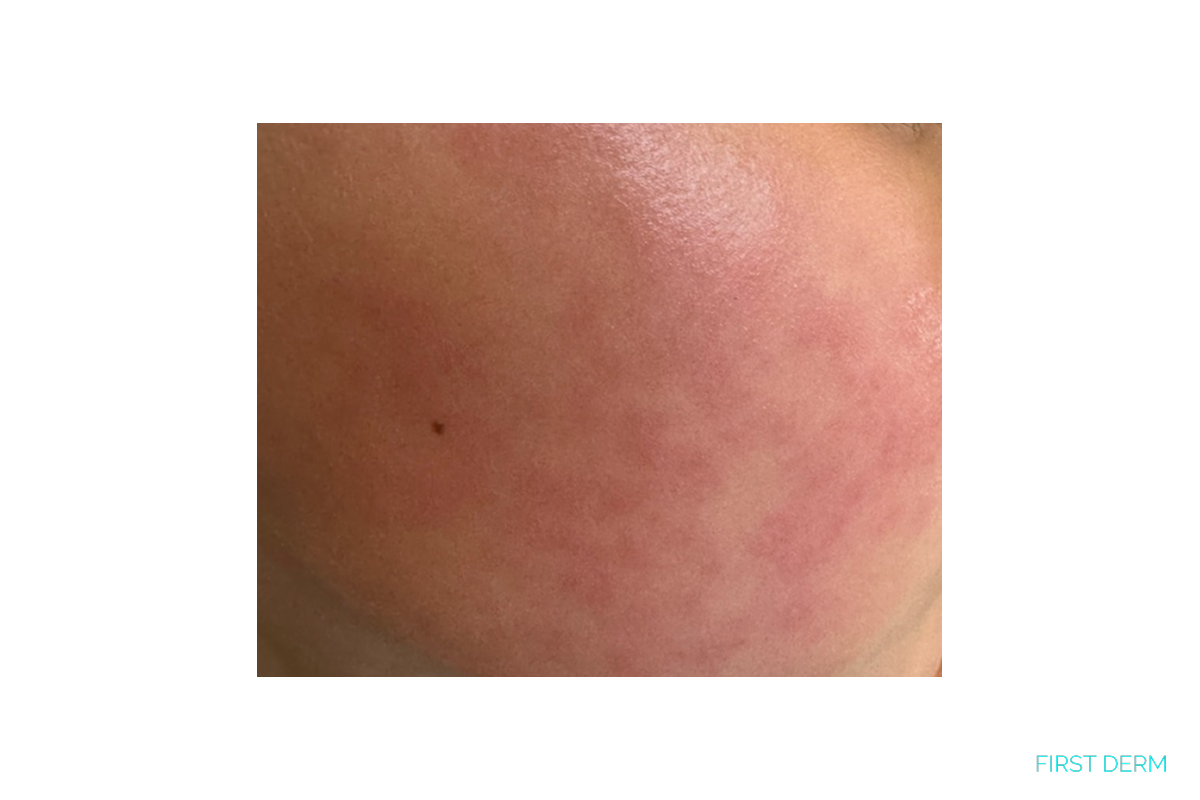
Erythema infectiosum (slapped cheek disease / fifth disease): distinctive bright red flushing on the cheek, caused by parvovirus B19. The rash typically appears after the contagious phase has passed.
Also known as erythema infectiosum or fifth disease, slapped cheek is caused by Parvo B19 viral infection. This is commonest among children between 5 to 15 years of age, commonly in winter and spring.[14]
Appearance: affected kids have reddened cheeks as if they have been slapped, without any other symptoms or very minimal symptoms like fever, upset stomach or body aches and pains. It is not uncommon to see a different lace-like rash on the trunk, arms and legs, which may worsen after exposure to the sun.[15]
Disease spread: coughed out droplets from a child with the disease can give it to another.15 However, by the time the rash appears, the infectious period has already passed.[14]
School rules: no rules against school attendance.
What to do at home: no specific treatment is required. Make sure the child is well rested and hydrated.
When to see your healthcare provider: if it gets complicated with an “Aplastic crisis”, where low blood cell counts lead to purple patches on the skin or difficulty to breathe, the child needs medical attention.[14] The same goes for children with bleeding disorders like thalassemia or sickle cel disease from birth. Also, if you are pregnant, seek medical advice quickly to prevent any potential harm to your unborn baby.
7. Scabies
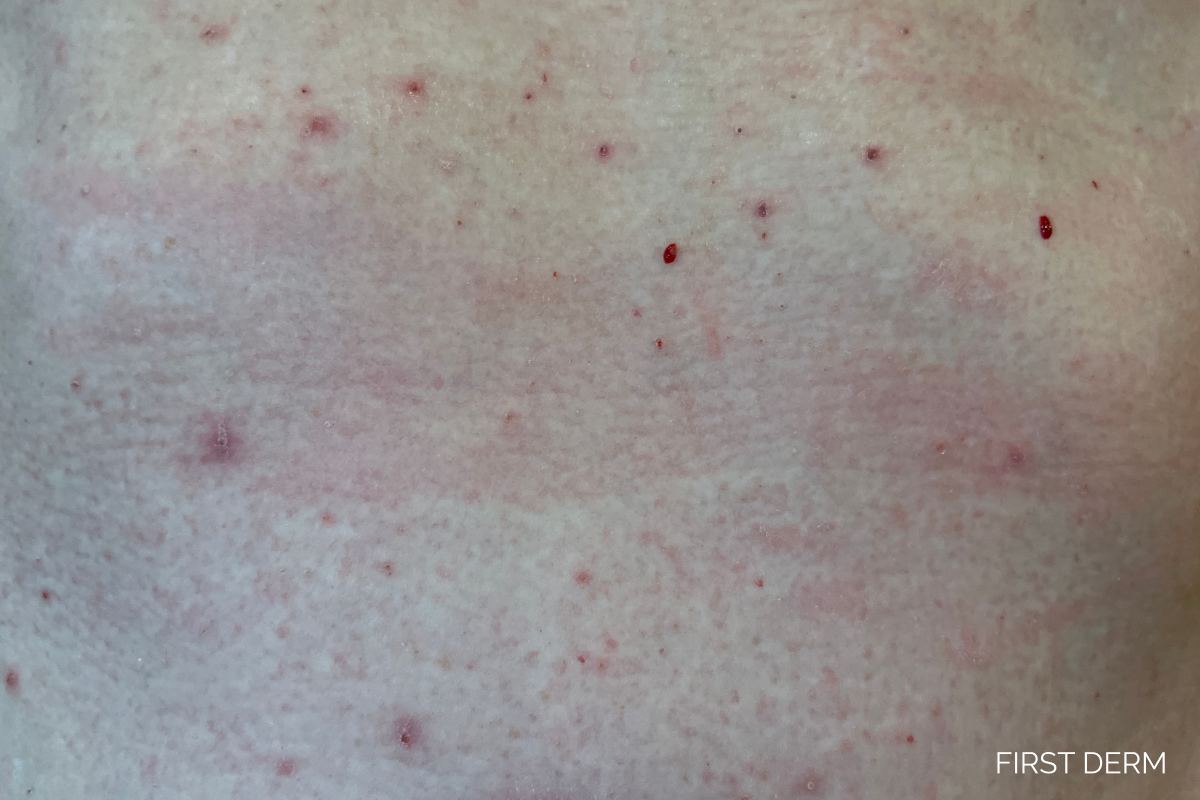
Scabies: clusters of small, intensely itchy red spots caused by a microscopic mite that burrows into the skin. Spreads through prolonged skin-to-skin contact
Scabies occurs when the skin gets infested by a small insect named Sarcoptes scabei, that burrows into the skin.
Appearance: intense itching that worsens towards the night, along with small bumps, thickened flat lesions or wavy tracks can be seen, especially in the finger web spaces.[17] In children below 2 years, even the face and the scalp can be affected. Remember that the itching may last up to 2 weeks after successful treatment.
Disease spread: for scabies mites to be transferred, prolonged direct skin-to-skin contact is needed.
School rules: while most schools do not mandate sending the child home early, they recommend same day treatment initiation and completion of first overnight treatment before returning to school.[16]
What to do at home: bring the child to your healthcare provider early for prescription medications. It usually consists of a cream or a lotion to be applied to the whole body, which is then left in place overnight. Make sure everyone in the family is treated, even if they have no symptoms.[17] Mites can be removed from clothing and bed linen by washing them in hot water. (over 50°C)
When to see your healthcare provider: as early as possible, for early commencement of treatment.
Rule out measles
Recently, the US reported an unusually high number of measles cases, the most recent peak being 296 cases per week reported in January 2026.[18] Worst numbers are from South Carolina, and Pennsylvania, where over 600 cases per week are seen.[18] The reason for this sudden spike is believed to be the high number of unvaccinated kindergarten kids and the ability of the measles virus to spread very easily and quickly.
You can recognize measles by the flu like illness with red eyes and runny nose, that is followed by a red pinpoint rash 3 to 4 days later. It starts from behind the ears or at the hairline and spreads downwards. While there is no specific treatment, it is important to avoid crowded places and wear masks to prevent disease from spreading further. Make sure your child is vaccinated against measles as this is the most important prevention method.[19]