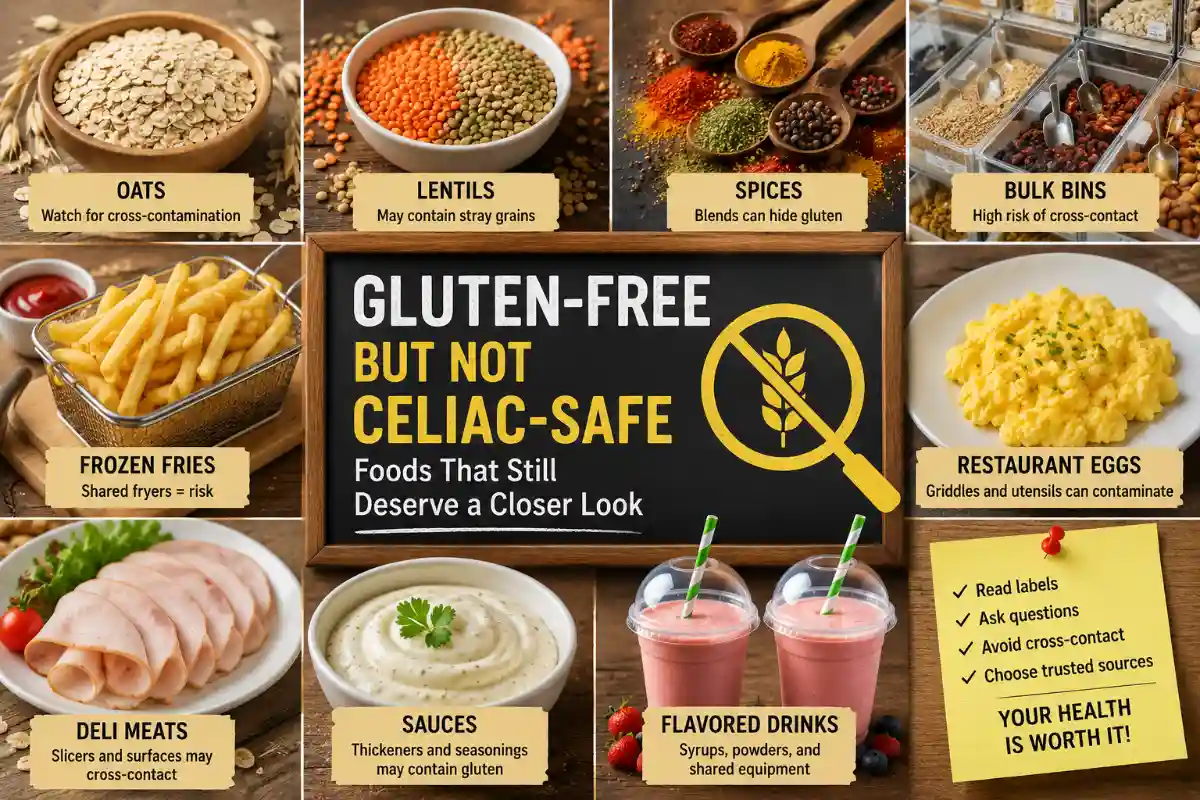
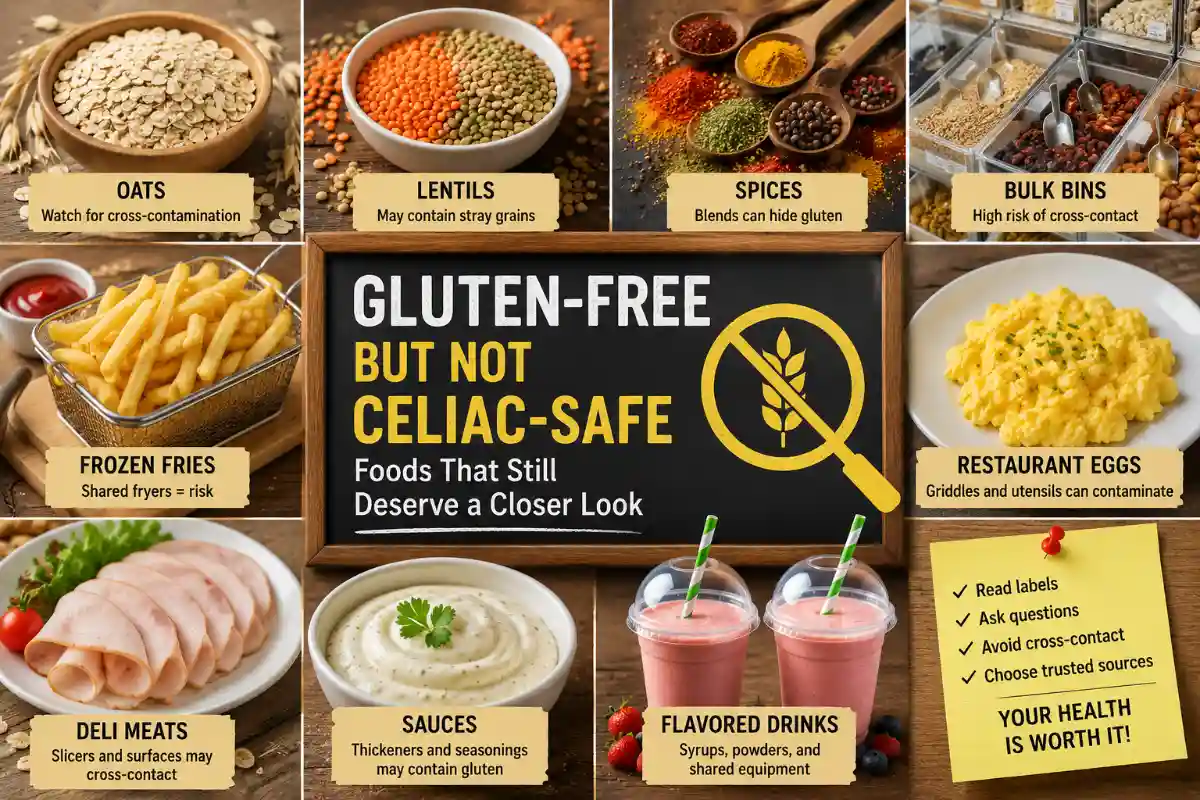
Celiac.com 09/18/2026 – For people with celiac disease or gluten sensitivity, learning which foods are naturally gluten-free is only part of the challenge. Rice, potatoes, eggs, lentils, spices, and many other foods do not naturally contain gluten, but that does not always mean the final product reaching your plate is free from meaningful cross-contact.
This is where real-world gluten avoidance becomes more complicated. A food can begin as naturally gluten-free and still pick up gluten during growing, harvesting, transportation, manufacturing, restaurant preparation, or serving. The risk varies widely from one food to another, and from one manufacturer or restaurant to another.
Celiac.com Sponsor (A12):
The goal is not to become afraid of every food without a gluten-free label. Instead, people with celiac disease can make better decisions by understanding which foods deserve a closer look and why.
Oats: Naturally Gluten-Free, but Frequently Contaminated
Oats are one of the clearest examples of the difference between naturally gluten-free and reliably gluten-free.
Pure oats do not naturally contain the same gluten proteins found in wheat, barley, and rye. The problem is that oats are commonly grown, harvested, transported, milled, or processed alongside gluten-containing grains. This creates many opportunities for stray wheat, barley, or rye kernels to enter the oat supply.
For someone with celiac disease, ordinary commercial oats should therefore not automatically be considered safe simply because the ingredient list says “oats.”
Gluten-free labeled oats are generally the better choice because they are produced under systems intended to reduce gluten contamination and meet gluten-free standards. Some manufacturers use specially managed oat supply chains, while others use mechanical or optical sorting to remove contaminating grains. Either approach can work when properly controlled and tested.
There is another complication: a small percentage of people with celiac disease may react to avenin, a protein naturally present in oats. For most people with celiac disease, appropriately produced gluten-free oats can be tolerated, but someone who continues to have symptoms after adding oats may want to discuss this possibility with a doctor or dietitian.
Lentils and Other Dried Legumes Can Hide Stray Grains
Lentils, beans, peas, and other legumes are naturally gluten-free, but dried lentils deserve more scrutiny than many people realize.
These crops may be grown in rotation with wheat or other grains, harvested with shared agricultural equipment, transported in shared containers, or processed in facilities that also handle gluten-containing grains. As a result, occasional wheat or barley kernels can sometimes be mixed into bags of lentils.
This does not mean all lentils are unsafe. It does mean that people with celiac disease should inspect dried lentils before cooking them and consider purchasing products specifically labeled gluten-free when available.
Rinsing and sorting lentils can help identify visible foreign grains, but washing alone cannot guarantee removal of gluten if flour or grain dust has contaminated the product. For frequent lentil eaters, choosing a manufacturer with clear gluten-control practices may provide additional reassurance.
Spices and Seasoning Blends Are Not Always as Simple as They Look
A plain single-ingredient spice such as black pepper, cinnamon, cumin, or paprika is naturally gluten-free. The situation becomes more complicated with spice blends, seasoning packets, rubs, and flavored mixes.
These products may contain starches, flavorings, anti-caking ingredients, malt-based components, or other additives. Cross-contact can also occur during grinding and packaging if the same facility handles wheat-containing products.
For people with celiac disease, the safest approach is to read the entire ingredient list rather than assuming that anything sold in the spice aisle is automatically gluten-free.
Seasoning mixes used in restaurants can be especially difficult to evaluate because employees may not know exactly what is in a proprietary blend. Taco seasoning, fries seasoning, meat rubs, gravy mixes, and flavored salts are all examples where it can be worth asking questions.
Bulk Bins Create a Special Cross-Contact Problem
Bulk bins are convenient and often less expensive, but they can present significant cross-contact concerns for people with celiac disease.
A naturally gluten-free food such as nuts, seeds, dried fruit, rice, beans, or candy may be stored directly next to flour, granola, wheat-based cereal, or other gluten-containing foods. Scoops may be moved from one bin to another, customers may spill products, and employees may refill containers without completely preventing cross-contact.
Even if the bulk product itself came from a gluten-free source, the retail environment can introduce gluten after the product arrives at the store.
Packaged versions of the same food generally provide more control because the product remains sealed from the manufacturing facility to the consumer. For someone with celiac disease, that extra protection can be worthwhile.
Frozen French Fries Can Be Surprisingly Complicated
Potatoes are gluten-free, so French fries might appear to be one of the easiest foods to order. Unfortunately, both frozen fries and restaurant fries can introduce several hidden risks.
Some commercially prepared frozen fries contain coatings, seasonings, or flavorings that may include gluten-containing ingredients. Even when the frozen product itself is gluten-free, restaurant preparation creates another major issue: the fryer.
If fries are cooked in the same oil as breaded chicken, onion rings, mozzarella sticks, battered fish, or other wheat-containing foods, gluten-containing crumbs can circulate through the oil and come into contact with the fries.
For people with celiac disease, asking whether a restaurant uses a dedicated gluten-free fryer is much more useful than simply asking whether the fries contain gluten.
Restaurant Eggs Can Pick Up Gluten on the Griddle
Eggs are naturally gluten-free, but breakfast restaurants illustrate how easily a safe ingredient can become contaminated during preparation.
Scrambled eggs or omelets may be cooked on the same grill or griddle used for pancakes, French toast, bread, breakfast sandwiches, and other wheat-containing foods.
Some restaurants may also add ingredients to egg mixtures that are not obvious to the customer. Pre-mixed liquid egg products, omelet fillings, sauces, cheese blends, or seasoning mixes may require additional checking.
Cross-contact from spatulas, utensils, and cooking surfaces can be just as important as the ingredients themselves.
Someone with celiac disease may want to ask whether the eggs can be prepared in a clean pan with clean utensils rather than on a shared griddle.
Deli Meats Can Become Contaminated After Packaging Is Opened
Many plain meats are naturally gluten-free, and numerous packaged deli meats are also labeled gluten-free. The risk can change once the product reaches a supermarket deli counter.
Deli slicers are often used for many different products throughout the day. Some meats may have marinades, seasonings, glazes, or coatings that contain gluten. Cheese, specialty products, and prepared foods may also be handled in the same area.
Even when the meat itself is gluten-free, crumbs or residues on slicers, counters, gloves, knives, or cutting boards may create cross-contact.
Prepackaged, factory-sealed deli meats can reduce this risk. If ordering from the deli counter, asking whether the slicer can be cleaned before use may help, although practices vary widely between stores.
Sauces Are One of the Most Common Places for Hidden Gluten
Sauces can transform a naturally gluten-free meal into one that is no longer safe for someone with celiac disease.
Soy sauce is a well-known example because many traditional varieties contain wheat. Gravies may be thickened with wheat flour. Teriyaki sauce, marinades, barbecue sauces, dressings, curry sauces, and specialty restaurant sauces can also contain gluten ingredients depending on the recipe.
Another problem is that restaurant staff may focus on the main ingredient and overlook the sauce. A grilled chicken breast, piece of fish, or vegetable dish may seem naturally gluten-free until a marinade or finishing sauce is added.
When eating out, it can help to ask specifically about sauces, marinades, seasoning mixtures, and preparation rather than asking only whether the main food contains gluten.
Flavored Drinks Can Contain More Than You Expect
Water, plain coffee, tea, milk, juice, and many simple beverages are naturally gluten-free, but flavored drinks can introduce additional ingredients.
Coffee-shop beverages may include flavored syrups, powders, toppings, cookie pieces, malted ingredients, or shared blender equipment. Smoothies can contain protein powders, flavoring mixes, granola, or other additions that are not obvious from the menu description.
Milkshakes may be made in equipment also used for cookie- or brownie-based drinks. Frozen beverages can contain proprietary flavor mixes. Some specialty drinks may also include malt, which usually comes from barley and is not gluten-free.
The more complicated the drink, the more worthwhile it becomes to check both the ingredients and the preparation method.
The Difference Between Gluten-Free Ingredients and Gluten-Free Preparation
One of the most useful distinctions for someone with celiac disease is the difference between the food itself and the environment in which it is prepared.
A potato can be gluten-free while the fryer is not. An egg can be gluten-free while the griddle is covered in pancake residue. Turkey can be gluten-free while the deli slicer carries residue from another product. Lentils can be naturally gluten-free while stray wheat kernels enter the bag during agricultural processing.
This is why ingredient lists alone do not always provide the complete answer.
For packaged foods, a gluten-free label provides useful reassurance because the manufacturer is making a specific claim about the finished product. Certification can offer an additional level of oversight. For restaurant foods, preparation practices and employee knowledge often become just as important as ingredients.
What This Means for People With Gluten Sensitivity
People with non-celiac gluten sensitivity may also experience symptoms after eating gluten, but their medical risk is different because the condition does not involve the same autoimmune intestinal damage seen in celiac disease.
Some people with gluten sensitivity may tolerate small amounts of cross-contact without symptoms, while others report reactions to very small exposures. Individual experience can therefore play a larger role in determining how cautious someone needs to be.
However, people who have not been properly tested for celiac disease should be careful about assuming they simply have gluten sensitivity. Testing for celiac disease is most accurate while gluten is still being consumed, and going gluten-free before evaluation can make diagnosis more difficult.
A Practical Approach Without Becoming Overly Restrictive
The answer is not to avoid every food that could theoretically encounter gluten. That would make an already restrictive diet unnecessarily difficult.
Instead, focus on foods where cross-contact is reasonably common or where manufacturing and preparation add uncertainty.
For higher-risk packaged foods, look for a gluten-free label and read the ingredient list. For naturally gluten-free grains, legumes, and processed foods, consider the manufacturer’s handling practices. In restaurants, ask about shared fryers, grills, utensils, sauces, and preparation areas.
Repeatedly eating foods from manufacturers and restaurants that demonstrate good gluten-control practices can also reduce uncertainty over time.
The Bottom Line
“Naturally gluten-free” describes what a food is made from, but it does not always describe everything that has happened to that food before you eat it.
Oats may encounter wheat during harvesting. Lentils can contain stray grain. Spices can be processed on shared equipment. Bulk bins can be contaminated by neighboring foods. French fries can enter shared fryers. Eggs can be cooked on pancake-covered griddles. Deli meats can encounter contaminated slicers. Sauces can contain unexpected wheat or barley ingredients, and flavored drinks can introduce gluten through additives or shared equipment.
For people with celiac disease, understanding these real-world risks is an important part of staying gluten-free without becoming unnecessarily fearful of food. The goal is not perfection through avoidance of everything questionable. It is learning where contamination is most likely, asking better questions, choosing trustworthy products and restaurants, and focusing extra attention on foods where “naturally gluten-free” does not necessarily mean “celiac-safe.”