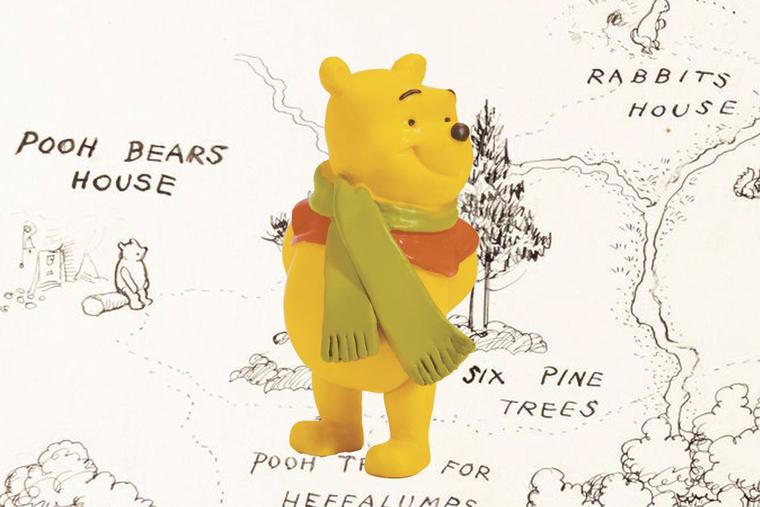
A century after A.A. Milne first introduced a “Bear of Very Little Brain” to the world, the tales of the Hundred Acre Wood continue to resonate far beyond the realm of children’s literature.
For former Anglican chaplain to the Queen of England and Catholic convert Gavin Ashenden, Milne’s classic work continues to inspire not only as timeless storytelling but as a subtle reflection of profound Christian truths.
“A. A. Milne’s Winnie-the-Pooh endures not merely as whimsy but as a quiet catechesis in the virtues,” Ashenden told the Register.
“The Hundred Acre Wood is populated by souls each marked by a besetting weakness — Eeyore’s despondency, Piglet’s timidity, Owl’s vanity, Rabbit’s officiousness — and yet none is ever mocked out of the community or reformed by force. They are loved as they are, which is itself a very Catholic instinct: Charity does not wait for our neighbor to become likeable before extending itself.”
Global publishers, toy manufacturers, and historical estates are rolling out major centennial campaigns to mark 100 years since A.A. Milne first published his legendary children’s collection in October 1926.
But behind the simple, pastoral tales of Christopher Robin and his stuffed companions in the Hundred Acre Wood, theologians, authors, and literary scholars point to a distinct undercurrent of deep Christian and Catholic virtues.
Far from being mere whimsical bedtime stories, Milne’s landscape serves as a profound allegory for the spiritual life, specifically highlighting the practice of radical humility, childlike faith, and what the Church calls the ministry of presence.
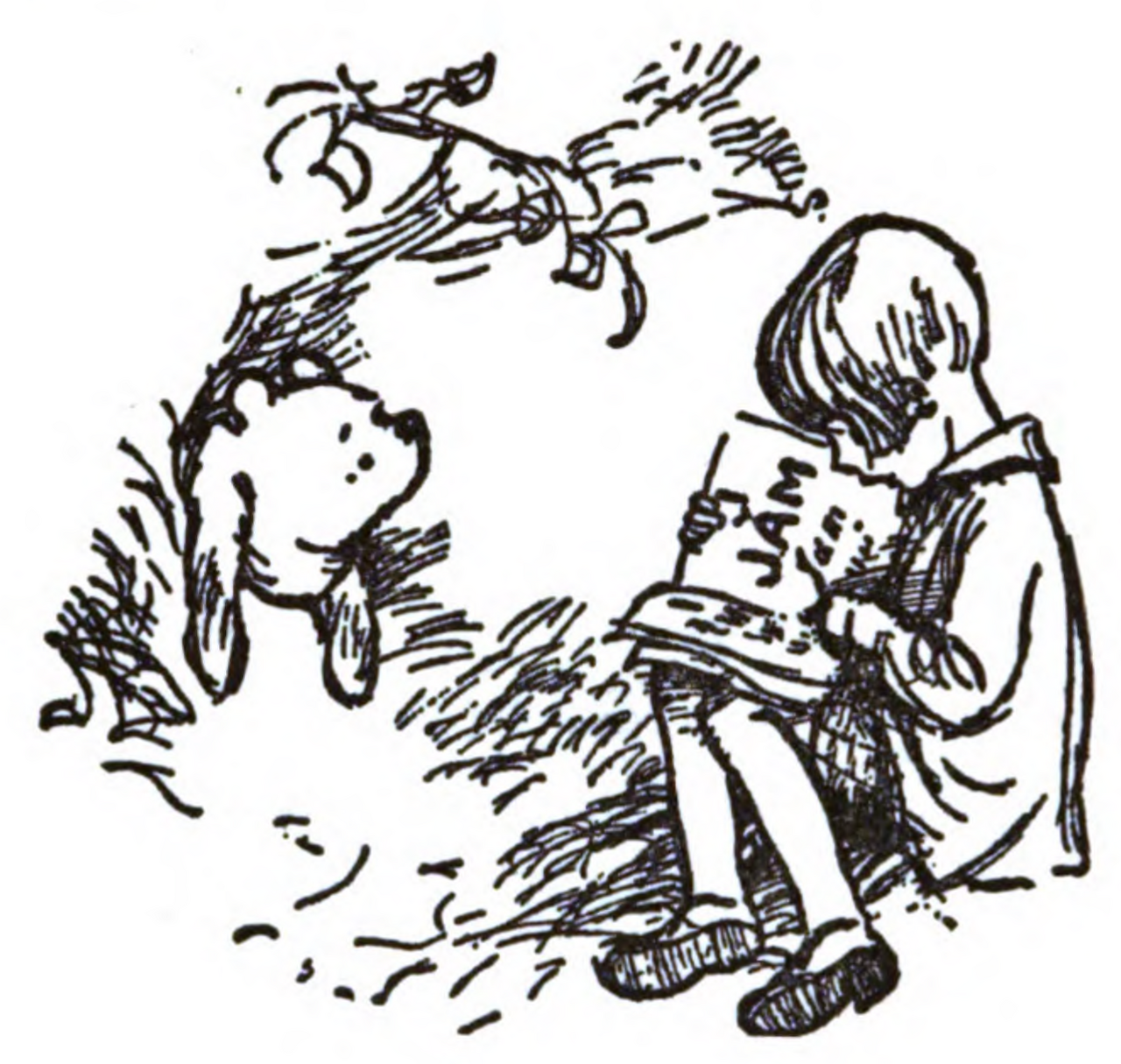
As Catholic blogger Amy Welborn points out, the enduring power of Milne’s creation rests in both its form and its rich narrative world.
“Like all the best children’s books, Winnie-the-Pooh gives two gifts,” Welborn told the Register. “First, language — witty and a little arch — that stretches not only the reader’s imagination, but her capacity for understanding and, secondly, a world in which a child has adventures free of adult meddling, but always in the company of friends.”
The Virtue of Simple-Mindedness
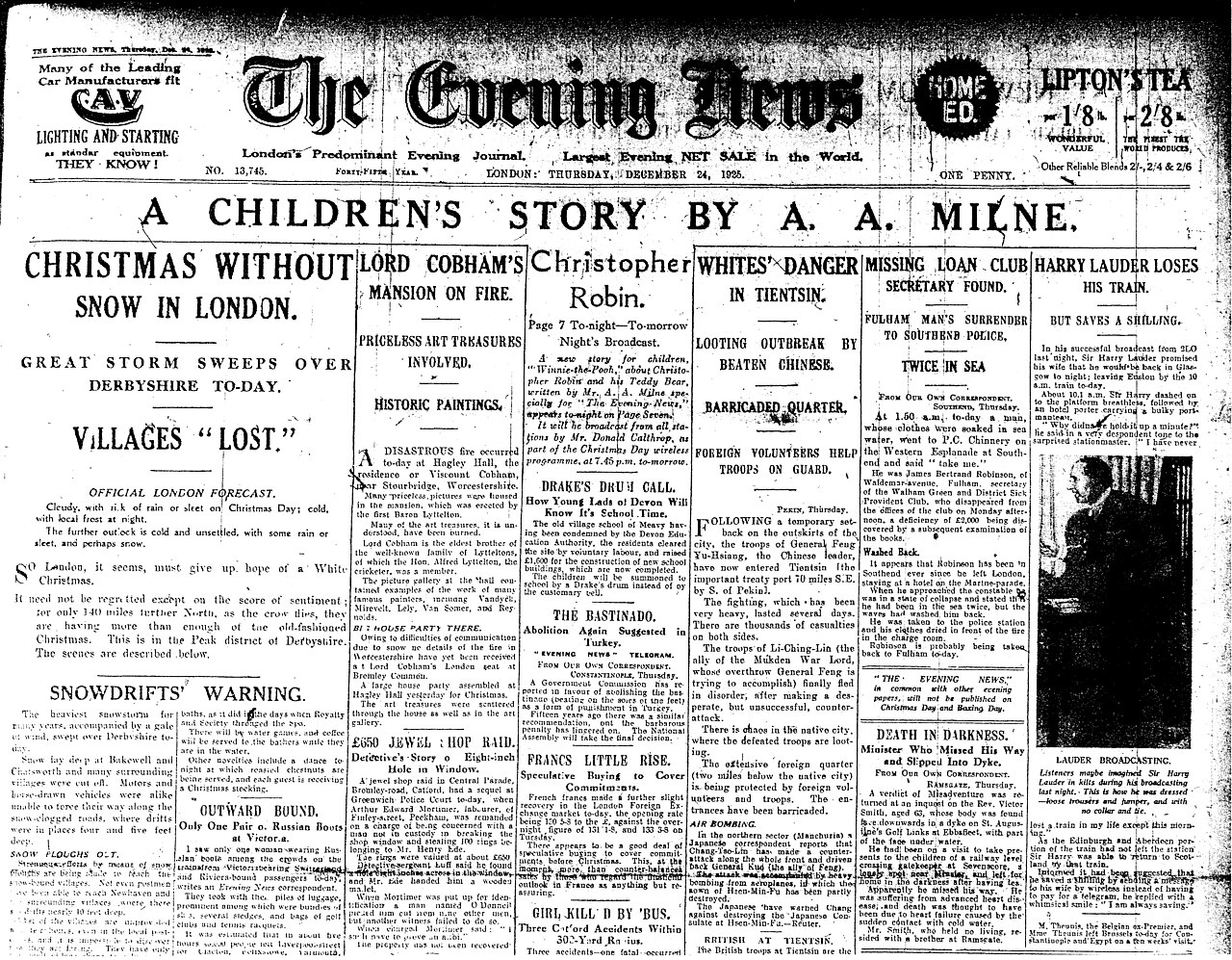
In his 1926 debut, Winnie-the-Pooh openly and cheerfully embraces his status as a bear with fluff for brains. Yet religious scholars note this exact trait maps directly onto the biblical call to spiritual poverty and the first Beatitude: “Blessed are the poor in spirit.”
While characters like Owl and Rabbit suffer from the modern traps of intellectual vanity, administrative anxiety and rigid perfectionism, Pooh operates entirely in a state of grace. Unburdened by pride or the need to control his environment, he relies on simple gifts and remains profoundly content with his “daily bread” — or, in his case, a pot of honey.
Ashenden sees in Pooh’s simple nature a clear echo of the Little Flower.
“Pooh himself, ‘a Bear of Very Little Brain,’ is the unlikely sage of the piece,” Ashenden told the Register.
“His simplicity is not stupidity but a kind of holy unselfconsciousness — he wants his honey, he loves his friends, and he is untroubled by the anxious calculations that govern the adult mind. There is something of the Little Way here, that Thérèse of Lisieux insight that sanctity need not be spectacular; it can be found in small, faithful, unglamorous acts of attention to those around us.”
This innocent, trusting worldview mirrors Christ’s instruction in the Gospel of Matthew to become like children to enter the Kingdom of heaven. Pooh does not overanalyze the mysteries of the wood; he simply lives within them, trusting that he is provided for and loved.
“Milne never preaches,” Ashenden added. “He simply shows us a small world ordered by mercy and lets children grow up half-remembering that this is how the real world ought to be.”
The Ministry of Presence
Perhaps the most profoundly Catholic echo in Milne’s work is showcased through the wood’s most notoriously melancholic resident, Eeyore. In a modern secular framework, Eeyore’s persistent gloom is often viewed as a problem to be solved, an inconvenience, or a clinical issue to be managed.
However, Betsy Fentress of The Catholic Association and host of EWTN Radio’s Conversations with Consequences notes that Milne offers a more compassionate perspective on human weakness.
“In modern times we might find relief in clinical diagnoses for our shortcomings, but through Milne’s poetry and stories, and E.H. Shepard’s marvelous drawings, we accept our fallen nature — and can even embrace it,” Fentress told the Register.
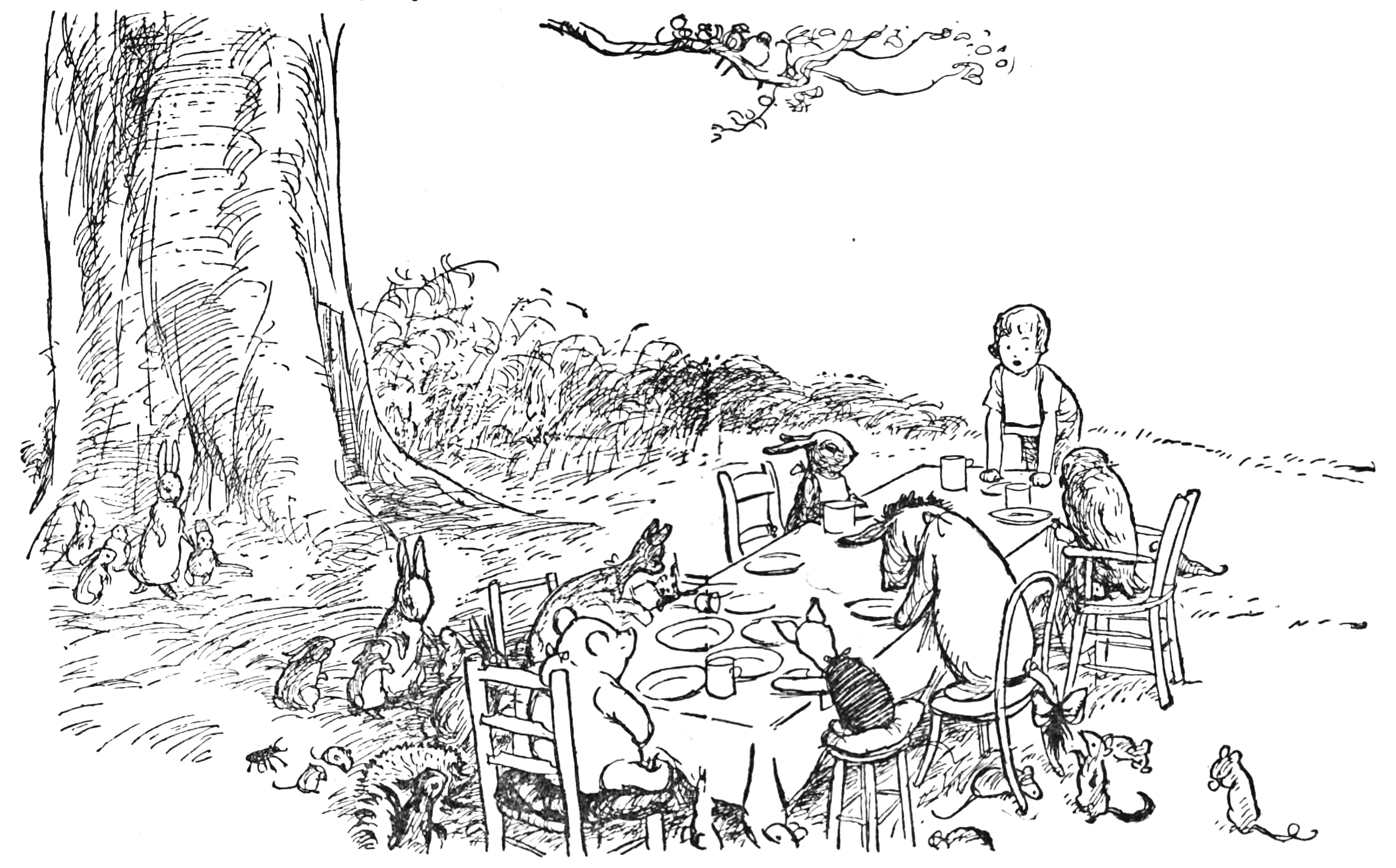
“A bear who gets stuck in a doorway, a sad donkey with droopy ears, a dyslexic owl — everybody has something — and with friends, we can rise above our daily discouragements.”
When the old gray donkey is trapped under his perpetual cloud of despair, his friends never offer condescending lectures, superficial pop-psychology fixes, or demanding platitudes telling him to cheer up. Instead, Pooh and Piglet routinely walk into his clearing, build up his fallen stick house, and quietly sit beside him in the dirt.
In Catholic theology, this exemplifies the ministry of presence — the incarnational act of entering directly into another’s suffering without trying to “fix” it, mimicking how Christ accompanies humanity in its brokenness. It acknowledges that, sometimes, the greatest act of charity is found not in words, but in shared silence.
Community as Holy Fellowship
The structure of the Hundred Acre Wood itself reflects the Pauline vision of the Church as one body with many distinct parts. Each character possesses a glaring psychological vulnerability: Piglet battles crippling anxiety, Tigger struggles with impulsivity, and Rabbit deals with an explosive temper.
Yet no one is cast out for their weaknesses.
As Ashenden observed, “The book’s gentle providence matters too. Nothing in the Wood is finally catastrophic; help arrives, friendships hold, and the narrating voice — kind, unhurried, faintly amused — hovers over the whole like a benign governance that never abandons its creatures. Children absorb, long before they could articulate it, that the world can be trusted, that weakness is not shameful, and that love is the ordinary medium of a good life.”
Literature professor and author Jessica Hooten Wilson believes this dynamic creates a safe harbor for the developing imagination.
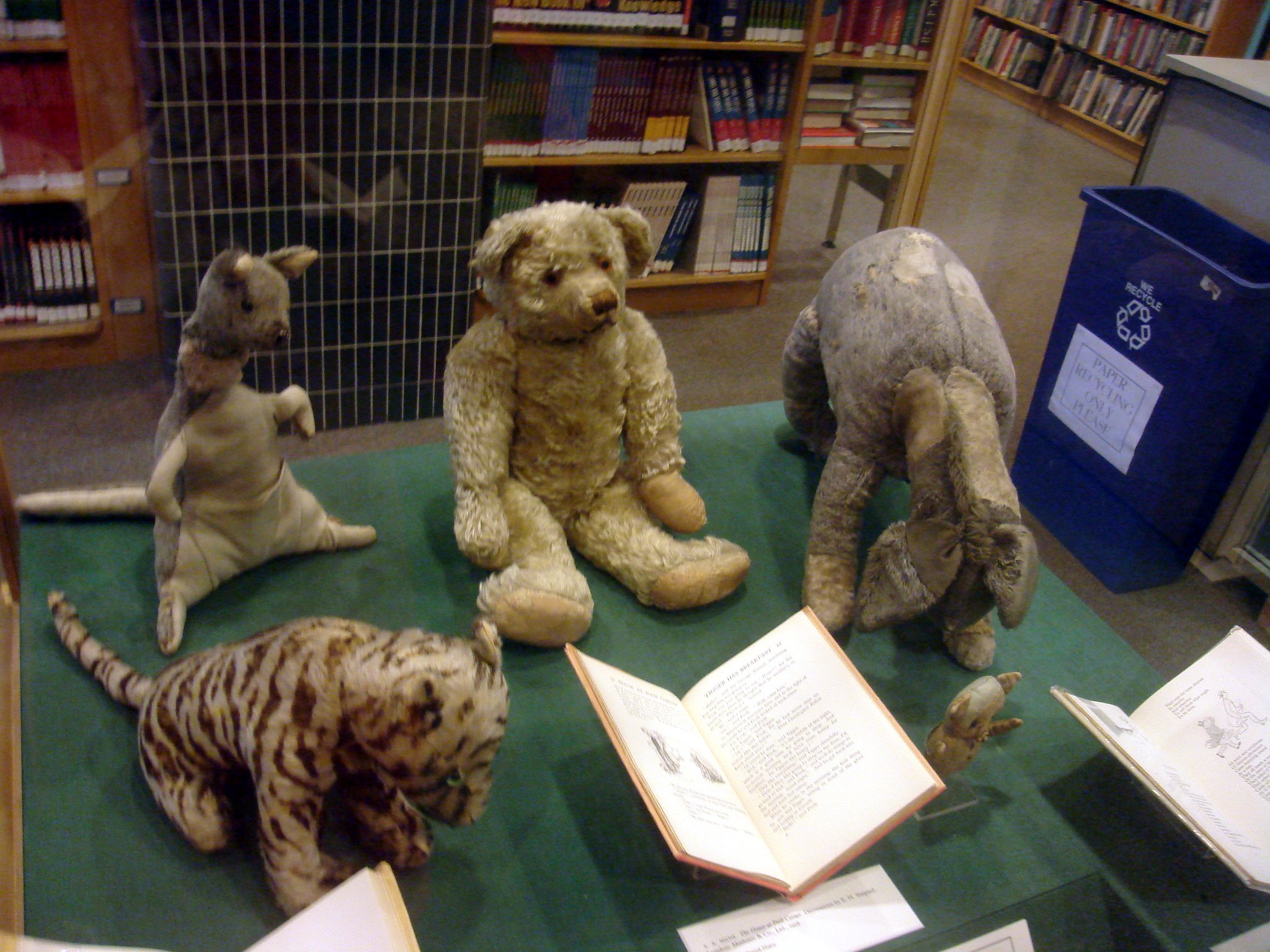
“Each of us connects with a different animal in Winnie-the-Pooh — are you more like Kanga the maternal, or like Roo the curious, or like Rabbit the rule-follower?” Hooten Wilson, who serves as Fletcher Jones Chair of Great Books at Pepperdine University, told the Register.
“Aesop’s Fables do not form the imagination as much as does the safe but silly world of the Hundred Acre Wood. With Pooh, we feel free to make mistakes — ‘silly old bear’ — and share aloud the unclear thoughts in our head. … We’re allowed to be who we are, and we won’t be alone even though we’re all different.”
This foundational companionship also serves as a model for authentic Christian fellowship. Catholic author Mike Aquilina highlighted how Milne’s tales reflect the Church’s approach to community and evangelization.
“In the early Church, to be a Christian was to be a friend (3 John 15),” Aquilina shared with the Register.
“Friendship was the primary means of evangelization during that age of explosive growth. … The Pooh books show us how friendship endures in a fallen world. Yes, Pooh can be self-interested. There are times when his god is his belly (Philippians 3:19), as St. Paul would say, and he suffers the consequences of this; but his friends band together to extract him from his difficulties. There is constancy in their companionship.”
An Eternal Echo
As centennial celebrations bring fans back to the real-life Ashdown Forest, in East Sussex, England, the spiritual core of Milne’s universe points to a deeper human longing: a return to innocence and the promise of ultimate restoration.

For Hooten Wilson, the tales resonate with a deep cosmic hope. “Like The Jungle Book, Beatrix Potter stories, or The Wind in the Willows, Winnie-the-Pooh tales speak to that part of us that desires to return to Day Six of creation and commune with animals,” she observed. “We also look forward to the eternity when we will run with panthers like Mowgli in the jungle, go on adventures with Frog and Toad, have deep conversations with Badger, and bounce up trees with Tigger — that day, which, of course, is far away and also soon, when the lion will eventually lie down with the lamb.”
Long after the intellectual arguments fade, the enduring message of the Hundred Acre Wood remains remarkably clear: Childlike love, quiet accompaniment and true friendship are the virtues that ultimately endure.
As Fentress concluded, “One hundred years later — we still need that unconditional love.”