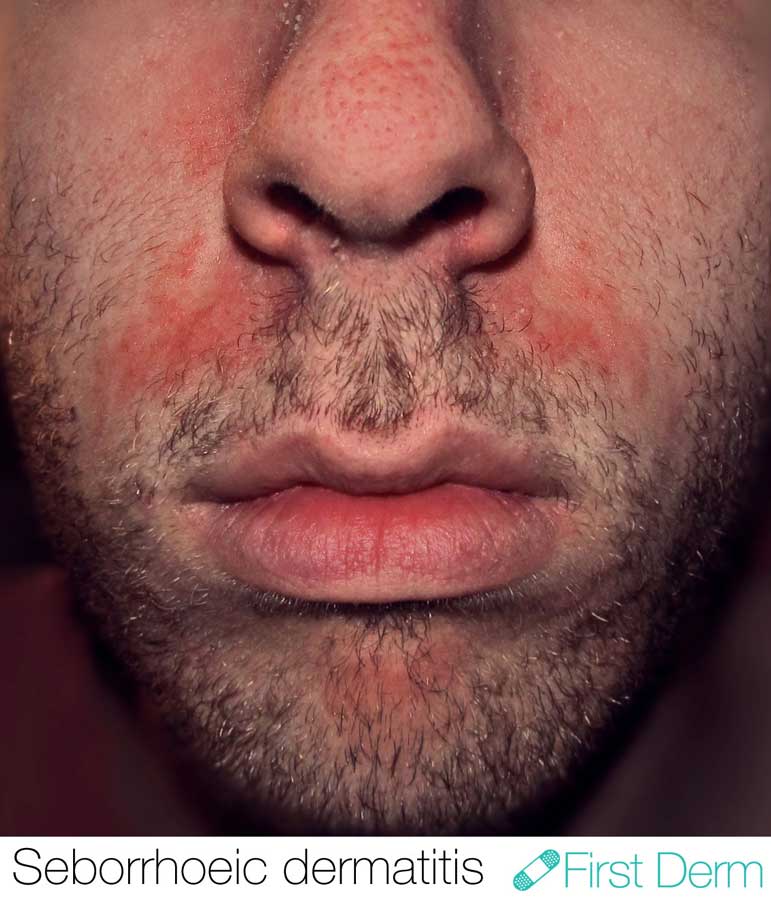
Seborrhoeic dermatitis can be formed on the scalp and anywhere on the body that as a lot of sebaceous glands (oil glands), including the sternum, armpits and groin. It also causes dandruff and itching.
Seborrhoeic dermatitis often occurs in adolescence or adulthood, but even small children can get seborrhoeic dermatitis on the scalp, eyebrows and the diaper area. Oily skin and increased incidence of the common skin yeast (Malassezia furfur) are the main aggravating factors. Another reason may be hypersensitivity to mushrooms.
Symptoms
The affected area is marked by red and scaly scalp, present as an orange-pink rash affecting the hair line, eyebrows, sides of nose, and behind the ears. The rash may be itchy. Small children can get dandruff, eczema of the scalp, eyebrows, and in the diaper area. The rash is known as cradle cap, which looks like fat, slightly yellowish scales that resemble seborrhoeic dermatitis.
What can I do?
Seborrhoeic dermatitis can often be managed at home with good skincare habits. You can:
-
Use a soap-free cleanser and apply a light, non-perfumed moisturiser to soothe affected areas
-
Wash your scalp regularly with an anti-dandruff shampoo containing ketoconazole, selenium sulphide, or zinc pyrithione
-
Avoid known triggers such as stress, tiredness, or cold dry weather
-
Expose the skin to natural sunlight where appropriate, but always use sun protection
-
Choose non-comedogenic (non-pore-blocking) skincare products
Should I seek medical care?
You should speak to your GP if:
-
Your symptoms are severe, persistent, or affecting your quality of life
-
Over-the-counter treatments haven’t helped
-
The condition affects infants or young children
-
The rash becomes infected (e.g. painful, weeping or crusted)
Your doctor can confirm the diagnosis, advise on appropriate treatment, and refer you to a dermatologist if needed.
Treatment
Seborrhoeic dermatitis is managed with a combination of antifungal and anti-inflammatory treatments. For the scalp, anti-yeast shampoos such as ketoconazole (e.g. Nizoral) are commonly used, sometimes combined with salicylic acid to help remove scale. A mild corticosteroid solution, such as Betnovate scalp application, may be added short-term for inflammation.
For severe scaling, products like Diprosalic scalp application (a combination of betamethasone and salicylic acid) can be effective.
For the face, a mild topical steroid (e.g. hydrocortisone) in combination with an imidazole antifungal (e.g. clotrimazole or miconazole) may be used for short courses to reduce redness and flaking.
Long-term maintenance with antifungal treatments once or twice weekly may help prevent recurrence.